

• Commercial Satellite Launch Service Market Research and Industry Insights – Report by MMR

    Commercial Satellite Launch Service Market Overview

    The Commercial Satellite Launch Service Market report provides an in-depth analysis that is required to make informed industry decisions and develop strategic growth plans. Regardless of the production method or cost structures, the Commercial Satellite Launch Service market report provides a comprehensive understanding of advanced tactics and strategies.

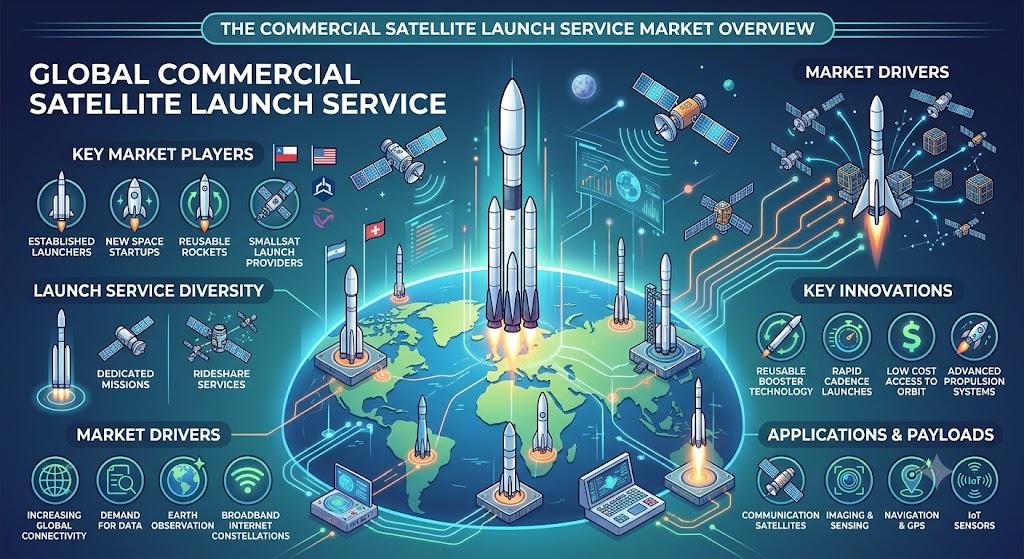
    The Commercial Satellite Launch Service Market size was valued at USD 7.84 Bn in 2025 and the total Commercial Satellite Launch Service revenue is expected to grow at a CAGR of 5.67% from 2026 to 2034, reaching nearly USD 12.89 Bn.

    Please connect with our representative, who will ensure you to get a report sample here @https://www.maximizemarketresearch.com/request-sample/11777/

    Commercial Satellite Launch Service Market Report Scope and Research Methodology

    The report offers an extensive examination of top players' strategies within the Commercial Satellite Launch Service industry, coupled with an in-depth analysis of market segments and regional dynamics. In-depth insights into market dynamics, encompassing drivers, restraints, opportunities, and challenges, are provided both on a regional and segmental basis within the Commercial Satellite Launch Service Market report. Additionally, the report presents import/export consumption, supply and demand, pricing, costs, revenue, and gross margins data, serving as an invaluable guide for investors.

    The data for the Commercial Satellite Launch Service Market report was meticulously gathered through a combination of primary and secondary research methods, ensuring its authenticity. Primary research methods employed encompassed questionnaire distribution, surveys, and telephone interviews with Commercial Satellite Launch Service industry experts, market leaders, marketing professionals, and entrepreneurs. The report's estimates of global and regional Commercial Satellite Launch Service market size were derived using a bottom-up approach. Furthermore, the strengths and weaknesses of Commercial Satellite Launch Service key players within the industry are outlined using SWOT analysis.

    Commercial Satellite Launch Service Market Regional Insights

    The report delves into the Commercial Satellite Launch Service business in great depth, segmenting it into numerous locations. North America, South America, Europe, Asia Pacific (APAC), Africa, and the Middle East are evaluated by region and country in the study. In the Commercial Satellite Launch Service market report, regional markets are thoroughly investigated in order to uncover regional market trends, restrictions, and possible prospects.

    Commercial Satellite Launch Service Market Segmentation

    by Launch Services

    Pre-launch Service
    Post-launch operations Service

    by Satellite Type

    Small Satellites (Mini, Micro, Nano, Pico)
    Medium Satellites
    Large Satellites

    by Orbit Type

    Low Earth Orbit (LEO)
    Medium Earth Orbit (MEO)
    Geostationary Orbit (GEO)
    Sun-Synchronous Orbit (SSO)

    by End-User

    Commercial
    Government & Defense
    Civil
    Others

    Request Free Sample Copy:https://www.maximizemarketresearch.com/request-sample/11777/

    Commercial Satellite Launch Service Market Key Players

    1. SpaceX (Space Exploration Technologies Corp.)
    2. Arianespace
    3. Blue Origin
    4. United Launch Alliance (ULA)
    5. Rocket Lab
    6. Northrop Grumman
    7. China National Space Administration (CNSA)
    8. Roscosmos (Russian Federal Space Agency)
    9. Indian Space Research Organisation (ISRO)
    10. Virgin Orbit
    11. Mitsubishi Heavy Industries
    12. OneWeb
    13. SSL (Space Systems Loral)
    14. Sierra Nevada Corporation (SNC)
    15. ISRO Propulsion Complex (IPRC)
    16. Northrop Grumman Innovation Systems (formerly Orbital ATK)
    17. .Gilmour Space Technologies
    18. Relativity Space
    19. AST & Science
    20. ExPace Technology Corporation

    Key Offerings:

    A detailed market overview
    Market Share, Size & Forecast by Revenue | 2026−2034
    Market Dynamics – Growth Drivers, Restraints, Investment Opportunities, and Key Trends
    Market Segmentation – A detailed analysis by segments and sub-segments
    Regional Insights
    Competitive Landscape – Top Key Vendors and Other Prominent Vendors
    More Trending From MMR:

    Global Waterbased Adhesive Market https://www.maximizemarketresearch.com/market-report/global-water-based-adhesive-market/25151/
    Halide Minerals Market https://www.maximizemarketresearch.com/market-report/halide-minerals-market/214740/
    Global Diphenylmethane Diisocyanate Market https://www.maximizemarketresearch.com/market-report/global-diphenylmethane-diisocyanate-market/113843/

    About Maximize Market Research:

    Maximize Market Research is a multifaceted market research and consulting company with professionals from several industries. Some of the industries we cover include medical devices, pharmaceutical manufacturers, science and engineering, electronic components, industrial equipment, technology and communication, cars and automobiles, chemical products and substances, general merchandise, beverages, personal care, and automated systems. To mention a few, we provide market-verified industry estimations, technical trend analysis, crucial market research, strategic advice, competition analysis, production and demand analysis, and client impact studies.

    Contact Maximize Market Research:

    3rd Floor, Naval IT Park, Phase 2

    Pune Banglore Highway, Narhe

    Pune, Maharashtra 411041, India

    [email protected]

    +91 96071 95908, +91 9607365656
    Commercial Satellite Launch Service Market Research and Industry Insights – Report by MMR Commercial Satellite Launch Service Market Overview The Commercial Satellite Launch Service Market report provides an in-depth analysis that is required to make informed industry decisions and develop strategic growth plans. Regardless of the production method or cost structures, the Commercial Satellite Launch Service market report provides a comprehensive understanding of advanced tactics and strategies. The Commercial Satellite Launch Service Market size was valued at USD 7.84 Bn in 2025 and the total Commercial Satellite Launch Service revenue is expected to grow at a CAGR of 5.67% from 2026 to 2034, reaching nearly USD 12.89 Bn. Please connect with our representative, who will ensure you to get a report sample here @https://www.maximizemarketresearch.com/request-sample/11777/ Commercial Satellite Launch Service Market Report Scope and Research Methodology The report offers an extensive examination of top players' strategies within the Commercial Satellite Launch Service industry, coupled with an in-depth analysis of market segments and regional dynamics. In-depth insights into market dynamics, encompassing drivers, restraints, opportunities, and challenges, are provided both on a regional and segmental basis within the Commercial Satellite Launch Service Market report. Additionally, the report presents import/export consumption, supply and demand, pricing, costs, revenue, and gross margins data, serving as an invaluable guide for investors. The data for the Commercial Satellite Launch Service Market report was meticulously gathered through a combination of primary and secondary research methods, ensuring its authenticity. Primary research methods employed encompassed questionnaire distribution, surveys, and telephone interviews with Commercial Satellite Launch Service industry experts, market leaders, marketing professionals, and entrepreneurs. The report's estimates of global and regional Commercial Satellite Launch Service market size were derived using a bottom-up approach. Furthermore, the strengths and weaknesses of Commercial Satellite Launch Service key players within the industry are outlined using SWOT analysis. Commercial Satellite Launch Service Market Regional Insights The report delves into the Commercial Satellite Launch Service business in great depth, segmenting it into numerous locations. North America, South America, Europe, Asia Pacific (APAC), Africa, and the Middle East are evaluated by region and country in the study. In the Commercial Satellite Launch Service market report, regional markets are thoroughly investigated in order to uncover regional market trends, restrictions, and possible prospects. Commercial Satellite Launch Service Market Segmentation by Launch Services Pre-launch Service Post-launch operations Service by Satellite Type Small Satellites (Mini, Micro, Nano, Pico) Medium Satellites Large Satellites by Orbit Type Low Earth Orbit (LEO) Medium Earth Orbit (MEO) Geostationary Orbit (GEO) Sun-Synchronous Orbit (SSO) by End-User Commercial Government & Defense Civil Others Request Free Sample Copy:https://www.maximizemarketresearch.com/request-sample/11777/ Commercial Satellite Launch Service Market Key Players 1. SpaceX (Space Exploration Technologies Corp.) 2. Arianespace 3. Blue Origin 4. United Launch Alliance (ULA) 5. Rocket Lab 6. Northrop Grumman 7. China National Space Administration (CNSA) 8. Roscosmos (Russian Federal Space Agency) 9. Indian Space Research Organisation (ISRO) 10. Virgin Orbit 11. Mitsubishi Heavy Industries 12. OneWeb 13. SSL (Space Systems Loral) 14. Sierra Nevada Corporation (SNC) 15. ISRO Propulsion Complex (IPRC) 16. Northrop Grumman Innovation Systems (formerly Orbital ATK) 17. .Gilmour Space Technologies 18. Relativity Space 19. AST & Science 20. ExPace Technology Corporation Key Offerings: A detailed market overview Market Share, Size & Forecast by Revenue | 2026−2034 Market Dynamics – Growth Drivers, Restraints, Investment Opportunities, and Key Trends Market Segmentation – A detailed analysis by segments and sub-segments Regional Insights Competitive Landscape – Top Key Vendors and Other Prominent Vendors More Trending From MMR: Global Waterbased Adhesive Market https://www.maximizemarketresearch.com/market-report/global-water-based-adhesive-market/25151/ Halide Minerals Market https://www.maximizemarketresearch.com/market-report/halide-minerals-market/214740/ Global Diphenylmethane Diisocyanate Market https://www.maximizemarketresearch.com/market-report/global-diphenylmethane-diisocyanate-market/113843/ About Maximize Market Research: Maximize Market Research is a multifaceted market research and consulting company with professionals from several industries. Some of the industries we cover include medical devices, pharmaceutical manufacturers, science and engineering, electronic components, industrial equipment, technology and communication, cars and automobiles, chemical products and substances, general merchandise, beverages, personal care, and automated systems. To mention a few, we provide market-verified industry estimations, technical trend analysis, crucial market research, strategic advice, competition analysis, production and demand analysis, and client impact studies. Contact Maximize Market Research: 3rd Floor, Naval IT Park, Phase 2 Pune Banglore Highway, Narhe Pune, Maharashtra 411041, India [email protected] +91 96071 95908, +91 9607365656
    0 Comments ·0 Shares ·69 Views

  • Portable Ultrasound Device Market Reshapes Diagnostic Access in Remote Healthcare

    Market Estimation & Definition

    The global Portable Ultrasound Devices Market is gaining momentum as healthcare providers increasingly adopt mobile diagnostic technologies for faster and more accessible patient assessment. According to Stellar Market Research, the market was valued at USD 5.92 billion in 2025 and is projected to reach USD 8.06 billion by 2032, registering a compound annual growth rate (CAGR) of 4.5% during the 2026–2032 forecast period. The report identifies 2025 as the base year, with historical data covering 2020–2025.

    Portable ultrasound devices are compact imaging systems designed to examine patients in locations such as hospital bedsides, emergency departments, clinics and community healthcare facilities. Their mobility enables medical professionals to perform ultrasound examinations without always transferring patients to dedicated imaging departments. These devices support clinical assessment across several specialties, including obstetrics, cardiology, urology and musculoskeletal care.

    Download Free PDF Brochure: https://www.stellarmr.com/report/req_sample/portable-ultrasound-devices-market/2679

    Market Growth Drivers & Opportunity

    Increasing demand for point-of-care diagnostics is a major factor supporting market expansion. Emergency departments, intensive care units and outpatient facilities require timely imaging to support clinical decisions. Portable ultrasound systems help healthcare professionals assess patients close to the point of treatment, potentially reducing delays and improving workflow efficiency.

    The growing burden of chronic diseases also supports demand for accessible diagnostic equipment. Cardiovascular conditions and other long-term health concerns often require regular assessment, while maternal healthcare services depend on imaging for pregnancy monitoring. Portable systems can extend diagnostic capabilities to smaller clinics and facilities with limited access to conventional imaging infrastructure.

    Technological advances, including compact hardware, improved image quality and wireless connectivity, are expanding the range of possible applications. Growth in home healthcare and telemedicine also creates opportunities for portable imaging solutions, particularly when clinicians need to assess patients outside major hospitals.

    However, stringent medical-device approval processes and shortages of trained sonographers remain important challenges. Manufacturers must demonstrate safety, reliability and clinical performance, while healthcare providers need appropriately trained personnel to operate devices and interpret results. Investment in training, accessible device interfaces and regulatory compliance will therefore remain important to sustainable growth.

    What Lies Ahead: Emerging Trends Shaping the Future

    Artificial intelligence (AI) integration is an emerging trend in portable ultrasound technology. AI-assisted features can help streamline examination workflows, support image acquisition and assist clinicians in evaluating ultrasound images. These capabilities may be particularly valuable in busy clinical environments and facilities where experienced imaging specialists are limited.

    Further development of handheld and compact systems is expected to improve mobility and accessibility. Wireless connectivity can help transfer images for remote consultation, while advances in imaging technology may expand the use of portable devices in cardiovascular, emergency and musculoskeletal assessment.

    Demand for flexible diagnostic equipment is also likely to encourage manufacturers to develop products suited to different clinical environments, from large hospitals to ambulatory care centres. Adoption will depend on clinical effectiveness, ease of use, device cost, data security and compliance with applicable regulations.

    Get More Report Details: https://www.stellarmr.com/report/portable-ultrasound-devices-market/2679

    Segmentation Analysis

    Stellar Market Research segments the Portable Ultrasound Devices Market by type, application, technology and end user.

    By Type: Handheld, Compact and Cart/Trolley. Cart/trolley systems dominated the market, supported by their larger displays, advanced imaging capabilities and suitability for multiple clinical applications.
    By Application: Obstetrics/Gynaecology, Cardiovascular, Urology, Gastric, Musculoskeletal and Others. Obstetrics/Gynaecology held the leading position in 2025, reflecting demand for maternal and women’s healthcare imaging.
    By Technology: 2D Ultrasound, 3D & 4D Ultrasound, Doppler Ultrasound and High-Intensity Focused Ultrasound.
    By End User: Hospitals, Diagnostic Centers, Ambulatory Care Centers and Others.
    These segments reflect demand across different clinical needs, device configurations and healthcare delivery settings.

    Country-Level Analysis: USA and Germany

    United States: The USA is an important market within North America, the region identified by the report as the largest market for portable ultrasound devices in 2025. Established medical-device manufacturers, advanced healthcare infrastructure and demand for point-of-care diagnostics support its industry position. Key companies listed in the report include GE HealthCare, FUJIFILM Sonosite, Butterfly Network and Hologic.

    Germany: Germany is a significant European market, supported by its established medical technology sector and healthcare infrastructure. Siemens Healthineers, headquartered in Erlangen, and Zimmer MedizinSysteme, based in Neu-Ulm, are among the Germany-associated companies identified in the report. Product development and demand for efficient clinical imaging solutions provide opportunities for the country’s medical-device industry. The report does not provide separate market-size estimates for either the USA or Germany.

    Competitive Analysis

    The competitive landscape includes established medical imaging corporations and specialist portable ultrasound manufacturers. Key players identified by Stellar Market Research include GE HealthCare, Koninklijke Philips N.V., Siemens Healthineers, FUJIFILM Sonosite, Butterfly Network, Samsung Medison, Shenzhen Mindray Bio-Medical Electronics and CHISON Medical Technologies.

    Competition is shaped by product innovation, imaging performance, portability, clinical usability and research and development capabilities. Companies that combine reliable image quality with efficient workflows and broader clinical applications may be better positioned to respond to changing healthcare requirements.

    Download Free PDF Brochure: https://www.stellarmr.com/report/req_sample/portable-ultrasound-devices-market/2679

    Press Release Conclusion

    The Portable Ultrasound Devices Market is positioned for continued expansion as healthcare systems prioritise accessible imaging, point-of-care diagnostics and flexible patient assessment. With the market forecast to reach USD 8.06 billion by 2032, opportunities will emerge across hospitals, diagnostic centres and ambulatory care facilities. AI-assisted imaging, connectivity improvements and more portable designs are likely to shape future product development. At the same time, regulatory requirements, equipment costs and shortages of skilled operators will remain important considerations for manufacturers and healthcare providers.

    About Stellar Market Research:

    Stellar Market Research is a multifaceted market research and consulting company with professionals from several industries. Some of the industries we cover include medical devices, pharmaceutical manufacturers, science and engineering, electronic components, industrial equipment, technology and communication, cars and automobiles, chemical products and substances, general merchandise, beverages, personal care, and automated systems. To mention a few, we provide market-verified industry estimations, technical trend analysis, crucial market research, strategic advice, competition analysis, production and demand analysis, and client impact studies.

    Contact Stellar Market Research:

    3rd Floor, Navale IT Park, Phase 2

    Pune Banglore Highway, Narhe,

    Pune, Maharashtra 411041, India

    [email protected]

    +91 20 6630 3320 | +91 9607365656
    Portable Ultrasound Device Market Reshapes Diagnostic Access in Remote Healthcare Market Estimation & Definition The global Portable Ultrasound Devices Market is gaining momentum as healthcare providers increasingly adopt mobile diagnostic technologies for faster and more accessible patient assessment. According to Stellar Market Research, the market was valued at USD 5.92 billion in 2025 and is projected to reach USD 8.06 billion by 2032, registering a compound annual growth rate (CAGR) of 4.5% during the 2026–2032 forecast period. The report identifies 2025 as the base year, with historical data covering 2020–2025. Portable ultrasound devices are compact imaging systems designed to examine patients in locations such as hospital bedsides, emergency departments, clinics and community healthcare facilities. Their mobility enables medical professionals to perform ultrasound examinations without always transferring patients to dedicated imaging departments. These devices support clinical assessment across several specialties, including obstetrics, cardiology, urology and musculoskeletal care. Download Free PDF Brochure: https://www.stellarmr.com/report/req_sample/portable-ultrasound-devices-market/2679 Market Growth Drivers & Opportunity Increasing demand for point-of-care diagnostics is a major factor supporting market expansion. Emergency departments, intensive care units and outpatient facilities require timely imaging to support clinical decisions. Portable ultrasound systems help healthcare professionals assess patients close to the point of treatment, potentially reducing delays and improving workflow efficiency. The growing burden of chronic diseases also supports demand for accessible diagnostic equipment. Cardiovascular conditions and other long-term health concerns often require regular assessment, while maternal healthcare services depend on imaging for pregnancy monitoring. Portable systems can extend diagnostic capabilities to smaller clinics and facilities with limited access to conventional imaging infrastructure. Technological advances, including compact hardware, improved image quality and wireless connectivity, are expanding the range of possible applications. Growth in home healthcare and telemedicine also creates opportunities for portable imaging solutions, particularly when clinicians need to assess patients outside major hospitals. However, stringent medical-device approval processes and shortages of trained sonographers remain important challenges. Manufacturers must demonstrate safety, reliability and clinical performance, while healthcare providers need appropriately trained personnel to operate devices and interpret results. Investment in training, accessible device interfaces and regulatory compliance will therefore remain important to sustainable growth. What Lies Ahead: Emerging Trends Shaping the Future Artificial intelligence (AI) integration is an emerging trend in portable ultrasound technology. AI-assisted features can help streamline examination workflows, support image acquisition and assist clinicians in evaluating ultrasound images. These capabilities may be particularly valuable in busy clinical environments and facilities where experienced imaging specialists are limited. Further development of handheld and compact systems is expected to improve mobility and accessibility. Wireless connectivity can help transfer images for remote consultation, while advances in imaging technology may expand the use of portable devices in cardiovascular, emergency and musculoskeletal assessment. Demand for flexible diagnostic equipment is also likely to encourage manufacturers to develop products suited to different clinical environments, from large hospitals to ambulatory care centres. Adoption will depend on clinical effectiveness, ease of use, device cost, data security and compliance with applicable regulations. Get More Report Details: https://www.stellarmr.com/report/portable-ultrasound-devices-market/2679 Segmentation Analysis Stellar Market Research segments the Portable Ultrasound Devices Market by type, application, technology and end user. By Type: Handheld, Compact and Cart/Trolley. Cart/trolley systems dominated the market, supported by their larger displays, advanced imaging capabilities and suitability for multiple clinical applications. By Application: Obstetrics/Gynaecology, Cardiovascular, Urology, Gastric, Musculoskeletal and Others. Obstetrics/Gynaecology held the leading position in 2025, reflecting demand for maternal and women’s healthcare imaging. By Technology: 2D Ultrasound, 3D & 4D Ultrasound, Doppler Ultrasound and High-Intensity Focused Ultrasound. By End User: Hospitals, Diagnostic Centers, Ambulatory Care Centers and Others. These segments reflect demand across different clinical needs, device configurations and healthcare delivery settings. Country-Level Analysis: USA and Germany United States: The USA is an important market within North America, the region identified by the report as the largest market for portable ultrasound devices in 2025. Established medical-device manufacturers, advanced healthcare infrastructure and demand for point-of-care diagnostics support its industry position. Key companies listed in the report include GE HealthCare, FUJIFILM Sonosite, Butterfly Network and Hologic. Germany: Germany is a significant European market, supported by its established medical technology sector and healthcare infrastructure. Siemens Healthineers, headquartered in Erlangen, and Zimmer MedizinSysteme, based in Neu-Ulm, are among the Germany-associated companies identified in the report. Product development and demand for efficient clinical imaging solutions provide opportunities for the country’s medical-device industry. The report does not provide separate market-size estimates for either the USA or Germany. Competitive Analysis The competitive landscape includes established medical imaging corporations and specialist portable ultrasound manufacturers. Key players identified by Stellar Market Research include GE HealthCare, Koninklijke Philips N.V., Siemens Healthineers, FUJIFILM Sonosite, Butterfly Network, Samsung Medison, Shenzhen Mindray Bio-Medical Electronics and CHISON Medical Technologies. Competition is shaped by product innovation, imaging performance, portability, clinical usability and research and development capabilities. Companies that combine reliable image quality with efficient workflows and broader clinical applications may be better positioned to respond to changing healthcare requirements. Download Free PDF Brochure: https://www.stellarmr.com/report/req_sample/portable-ultrasound-devices-market/2679 Press Release Conclusion The Portable Ultrasound Devices Market is positioned for continued expansion as healthcare systems prioritise accessible imaging, point-of-care diagnostics and flexible patient assessment. With the market forecast to reach USD 8.06 billion by 2032, opportunities will emerge across hospitals, diagnostic centres and ambulatory care facilities. AI-assisted imaging, connectivity improvements and more portable designs are likely to shape future product development. At the same time, regulatory requirements, equipment costs and shortages of skilled operators will remain important considerations for manufacturers and healthcare providers. About Stellar Market Research: Stellar Market Research is a multifaceted market research and consulting company with professionals from several industries. Some of the industries we cover include medical devices, pharmaceutical manufacturers, science and engineering, electronic components, industrial equipment, technology and communication, cars and automobiles, chemical products and substances, general merchandise, beverages, personal care, and automated systems. To mention a few, we provide market-verified industry estimations, technical trend analysis, crucial market research, strategic advice, competition analysis, production and demand analysis, and client impact studies. Contact Stellar Market Research: 3rd Floor, Navale IT Park, Phase 2 Pune Banglore Highway, Narhe, Pune, Maharashtra 411041, India [email protected] +91 20 6630 3320 | +91 9607365656
    0 Comments ·0 Shares ·363 Views
  • Smart Hospitality Market Digital Transformation and Automation Trends Report by MMR

    Unveiling the Latest Trends in the Smart Hospitality Market

    Maximize Market Research, a leading business consultancy firm, has released a comprehensive analysis of the Smart Hospitality Market. The report offers valuable business insights, including demand and pricing analysis, as well as an overview of the competitive landscape. It provides a detailed examination of the current state of the Smart Hospitality market, with projections extending through 2032

    Unlock more insights—request a free sample report now :https://www.maximizemarketresearch.com/request-sample/13824/

    Defining the Smart Hospitality Market Scope Through Comprehensive Research

    The Smart Hospitality market research delivers an in-depth analysis of key factors influencing industry growth, along with potential challenges that may arise. It provides stakeholders with a comprehensive understanding of the competitive landscape, including insights into leading companies, their product offerings, and emerging investment opportunities within the market. The report integrates both qualitative and quantitative insights, offering a well-rounded perspective on the industry’s current and future trajectory. Additionally, the MMR report includes a detailed competitive analysis, examining market players, their strategies, and key trends shaping the industry. The research is based on a blend of primary and secondary data sources, such as government publications, company websites, annual reports, and expert opinions from industry professionals and academics. Furthermore, the report identifies new market demands and trends, providing a thorough explanation of their impact on the Smart Hospitality market’s evolution. By addressing consumer preferences, regulatory frameworks, and technological advancements, the study equips businesses with actionable insights to navigate the industry’s dynamic landscape effectively.

    Explore Regional Insights and Market Dynamics in the Smart Hospitality Industry

    This report provides an in-depth regional analysis, covering essential aspects such as market size, growth rate, and trade activities, including imports and exports across different regions. By examining the geographic distribution of the Smart Hospitality market, the study offers a clear understanding of industry trends and market conditions in various countries.

    The Smart Hospitality market spans across North America, Europe, Asia Pacific, Latin America, Africa, and the Middle East, with each region presenting unique opportunities and challenges. This comprehensive analysis helps businesses identify regional growth potential, competitive landscapes, and key market drivers, enabling strategic decision-making in a dynamic global market

    Unlock the Key Market Segments Powering Smart Hospitality Industry Growth :

    The Global Smart Hospitality Market is expected to grow from USD 56.77 billion in 2025 to USD 225.64 billion by 2034, at a CAGR of 16.57% during the forecast period.

    Gain more details with a free sample report. Inquire now :https://www.maximizemarketresearch.com/request-sample/13824/

    Breaking Down the Smart Hospitality Market: Key Segments Shaping the Industry


    by Component

    Solution
    Services

    by Solution Type

    Hotel Operation Management
    Hotel Automation Management
    Guest Service Management System
    Security Management System
    Others

    by Deployment Mode

    On-Premise
    Cloud

    by End-User

    Hotels
    Cruises
    Luxury Yachts
    Others

    Meet the Industry Leaders Revolutionizing the Smart Hospitality Market

    Global

    1. IBM Corporation (United States)
    2. Schneider Electric (France)
    3. Siemens AG (Germany)
    4. Honeywell International (United States)
    5. Cisco Systems, Inc. (United States)
    6. Oracle Corporation (United States)
    7. Huawei Technologies (China)
    8. NEC Corporation (Japan)
    9. SAMSUNG (South Korea)
    10. Qualsoft Systems Pvt. Ltd. (India)
    11. Control4Corporation (United States)
    12. Cloudbeds (United States)
    North America
    1. BuildingIQ (United States)
    2. Johnson Controls (United States)
    3. Infor, Inc. (United States)
    4. WiSuite (United States)
    5. Frontdesk (United States)
    Europe
    1.Winhotel Solutions (Spain)
    2. BLAZON HOTELS (Dubai)
    3.Guestline (United Kingdom)

    Uncover Key Insights Answering the Biggest Questions in the Smart Hospitality Market

    What is Smart Hospitality ?
    What is the growth rate of the Smart Hospitality Market?
    Which are the factors expected to drive the Smart Hospitality market growth?
    What is the CAGR at which the Smart Hospitality market will grow during the forecast period?
    What are the different segments of the Smart Hospitality Market?
    Which is the fastest growing region in the Smart Hospitality market?
    What growth strategies are the players considering to increase their presence in Smart Hospitality ?
    What are the upcoming opportunities and trends for the Smart Hospitality Market?
    What are the recent industry trends that can be implemented to generate additional revenue streams for the Smart Hospitality Market?
    Who are the leading companies and what are their portfolios in Smart Hospitality Market?
    What segments are covered in the Smart Hospitality Market?
    Who are the key players in the Smart Hospitality market?
    Gain a Competitive Edge – Access Market Insights Through the Sample Link @https://www.maximizemarketresearch.com/market-report/smart-hospitality-market/13824/

    Explore the Revolutionary Products Powering Market Success

    Past Size and Competitive Landscape
    Past Pricing and price curve by region
    Size, Share, Size Forecast by different segment
    Dynamics Growth Drivers, Restraints, Opportunities, and Key Trends by Region
    Segmentation A detailed analysis by segment with their sub-segments and Region
    Competitive Landscape Profiles of selected key players by region from a strategic perspective
    Explore Our Trending Reports to Stay Ahead of Industry Shifts :

    Global Oxyfluorfen Market https://www.maximizemarketresearch.com/market-report/global-oxyfluorfen-market/81643/
    Global Windproof Lighter Market https://www.maximizemarketresearch.com/market-report/global-windproof-lighter-market/69909/
    Global Organic Baby Shampoo Market https://www.maximizemarketresearch.com/market-report/global-organic-baby-shampoo-market/72693/

    Connect with Maximize Market Research for Expert Insights In-Depth Analysis :

    +91 9607365656

    [email protected]
    Smart Hospitality Market Digital Transformation and Automation Trends Report by MMR Unveiling the Latest Trends in the Smart Hospitality Market Maximize Market Research, a leading business consultancy firm, has released a comprehensive analysis of the Smart Hospitality Market. The report offers valuable business insights, including demand and pricing analysis, as well as an overview of the competitive landscape. It provides a detailed examination of the current state of the Smart Hospitality market, with projections extending through 2032 Unlock more insights—request a free sample report now :https://www.maximizemarketresearch.com/request-sample/13824/ Defining the Smart Hospitality Market Scope Through Comprehensive Research The Smart Hospitality market research delivers an in-depth analysis of key factors influencing industry growth, along with potential challenges that may arise. It provides stakeholders with a comprehensive understanding of the competitive landscape, including insights into leading companies, their product offerings, and emerging investment opportunities within the market. The report integrates both qualitative and quantitative insights, offering a well-rounded perspective on the industry’s current and future trajectory. Additionally, the MMR report includes a detailed competitive analysis, examining market players, their strategies, and key trends shaping the industry. The research is based on a blend of primary and secondary data sources, such as government publications, company websites, annual reports, and expert opinions from industry professionals and academics. Furthermore, the report identifies new market demands and trends, providing a thorough explanation of their impact on the Smart Hospitality market’s evolution. By addressing consumer preferences, regulatory frameworks, and technological advancements, the study equips businesses with actionable insights to navigate the industry’s dynamic landscape effectively. Explore Regional Insights and Market Dynamics in the Smart Hospitality Industry This report provides an in-depth regional analysis, covering essential aspects such as market size, growth rate, and trade activities, including imports and exports across different regions. By examining the geographic distribution of the Smart Hospitality market, the study offers a clear understanding of industry trends and market conditions in various countries. The Smart Hospitality market spans across North America, Europe, Asia Pacific, Latin America, Africa, and the Middle East, with each region presenting unique opportunities and challenges. This comprehensive analysis helps businesses identify regional growth potential, competitive landscapes, and key market drivers, enabling strategic decision-making in a dynamic global market Unlock the Key Market Segments Powering Smart Hospitality Industry Growth : The Global Smart Hospitality Market is expected to grow from USD 56.77 billion in 2025 to USD 225.64 billion by 2034, at a CAGR of 16.57% during the forecast period. Gain more details with a free sample report. Inquire now :https://www.maximizemarketresearch.com/request-sample/13824/ Breaking Down the Smart Hospitality Market: Key Segments Shaping the Industry by Component Solution Services by Solution Type Hotel Operation Management Hotel Automation Management Guest Service Management System Security Management System Others by Deployment Mode On-Premise Cloud by End-User Hotels Cruises Luxury Yachts Others Meet the Industry Leaders Revolutionizing the Smart Hospitality Market Global 1. IBM Corporation (United States) 2. Schneider Electric (France) 3. Siemens AG (Germany) 4. Honeywell International (United States) 5. Cisco Systems, Inc. (United States) 6. Oracle Corporation (United States) 7. Huawei Technologies (China) 8. NEC Corporation (Japan) 9. SAMSUNG (South Korea) 10. Qualsoft Systems Pvt. Ltd. (India) 11. Control4Corporation (United States) 12. Cloudbeds (United States) North America 1. BuildingIQ (United States) 2. Johnson Controls (United States) 3. Infor, Inc. (United States) 4. WiSuite (United States) 5. Frontdesk (United States) Europe 1.Winhotel Solutions (Spain) 2. BLAZON HOTELS (Dubai) 3.Guestline (United Kingdom) Uncover Key Insights Answering the Biggest Questions in the Smart Hospitality Market What is Smart Hospitality ? What is the growth rate of the Smart Hospitality Market? Which are the factors expected to drive the Smart Hospitality market growth? What is the CAGR at which the Smart Hospitality market will grow during the forecast period? What are the different segments of the Smart Hospitality Market? Which is the fastest growing region in the Smart Hospitality market? What growth strategies are the players considering to increase their presence in Smart Hospitality ? What are the upcoming opportunities and trends for the Smart Hospitality Market? What are the recent industry trends that can be implemented to generate additional revenue streams for the Smart Hospitality Market? Who are the leading companies and what are their portfolios in Smart Hospitality Market? What segments are covered in the Smart Hospitality Market? Who are the key players in the Smart Hospitality market? Gain a Competitive Edge – Access Market Insights Through the Sample Link @https://www.maximizemarketresearch.com/market-report/smart-hospitality-market/13824/ Explore the Revolutionary Products Powering Market Success Past Size and Competitive Landscape Past Pricing and price curve by region Size, Share, Size Forecast by different segment Dynamics Growth Drivers, Restraints, Opportunities, and Key Trends by Region Segmentation A detailed analysis by segment with their sub-segments and Region Competitive Landscape Profiles of selected key players by region from a strategic perspective Explore Our Trending Reports to Stay Ahead of Industry Shifts : Global Oxyfluorfen Market https://www.maximizemarketresearch.com/market-report/global-oxyfluorfen-market/81643/ Global Windproof Lighter Market https://www.maximizemarketresearch.com/market-report/global-windproof-lighter-market/69909/ Global Organic Baby Shampoo Market https://www.maximizemarketresearch.com/market-report/global-organic-baby-shampoo-market/72693/ Connect with Maximize Market Research for Expert Insights In-Depth Analysis : +91 9607365656 [email protected]
    0 Comments ·0 Shares ·115 Views
  • The Guar Gum Market is projected to achieve monumental growth. According to a comprehensive market intelligence report published by Stellar Market Research, the global market size was valued at USD 1.11 billion in 2025 and is poised to expand at a robust compound annual growth rate (CAGR) of 7.4% from 2026 to 2034, reaching nearly USD 2.1 billion by the end of the forecast period.

    The global guar gum landscape is undergoing a structural pivot defined by dual-engine demand: high-performance energy extraction and health-conscious consumerism. Processed primarily from the endosperm of the cluster bean (Cyamopsis tetragonoloba), guar gum’s unique ability to form hydrogen bonds with water molecules makes it an irreplaceable natural hydrocolloid.

    Key Findings from the Report
    Valuation & Growth Trajectory: The global guar gum market reached USD 1.11 billion in 2025 and is projected to scale to USD 2.1 billion by 2034, registering a 7.4% CAGR.

    Grade Segment Dominance: The Food grade segment held the leading market share in 2025, propelled by surging demand for clean-label, low-fat, and convenience foods.

    Application Segment Insights: The Oil & Gas application segment captured the largest market share (37.62%) in 2025, heavily driven by North American shale gas extraction and global drilling projects.

    Functional Insights: Stabilizers and emulsifiers dominated functional segments with a 54.38% market share in 2025, expanding at a projected 6.9% CAGR due to widespread utility in dairy, confectionery, and personal care.

    Geographical Leadership: North America commanded a 43.2% market share in 2025, underpinned by extensive shale operations and robust processed food consumption.

    Production Hub: Asia-Pacific—led by India, which accounts for approximately 65% to 78% of global exports and production—remains the indispensable agricultural backbone of the supply chain.

    Investment Relevance: Rising trade volumes (such as India exporting over 417,000 metric tons valued at USD 541.65 million) highlight immense investment opportunities in seed quality, processing efficiency, and supply chain logistics.

    For further information, click the following link:https://www.stellarmr.com/report/req_sample/guar-gum-market/2828

    Market Drivers and Restraints
    Drivers:
    Shale Gas Exploration and Drilling Expansion: The rapid expansion of hydraulic fracturing in North America and emerging regions requires high-viscosity friction reducers, cementing guar gum's critical role in energy extraction.

    Explosion of Clean-Label and Convenience Foods: Changing lifestyles, urban work hours, and rising disposable incomes have elevated convenience food consumption, driving demand for natural stabilizers in soups, sauces, bakery items, and frozen desserts.

    Nutritional and Health Benefits: Heightened consumer focus on functional foods that improve glucose tolerance, reduce serum LDL cholesterol, and provide soluble dietary fiber is accelerating plant hydrocolloid utilization.

    Restraints:
    Raw Material Price Volatility: Unpredictable weather patterns, monsoon variability, and fluctuating crop yields in key agricultural belts cause sharp raw material price swings.

    Limited R&D and Infrastructure Deficits: A historical lack of specialized research facilities, certified seed breeding programs, and modernized processing machinery in primary producing regions constrains yield optimization and technological upgrading.

    Technology, Regulation, and Sustainability Trends
    The guar gum industry is undergoing rapid modernization driven by evolving compliance standards and technological integration. Regulatory bodies like the U.S. Food and Drug Administration (FDA) recognize guar gum as safe (GRAS) within specified limits, fostering consumer trust.

    On the operational front, processors are adopting advanced thermal-mechanical processing techniques to enhance powder solubility, lower microbial loads, and tailor viscosity profiles for specialized industrial uses. Furthermore, sustainability and ESG considerations are taking center stage; agricultural stakeholders are promoting climate-resilient cluster bean farming, micro-irrigation, and certified seed adoption to reduce environmental footprints and stabilize farmer incomes against climate shocks.

    Regional Insights
    North America: Dominating the global landscape with a 43.2% market share in 2025, North America's leadership is anchored by extensive shale oil and gas operations in Texas and widespread adoption of functional, low-calorie convenience foods. The U.S. alone accounts for over 41% of global guar gum imports.

    Asia-Pacific: Serving as the world's primary cultivation hub, India and Pakistan drive global supply. India contributes roughly 65% to 78% of global exports, with robust export growth heading into Western markets. Domestic cultivation is also expanding in response to international demand.

    Europe & Emerging Markets: Europe maintains steady demand driven by stringent clean-label food standards and pharmaceutical binder applications, while emerging markets in the Middle East and Latin America show rising promise in water treatment and mining sectors.

    Recent Industry Developments
    VedaOils (2025): Expanded its organic cosmetic-grade guar gum powder portfolio, capturing a wider footprint in natural personal care formulations and increasing eco-friendly product output by 15%.

    Sunita Hydrocolloids (2024): Invested in upgraded hydro-thermal processing units at its Rajasthan facility, boosting high-viscosity industrial-grade production capacity by 20% to meet North American oilfield demands.

    APEDA & Indian Exporters Consortium (2025): Implemented streamlined agricultural export quality certification protocols, stabilizing outbound shipments which crossed 417,000 metric tons valued at over USD 541 million.

    Global Hydrocolloids (2024): Formed a strategic supply partnership with major North American oilfield service providers, securing long-term delivery contracts for frac-grade fracturing guar.

    Agricultural Universities of Rajasthan & Gujarat (2024): Launched collaborative drought-resistant cluster bean seed development initiatives, improving agricultural yields by 8–10% for participating regional farmers.

    Competitive Landscape
    The global guar gum market features a consolidated yet competitive landscape characterized by integrated processors, specialized refiners, and multinational ingredient suppliers. Leading players are focusing on backward integration, strategic export partnerships, and customized grade formulations for pharmaceutical and oilfield applications.

    Key market participants profiled in the report include Sunita Hydrocolloids, Vikas WSP Ltd., Hindustan Gum & Chemicals Ltd., Cargill, Inc., Ashland Global Holdings Inc., Kerry Group, and Lotus Gums & Chemicals. These companies actively deploy capacity expansions, joint ventures, and customized bio-polymer innovations to reinforce their market positioning.

    Analyst Commentary
    "The guar gum market has evolved far beyond traditional food stabilization into a high-tech biopolymer essential for modern energy extraction and advanced pharmaceutical drug delivery," said a Senior Research Analyst at Stellar Market Research. "While agricultural volatility and processing infrastructure bottlenecks remain challenges, the pivot toward sustainable, plant-based hydrocolloids and enhanced shale exploration guarantees a lucrative pathway for stakeholders willing to invest in R&D and supply chain transparency through 2034."

    Future Outlook
    Looking toward 2034, the guar gum market is set for sustained evolution. Demand will increasingly favor high-purity, enzymatically modified, and sustainably sourced derivatives. Investment will concentrate on digitalizing agricultural supply chains, establishing dedicated R&D institutes for cluster bean genetics, and optimizing eco-friendly extraction technologies. As regulatory frameworks tighten around synthetic additives, natural hydrocolloids like guar gum will secure an irreplaceable strategic role across industrial ecosystems worldwide.

    For further information, click the following link:https://www.stellarmr.com/report/req_sample/guar-gum-market/2828

    About Stellar Market Research

    Stellar Market Research is a multifaceted market research and consulting company with professionals from several industries. Some of the industries we cover include medical devices, pharmaceutical manufacturers, science and engineering, electronic components, industrial equipment, technology and communication, cars and automobiles, chemical products and substances, general merchandise, beverages, personal care, and automated systems. To mention a few, we provide market-verified industry estimations, technical trend analysis, crucial market research, strategic advice, competition analysis, production and demand analysis, and client impact studies.

    Address
    Phase 3, Navale IT Zone, S.No. 51/2A/2, Office No. 202, 2nd floor, Near, Navale Brg, Narhe, Pune, Maharashtra 411041

    Email
    [email protected]

    Mobile
    +91 9607365656
    The Guar Gum Market is projected to achieve monumental growth. According to a comprehensive market intelligence report published by Stellar Market Research, the global market size was valued at USD 1.11 billion in 2025 and is poised to expand at a robust compound annual growth rate (CAGR) of 7.4% from 2026 to 2034, reaching nearly USD 2.1 billion by the end of the forecast period. The global guar gum landscape is undergoing a structural pivot defined by dual-engine demand: high-performance energy extraction and health-conscious consumerism. Processed primarily from the endosperm of the cluster bean (Cyamopsis tetragonoloba), guar gum’s unique ability to form hydrogen bonds with water molecules makes it an irreplaceable natural hydrocolloid. Key Findings from the Report Valuation & Growth Trajectory: The global guar gum market reached USD 1.11 billion in 2025 and is projected to scale to USD 2.1 billion by 2034, registering a 7.4% CAGR. Grade Segment Dominance: The Food grade segment held the leading market share in 2025, propelled by surging demand for clean-label, low-fat, and convenience foods. Application Segment Insights: The Oil & Gas application segment captured the largest market share (37.62%) in 2025, heavily driven by North American shale gas extraction and global drilling projects. Functional Insights: Stabilizers and emulsifiers dominated functional segments with a 54.38% market share in 2025, expanding at a projected 6.9% CAGR due to widespread utility in dairy, confectionery, and personal care. Geographical Leadership: North America commanded a 43.2% market share in 2025, underpinned by extensive shale operations and robust processed food consumption. Production Hub: Asia-Pacific—led by India, which accounts for approximately 65% to 78% of global exports and production—remains the indispensable agricultural backbone of the supply chain. Investment Relevance: Rising trade volumes (such as India exporting over 417,000 metric tons valued at USD 541.65 million) highlight immense investment opportunities in seed quality, processing efficiency, and supply chain logistics. For further information, click the following link:https://www.stellarmr.com/report/req_sample/guar-gum-market/2828 Market Drivers and Restraints Drivers: Shale Gas Exploration and Drilling Expansion: The rapid expansion of hydraulic fracturing in North America and emerging regions requires high-viscosity friction reducers, cementing guar gum's critical role in energy extraction. Explosion of Clean-Label and Convenience Foods: Changing lifestyles, urban work hours, and rising disposable incomes have elevated convenience food consumption, driving demand for natural stabilizers in soups, sauces, bakery items, and frozen desserts. Nutritional and Health Benefits: Heightened consumer focus on functional foods that improve glucose tolerance, reduce serum LDL cholesterol, and provide soluble dietary fiber is accelerating plant hydrocolloid utilization. Restraints: Raw Material Price Volatility: Unpredictable weather patterns, monsoon variability, and fluctuating crop yields in key agricultural belts cause sharp raw material price swings. Limited R&D and Infrastructure Deficits: A historical lack of specialized research facilities, certified seed breeding programs, and modernized processing machinery in primary producing regions constrains yield optimization and technological upgrading. Technology, Regulation, and Sustainability Trends The guar gum industry is undergoing rapid modernization driven by evolving compliance standards and technological integration. Regulatory bodies like the U.S. Food and Drug Administration (FDA) recognize guar gum as safe (GRAS) within specified limits, fostering consumer trust. On the operational front, processors are adopting advanced thermal-mechanical processing techniques to enhance powder solubility, lower microbial loads, and tailor viscosity profiles for specialized industrial uses. Furthermore, sustainability and ESG considerations are taking center stage; agricultural stakeholders are promoting climate-resilient cluster bean farming, micro-irrigation, and certified seed adoption to reduce environmental footprints and stabilize farmer incomes against climate shocks. Regional Insights North America: Dominating the global landscape with a 43.2% market share in 2025, North America's leadership is anchored by extensive shale oil and gas operations in Texas and widespread adoption of functional, low-calorie convenience foods. The U.S. alone accounts for over 41% of global guar gum imports. Asia-Pacific: Serving as the world's primary cultivation hub, India and Pakistan drive global supply. India contributes roughly 65% to 78% of global exports, with robust export growth heading into Western markets. Domestic cultivation is also expanding in response to international demand. Europe & Emerging Markets: Europe maintains steady demand driven by stringent clean-label food standards and pharmaceutical binder applications, while emerging markets in the Middle East and Latin America show rising promise in water treatment and mining sectors. Recent Industry Developments VedaOils (2025): Expanded its organic cosmetic-grade guar gum powder portfolio, capturing a wider footprint in natural personal care formulations and increasing eco-friendly product output by 15%. Sunita Hydrocolloids (2024): Invested in upgraded hydro-thermal processing units at its Rajasthan facility, boosting high-viscosity industrial-grade production capacity by 20% to meet North American oilfield demands. APEDA & Indian Exporters Consortium (2025): Implemented streamlined agricultural export quality certification protocols, stabilizing outbound shipments which crossed 417,000 metric tons valued at over USD 541 million. Global Hydrocolloids (2024): Formed a strategic supply partnership with major North American oilfield service providers, securing long-term delivery contracts for frac-grade fracturing guar. Agricultural Universities of Rajasthan & Gujarat (2024): Launched collaborative drought-resistant cluster bean seed development initiatives, improving agricultural yields by 8–10% for participating regional farmers. Competitive Landscape The global guar gum market features a consolidated yet competitive landscape characterized by integrated processors, specialized refiners, and multinational ingredient suppliers. Leading players are focusing on backward integration, strategic export partnerships, and customized grade formulations for pharmaceutical and oilfield applications. Key market participants profiled in the report include Sunita Hydrocolloids, Vikas WSP Ltd., Hindustan Gum & Chemicals Ltd., Cargill, Inc., Ashland Global Holdings Inc., Kerry Group, and Lotus Gums & Chemicals. These companies actively deploy capacity expansions, joint ventures, and customized bio-polymer innovations to reinforce their market positioning. Analyst Commentary "The guar gum market has evolved far beyond traditional food stabilization into a high-tech biopolymer essential for modern energy extraction and advanced pharmaceutical drug delivery," said a Senior Research Analyst at Stellar Market Research. "While agricultural volatility and processing infrastructure bottlenecks remain challenges, the pivot toward sustainable, plant-based hydrocolloids and enhanced shale exploration guarantees a lucrative pathway for stakeholders willing to invest in R&D and supply chain transparency through 2034." Future Outlook Looking toward 2034, the guar gum market is set for sustained evolution. Demand will increasingly favor high-purity, enzymatically modified, and sustainably sourced derivatives. Investment will concentrate on digitalizing agricultural supply chains, establishing dedicated R&D institutes for cluster bean genetics, and optimizing eco-friendly extraction technologies. As regulatory frameworks tighten around synthetic additives, natural hydrocolloids like guar gum will secure an irreplaceable strategic role across industrial ecosystems worldwide. For further information, click the following link:https://www.stellarmr.com/report/req_sample/guar-gum-market/2828 About Stellar Market Research Stellar Market Research is a multifaceted market research and consulting company with professionals from several industries. Some of the industries we cover include medical devices, pharmaceutical manufacturers, science and engineering, electronic components, industrial equipment, technology and communication, cars and automobiles, chemical products and substances, general merchandise, beverages, personal care, and automated systems. To mention a few, we provide market-verified industry estimations, technical trend analysis, crucial market research, strategic advice, competition analysis, production and demand analysis, and client impact studies. Address Phase 3, Navale IT Zone, S.No. 51/2A/2, Office No. 202, 2nd floor, Near, Navale Brg, Narhe, Pune, Maharashtra 411041 Email [email protected] Mobile +91 9607365656
    0 Comments ·0 Shares ·984 Views
  • WPC ETA Testing Support for Wi-Fi and Bluetooth Devices
    Wi-Fi and Bluetooth devices may require WPC Equipment Type Approval (ETA) depending on their specifications and applicable rules. Sunren provides RF testing services to support wireless product compliance in India. Discover our services for your business.

    Learn more: https://www.sunren.net/wireless-approval.html
    WPC ETA Testing Support for Wi-Fi and Bluetooth Devices Wi-Fi and Bluetooth devices may require WPC Equipment Type Approval (ETA) depending on their specifications and applicable rules. Sunren provides RF testing services to support wireless product compliance in India. Discover our services for your business. Learn more: https://www.sunren.net/wireless-approval.html
    www.sunren.net
    Get reliable Wireless Testing for WPC approval at our accredited lab. Ensure devices meet regulatory standards for seamless compliance.
    0 Comments ·0 Shares ·160 Views
  • Telecom Approval Services in India | Sunren
    Looking for reliable telecom approval services in India? Sunren supports businesses with telecom testing and regulatory compliance requirements. Explore our services to help manufacturers prepare their telecom products for the Indian market.

    Learn more: https://www.sunren.net/telecom-approval.html
    Telecom Approval Services in India | Sunren Looking for reliable telecom approval services in India? Sunren supports businesses with telecom testing and regulatory compliance requirements. Explore our services to help manufacturers prepare their telecom products for the Indian market. Learn more: https://www.sunren.net/telecom-approval.html
    www.sunren.net
    Expert Telecom testing for TEC & MTCTE approval at our accredited lab. Ensure your devices meet all regulatory compliance standards.
    0 Comments ·0 Shares ·304 Views
  • The Agrivoltaics Market reveals that the global market is experiencing a structural transformation, driven by the imperative to maximize land productivity, accelerate clean energy integration, and adopt climate-resilient farming techniques.

    The global agricultural and energy landscapes are undergoing a profound paradigm shift. Traditionally, land allocation has faced a zero-sum conflict between food production and photovoltaic (PV) solar installations. However, the agrivoltaics paradigm—co-locating agricultural activity and solar photovoltaic electricity generation on the same parcel of land—has emerged as a transformative solution to the land-food-energy nexus.

    Key Findings from the Report
    Valuation & Growth Trajectory: The global agrivoltaics market is projected to expand at a robust CAGR of over 11.5% throughout the forecast period from 2024 to 2034.

    Dominant Segment: Ground-mounted photovoltaic systems currently dominate the market share, favored by structural scalability and ease of integration with large-scale agricultural machinery.

    Fastest-Growing Segment: Tracking-system-integrated agrivoltaics represents the fastest-growing segment, driven by dynamic solar-tracking algorithms that optimize both crop microclimate exposure and energy generation yields.

    Crop Application Insight: Shade-tolerant crops—including berries, leafy greens, root vegetables, and select specialty vineyards—account for the largest share of commercial crop integration.

    Leading Region: Europe holds the leading revenue share, supported by stringent European Union decarbonization targets, favorable feed-in tariffs, and robust governmental subsidies for dual-use agricultural tech.

    Emerging Region: Asia-Pacific is positioned as the fastest-growing regional market, catalyzed by intensive land-use pressures in nations like China, Japan, and India, alongside national solar-agriculture integration initiatives.

    Investment Relevance: Venture capital and project-finance investments in agrivoltaic infrastructure have surged, attracting institutional capital focused on long-term Environmental, Social, and Governance (ESG) assets.

    For further information, click the following link:https://www.stellarmr.com/report/req_sample/agrivoltaics-market/2915
    Market Drivers and Restraints
    Drivers
    Land-Use Optimization and Dual Revenue Streams: The ability to simultaneously harvest crops and generate commercial electricity provides farmers with financial hedging against commodity price volatility and volatile crop yields.

    Climate Resilience and Microclimate Protection: Agrivoltaic shade structures reduce evapotranspiration, lower ambient soil and leaf temperatures during heatwaves, and conserve crucial irrigation water in arid and semi-arid agricultural zones.

    Decarbonization and Renewable Energy Mandates: Government incentives, carbon credit frameworks, and corporate net-zero commitments are driving agricultural enterprises to adopt on-site clean energy generation infrastructure.

    Restraints
    High Initial Capital Expenditure (CapEx): Specialized elevated mounting structures, custom PV spacing, and dual-purpose engineering designs incur significantly higher upfront setup costs compared to conventional solar farms.

    Operational and Mechanization Complexities: Operating heavy agricultural machinery beneath solar arrays requires precise layout planning, specialized equipment maneuvering, and ongoing operational coordination between farmers and energy operators.

    Technology, Regulation, and Sustainability Trends
    The agrivoltaics sector is being reshaped by rapid advancements in semi-transparent photovoltaic glass, bifacial solar modules, and automated smart-tracking systems that optimize light transmission based on real-time crop growth cycles. Regulatory frameworks are progressively evolving from ambiguous zoning restrictions to dedicated policy incentives, particularly across European and North American jurisdictions.

    From an ESG and sustainability standpoint, agrivoltaics delivers exceptional impact metrics: it drastically lowers the carbon footprint of food production, curtails agricultural water consumption by up to 20–30% in arid climates, and prevents the conversion of virgin ecosystems into industrial solar plants by utilizing pre-disturbed agricultural land.

    Regional Insights
    Europe: Leads the global market due to aggressive EU climate neutrality roadmaps, institutional research backing, and pioneering national policies in countries like France, Germany, and Italy that mandate or subsidize agrivoltaic zoning.

    Asia-Pacific: Represents the high-growth frontier. High population density and limited arable land per capita in nations such as China, Japan, and South Korea have forced accelerated adoption. Government-backed agricultural modernization programs are integrating solar PV directly into greenhouse horticulture and paddy cultivation.

    North America: Exhibiting rapid expansion driven by commercial farm consolidations, state-level clean energy portfolio standards, and growing pilot programs across the US Midwest and agricultural hubs in California.

    Recent Industry Developments
    Enel Green Power (2025): Launched an advanced commercial agrivoltaics pilot project in Southern Europe integrating high-clearance tracking PV arrays with olive groves, delivering a verified 15% reduction in irrigation water usage and stable crop yields.

    BayWa r.e. (2025): Expanded its international portfolio by completing a multi-megawatt fruit-protection agrivoltaic installation in Germany, safeguarding soft fruit yields against severe hail and extreme heat while generating clean electricity for regional grid injection.

    SunAgri (2024): Partnered with major European agricultural cooperatives to deploy dynamic smart-slat solar panels over vineyard acreage, demonstrating optimized grape maturation and enhanced wine quality alongside commercial power generation.

    TotalEnergies (2024): Acquired a controlling stake in a specialized agrivoltaics technology developer, injecting capital to scale modular, farmer-friendly elevation structures designed for seamless tractor access.

    NLC India Limited (2025): Initiated large-scale agricultural co-location initiatives beneath existing utility solar parks, proving the commercial viability of intercropping shade-tolerant legumes and fodder crops on degraded mining and industrial tracts.

    Competitive Landscape
    The global agrivoltaics market features a dynamic mix of specialized agritech innovators, renewable energy developers, and agricultural engineering conglomerates. Leading market players include BayWa r.e., Enel Green Power, TotalEnergies, SunAgri, Lightsource bp, Nexans, and REM TEC.

    Market participants are actively engaging in strategic joint ventures, proprietary mounting-structure patent filings, and collaboration agreements with agricultural universities to validate crop-specific yield models and de-risk investments for commercial farming enterprises.

    Analyst Commentary
    "The agrivoltaics market has transitioned past the experimental phase into a vital commercial pillar of the global energy-food nexus," said a Senior Research Analyst at Stellar Market Research. "As land scarcity intensifies and climate volatility threatens traditional agriculture, co-locating solar infrastructure with crop production is no longer merely an environmental option—it is a fundamental economic imperative that secures both our food supply and our renewable energy future."

    Future Outlook
    Through the forecast period to 2034, the agrivoltaics market is poised for exponential mainstream integration. Expected technological breakthroughs in bifacial transparency, wireless sensor-driven microclimate management, and standardized modular mounting kits will continue to compress installation costs. As regulatory bodies streamline dual-use zoning laws and institutional ESG investors direct capital toward verifiable land-restoration assets, agrivoltaics will firmly establish itself as a cornerstone of resilient, climate-smart global agriculture.

    For further information, click the following link:https://www.stellarmr.com/report/req_sample/agrivoltaics-market/2915
    About Stellar Market Research
    Stellar Market Research is a multifaceted market research and consulting company with professionals from several industries. Some of the industries we cover include medical devices, pharmaceutical manufacturers, science and engineering, electronic components, industrial equipment, technology and communication, cars and automobiles, chemical products and substances, general merchandise, beverages, personal care, and automated systems. To mention a few, we provide market-verified industry estimations, technical trend analysis, crucial market research, strategic advice, competition analysis, production and demand analysis, and client impact studies.

    Address
    Phase 3, Navale IT Zone, S.No. 51/2A/2, Office No. 202, 2nd floor, Near, Navale Brg, Narhe, Pune, Maharashtra 411041

    Email
    [email protected]

    Mobile
    +91 9607365656
    The Agrivoltaics Market reveals that the global market is experiencing a structural transformation, driven by the imperative to maximize land productivity, accelerate clean energy integration, and adopt climate-resilient farming techniques. The global agricultural and energy landscapes are undergoing a profound paradigm shift. Traditionally, land allocation has faced a zero-sum conflict between food production and photovoltaic (PV) solar installations. However, the agrivoltaics paradigm—co-locating agricultural activity and solar photovoltaic electricity generation on the same parcel of land—has emerged as a transformative solution to the land-food-energy nexus. Key Findings from the Report Valuation & Growth Trajectory: The global agrivoltaics market is projected to expand at a robust CAGR of over 11.5% throughout the forecast period from 2024 to 2034. Dominant Segment: Ground-mounted photovoltaic systems currently dominate the market share, favored by structural scalability and ease of integration with large-scale agricultural machinery. Fastest-Growing Segment: Tracking-system-integrated agrivoltaics represents the fastest-growing segment, driven by dynamic solar-tracking algorithms that optimize both crop microclimate exposure and energy generation yields. Crop Application Insight: Shade-tolerant crops—including berries, leafy greens, root vegetables, and select specialty vineyards—account for the largest share of commercial crop integration. Leading Region: Europe holds the leading revenue share, supported by stringent European Union decarbonization targets, favorable feed-in tariffs, and robust governmental subsidies for dual-use agricultural tech. Emerging Region: Asia-Pacific is positioned as the fastest-growing regional market, catalyzed by intensive land-use pressures in nations like China, Japan, and India, alongside national solar-agriculture integration initiatives. Investment Relevance: Venture capital and project-finance investments in agrivoltaic infrastructure have surged, attracting institutional capital focused on long-term Environmental, Social, and Governance (ESG) assets. For further information, click the following link:https://www.stellarmr.com/report/req_sample/agrivoltaics-market/2915 Market Drivers and Restraints Drivers Land-Use Optimization and Dual Revenue Streams: The ability to simultaneously harvest crops and generate commercial electricity provides farmers with financial hedging against commodity price volatility and volatile crop yields. Climate Resilience and Microclimate Protection: Agrivoltaic shade structures reduce evapotranspiration, lower ambient soil and leaf temperatures during heatwaves, and conserve crucial irrigation water in arid and semi-arid agricultural zones. Decarbonization and Renewable Energy Mandates: Government incentives, carbon credit frameworks, and corporate net-zero commitments are driving agricultural enterprises to adopt on-site clean energy generation infrastructure. Restraints High Initial Capital Expenditure (CapEx): Specialized elevated mounting structures, custom PV spacing, and dual-purpose engineering designs incur significantly higher upfront setup costs compared to conventional solar farms. Operational and Mechanization Complexities: Operating heavy agricultural machinery beneath solar arrays requires precise layout planning, specialized equipment maneuvering, and ongoing operational coordination between farmers and energy operators. Technology, Regulation, and Sustainability Trends The agrivoltaics sector is being reshaped by rapid advancements in semi-transparent photovoltaic glass, bifacial solar modules, and automated smart-tracking systems that optimize light transmission based on real-time crop growth cycles. Regulatory frameworks are progressively evolving from ambiguous zoning restrictions to dedicated policy incentives, particularly across European and North American jurisdictions. From an ESG and sustainability standpoint, agrivoltaics delivers exceptional impact metrics: it drastically lowers the carbon footprint of food production, curtails agricultural water consumption by up to 20–30% in arid climates, and prevents the conversion of virgin ecosystems into industrial solar plants by utilizing pre-disturbed agricultural land. Regional Insights Europe: Leads the global market due to aggressive EU climate neutrality roadmaps, institutional research backing, and pioneering national policies in countries like France, Germany, and Italy that mandate or subsidize agrivoltaic zoning. Asia-Pacific: Represents the high-growth frontier. High population density and limited arable land per capita in nations such as China, Japan, and South Korea have forced accelerated adoption. Government-backed agricultural modernization programs are integrating solar PV directly into greenhouse horticulture and paddy cultivation. North America: Exhibiting rapid expansion driven by commercial farm consolidations, state-level clean energy portfolio standards, and growing pilot programs across the US Midwest and agricultural hubs in California. Recent Industry Developments Enel Green Power (2025): Launched an advanced commercial agrivoltaics pilot project in Southern Europe integrating high-clearance tracking PV arrays with olive groves, delivering a verified 15% reduction in irrigation water usage and stable crop yields. BayWa r.e. (2025): Expanded its international portfolio by completing a multi-megawatt fruit-protection agrivoltaic installation in Germany, safeguarding soft fruit yields against severe hail and extreme heat while generating clean electricity for regional grid injection. SunAgri (2024): Partnered with major European agricultural cooperatives to deploy dynamic smart-slat solar panels over vineyard acreage, demonstrating optimized grape maturation and enhanced wine quality alongside commercial power generation. TotalEnergies (2024): Acquired a controlling stake in a specialized agrivoltaics technology developer, injecting capital to scale modular, farmer-friendly elevation structures designed for seamless tractor access. NLC India Limited (2025): Initiated large-scale agricultural co-location initiatives beneath existing utility solar parks, proving the commercial viability of intercropping shade-tolerant legumes and fodder crops on degraded mining and industrial tracts. Competitive Landscape The global agrivoltaics market features a dynamic mix of specialized agritech innovators, renewable energy developers, and agricultural engineering conglomerates. Leading market players include BayWa r.e., Enel Green Power, TotalEnergies, SunAgri, Lightsource bp, Nexans, and REM TEC. Market participants are actively engaging in strategic joint ventures, proprietary mounting-structure patent filings, and collaboration agreements with agricultural universities to validate crop-specific yield models and de-risk investments for commercial farming enterprises. Analyst Commentary "The agrivoltaics market has transitioned past the experimental phase into a vital commercial pillar of the global energy-food nexus," said a Senior Research Analyst at Stellar Market Research. "As land scarcity intensifies and climate volatility threatens traditional agriculture, co-locating solar infrastructure with crop production is no longer merely an environmental option—it is a fundamental economic imperative that secures both our food supply and our renewable energy future." Future Outlook Through the forecast period to 2034, the agrivoltaics market is poised for exponential mainstream integration. Expected technological breakthroughs in bifacial transparency, wireless sensor-driven microclimate management, and standardized modular mounting kits will continue to compress installation costs. As regulatory bodies streamline dual-use zoning laws and institutional ESG investors direct capital toward verifiable land-restoration assets, agrivoltaics will firmly establish itself as a cornerstone of resilient, climate-smart global agriculture. For further information, click the following link:https://www.stellarmr.com/report/req_sample/agrivoltaics-market/2915 About Stellar Market Research Stellar Market Research is a multifaceted market research and consulting company with professionals from several industries. Some of the industries we cover include medical devices, pharmaceutical manufacturers, science and engineering, electronic components, industrial equipment, technology and communication, cars and automobiles, chemical products and substances, general merchandise, beverages, personal care, and automated systems. To mention a few, we provide market-verified industry estimations, technical trend analysis, crucial market research, strategic advice, competition analysis, production and demand analysis, and client impact studies. Address Phase 3, Navale IT Zone, S.No. 51/2A/2, Office No. 202, 2nd floor, Near, Navale Brg, Narhe, Pune, Maharashtra 411041 Email [email protected] Mobile +91 9607365656
    0 Comments ·0 Shares ·418 Views
  • The global Vacuum Therapy Devices Market is experiencing a structural paradigm shift toward accelerated healing technologies, according to a comprehensive market intelligence report released by Stellar Market Research. Valued at USD 2.01 billion in 2024, the market is projected to expand steadily to USD 2.73 billion by 2032. This trajectory is strategically underpinned by rising healthcare expenditures, increasing demand for non-invasive wound management solutions, and the surging prevalence of chronic conditions such as diabetic foot ulcers and surgical site infections across global health systems.

    The modern healthcare ecosystem is under intense pressure to reduce hospital readmission rates, shorten patient recovery times, and optimize nursing labor efficiency. Negative Pressure Wound Therapy (NPWT) and vacuum-assisted closure systems have evolved from specialized hospital interventions into essential multi-setting modalities spanning acute care facilities, outpatient clinics, and home healthcare environments. As healthcare providers pivot toward value-based care models, manufacturers are heavily investing in ultra-portable, disposable, and digitally integrated vacuum therapy units. This transformation is eliminating clinical bottlenecks, enabling patient-centric ambulatory care, and unlocking high-margin commercial opportunities for device innovators and medical technology distributors.

    Key Findings from the Report
    Market Valuation & Growth: The global vacuum therapy devices market reached USD 2.01 billion in 2024 and is projected to scale to USD 2.73 billion by 2032, registering a compound annual growth rate (CAGR) of 3.9% over the forecast period.

    Dominant Modality: Traditional and conventional stationary NPWT systems maintained the largest revenue share in 2024 due to high-volume applications in critical care wards and complex trauma centers.

    Fastest-Growing Segment: Single-use, disposable vacuum therapy devices are exhibiting the highest CAGR, propelled by patient preference for ambulatory freedom and institutional cost containment.

    Application Insights: Wound care management—specifically targeting diabetic ulcers, pressure sores, and burns—dominates clinical adoption, accounting for the lion's share of market demand.

    Regional Dominance: North America secured the leading revenue share in 2024, supported by sophisticated healthcare reimbursement frameworks and high adoption of advanced medical devices.

    Emerging Hotspot: Asia Pacific is identified as the fastest-growing regional market, driven by expanding healthcare infrastructure in China and India, alongside a rising diabetic population.

    Investment & Partnership Relevance: Strategic mergers, acquisitions, and regional distributor partnerships are the primary competitive levers for market entrants seeking to expand geographic footprints.

    For further information, click the following link:https://www.stellarmr.com/report/req_sample/monkey-pox-vaccine-and-treatment-market/2670

    Market Drivers and Restraints
    Driver 1: Surge in Chronic Wounds and Diabetes Prevalence: The global escalation of diabetes mellitus and lifestyle-associated metabolic disorders has triggered a dramatic rise in hard-to-heal chronic wounds, such as diabetic foot ulcers, directly fueling continuous demand for vacuum therapy systems.

    Driver 2: Shift Toward Portable and Homecare Medical Devices: Technological innovations yielding lightweight, pocket-sized, and disposable NPWT pumps allow patients to self-manage treatments outside hospitals, significantly boosting ambulatory adoption.

    Driver 3: Superior Clinical Efficacy and Faster Healing Rates: Clinical validation demonstrating that vacuum therapy reduces edema, promotes granulation tissue formation, and decreases bacterial colonization accelerates clinical guideline endorsement.

    Restraint 1: High Equipment and Consumable Costs: The premium pricing associated with advanced electronic vacuum pumps, proprietary canisters, and sterile dressing kits restricts rapid adoption in resource-constrained developing healthcare systems.

    Restraint 2: Stringent Reimbursement and Regulatory Hurdles: Complex clearance pathways from agencies like the US FDA alongside restrictive reimbursement codes for home-based NPWT create commercialization friction for emerging manufacturers.

    Technology, Regulation, and Sustainability Trends
    The vacuum therapy devices sector is undergoing a profound technological and operational evolution. The integration of smart sensors into NPWT units now enables real-time monitoring of exudate volume, pressure leaks, and dressing saturation, feeding clinical data directly into electronic health record (EHR) systems. Regulatory bodies are concurrently enforcing stricter biocompatibility and sterilization validation standards, compelling manufacturers to upgrade manufacturing cleanrooms. Simultaneously, environmental sustainability (ESG) pressures are steering R&D teams toward eco-friendly, recyclable chassis materials and minimizing single-use plastic waste in disposable pump product lines without compromising patient safety or sterility.

    Regional Insights
    North America commands the leading revenue share in the global market, reinforced by widespread medical device reimbursement policies, early clinical adoption of advanced wound care products, and prominent domestic medtech headquarters. Meanwhile, the Asia Pacific region represents the most lucrative emerging market frontier. Accelerated by government-backed universal health coverage initiatives in India, rapid hospital infrastructure buildouts across Southeast Asia, and a vast geriatric demographic base in Japan and China, APAC is witnessing robust double-digit expansion in clinical procurement volumes.

    Recent Industry Developments
    3M Company (2025): Launched an advanced connected-care iteration of its V.A.C. Therapy system, integrating wireless compliance tracking that reduced clinician follow-up times by 18% in outpatient trials.

    Smith & Nephew plc (2024): Expanded its PICO single-use negative pressure wound therapy manufacturing capacity in Europe, securing a 12% boost in regional supply chain responsiveness for ambulatory devices.

    Coloplast A/S (2024): Completed the strategic acquisition of a specialized advanced wound care portfolio, expanding its footprint in European institutional procurement networks.

    Medela AG (2023): Introduced next-generation quiet-pump technology for its Invia Liberty NPWT system, improving patient sleep quality and clinical comfort scores during extended hospital stays.

    ConvaTec Inc. (2023): Received expanded FDA 510(k) clearance for a redesigned portable vacuum therapy dressing kit, streamlining application procedures for visiting nurse services.

    Competitive Landscape
    The global competitive arena is characterized by intense rivalry among established medical technology conglomerates and nimble domestic innovators. Leading market participants—including 3M (KCI), Smith & Nephew, ConvaTec, Medela, and B. Braun Melsungen—are actively fortifying their market positions through strategic product extensions, patent acquisitions, and direct-to-clinic distribution agreements. Major players focus heavily on portfolio diversification, combining mechanical pump reliability with smart-digital user interfaces to capture institutional customer loyalty.

    Analyst Commentary
    "The vacuum therapy devices market is transitioning from a niche hospital intervention into an essential cornerstone of global ambulatory and chronic care management," said a Senior Research Analyst at Stellar Market Research. "As healthcare systems prioritize cost-efficiency and reduced length-of-stay metrics, innovators who successfully blend clinical efficacy with user-friendly, portable, and digitally connected NPWT designs will capture outsized market share through the next decade."

    Future Outlook
    Looking ahead to 2032, the vacuum therapy devices market is forecast to maintain steady momentum. Growth will increasingly be catalyzed by artificial intelligence-driven wound assessment algorithms, automated pressure adjustments, and broader insurance coverage for home-based therapies. While pricing pressures in emerging regions will challenge margin expansion, ongoing R&D focused on cost-effective disposable devices and strategic cross-border partnerships will ensure sustained industry growth and improved patient outcomes worldwide.

    For further information, click the following link:https://www.stellarmr.com/report/req_sample/monkey-pox-vaccine-and-treatment-market/2670


    About Stellar Market Research:

    Stellar Market Research is a multifaceted market research and consulting company with professionals from several industries. Some of the industries we cover include medical devices, pharmaceutical manufacturers, science and engineering, electronic components, industrial equipment, technology and communication, cars and automobiles, chemical products and substances, general merchandise, beverages, personal care, and automated systems. To mention a few, we provide market-verified industry estimations, technical trend analysis, crucial market research, strategic advice, competition analysis, production and demand analysis, and client impact studies.

    Address
    Phase 3, Navale IT Zone, S.No. 51/2A/2, Office No. 202, 2nd floor, Near, Navale Brg, Narhe, Pune, Maharashtra 411041

    Email
    [email protected]

    Mobile
    +91 9607365656
    The global Vacuum Therapy Devices Market is experiencing a structural paradigm shift toward accelerated healing technologies, according to a comprehensive market intelligence report released by Stellar Market Research. Valued at USD 2.01 billion in 2024, the market is projected to expand steadily to USD 2.73 billion by 2032. This trajectory is strategically underpinned by rising healthcare expenditures, increasing demand for non-invasive wound management solutions, and the surging prevalence of chronic conditions such as diabetic foot ulcers and surgical site infections across global health systems. The modern healthcare ecosystem is under intense pressure to reduce hospital readmission rates, shorten patient recovery times, and optimize nursing labor efficiency. Negative Pressure Wound Therapy (NPWT) and vacuum-assisted closure systems have evolved from specialized hospital interventions into essential multi-setting modalities spanning acute care facilities, outpatient clinics, and home healthcare environments. As healthcare providers pivot toward value-based care models, manufacturers are heavily investing in ultra-portable, disposable, and digitally integrated vacuum therapy units. This transformation is eliminating clinical bottlenecks, enabling patient-centric ambulatory care, and unlocking high-margin commercial opportunities for device innovators and medical technology distributors. Key Findings from the Report Market Valuation & Growth: The global vacuum therapy devices market reached USD 2.01 billion in 2024 and is projected to scale to USD 2.73 billion by 2032, registering a compound annual growth rate (CAGR) of 3.9% over the forecast period. Dominant Modality: Traditional and conventional stationary NPWT systems maintained the largest revenue share in 2024 due to high-volume applications in critical care wards and complex trauma centers. Fastest-Growing Segment: Single-use, disposable vacuum therapy devices are exhibiting the highest CAGR, propelled by patient preference for ambulatory freedom and institutional cost containment. Application Insights: Wound care management—specifically targeting diabetic ulcers, pressure sores, and burns—dominates clinical adoption, accounting for the lion's share of market demand. Regional Dominance: North America secured the leading revenue share in 2024, supported by sophisticated healthcare reimbursement frameworks and high adoption of advanced medical devices. Emerging Hotspot: Asia Pacific is identified as the fastest-growing regional market, driven by expanding healthcare infrastructure in China and India, alongside a rising diabetic population. Investment & Partnership Relevance: Strategic mergers, acquisitions, and regional distributor partnerships are the primary competitive levers for market entrants seeking to expand geographic footprints. For further information, click the following link:https://www.stellarmr.com/report/req_sample/monkey-pox-vaccine-and-treatment-market/2670 Market Drivers and Restraints Driver 1: Surge in Chronic Wounds and Diabetes Prevalence: The global escalation of diabetes mellitus and lifestyle-associated metabolic disorders has triggered a dramatic rise in hard-to-heal chronic wounds, such as diabetic foot ulcers, directly fueling continuous demand for vacuum therapy systems. Driver 2: Shift Toward Portable and Homecare Medical Devices: Technological innovations yielding lightweight, pocket-sized, and disposable NPWT pumps allow patients to self-manage treatments outside hospitals, significantly boosting ambulatory adoption. Driver 3: Superior Clinical Efficacy and Faster Healing Rates: Clinical validation demonstrating that vacuum therapy reduces edema, promotes granulation tissue formation, and decreases bacterial colonization accelerates clinical guideline endorsement. Restraint 1: High Equipment and Consumable Costs: The premium pricing associated with advanced electronic vacuum pumps, proprietary canisters, and sterile dressing kits restricts rapid adoption in resource-constrained developing healthcare systems. Restraint 2: Stringent Reimbursement and Regulatory Hurdles: Complex clearance pathways from agencies like the US FDA alongside restrictive reimbursement codes for home-based NPWT create commercialization friction for emerging manufacturers. Technology, Regulation, and Sustainability Trends The vacuum therapy devices sector is undergoing a profound technological and operational evolution. The integration of smart sensors into NPWT units now enables real-time monitoring of exudate volume, pressure leaks, and dressing saturation, feeding clinical data directly into electronic health record (EHR) systems. Regulatory bodies are concurrently enforcing stricter biocompatibility and sterilization validation standards, compelling manufacturers to upgrade manufacturing cleanrooms. Simultaneously, environmental sustainability (ESG) pressures are steering R&D teams toward eco-friendly, recyclable chassis materials and minimizing single-use plastic waste in disposable pump product lines without compromising patient safety or sterility. Regional Insights North America commands the leading revenue share in the global market, reinforced by widespread medical device reimbursement policies, early clinical adoption of advanced wound care products, and prominent domestic medtech headquarters. Meanwhile, the Asia Pacific region represents the most lucrative emerging market frontier. Accelerated by government-backed universal health coverage initiatives in India, rapid hospital infrastructure buildouts across Southeast Asia, and a vast geriatric demographic base in Japan and China, APAC is witnessing robust double-digit expansion in clinical procurement volumes. Recent Industry Developments 3M Company (2025): Launched an advanced connected-care iteration of its V.A.C. Therapy system, integrating wireless compliance tracking that reduced clinician follow-up times by 18% in outpatient trials. Smith & Nephew plc (2024): Expanded its PICO single-use negative pressure wound therapy manufacturing capacity in Europe, securing a 12% boost in regional supply chain responsiveness for ambulatory devices. Coloplast A/S (2024): Completed the strategic acquisition of a specialized advanced wound care portfolio, expanding its footprint in European institutional procurement networks. Medela AG (2023): Introduced next-generation quiet-pump technology for its Invia Liberty NPWT system, improving patient sleep quality and clinical comfort scores during extended hospital stays. ConvaTec Inc. (2023): Received expanded FDA 510(k) clearance for a redesigned portable vacuum therapy dressing kit, streamlining application procedures for visiting nurse services. Competitive Landscape The global competitive arena is characterized by intense rivalry among established medical technology conglomerates and nimble domestic innovators. Leading market participants—including 3M (KCI), Smith & Nephew, ConvaTec, Medela, and B. Braun Melsungen—are actively fortifying their market positions through strategic product extensions, patent acquisitions, and direct-to-clinic distribution agreements. Major players focus heavily on portfolio diversification, combining mechanical pump reliability with smart-digital user interfaces to capture institutional customer loyalty. Analyst Commentary "The vacuum therapy devices market is transitioning from a niche hospital intervention into an essential cornerstone of global ambulatory and chronic care management," said a Senior Research Analyst at Stellar Market Research. "As healthcare systems prioritize cost-efficiency and reduced length-of-stay metrics, innovators who successfully blend clinical efficacy with user-friendly, portable, and digitally connected NPWT designs will capture outsized market share through the next decade." Future Outlook Looking ahead to 2032, the vacuum therapy devices market is forecast to maintain steady momentum. Growth will increasingly be catalyzed by artificial intelligence-driven wound assessment algorithms, automated pressure adjustments, and broader insurance coverage for home-based therapies. While pricing pressures in emerging regions will challenge margin expansion, ongoing R&D focused on cost-effective disposable devices and strategic cross-border partnerships will ensure sustained industry growth and improved patient outcomes worldwide. For further information, click the following link:https://www.stellarmr.com/report/req_sample/monkey-pox-vaccine-and-treatment-market/2670 About Stellar Market Research: Stellar Market Research is a multifaceted market research and consulting company with professionals from several industries. Some of the industries we cover include medical devices, pharmaceutical manufacturers, science and engineering, electronic components, industrial equipment, technology and communication, cars and automobiles, chemical products and substances, general merchandise, beverages, personal care, and automated systems. To mention a few, we provide market-verified industry estimations, technical trend analysis, crucial market research, strategic advice, competition analysis, production and demand analysis, and client impact studies. Address Phase 3, Navale IT Zone, S.No. 51/2A/2, Office No. 202, 2nd floor, Near, Navale Brg, Narhe, Pune, Maharashtra 411041 Email [email protected] Mobile +91 9607365656
    0 Comments ·0 Shares ·588 Views
  • The global Vacuum Therapy Devices Market is experiencing robust expansion, according to a comprehensive intelligence report published by Stellar Market Research. Valued at USD 2.01 billion in 2024, the market is projected to reach USD 2.73 billion by 2032, registering a compound annual growth rate (CAGR) of 3.9% over the forecast period. This market is strategically critical as healthcare systems worldwide pivot toward advanced wound care management, ambulatory homecare infrastructure, and cost-effective clinical solutions to manage escalating incidences of chronic wounds, diabetic ulcers, and complex surgical lesions.

    The modern healthcare paradigm is undergoing a structural shift toward decentralized and patient-centric care models. Traditionally constrained to intensive inpatient settings, vacuum-assisted closure and negative pressure wound therapy (NPWT) are rapidly decentralizing. The convergence of portable, battery-operated, and single-use disposable vacuum therapy devices is redefining post-acute care management. This transition not only reduces hospital length of stay (LOS) and overall institutional expenditure but also dramatically improves patient mobility, quality of life, and clinical compliance.

    Key Findings from the Report
    Market Valuation & Trajectory: The global vacuum therapy devices market was valued at USD 2.01 billion in 2024 and is on track to scale to USD 2.73 billion by 2032, achieving a steady 3.9% CAGR.

    Dominant Product Segment: Negative Pressure Wound Therapy (NPWT) systems command the lion's share of the market, fueled by high clinical efficacy in treating complex open wounds, burns, and surgical incisions.

    Application Insights: The chronic wounds segment maintains dominant market leadership, holding a major revenue share driven by expanding diabetic populations and geriatric cohorts prone to pressure ulcers and venous leg ulcers.

    End-User Dynamics: Hospitals and Ambulatory Surgical Centers (ASCs) represent the leading end-user segment, though homecare settings are registering the fastest adoption velocity due to preferences for ambulatory care.

    Regional Dominance: North America leads the global revenue landscape, underpinned by sophisticated healthcare reimbursement frameworks, high adoption of advanced medical tech, and extensive clinical infrastructure.

    Emerging Growth Hub: The Asia-Pacific region is emerging as the fastest-growing market, propelled by expanding healthcare expenditures, rising surgical volumes, and modernization of tier-1 and tier-2 hospital networks in India and China.

    Investment & M&A Relevance: Strategic consolidation, cross-border technology acquisitions, and geographical distribution partnerships are the primary capital deployment strategies driving competitive differentiation.

    For further information, click the following link:https://www.stellarmr.com/report/req_sample/Vacuum-Therapy-Devices-Market/2786
    Market Drivers and Restraints
    Drivers:

    Rising Prevalence of Chronic Diseases: An escalating global geriatric population paired with surging incidences of diabetes, obesity, and lifestyle-induced vascular diseases has dramatically increased chronic wound and ulcer cases.

    Technological Advancements in Portable NPWT: The proliferation of lightweight, quiet, and user-friendly portable vacuum therapy units allows patients to undergo continuous therapy outside clinical environments, boosting market uptake.

    Favorable Reimbursement Policies: Expanding clinical reimbursement frameworks across North America and Western Europe for outpatient and home-based wound management incentivize healthcare providers and patients to adopt vacuum therapy solutions.

    Restraints:

    High Costs of Advanced Devices: Premium pricing associated with disposable, single-use NPWT systems and smart electronic vacuum units can restrict adoption in price-sensitive emerging economies.

    Stringent Regulatory Compliance: Lengthy approval pathways, rigorous clinical trial mandates, and complex clearance standards imposed by bodies like the US FDA and European MDR delay product commercialization timelines.

    Technology, Regulation, and Sustainability Trends
    The vacuum therapy landscape is witnessing rapid technological integration, notably smart sensors capable of monitoring exudate levels, pressure maintenance, and battery status in real-time. This digital transformation optimizes clinical intervention schedules and reduces device wastage. On the regulatory front, compliance standards remain rigorous, pushing manufacturers to secure rigorous safety and biocompatibility clearances. Concurrently, sustainability imperatives are reshaping product lifecycles; leading MedTech companies are increasingly prioritizing eco-design principles—such as recyclable housing components, reduced electronic waste in single-use canisters, and energy-efficient charging infrastructure—to meet stringent environmental, social, and governance (ESG) benchmarks demanded by institutional healthcare procurement networks.

    Regional Insights
    North America continues to anchor global market leadership, sustained by a high concentration of advanced wound care specialists, robust reimbursement structures, and substantial capital investments by major industry stakeholders. Meanwhile, the Asia-Pacific region is tracking as the most dynamic growth frontier. Rapid urbanization, surging investments in healthcare infrastructure across China and India, and rising disposable incomes are enabling broader access to modern surgical and post-operative care. In Europe, steady regulatory harmonization and an aging demographic profile underpin consistent market expansion, with Germany, the UK, and France serving as core commercial hubs.

    Recent Industry Developments
    3M Company (2025): Expanded its advanced wound care portfolio with the commercial rollout of next-generation digital NPWT pump interfaces, driving a 12% improvement in patient compliance and continuous exudate tracking in outpatient settings.

    Smith & Nephew plc (2024): Completed a strategic partnership agreement aimed at expanding distribution networks for portable single-use negative pressure systems across emerging Asia-Pacific markets, targeting a 15% regional sales uplift.

    ConvaTec Inc. (2025): Received expanded regulatory clearance for its advanced canister-less vacuum therapy line, significantly reducing hospital material wastage and lowering operational costs for ambulatory care centers.

    Medela AG (2024): Invested in a dedicated production capacity expansion across European manufacturing facilities to meet surging global demand for lightweight, ambulatory vacuum therapy accessories.

    KCI Licensing / 3M (2024): Introduced enhanced clinical training and smart-pump connectivity solutions designed to minimize clinician error and optimize wound healing timelines in acute care hospitals.

    Competitive Landscape
    The global vacuum therapy devices market is characterized by a consolidated core of multinational MedTech heavyweights alongside agile regional innovators. Dominant market players—including 3M Company (KCI), Smith & Nephew plc, ConvaTec Inc., Medela AG, and B. Braun Melsungen AG—compete intensely through portfolio diversification, geographic expansion, and strategic acquisitions of niche technology developers. Leading firms are heavily investing in research and development to produce cost-effective, ergonomic, and smart-connected units that seamlessly integrate into broader digital hospital and home-monitoring ecosystems.

    Analyst Commentary
    "The vacuum therapy devices market has transitioned from a purely hospital-centric specialty intervention to an essential component of ambulatory and home-based continuum of care," said a Senior Research Analyst at Stellar Market Research. "As healthcare providers face mounting pressure to reduce readmission rates and shorten inpatient stays, the ability of portable and smart NPWT systems to accelerate healing while cutting overall treatment costs makes them indispensable. Manufacturers that successfully balance advanced telemetry with cost efficiencies will capture outsized market share through the decade."

    Future Outlook
    Looking ahead through the forecast period to 2032, the vacuum therapy devices market will be characterized by aggressive technological convergence, including AI-driven wound assessment algorithms, IoT-enabled remote patient monitoring, and deeper penetration into tier-2 and tier-3 healthcare markets across developing economies. Strategic consolidation and localized manufacturing partnerships will become increasingly vital as companies strive to hedge against supply chain volatility while meeting surging global demand for superior clinical outcomes.

    For further information, click the following link:https://www.stellarmr.com/report/req_sample/Vacuum-Therapy-Devices-Market/2786
    About Stellar Market Research
    Stellar Market Research is a multifaceted market research and consulting company with professionals from several industries. Some of the industries we cover include medical devices, pharmaceutical manufacturers, science and engineering, electronic components, industrial equipment, technology and communication, cars and automobiles, chemical products and substances, general merchandise, beverages, personal care, and automated systems. To mention a few, we provide market-verified industry estimations, technical trend analysis, crucial market research, strategic advice, competition analysis, production and demand analysis, and client impact studies.

    Address
    Phase 3, Navale IT Zone, S.No. 51/2A/2, Office No. 202, 2nd floor, Near, Navale Brg, Narhe, Pune, Maharashtra 411041

    Email
    [email protected]

    Mobile
    +91 9607365656
    The global Vacuum Therapy Devices Market is experiencing robust expansion, according to a comprehensive intelligence report published by Stellar Market Research. Valued at USD 2.01 billion in 2024, the market is projected to reach USD 2.73 billion by 2032, registering a compound annual growth rate (CAGR) of 3.9% over the forecast period. This market is strategically critical as healthcare systems worldwide pivot toward advanced wound care management, ambulatory homecare infrastructure, and cost-effective clinical solutions to manage escalating incidences of chronic wounds, diabetic ulcers, and complex surgical lesions. The modern healthcare paradigm is undergoing a structural shift toward decentralized and patient-centric care models. Traditionally constrained to intensive inpatient settings, vacuum-assisted closure and negative pressure wound therapy (NPWT) are rapidly decentralizing. The convergence of portable, battery-operated, and single-use disposable vacuum therapy devices is redefining post-acute care management. This transition not only reduces hospital length of stay (LOS) and overall institutional expenditure but also dramatically improves patient mobility, quality of life, and clinical compliance. Key Findings from the Report Market Valuation & Trajectory: The global vacuum therapy devices market was valued at USD 2.01 billion in 2024 and is on track to scale to USD 2.73 billion by 2032, achieving a steady 3.9% CAGR. Dominant Product Segment: Negative Pressure Wound Therapy (NPWT) systems command the lion's share of the market, fueled by high clinical efficacy in treating complex open wounds, burns, and surgical incisions. Application Insights: The chronic wounds segment maintains dominant market leadership, holding a major revenue share driven by expanding diabetic populations and geriatric cohorts prone to pressure ulcers and venous leg ulcers. End-User Dynamics: Hospitals and Ambulatory Surgical Centers (ASCs) represent the leading end-user segment, though homecare settings are registering the fastest adoption velocity due to preferences for ambulatory care. Regional Dominance: North America leads the global revenue landscape, underpinned by sophisticated healthcare reimbursement frameworks, high adoption of advanced medical tech, and extensive clinical infrastructure. Emerging Growth Hub: The Asia-Pacific region is emerging as the fastest-growing market, propelled by expanding healthcare expenditures, rising surgical volumes, and modernization of tier-1 and tier-2 hospital networks in India and China. Investment & M&A Relevance: Strategic consolidation, cross-border technology acquisitions, and geographical distribution partnerships are the primary capital deployment strategies driving competitive differentiation. For further information, click the following link:https://www.stellarmr.com/report/req_sample/Vacuum-Therapy-Devices-Market/2786 Market Drivers and Restraints Drivers: Rising Prevalence of Chronic Diseases: An escalating global geriatric population paired with surging incidences of diabetes, obesity, and lifestyle-induced vascular diseases has dramatically increased chronic wound and ulcer cases. Technological Advancements in Portable NPWT: The proliferation of lightweight, quiet, and user-friendly portable vacuum therapy units allows patients to undergo continuous therapy outside clinical environments, boosting market uptake. Favorable Reimbursement Policies: Expanding clinical reimbursement frameworks across North America and Western Europe for outpatient and home-based wound management incentivize healthcare providers and patients to adopt vacuum therapy solutions. Restraints: High Costs of Advanced Devices: Premium pricing associated with disposable, single-use NPWT systems and smart electronic vacuum units can restrict adoption in price-sensitive emerging economies. Stringent Regulatory Compliance: Lengthy approval pathways, rigorous clinical trial mandates, and complex clearance standards imposed by bodies like the US FDA and European MDR delay product commercialization timelines. Technology, Regulation, and Sustainability Trends The vacuum therapy landscape is witnessing rapid technological integration, notably smart sensors capable of monitoring exudate levels, pressure maintenance, and battery status in real-time. This digital transformation optimizes clinical intervention schedules and reduces device wastage. On the regulatory front, compliance standards remain rigorous, pushing manufacturers to secure rigorous safety and biocompatibility clearances. Concurrently, sustainability imperatives are reshaping product lifecycles; leading MedTech companies are increasingly prioritizing eco-design principles—such as recyclable housing components, reduced electronic waste in single-use canisters, and energy-efficient charging infrastructure—to meet stringent environmental, social, and governance (ESG) benchmarks demanded by institutional healthcare procurement networks. Regional Insights North America continues to anchor global market leadership, sustained by a high concentration of advanced wound care specialists, robust reimbursement structures, and substantial capital investments by major industry stakeholders. Meanwhile, the Asia-Pacific region is tracking as the most dynamic growth frontier. Rapid urbanization, surging investments in healthcare infrastructure across China and India, and rising disposable incomes are enabling broader access to modern surgical and post-operative care. In Europe, steady regulatory harmonization and an aging demographic profile underpin consistent market expansion, with Germany, the UK, and France serving as core commercial hubs. Recent Industry Developments 3M Company (2025): Expanded its advanced wound care portfolio with the commercial rollout of next-generation digital NPWT pump interfaces, driving a 12% improvement in patient compliance and continuous exudate tracking in outpatient settings. Smith & Nephew plc (2024): Completed a strategic partnership agreement aimed at expanding distribution networks for portable single-use negative pressure systems across emerging Asia-Pacific markets, targeting a 15% regional sales uplift. ConvaTec Inc. (2025): Received expanded regulatory clearance for its advanced canister-less vacuum therapy line, significantly reducing hospital material wastage and lowering operational costs for ambulatory care centers. Medela AG (2024): Invested in a dedicated production capacity expansion across European manufacturing facilities to meet surging global demand for lightweight, ambulatory vacuum therapy accessories. KCI Licensing / 3M (2024): Introduced enhanced clinical training and smart-pump connectivity solutions designed to minimize clinician error and optimize wound healing timelines in acute care hospitals. Competitive Landscape The global vacuum therapy devices market is characterized by a consolidated core of multinational MedTech heavyweights alongside agile regional innovators. Dominant market players—including 3M Company (KCI), Smith & Nephew plc, ConvaTec Inc., Medela AG, and B. Braun Melsungen AG—compete intensely through portfolio diversification, geographic expansion, and strategic acquisitions of niche technology developers. Leading firms are heavily investing in research and development to produce cost-effective, ergonomic, and smart-connected units that seamlessly integrate into broader digital hospital and home-monitoring ecosystems. Analyst Commentary "The vacuum therapy devices market has transitioned from a purely hospital-centric specialty intervention to an essential component of ambulatory and home-based continuum of care," said a Senior Research Analyst at Stellar Market Research. "As healthcare providers face mounting pressure to reduce readmission rates and shorten inpatient stays, the ability of portable and smart NPWT systems to accelerate healing while cutting overall treatment costs makes them indispensable. Manufacturers that successfully balance advanced telemetry with cost efficiencies will capture outsized market share through the decade." Future Outlook Looking ahead through the forecast period to 2032, the vacuum therapy devices market will be characterized by aggressive technological convergence, including AI-driven wound assessment algorithms, IoT-enabled remote patient monitoring, and deeper penetration into tier-2 and tier-3 healthcare markets across developing economies. Strategic consolidation and localized manufacturing partnerships will become increasingly vital as companies strive to hedge against supply chain volatility while meeting surging global demand for superior clinical outcomes. For further information, click the following link:https://www.stellarmr.com/report/req_sample/Vacuum-Therapy-Devices-Market/2786 About Stellar Market Research Stellar Market Research is a multifaceted market research and consulting company with professionals from several industries. Some of the industries we cover include medical devices, pharmaceutical manufacturers, science and engineering, electronic components, industrial equipment, technology and communication, cars and automobiles, chemical products and substances, general merchandise, beverages, personal care, and automated systems. To mention a few, we provide market-verified industry estimations, technical trend analysis, crucial market research, strategic advice, competition analysis, production and demand analysis, and client impact studies. Address Phase 3, Navale IT Zone, S.No. 51/2A/2, Office No. 202, 2nd floor, Near, Navale Brg, Narhe, Pune, Maharashtra 411041 Email [email protected] Mobile +91 9607365656
    0 Comments ·0 Shares ·468 Views
  • WPC Approval in India: Wireless Testing by Sunren

    Looking for reliable WPC approval testing in India? Sunren provides professional RF testing services to help manufacturers and importers meet wireless regulatory requirements. Explore our wireless testing capabilities and support your product compliance needs.

    https://www.sunren.net/wireless-approval.html
    WPC Approval in India: Wireless Testing by Sunren Looking for reliable WPC approval testing in India? Sunren provides professional RF testing services to help manufacturers and importers meet wireless regulatory requirements. Explore our wireless testing capabilities and support your product compliance needs. https://www.sunren.net/wireless-approval.html
    www.sunren.net
    Get reliable Wireless Testing for WPC approval at our accredited lab. Ensure devices meet regulatory standards for seamless compliance.
    0 Comments ·0 Shares ·306 Views
  • ARAI Approval Services for Automotive Products
    Looking for ARAI approval support in India? Sunren provides automotive product testing, pre-compliance assessment, and documentation guidance to help manufacturers meet applicable automotive standards. Explore our services today: https://www.sunren.net/arai-approval.html
    ARAI Approval Services for Automotive Products Looking for ARAI approval support in India? Sunren provides automotive product testing, pre-compliance assessment, and documentation guidance to help manufacturers meet applicable automotive standards. Explore our services today: https://www.sunren.net/arai-approval.html
    www.sunren.net
    Get reliable Wireless Testing for WPC approval at our accredited lab. Ensure devices meet regulatory standards for seamless compliance.
    0 Comments ·0 Shares ·324 Views
  • What Investment Opportunities Will Emerge in the Automotive Upholstery Market by 2029?

    Automotive Upholstery Market Overview

    The Automotive Upholstery Market report provides an in-depth analysis that is required to make informed industry decisions and develop strategic growth plans. Regardless of the production method or cost structures, the Automotive Upholstery market report provides a comprehensive understanding of advanced tactics and strategies.

    Automotive Upholstery Market Forecast

    Automotive Upholstery Market size is expected to reach US$ 9.29 Bn. by 2029, at a CAGR of 6.52% during the forecast period.

    Please connect with our representative, who will ensure you to get a report sample here @https://www.maximizemarketresearch.com/request-sample/2463/

    Automotive Upholstery Market Report Scope and Research Methodology

    The report offers an extensive examination of top players' strategies within the Automotive Upholstery industry, coupled with an in-depth analysis of market segments and regional dynamics. In-depth insights into market dynamics, encompassing drivers, restraints, opportunities, and challenges, are provided both on a regional and segmental basis within the Automotive Upholstery Market report. Additionally, the report presents import/export consumption, supply and demand, pricing, costs, revenue, and gross margins data, serving as an invaluable guide for investors.

    The data for the Automotive Upholstery Market report was meticulously gathered through a combination of primary and secondary research methods, ensuring its authenticity. Primary research methods employed encompassed questionnaire distribution, surveys, and telephone interviews with Automotive Upholstery industry experts, market leaders, marketing professionals, and entrepreneurs. The report's estimates of global and regional Automotive Upholstery market size were derived using a bottom-up approach. Furthermore, the strengths and weaknesses of Automotive Upholstery key players within the industry are outlined using SWOT analysis.

    Automotive Upholstery Market Regional Insights

    The report delves into the Automotive Upholstery business in great depth, segmenting it into numerous locations. North America, South America, Europe, Asia Pacific (APAC), Africa, and the Middle East are evaluated by region and country in the study. In the Automotive Upholstery market report, regional markets are thoroughly investigated in order to uncover regional market trends, restrictions, and possible prospects.

    Automotive Upholstery Market Segmentation

    by Upholstery Materials

    • Automotive Textiles
    • Leather
    • Plastic
    • Smart Fabrics
    • Synthetic Rubber
    • Thermoplastic Polymers

    by Fabric Type

    • Non-Woven
    • Woven

    by Vehicle Type

    • Passenger Vehicle
    • Commercial Vehicle

    by Integrated Technology

    • Conventional
    • Smart Seats
    • Ventilated

    by Application

    • Carpets
    • Dashboards
    • Roof Liners
    • Seat Covers
    • Sun Visors
    • Trunk Liners

    Request Free Sample Copy:https://www.maximizemarketresearch.com/request-sample/2463/

    Automotive Upholstery Market Key Players

    • Toyota Boshoku Corporation
    • Lear Corporation
    • Grammer AG
    • Faurecia S.A.
    • Grupo Antolin Irausa, S.A.
    • Adient PLC
    • Sage Automotive Interiors
    • Seiren Co., Ltd
    • Martur Automotive Seating Systems
    • Acme Mills Company
    • Borgers Se & Co. KGaA
    • Haartz Corporation
    • CMI Enterprises
    • Eagle Ottawa LLC
    • IMS Nonwoven
    • Katzkin
    • Naugahyde
    • The Woodbridge Group

    Key Offerings:

    A detailed market overview
    Market Share, Size & Forecast by Revenue | 2026−2034
    Market Dynamics – Growth Drivers, Restraints, Investment Opportunities, and Key Trends
    Market Segmentation – A detailed analysis by segments and sub-segments
    Regional Insights
    Competitive Landscape – Top Key Vendors and Other Prominent Vendors
    More Trending From MMR:

    Global Ship Repair and Maintenance Services Market https://www.maximizemarketresearch.com/market-report/global-ship-repair-and-maintenance-services-market/104905/
    Europe E bike Market https://www.maximizemarketresearch.com/market-report/europe-e-bike-market/21420/
    Global Aircraft Hangar Market https://www.maximizemarketresearch.com/market-report/global-aircraft-hangar-market/70649/

    About Maximize Market Research:

    Maximize Market Research is a multifaceted market research and consulting company with professionals from several industries. Some of the industries we cover include medical devices, pharmaceutical manufacturers, science and engineering, electronic components, industrial equipment, technology and communication, cars and automobiles, chemical products and substances, general merchandise, beverages, personal care, and automated systems. To mention a few, we provide market-verified industry estimations, technical trend analysis, crucial market research, strategic advice, competition analysis, production and demand analysis, and client impact studies.

    Contact Maximize Market Research:

    3rd Floor, Naval IT Park, Phase 2

    Pune Banglore Highway, Narhe

    Pune, Maharashtra 411041, India

    [email protected]

    +91 96071 95908, +91 9607365656
    What Investment Opportunities Will Emerge in the Automotive Upholstery Market by 2029? Automotive Upholstery Market Overview The Automotive Upholstery Market report provides an in-depth analysis that is required to make informed industry decisions and develop strategic growth plans. Regardless of the production method or cost structures, the Automotive Upholstery market report provides a comprehensive understanding of advanced tactics and strategies. Automotive Upholstery Market Forecast Automotive Upholstery Market size is expected to reach US$ 9.29 Bn. by 2029, at a CAGR of 6.52% during the forecast period. Please connect with our representative, who will ensure you to get a report sample here @https://www.maximizemarketresearch.com/request-sample/2463/ Automotive Upholstery Market Report Scope and Research Methodology The report offers an extensive examination of top players' strategies within the Automotive Upholstery industry, coupled with an in-depth analysis of market segments and regional dynamics. In-depth insights into market dynamics, encompassing drivers, restraints, opportunities, and challenges, are provided both on a regional and segmental basis within the Automotive Upholstery Market report. Additionally, the report presents import/export consumption, supply and demand, pricing, costs, revenue, and gross margins data, serving as an invaluable guide for investors. The data for the Automotive Upholstery Market report was meticulously gathered through a combination of primary and secondary research methods, ensuring its authenticity. Primary research methods employed encompassed questionnaire distribution, surveys, and telephone interviews with Automotive Upholstery industry experts, market leaders, marketing professionals, and entrepreneurs. The report's estimates of global and regional Automotive Upholstery market size were derived using a bottom-up approach. Furthermore, the strengths and weaknesses of Automotive Upholstery key players within the industry are outlined using SWOT analysis. Automotive Upholstery Market Regional Insights The report delves into the Automotive Upholstery business in great depth, segmenting it into numerous locations. North America, South America, Europe, Asia Pacific (APAC), Africa, and the Middle East are evaluated by region and country in the study. In the Automotive Upholstery market report, regional markets are thoroughly investigated in order to uncover regional market trends, restrictions, and possible prospects. Automotive Upholstery Market Segmentation by Upholstery Materials • Automotive Textiles • Leather • Plastic • Smart Fabrics • Synthetic Rubber • Thermoplastic Polymers by Fabric Type • Non-Woven • Woven by Vehicle Type • Passenger Vehicle • Commercial Vehicle by Integrated Technology • Conventional • Smart Seats • Ventilated by Application • Carpets • Dashboards • Roof Liners • Seat Covers • Sun Visors • Trunk Liners Request Free Sample Copy:https://www.maximizemarketresearch.com/request-sample/2463/ Automotive Upholstery Market Key Players • Toyota Boshoku Corporation • Lear Corporation • Grammer AG • Faurecia S.A. • Grupo Antolin Irausa, S.A. • Adient PLC • Sage Automotive Interiors • Seiren Co., Ltd • Martur Automotive Seating Systems • Acme Mills Company • Borgers Se & Co. KGaA • Haartz Corporation • CMI Enterprises • Eagle Ottawa LLC • IMS Nonwoven • Katzkin • Naugahyde • The Woodbridge Group Key Offerings: A detailed market overview Market Share, Size & Forecast by Revenue | 2026−2034 Market Dynamics – Growth Drivers, Restraints, Investment Opportunities, and Key Trends Market Segmentation – A detailed analysis by segments and sub-segments Regional Insights Competitive Landscape – Top Key Vendors and Other Prominent Vendors More Trending From MMR: Global Ship Repair and Maintenance Services Market https://www.maximizemarketresearch.com/market-report/global-ship-repair-and-maintenance-services-market/104905/ Europe E bike Market https://www.maximizemarketresearch.com/market-report/europe-e-bike-market/21420/ Global Aircraft Hangar Market https://www.maximizemarketresearch.com/market-report/global-aircraft-hangar-market/70649/ About Maximize Market Research: Maximize Market Research is a multifaceted market research and consulting company with professionals from several industries. Some of the industries we cover include medical devices, pharmaceutical manufacturers, science and engineering, electronic components, industrial equipment, technology and communication, cars and automobiles, chemical products and substances, general merchandise, beverages, personal care, and automated systems. To mention a few, we provide market-verified industry estimations, technical trend analysis, crucial market research, strategic advice, competition analysis, production and demand analysis, and client impact studies. Contact Maximize Market Research: 3rd Floor, Naval IT Park, Phase 2 Pune Banglore Highway, Narhe Pune, Maharashtra 411041, India [email protected] +91 96071 95908, +91 9607365656
    0 Comments ·0 Shares ·429 Views
More Results