• Polyethylene glycol (PEG) is a versatile polymer used across pharmaceuticals, cosmetics, personal care, food-related applications, and industrial manufacturing. Discover the key trends, growth drivers, and innovations shaping the global PEG industry, including advanced formulations, specialized molecular-weight grades, and expanding industrial applications.

    Explore the full report: https://www.marknteladvisors.com/research-library/polyethylene-glycol-market-report.html
    Polyethylene glycol (PEG) is a versatile polymer used across pharmaceuticals, cosmetics, personal care, food-related applications, and industrial manufacturing. Discover the key trends, growth drivers, and innovations shaping the global PEG industry, including advanced formulations, specialized molecular-weight grades, and expanding industrial applications. Explore the full report: https://www.marknteladvisors.com/research-library/polyethylene-glycol-market-report.html
    Polyethylene Glycol Market Size, Trends & Forecast 2026-2032
    www.marknteladvisors.com
    Polyethylene Glycol Market is valued at USD 3.86 billion in 2026 and is projected to reach USD 5.45 billion by 2032, expanding at a CAGR of 5.92%
    0 Comments ·0 Shares ·314 Views
  • Cosmetics Stability Testing Services Market Latest Trend, Growth, Size, Application & Forecast by 2034
    https://www.datalibraryresearch.com/reports/cosmetics-stability-testing-services-market-4269
    Cosmetics Stability Testing Services Market Latest Trend, Growth, Size, Application & Forecast by 2034 https://www.datalibraryresearch.com/reports/cosmetics-stability-testing-services-market-4269
    0 Comments ·0 Shares ·322 Views
  • Propylene Oxide Market Demand, Growth Drivers, and Future Outlook Report by MMR

    Propylene Oxide Market to Reach USD 36.04 Billion by 2034, Driven by Polyurethane Demand and Industrial Applications

    Market Overview

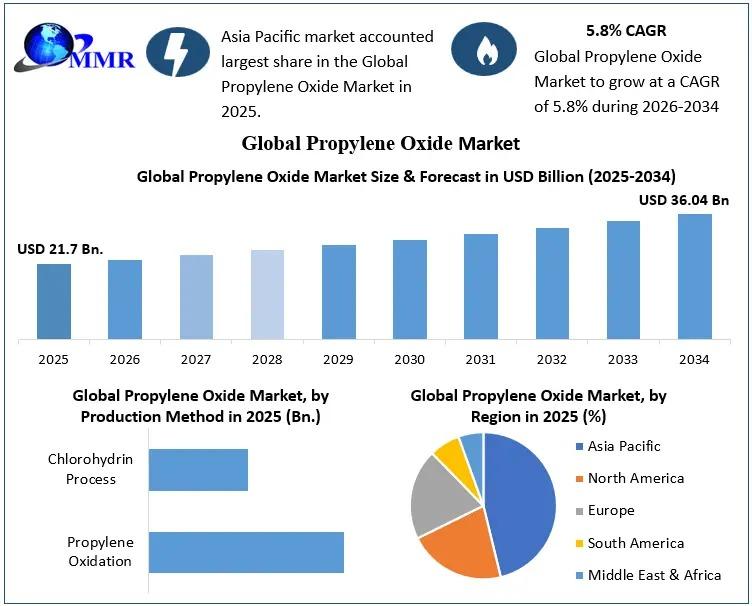
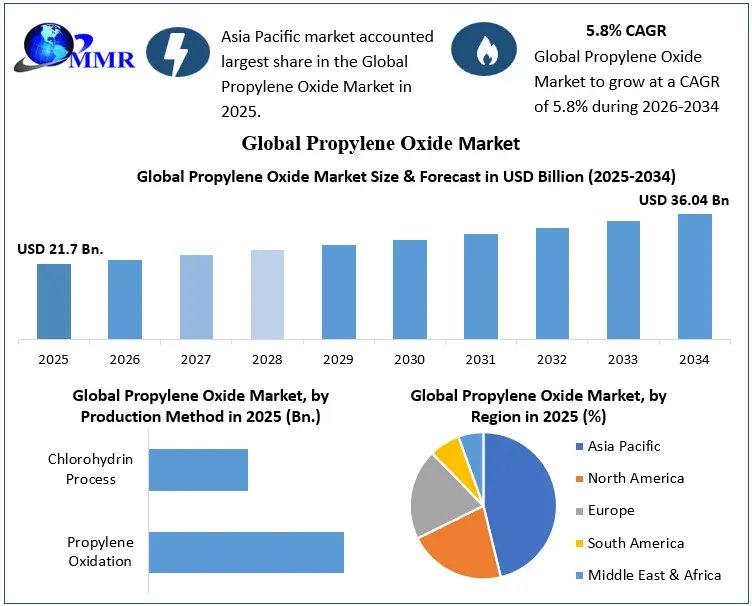
    The Propylene Oxide Market was valued at USD 21.7 billion in 2025 and is projected to reach USD 36.04 billion by 2034, registering a compound annual growth rate (CAGR) of 5.8% during the forecast period from 2026 to 2034. Increasing demand for polyurethane foams, expanding automotive production, infrastructure development, and the growing use of propylene oxide derivatives across industrial applications are supporting market expansion. Manufacturers are also focusing on production efficiency, supply chain optimization, and advanced chemical processing technologies to strengthen their competitive positions.

    Market Estimation, Growth Drivers, and Opportunities

    Propylene oxide is an important chemical intermediate used to manufacture polyether polyols, propylene glycol, glycol ethers, and specialty surfactants. These derivatives serve multiple industries, including automotive, construction, packaging, furniture and bedding, electronics, pharmaceuticals, and personal care.

    The market's growth is primarily driven by rising demand for polyurethane materials. Polyether polyols, produced using propylene oxide, are essential ingredients in flexible and rigid polyurethane foams used in mattresses, furniture, automotive seating, building insulation, and refrigeration systems. Increasing construction activity and demand for energy-efficient buildings are creating additional opportunities for polyurethane-based insulation materials.

    The expansion of electric vehicle manufacturing also supports market development. Polyurethane materials are used in vehicle interiors, cushioning, adhesives, coatings, and selected battery-related applications. Furthermore, propylene glycol is widely used in pharmaceutical formulations, cosmetics, food processing, and industrial fluids, creating opportunities across diverse downstream markets.

    Get a Sample Insight Report Now : https://www.maximizemarketresearch.com/request-sample/2515/

    United States Market Trends and Investment Outlook

    The United States remains an important market because of its established petrochemical infrastructure, integrated feedstock supply chains, and demand from automotive, construction, and industrial manufacturing sectors. In March 2025, LyondellBasell announced an investment to expand propylene production capacity at its Channelview Complex near Houston.
    Propylene Oxide Market Demand, Growth Drivers, and Future Outlook Report by MMR Propylene Oxide Market to Reach USD 36.04 Billion by 2034, Driven by Polyurethane Demand and Industrial Applications Market Overview The Propylene Oxide Market was valued at USD 21.7 billion in 2025 and is projected to reach USD 36.04 billion by 2034, registering a compound annual growth rate (CAGR) of 5.8% during the forecast period from 2026 to 2034. Increasing demand for polyurethane foams, expanding automotive production, infrastructure development, and the growing use of propylene oxide derivatives across industrial applications are supporting market expansion. Manufacturers are also focusing on production efficiency, supply chain optimization, and advanced chemical processing technologies to strengthen their competitive positions. Market Estimation, Growth Drivers, and Opportunities Propylene oxide is an important chemical intermediate used to manufacture polyether polyols, propylene glycol, glycol ethers, and specialty surfactants. These derivatives serve multiple industries, including automotive, construction, packaging, furniture and bedding, electronics, pharmaceuticals, and personal care. The market's growth is primarily driven by rising demand for polyurethane materials. Polyether polyols, produced using propylene oxide, are essential ingredients in flexible and rigid polyurethane foams used in mattresses, furniture, automotive seating, building insulation, and refrigeration systems. Increasing construction activity and demand for energy-efficient buildings are creating additional opportunities for polyurethane-based insulation materials. The expansion of electric vehicle manufacturing also supports market development. Polyurethane materials are used in vehicle interiors, cushioning, adhesives, coatings, and selected battery-related applications. Furthermore, propylene glycol is widely used in pharmaceutical formulations, cosmetics, food processing, and industrial fluids, creating opportunities across diverse downstream markets. Get a Sample Insight Report Now : https://www.maximizemarketresearch.com/request-sample/2515/ United States Market Trends and Investment Outlook The United States remains an important market because of its established petrochemical infrastructure, integrated feedstock supply chains, and demand from automotive, construction, and industrial manufacturing sectors. In March 2025, LyondellBasell announced an investment to expand propylene production capacity at its Channelview Complex near Houston.
    0 Comments ·0 Shares ·444 Views
  • Stellar Market Research, a premier market intelligence and business consulting firm, has released an in-depth strategic analysis report on the Nutricosmetics Market. The comprehensive study evaluates current dynamics, shifts in consumer behavior, and technological catalysts transforming the global landscape. According to the report, the market was valued at USD 7.69 billion in 2025 and is projected to scale to USD 15.34 billion by 2034, registering a robust compound annual growth rate (CAGR) of approximately 7.9% to 8.31% over the forecast period.

    The convergence of personal care, dermatology, and nutraceutical science has catalyzed a paradigm shift in how consumers approach anti-aging and daily beauty regimens. Moving beyond topical cosmetics, the global market is experiencing unprecedented demand for ingestible solutions that target skin elasticity, hair vitality, and nail strength at a cellular level. This structural transformation is heavily propelled by heightened consumer literacy regarding holistic wellness, preventative health, and the limitations of surface-level cosmetic treatments.

    Key Findings from the Report

    Market Valuation & Growth Trajectory: The global nutricosmetics market, valued at USD 7.69 billion in 2025, is on a high-growth trajectory, poised to reach USD 15.34 billion by 2034, expanding at a steady CAGR of ~7.9% to 8.31%.

    Dominant Product & Segment Share: Dietary supplements (capsules, tablets, and powders) lead product-type demand, capturing over 60% of the market share due to consumer familiarity, ease of precise dosing, and seamless integration into daily wellness routines.

    Application Insights: Skin care applications hold the largest revenue share, driven by surging consumer preference for anti-aging, hydration, and UV-protection ingestibles, while hair care emerges as the fastest-growing application category.

    Ingredient Leadership: Collagen peptides dominate the active ingredient base, capturing a dominant share supported by strong consumer awareness surrounding skin matrix support and joint-beauty synergies.

    Leading Geographic Hub: North America commands the largest regional revenue share, anchored by advanced retail channels, high disposable incomes, and robust regulatory oversight by the FDA that bolsters consumer confidence.

    Fastest-Growing Region: Asia-Pacific is projected to record the highest regional CAGR through the forecast period, powered by deeply entrenched cultural traditions of functional foods and preventive health in Japan and South Korea.

    Distribution Channel Evolution: Online retail channels represent the primary sales avenue, fueled by direct-to-consumer (D2C) subscription models, digital beauty education, and targeted social media marketing.

    For further information, click the following link: https://www.stellarmr.com/report/req_sample/Nutricosmetics-Market/2625
    Market Drivers and Restraints
    Drivers
    Rising Consumer Preference for Preventive Health & Wellness: A cultural shift toward proactive self-care has accelerated consumer willingness to invest in ingestible beauty products that promise long-term systemic benefits over quick fixes.

    Advancements in Bioactive Extraction & Delivery Systems: Innovations in bioavailability—such as advanced hydrolyzed peptides, liposomal delivery, and biomimetic ingredients—are substantially enhancing product efficacy and consumer results.

    Proliferation of D2C Subscription Models & Digital Personalization: E-commerce platforms and AI-driven skin diagnostic tools allow brands to offer tailored supplement regimens, successfully lowering adoption friction and driving repeat purchases.

    Restraints
    Strict and Fragmented Regulatory Frameworks: Navigating cross-border compliance regarding health claims, ingredient approvals (such as novel foods in Europe), and substantiating beauty-from-within claims presents a significant hurdle for market entrants.

    High Price Points for Premium Formulations: Premium clinical ingredients and specialized manufacturing processes often result in elevated retail price points, limiting market penetration among price-sensitive consumer segments.

    Technology, Regulation, and Sustainability Trends
    The nutricosmetics sector is undergoing a profound operational transformation driven by technology and sustainability. Artificial intelligence and mobile diagnostic apps are increasingly utilized to analyze individual skin metrics and deliver customized supplement formulations. Concurrently, regulatory bodies are enforcing stricter documentation standards for substantiating skin and hair health claims, compelling brands to invest heavily in clinical trials.

    On the environmental front, sustainability (ESG) has become a core competitive differentiator. Manufacturers are rapidly transitioning to eco-friendly packaging—such as paper-based canisters and biodegradable pouches—and adopting traceable, ethically sourced marine and plant-derived ingredients to satisfy eco-conscious consumers.

    Regional Insights
    North America: Maintaining a dominant regional market share, North America benefits from robust venture capital activity, widespread adoption of personalized nutrition, and mainstream retail expansion into metabolic and inner-beauty aisles.

    Asia-Pacific: Poised for the fastest regional growth, Asia-Pacific thrives on mature consumer habits in Japan and South Korea, where fermented botanicals, collagen drinks, and functional foods are deeply woven into daily lifestyle and heritage routines.

    Europe: Driven by stringent European Food Safety Authority (EFSA) standards, Europe prioritizes clean-label transparency, rigorous product safety, and aggressive corporate sustainability mandates.

    Recent Industry Developments
    L'Oréal (2026): Entered the nutricosmetics space with the launch of Vichy Laboratories Liftactiv Collagen Supplements, designed to support cellular health and natural collagen synthesis for both men and women.

    Solabia Group (2026): Completed the strategic acquisition of Mibelle Biochemistry in July 2026, expanding its biotech-oriented active ingredient portfolio and accelerating formulation capabilities for global beauty brands.

    TOSLA & Geltor (2026): Partnered to launch the Signaling Collagen liquid shot, a vegan-certified ingestible featuring biomimetic type 21 signaling collagen polypeptides to improve skin architecture.

    Nutrafol (2026): Expanded its life-stage product portfolio with the launch of the Men 50+ Hair Growth Nutraceutical, addressing targeted hair-thinning pathways in aging demographics.

    Amway / Nutrilite (2026): Won the Cellular Longevity from Within category at INNOCOS for its CelAct Cellular Aging Support formulation, highlighting the industry's pivot toward cellular health innovations.

    Competitive Landscape
    The global nutricosmetics market features a dynamic mix of established multinational health-science conglomerates, specialized beauty giants, and agile direct-to-consumer disruptors. Leading players are focusing on strategic mergers, biotech acquisitions, and clean-label product extensions to capture market share. Key market participants include Nestlé Health Science, Shiseido Company, L'Oréal, Amway (Nutrilite), Solabia Group (Mibelle Biochemistry), Nutrafol, and Ritual, among others. Competitive advantage increasingly relies on clinical validation, transparent sourcing, and personalized digital subscription ecosystems.

    Analyst Commentary
    "The nutricosmetics sector is no longer viewed as an experimental crossover between food and cosmetics; it has matured into a science-driven category defined by clinical validation and cellular health," said a Senior Research Analyst at Stellar Market Research. "As consumers increasingly look inward to manage long-term skin vitality and healthy aging, brands that successfully combine bioavailable active ingredients with transparent, sustainable supply chains will command the next wave of market leadership."

    Future Outlook
    Through the forecast period, the nutricosmetics market is anticipated to experience accelerated mainstream adoption. Growth will be heavily underpins by continuous technological innovations in biotechnology, precision nutrition, and multi-functional format diversification (such as functional gummies, liquid ampoules, and daily convenience sachets). Regulatory compliance will tighten, filtering out unsubstantiated claims and favoring science-led market leaders. Strategic cross-sector collaborations between pharmaceutical labs, cosmetic powerhouses, and biotech innovators will further redefine the boundaries of modern beauty and wellness.

    For further information, click the following link: https://www.stellarmr.com/report/req_sample/Nutricosmetics-Market/2625
    About Stellar Market Research
    Stellar Market Research is a multifaceted market research and consulting company with professionals from several industries. Some of the industries we cover include medical devices, pharmaceutical manufacturers, science and engineering, electronic components, industrial equipment, technology and communication, cars and automobiles, chemical products and substances, general merchandise, beverages, personal care, and automated systems. To mention a few, we provide market-verified industry estimations, technical trend analysis, crucial market research, strategic advice, competition analysis, production and demand analysis, and client impact studies.

    Address
    Phase 3, Navale IT Zone, S.No. 51/2A/2, Office No. 202, 2nd floor, Near, Navale Brg, Narhe, Pune, Maharashtra 411041

    Email
    [email protected]

    Mobile
    +91 9607365656

    Stellar Market Research, a premier market intelligence and business consulting firm, has released an in-depth strategic analysis report on the Nutricosmetics Market. The comprehensive study evaluates current dynamics, shifts in consumer behavior, and technological catalysts transforming the global landscape. According to the report, the market was valued at USD 7.69 billion in 2025 and is projected to scale to USD 15.34 billion by 2034, registering a robust compound annual growth rate (CAGR) of approximately 7.9% to 8.31% over the forecast period. The convergence of personal care, dermatology, and nutraceutical science has catalyzed a paradigm shift in how consumers approach anti-aging and daily beauty regimens. Moving beyond topical cosmetics, the global market is experiencing unprecedented demand for ingestible solutions that target skin elasticity, hair vitality, and nail strength at a cellular level. This structural transformation is heavily propelled by heightened consumer literacy regarding holistic wellness, preventative health, and the limitations of surface-level cosmetic treatments. Key Findings from the Report Market Valuation & Growth Trajectory: The global nutricosmetics market, valued at USD 7.69 billion in 2025, is on a high-growth trajectory, poised to reach USD 15.34 billion by 2034, expanding at a steady CAGR of ~7.9% to 8.31%. Dominant Product & Segment Share: Dietary supplements (capsules, tablets, and powders) lead product-type demand, capturing over 60% of the market share due to consumer familiarity, ease of precise dosing, and seamless integration into daily wellness routines. Application Insights: Skin care applications hold the largest revenue share, driven by surging consumer preference for anti-aging, hydration, and UV-protection ingestibles, while hair care emerges as the fastest-growing application category. Ingredient Leadership: Collagen peptides dominate the active ingredient base, capturing a dominant share supported by strong consumer awareness surrounding skin matrix support and joint-beauty synergies. Leading Geographic Hub: North America commands the largest regional revenue share, anchored by advanced retail channels, high disposable incomes, and robust regulatory oversight by the FDA that bolsters consumer confidence. Fastest-Growing Region: Asia-Pacific is projected to record the highest regional CAGR through the forecast period, powered by deeply entrenched cultural traditions of functional foods and preventive health in Japan and South Korea. Distribution Channel Evolution: Online retail channels represent the primary sales avenue, fueled by direct-to-consumer (D2C) subscription models, digital beauty education, and targeted social media marketing. For further information, click the following link: https://www.stellarmr.com/report/req_sample/Nutricosmetics-Market/2625 Market Drivers and Restraints Drivers Rising Consumer Preference for Preventive Health & Wellness: A cultural shift toward proactive self-care has accelerated consumer willingness to invest in ingestible beauty products that promise long-term systemic benefits over quick fixes. Advancements in Bioactive Extraction & Delivery Systems: Innovations in bioavailability—such as advanced hydrolyzed peptides, liposomal delivery, and biomimetic ingredients—are substantially enhancing product efficacy and consumer results. Proliferation of D2C Subscription Models & Digital Personalization: E-commerce platforms and AI-driven skin diagnostic tools allow brands to offer tailored supplement regimens, successfully lowering adoption friction and driving repeat purchases. Restraints Strict and Fragmented Regulatory Frameworks: Navigating cross-border compliance regarding health claims, ingredient approvals (such as novel foods in Europe), and substantiating beauty-from-within claims presents a significant hurdle for market entrants. High Price Points for Premium Formulations: Premium clinical ingredients and specialized manufacturing processes often result in elevated retail price points, limiting market penetration among price-sensitive consumer segments. Technology, Regulation, and Sustainability Trends The nutricosmetics sector is undergoing a profound operational transformation driven by technology and sustainability. Artificial intelligence and mobile diagnostic apps are increasingly utilized to analyze individual skin metrics and deliver customized supplement formulations. Concurrently, regulatory bodies are enforcing stricter documentation standards for substantiating skin and hair health claims, compelling brands to invest heavily in clinical trials. On the environmental front, sustainability (ESG) has become a core competitive differentiator. Manufacturers are rapidly transitioning to eco-friendly packaging—such as paper-based canisters and biodegradable pouches—and adopting traceable, ethically sourced marine and plant-derived ingredients to satisfy eco-conscious consumers. Regional Insights North America: Maintaining a dominant regional market share, North America benefits from robust venture capital activity, widespread adoption of personalized nutrition, and mainstream retail expansion into metabolic and inner-beauty aisles. Asia-Pacific: Poised for the fastest regional growth, Asia-Pacific thrives on mature consumer habits in Japan and South Korea, where fermented botanicals, collagen drinks, and functional foods are deeply woven into daily lifestyle and heritage routines. Europe: Driven by stringent European Food Safety Authority (EFSA) standards, Europe prioritizes clean-label transparency, rigorous product safety, and aggressive corporate sustainability mandates. Recent Industry Developments L'Oréal (2026): Entered the nutricosmetics space with the launch of Vichy Laboratories Liftactiv Collagen Supplements, designed to support cellular health and natural collagen synthesis for both men and women. Solabia Group (2026): Completed the strategic acquisition of Mibelle Biochemistry in July 2026, expanding its biotech-oriented active ingredient portfolio and accelerating formulation capabilities for global beauty brands. TOSLA & Geltor (2026): Partnered to launch the Signaling Collagen liquid shot, a vegan-certified ingestible featuring biomimetic type 21 signaling collagen polypeptides to improve skin architecture. Nutrafol (2026): Expanded its life-stage product portfolio with the launch of the Men 50+ Hair Growth Nutraceutical, addressing targeted hair-thinning pathways in aging demographics. Amway / Nutrilite (2026): Won the Cellular Longevity from Within category at INNOCOS for its CelAct Cellular Aging Support formulation, highlighting the industry's pivot toward cellular health innovations. Competitive Landscape The global nutricosmetics market features a dynamic mix of established multinational health-science conglomerates, specialized beauty giants, and agile direct-to-consumer disruptors. Leading players are focusing on strategic mergers, biotech acquisitions, and clean-label product extensions to capture market share. Key market participants include Nestlé Health Science, Shiseido Company, L'Oréal, Amway (Nutrilite), Solabia Group (Mibelle Biochemistry), Nutrafol, and Ritual, among others. Competitive advantage increasingly relies on clinical validation, transparent sourcing, and personalized digital subscription ecosystems. Analyst Commentary "The nutricosmetics sector is no longer viewed as an experimental crossover between food and cosmetics; it has matured into a science-driven category defined by clinical validation and cellular health," said a Senior Research Analyst at Stellar Market Research. "As consumers increasingly look inward to manage long-term skin vitality and healthy aging, brands that successfully combine bioavailable active ingredients with transparent, sustainable supply chains will command the next wave of market leadership." Future Outlook Through the forecast period, the nutricosmetics market is anticipated to experience accelerated mainstream adoption. Growth will be heavily underpins by continuous technological innovations in biotechnology, precision nutrition, and multi-functional format diversification (such as functional gummies, liquid ampoules, and daily convenience sachets). Regulatory compliance will tighten, filtering out unsubstantiated claims and favoring science-led market leaders. Strategic cross-sector collaborations between pharmaceutical labs, cosmetic powerhouses, and biotech innovators will further redefine the boundaries of modern beauty and wellness. For further information, click the following link: https://www.stellarmr.com/report/req_sample/Nutricosmetics-Market/2625 About Stellar Market Research Stellar Market Research is a multifaceted market research and consulting company with professionals from several industries. Some of the industries we cover include medical devices, pharmaceutical manufacturers, science and engineering, electronic components, industrial equipment, technology and communication, cars and automobiles, chemical products and substances, general merchandise, beverages, personal care, and automated systems. To mention a few, we provide market-verified industry estimations, technical trend analysis, crucial market research, strategic advice, competition analysis, production and demand analysis, and client impact studies. Address Phase 3, Navale IT Zone, S.No. 51/2A/2, Office No. 202, 2nd floor, Near, Navale Brg, Narhe, Pune, Maharashtra 411041 Email [email protected] Mobile +91 9607365656

    0 Comments ·0 Shares ·257 Views
  • Luxury Goods Market Expansion Fueled by North American Spending

    Market Estimation & Definition

    The global Luxury Goods Market is experiencing continued expansion as affluent consumers, high-net-worth individuals, and younger premium buyers increase spending on fashion, jewellery, watches, beauty products, and other high-value goods. According to Stellar Market Research, the market was valued at USD 503.26 billion in 2025 and is projected to reach USD 698.75 billion by 2032, registering a CAGR of 4.8% during 2026–2032. The report uses 2025 as the base year, with historical data covering 2020–2025.

    Luxury goods encompass premium products distinguished by brand reputation, craftsmanship, exclusivity, design, heritage, and perceived value. The market includes categories ranging from apparel and handbags to watches, jewellery, perfumes, cosmetics, and footwear. Luxury consumption is increasingly influenced by personalized experiences, brand storytelling, digital engagement, and direct-to-consumer retail strategies.

    Download Free PDF Brochure: https://www.stellarmr.com/report/req_sample/Luxury-Goods-Market/1369

    Market Growth Drivers & Opportunity

    Rising global wealth and the expanding population of high-net-worth individuals remain important growth drivers. Stellar Market Research notes that affluent consumers contributed more than 40% of total luxury goods demand in 2025. Increasing disposable incomes in emerging economies are also bringing new consumers into premium product categories.

    Digital transformation is creating another significant opportunity. Luxury brands are strengthening e-commerce platforms, omnichannel retail, virtual experiences, and mobile-first customer engagement. These channels allow brands to reach consumers beyond traditional physical boutiques while maintaining personalized communication and premium positioning.

    Asia Pacific represents a major opportunity because of rising incomes, urbanization, expanding high-net-worth populations, and increasing premium-brand adoption in China and India. The region accounted for around 38–40% of global luxury consumption in 2025 according to different sections of the Stellar report, highlighting its strategic importance to the industry's future growth.

    What Lies Ahead: Emerging Trends Shaping the Future

    The next phase of luxury consumption is expected to be shaped by digital retail, personalization, responsible sourcing, experiential consumption, and younger consumers. Millennials and Gen Z are increasingly influencing purchasing behavior through their preference for authentic brand stories, digital interaction, personalized experiences, and sustainability. Stellar estimates that younger consumers could account for more than 55% of total luxury consumption by 2030.

    Sustainability is also becoming more relevant as consumers seek greater transparency around sourcing, manufacturing, and environmental practices. Luxury companies are responding through responsible sourcing initiatives, sustainability programs, and greater emphasis on product traceability.

    At the same time, economic volatility, inflation, currency fluctuations, counterfeiting, and grey-market activity remain challenges for the industry. These factors can influence discretionary spending and potentially affect brand exclusivity and pricing power.

    Get More Report Details: https://www.stellarmr.com/report/Luxury-Goods-Market/1369

    Segmentation Analysis

    According to Stellar Market Research, the Luxury Goods Market is segmented by Product Type, Distribution Channel, and End User. By Product Type, the categories are Apparel, Watches, Jewellery, Handbags, Perfumes & Cosmetics, Footwear, and Others. Apparel held the largest share, exceeding 28% in 2025, supported by designer clothing demand, brand penetration in emerging markets, and purchases by high-net-worth consumers. Jewellery contributed 20%, while Watches accounted for 18% and Handbags represented 15%.

    By Distribution Channel, the market is divided into Offline and Online. Digital purchasing and omnichannel strategies are increasing the importance of online channels, while physical stores continue to provide personalized and experiential luxury shopping environments.

    By End User, the report covers Women and Men, reflecting the broadening consumer base for premium fashion, accessories, beauty products, watches, and jewellery.

    Country-Level Analysis: USA and Germany

    The United States is included within the North American regional scope alongside Canada and Mexico. The market benefits from established luxury consumption, affluent consumers, premium retail infrastructure, and strong digital commerce adoption. The United States is also represented in the competitive landscape through Tiffany & Co. and Michael Kors.

    Germany is covered within the European regional market, alongside countries including the UK, France, Italy, Spain, Sweden, and Russia. Germany also has representation among the identified industry players through Montblanc, which operates under Richemont. The country's established premium-goods ecosystem contributes to the wider European luxury market.

    Competitive Analysis

    The competitive landscape includes major global luxury groups and specialized premium brands. Key companies identified by Stellar Market Research include LVMH, Kering, Hermès International, Richemont, Chanel, Prada, Burberry, Rolex, Cartier, Dior, Gucci, Saint Laurent, Bottega Veneta, Balenciaga, Fendi, Bulgari, Tiffany & Co., Givenchy, Celine, Loewe, Montblanc, Valentino, Versace, and Michael Kors.

    Competition is increasingly shaped by brand heritage, product innovation, controlled distribution, digital engagement, sustainability initiatives, and personalized customer experiences. Major luxury groups are also using multi-brand portfolios and direct-to-consumer strategies to strengthen their global market presence.

    Download Free PDF Brochure: https://www.stellarmr.com/report/req_sample/Luxury-Goods-Market/1369

    Press Release Conclusion

    The global Luxury Goods Market is positioned for sustained expansion as high-net-worth populations increase, digital luxury channels mature, and consumers place greater emphasis on premium products and experiences. With the market projected to grow from USD 503.26 billion in 2025 to USD 698.75 billion by 2032, opportunities are emerging across fashion, watches, jewellery, handbags, cosmetics, footwear, and digital luxury retail. Asia Pacific remains a key growth region, while North America and Europe continue to provide established luxury-consumption markets. Personalization, responsible luxury, omnichannel retail, and engagement with younger consumers are expected to remain central to the industry's development through 2032.

    About Stellar Market Research:

    Stellar Market Research is a multifaceted market research and consulting company with professionals from several industries. Some of the industries we cover include medical devices, pharmaceutical manufacturers, science and engineering, electronic components, industrial equipment, technology and communication, cars and automobiles, chemical products and substances, general merchandise, beverages, personal care, and automated systems. To mention a few, we provide market-verified industry estimations, technical trend analysis, crucial market research, strategic advice, competition analysis, production and demand analysis, and client impact studies.

    Contact Stellar Market Research:

    3rd Floor, Navale IT Park, Phase 2

    Pune Banglore Highway, Narhe,

    Pune, Maharashtra 411041, India

    [email protected]

    +91 20 6630 3320 | +91 9607365656
    Luxury Goods Market Expansion Fueled by North American Spending Market Estimation & Definition The global Luxury Goods Market is experiencing continued expansion as affluent consumers, high-net-worth individuals, and younger premium buyers increase spending on fashion, jewellery, watches, beauty products, and other high-value goods. According to Stellar Market Research, the market was valued at USD 503.26 billion in 2025 and is projected to reach USD 698.75 billion by 2032, registering a CAGR of 4.8% during 2026–2032. The report uses 2025 as the base year, with historical data covering 2020–2025. Luxury goods encompass premium products distinguished by brand reputation, craftsmanship, exclusivity, design, heritage, and perceived value. The market includes categories ranging from apparel and handbags to watches, jewellery, perfumes, cosmetics, and footwear. Luxury consumption is increasingly influenced by personalized experiences, brand storytelling, digital engagement, and direct-to-consumer retail strategies. Download Free PDF Brochure: https://www.stellarmr.com/report/req_sample/Luxury-Goods-Market/1369 Market Growth Drivers & Opportunity Rising global wealth and the expanding population of high-net-worth individuals remain important growth drivers. Stellar Market Research notes that affluent consumers contributed more than 40% of total luxury goods demand in 2025. Increasing disposable incomes in emerging economies are also bringing new consumers into premium product categories. Digital transformation is creating another significant opportunity. Luxury brands are strengthening e-commerce platforms, omnichannel retail, virtual experiences, and mobile-first customer engagement. These channels allow brands to reach consumers beyond traditional physical boutiques while maintaining personalized communication and premium positioning. Asia Pacific represents a major opportunity because of rising incomes, urbanization, expanding high-net-worth populations, and increasing premium-brand adoption in China and India. The region accounted for around 38–40% of global luxury consumption in 2025 according to different sections of the Stellar report, highlighting its strategic importance to the industry's future growth. What Lies Ahead: Emerging Trends Shaping the Future The next phase of luxury consumption is expected to be shaped by digital retail, personalization, responsible sourcing, experiential consumption, and younger consumers. Millennials and Gen Z are increasingly influencing purchasing behavior through their preference for authentic brand stories, digital interaction, personalized experiences, and sustainability. Stellar estimates that younger consumers could account for more than 55% of total luxury consumption by 2030. Sustainability is also becoming more relevant as consumers seek greater transparency around sourcing, manufacturing, and environmental practices. Luxury companies are responding through responsible sourcing initiatives, sustainability programs, and greater emphasis on product traceability. At the same time, economic volatility, inflation, currency fluctuations, counterfeiting, and grey-market activity remain challenges for the industry. These factors can influence discretionary spending and potentially affect brand exclusivity and pricing power. Get More Report Details: https://www.stellarmr.com/report/Luxury-Goods-Market/1369 Segmentation Analysis According to Stellar Market Research, the Luxury Goods Market is segmented by Product Type, Distribution Channel, and End User. By Product Type, the categories are Apparel, Watches, Jewellery, Handbags, Perfumes & Cosmetics, Footwear, and Others. Apparel held the largest share, exceeding 28% in 2025, supported by designer clothing demand, brand penetration in emerging markets, and purchases by high-net-worth consumers. Jewellery contributed 20%, while Watches accounted for 18% and Handbags represented 15%. By Distribution Channel, the market is divided into Offline and Online. Digital purchasing and omnichannel strategies are increasing the importance of online channels, while physical stores continue to provide personalized and experiential luxury shopping environments. By End User, the report covers Women and Men, reflecting the broadening consumer base for premium fashion, accessories, beauty products, watches, and jewellery. Country-Level Analysis: USA and Germany The United States is included within the North American regional scope alongside Canada and Mexico. The market benefits from established luxury consumption, affluent consumers, premium retail infrastructure, and strong digital commerce adoption. The United States is also represented in the competitive landscape through Tiffany & Co. and Michael Kors. Germany is covered within the European regional market, alongside countries including the UK, France, Italy, Spain, Sweden, and Russia. Germany also has representation among the identified industry players through Montblanc, which operates under Richemont. The country's established premium-goods ecosystem contributes to the wider European luxury market. Competitive Analysis The competitive landscape includes major global luxury groups and specialized premium brands. Key companies identified by Stellar Market Research include LVMH, Kering, Hermès International, Richemont, Chanel, Prada, Burberry, Rolex, Cartier, Dior, Gucci, Saint Laurent, Bottega Veneta, Balenciaga, Fendi, Bulgari, Tiffany & Co., Givenchy, Celine, Loewe, Montblanc, Valentino, Versace, and Michael Kors. Competition is increasingly shaped by brand heritage, product innovation, controlled distribution, digital engagement, sustainability initiatives, and personalized customer experiences. Major luxury groups are also using multi-brand portfolios and direct-to-consumer strategies to strengthen their global market presence. Download Free PDF Brochure: https://www.stellarmr.com/report/req_sample/Luxury-Goods-Market/1369 Press Release Conclusion The global Luxury Goods Market is positioned for sustained expansion as high-net-worth populations increase, digital luxury channels mature, and consumers place greater emphasis on premium products and experiences. With the market projected to grow from USD 503.26 billion in 2025 to USD 698.75 billion by 2032, opportunities are emerging across fashion, watches, jewellery, handbags, cosmetics, footwear, and digital luxury retail. Asia Pacific remains a key growth region, while North America and Europe continue to provide established luxury-consumption markets. Personalization, responsible luxury, omnichannel retail, and engagement with younger consumers are expected to remain central to the industry's development through 2032. About Stellar Market Research: Stellar Market Research is a multifaceted market research and consulting company with professionals from several industries. Some of the industries we cover include medical devices, pharmaceutical manufacturers, science and engineering, electronic components, industrial equipment, technology and communication, cars and automobiles, chemical products and substances, general merchandise, beverages, personal care, and automated systems. To mention a few, we provide market-verified industry estimations, technical trend analysis, crucial market research, strategic advice, competition analysis, production and demand analysis, and client impact studies. Contact Stellar Market Research: 3rd Floor, Navale IT Park, Phase 2 Pune Banglore Highway, Narhe, Pune, Maharashtra 411041, India [email protected] +91 20 6630 3320 | +91 9607365656
    0 Comments ·0 Shares ·474 Views
  • Specialty Surfactants Market Demand and Projected Industry Growth

    Specialty Surfactants Market to Reach USD 38.88 Billion by 2034, Driven by Sustainable Formulations and High-Performance Applications

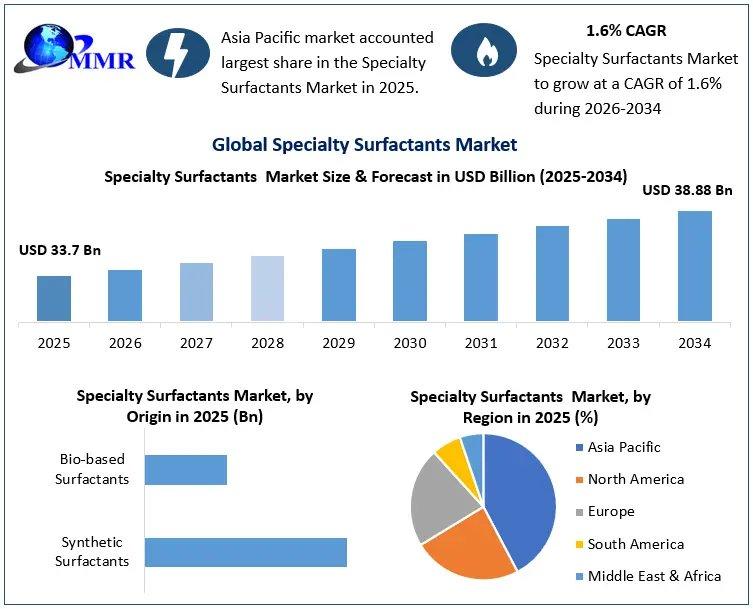
    The Specialty Surfactants Market is entering a period of steady transformation as manufacturers, formulators, and end-use industries increasingly seek high-performance ingredients that combine functionality, safety, and sustainability. According to Maximize Market Research, the market was valued at USD 33.7 billion in 2025 and is projected to reach USD 38.88 billion by 2034, expanding at a CAGR of 1.6% during 2026–2034.

    Market Estimation, Growth Drivers and Opportunities

    Specialty surfactants are surface-active chemicals designed to provide targeted properties such as emulsification, wetting, foaming, dispersion, solubilization, and cleaning. Their use across household detergents, personal care, industrial cleaning, agriculture, oilfield chemicals, textiles, lubricants, and other specialty applications continues to support market demand.

    One of the strongest growth drivers is the increasing consumption of personal care and home-care products. Premium skincare, shampoos, body washes, cosmetics, detergents, dishwashing liquids, and surface cleaners require surfactants with controlled performance and formulation compatibility. Industrialization and increasing hygiene awareness are also supporting demand for specialty cleaning formulations.

    Sustainability is creating another major opportunity. Manufacturers are investing in bio-based, biodegradable, low-toxicity, sugar-based, amino-acid-based, and biosurfactant technologies to address environmental concerns and changing customer expectations. At the same time, application-specific formulations are creating opportunities for suppliers to differentiate products through improved performance rather than competing only on price.

    However, raw-material price volatility, regulatory compliance costs, formulation complexity, and competition from conventional surfactants remain important challenges. Companies capable of combining performance, sustainability, cost efficiency, and reliable supply are positioned to capture emerging opportunities.

    Get Your Free Sample Report Link : https://www.maximizemarketresearch.com/request-sample/80533/

    U.S. Market Trends and Investment Outlook

    The United States remains an important specialty surfactants market because of its established personal care, household cleaning, industrial, pharmaceutical, agricultural, and specialty chemical industries. During 2025, sustainability and domestic production capacity became particularly important themes. BASF expanded its North American EcoBalanced Care Chemicals portfolio, including biomass-balance-certified betaine products, while six U.S. Care Chemicals production sites were powered with renewable electricity.

    Investment in domestic specialty surfactant capacity also accelerated. Stepan Company announced a 25% increase in Alpha Olefin Sulfonates (AOS) production capacity through investments and process improvements across facilities in Illinois, California, and Georgia. BASF also announced an additional APG production line in Cincinnati scheduled for start-up in 2026. These developments demonstrate the industry's movement toward higher-capacity, sustainable, and supply-chain-resilient specialty surfactant manufacturing in the U.S.

    Specialty Surfactants Market Demand and Projected Industry Growth Specialty Surfactants Market to Reach USD 38.88 Billion by 2034, Driven by Sustainable Formulations and High-Performance Applications The Specialty Surfactants Market is entering a period of steady transformation as manufacturers, formulators, and end-use industries increasingly seek high-performance ingredients that combine functionality, safety, and sustainability. According to Maximize Market Research, the market was valued at USD 33.7 billion in 2025 and is projected to reach USD 38.88 billion by 2034, expanding at a CAGR of 1.6% during 2026–2034. Market Estimation, Growth Drivers and Opportunities Specialty surfactants are surface-active chemicals designed to provide targeted properties such as emulsification, wetting, foaming, dispersion, solubilization, and cleaning. Their use across household detergents, personal care, industrial cleaning, agriculture, oilfield chemicals, textiles, lubricants, and other specialty applications continues to support market demand. One of the strongest growth drivers is the increasing consumption of personal care and home-care products. Premium skincare, shampoos, body washes, cosmetics, detergents, dishwashing liquids, and surface cleaners require surfactants with controlled performance and formulation compatibility. Industrialization and increasing hygiene awareness are also supporting demand for specialty cleaning formulations. Sustainability is creating another major opportunity. Manufacturers are investing in bio-based, biodegradable, low-toxicity, sugar-based, amino-acid-based, and biosurfactant technologies to address environmental concerns and changing customer expectations. At the same time, application-specific formulations are creating opportunities for suppliers to differentiate products through improved performance rather than competing only on price. However, raw-material price volatility, regulatory compliance costs, formulation complexity, and competition from conventional surfactants remain important challenges. Companies capable of combining performance, sustainability, cost efficiency, and reliable supply are positioned to capture emerging opportunities. Get Your Free Sample Report Link : https://www.maximizemarketresearch.com/request-sample/80533/ U.S. Market Trends and Investment Outlook The United States remains an important specialty surfactants market because of its established personal care, household cleaning, industrial, pharmaceutical, agricultural, and specialty chemical industries. During 2025, sustainability and domestic production capacity became particularly important themes. BASF expanded its North American EcoBalanced Care Chemicals portfolio, including biomass-balance-certified betaine products, while six U.S. Care Chemicals production sites were powered with renewable electricity. Investment in domestic specialty surfactant capacity also accelerated. Stepan Company announced a 25% increase in Alpha Olefin Sulfonates (AOS) production capacity through investments and process improvements across facilities in Illinois, California, and Georgia. BASF also announced an additional APG production line in Cincinnati scheduled for start-up in 2026. These developments demonstrate the industry's movement toward higher-capacity, sustainable, and supply-chain-resilient specialty surfactant manufacturing in the U.S.
    0 Comments ·0 Shares ·278 Views
  • Propylene Oxide Market Size, Share, Growth Drivers, and Future Growth

    Global Propylene Oxide Market to Reach USD 36.04 Billion by 2034, Driven by Polyurethane, EV and Sustainable Production Demand

    The Propylene Oxide Market was valued at USD 21.7 billion in 2025 and is projected to reach USD 36.04 billion by 2034, expanding at a CAGR of 5.8% during 2026–2034. Propylene oxide is a critical chemical intermediate used to manufacture polyether polyols, propylene glycol, glycol ethers and specialty surfactants. Increasing demand for polyurethane foams across automotive, construction, furniture, insulation and packaging is strengthening consumption, while electric vehicle production is creating new opportunities for polyurethane-based battery encapsulation, thermal management, adhesives and interior applications.

    Market Estimation, Growth Drivers and Opportunities

    The market outlook is supported by industrialization, urbanization and rising demand for lightweight, energy-efficient materials. Automotive manufacturers use polyurethane-derived materials for seating, insulation, vibration damping and interiors, while electric vehicles create additional demand for polyurethane-based battery thermal management and encapsulation. Construction is another major growth engine because rigid polyurethane foams support building insulation and energy efficiency.

    Propylene glycol also expands opportunities in pharmaceuticals, food processing, cosmetics and personal care, while glycol ethers and specialty surfactants serve coatings, cleaning products and inks. Sustainable manufacturing is creating opportunities for hydrogen peroxide to propylene oxide (HPPO) technology. However, volatile propylene feedstock prices and higher production costs remain important challenges for producers and investors.

    U.S. Market Trends and Investment

    The United States remains a strategically important propylene oxide market because of its integrated petrochemical infrastructure, strong automotive and construction industries, and established polyurethane value chain. In 2025, industry activity highlighted a shift toward supply optimization and feedstock security. LyondellBasell approved an investment to expand propylene production at its Channelview Complex near Houston, with approximately 400,000 metric tons per year of additional capacity planned and startup targeted for 2028. The project is expected to strengthen propylene availability and reduce exposure to feedstock volatility, supporting downstream opportunities including propylene oxide. At the same time, Dow permanently shut down a higher-cost propylene oxide unit at Freeport, Texas, rationalizing approximately 20% of North American PO industry capacity. These developments show U.S. producers balancing capacity rationalization with targeted feedstock investment.

    Request a Sample of the Full Market Report : https://www.maximizemarketresearch.com/request-sample/2515/

    Market Segmentation: Largest Share

    By application, Polyether Polyols hold the largest share of the global Propylene Oxide Market. Their extensive use in flexible and rigid polyurethane foams for furniture, bedding, automotive seats, construction insulation and related applications makes them the leading consumption outlet for propylene oxide. By end user, Automotive and Construction are the dominant segments, supported by continued demand for polyurethane foams, coatings, adhesives and insulation. By region, Asia Pacific held the largest market share at 46.2% in 2025, reflecting rapid industrialization, urbanization and strong manufacturing activity across China, India and Southeast Asia.

    Propylene Oxide Market Size, Share, Growth Drivers, and Future Growth Global Propylene Oxide Market to Reach USD 36.04 Billion by 2034, Driven by Polyurethane, EV and Sustainable Production Demand The Propylene Oxide Market was valued at USD 21.7 billion in 2025 and is projected to reach USD 36.04 billion by 2034, expanding at a CAGR of 5.8% during 2026–2034. Propylene oxide is a critical chemical intermediate used to manufacture polyether polyols, propylene glycol, glycol ethers and specialty surfactants. Increasing demand for polyurethane foams across automotive, construction, furniture, insulation and packaging is strengthening consumption, while electric vehicle production is creating new opportunities for polyurethane-based battery encapsulation, thermal management, adhesives and interior applications. Market Estimation, Growth Drivers and Opportunities The market outlook is supported by industrialization, urbanization and rising demand for lightweight, energy-efficient materials. Automotive manufacturers use polyurethane-derived materials for seating, insulation, vibration damping and interiors, while electric vehicles create additional demand for polyurethane-based battery thermal management and encapsulation. Construction is another major growth engine because rigid polyurethane foams support building insulation and energy efficiency. Propylene glycol also expands opportunities in pharmaceuticals, food processing, cosmetics and personal care, while glycol ethers and specialty surfactants serve coatings, cleaning products and inks. Sustainable manufacturing is creating opportunities for hydrogen peroxide to propylene oxide (HPPO) technology. However, volatile propylene feedstock prices and higher production costs remain important challenges for producers and investors. U.S. Market Trends and Investment The United States remains a strategically important propylene oxide market because of its integrated petrochemical infrastructure, strong automotive and construction industries, and established polyurethane value chain. In 2025, industry activity highlighted a shift toward supply optimization and feedstock security. LyondellBasell approved an investment to expand propylene production at its Channelview Complex near Houston, with approximately 400,000 metric tons per year of additional capacity planned and startup targeted for 2028. The project is expected to strengthen propylene availability and reduce exposure to feedstock volatility, supporting downstream opportunities including propylene oxide. At the same time, Dow permanently shut down a higher-cost propylene oxide unit at Freeport, Texas, rationalizing approximately 20% of North American PO industry capacity. These developments show U.S. producers balancing capacity rationalization with targeted feedstock investment. Request a Sample of the Full Market Report : https://www.maximizemarketresearch.com/request-sample/2515/ Market Segmentation: Largest Share By application, Polyether Polyols hold the largest share of the global Propylene Oxide Market. Their extensive use in flexible and rigid polyurethane foams for furniture, bedding, automotive seats, construction insulation and related applications makes them the leading consumption outlet for propylene oxide. By end user, Automotive and Construction are the dominant segments, supported by continued demand for polyurethane foams, coatings, adhesives and insulation. By region, Asia Pacific held the largest market share at 46.2% in 2025, reflecting rapid industrialization, urbanization and strong manufacturing activity across China, India and Southeast Asia.
    0 Comments ·0 Shares ·279 Views
  • Glycolic Acid Market Growth and Future Opportunities Across Key Applications

    Glycolic Acid Market to Reach USD 1,118.78 Billion by 2032, Driven by Skincare, Pharmaceutical and Sustainable Chemical Applications

    The Glycolic Acid Market is entering a period of sustained expansion as demand increases across personal care and cosmetics, pharmaceuticals, industrial cleaning, textiles, specialty chemicals, and biodegradable polymer applications. According to Maximize Market Research, the Glycolic Acid Market was valued at USD 723.75 Billion in 2025 and is projected to grow at a CAGR of 6.42% from 2026 to 2032, reaching nearly USD 1,118.78 Billion by 2032.

    Glycolic acid, also known as hydroxyacetic acid, is increasingly valued for its versatile chemical properties and applications. The strongest growth driver remains the expanding use of glycolic acid in skincare products, including chemical peels, facial cleansers, anti-aging creams, serums, exfoliants, and acne treatments. Growing consumer awareness of skin health, rising disposable incomes, premium beauty spending, and increasing adoption of dermatological and aesthetic treatments are strengthening demand.

    Beyond cosmetics, the market is benefiting from broader industrial applications. Glycolic acid is used in pharmaceutical formulations, textile processing, leather treatment, industrial cleaning, specialty chemicals, and biodegradable polymer manufacturing. Growing interest in sustainable chemical production and bio-based materials is creating additional opportunities. Manufacturers are increasingly focused on improving purity, production efficiency, environmental performance, and formulation compatibility, supporting long-term market development.

    Access a Free Sample Report Copy : https://www.maximizemarketresearch.com/request-sample/35402/

    U.S. Market Trends and Investment

    The United States remains one of the most important markets for glycolic acid because of its established pharmaceutical, personal care, dermatology, and specialty chemical industries. During 2025, the North American supply landscape received further momentum when Brenntag Specialties announced a strategic distribution agreement with PureTech Scientific covering the United States, Canada, and Mexico.

    Market Segmentation: Leading Segment

    By Grade, Pharmaceutical Grade is expected to dominate the global Glycolic Acid Market during the forecast period. Its high purity and quality requirements make it suitable for pharmaceutical formulations, dermatological treatments, chemical peels, premium skincare, wound-care products, and other medical applications.

    By Application, Personal Care & Cosmetics is projected to hold the largest market share. Rising demand for anti-aging products, exfoliants, facial cleansers, serums, acne treatments, and professional chemical peels continues to make this segment the primary demand center for glycolic acid.

    Competitive Analysis

    The global Glycolic Acid Market is moderately competitive, with leading chemical manufacturers and specialty ingredient suppliers focusing on product innovation, supply reliability, application expansion, and sustainable production.

    China Petrochemical Corporation (Sinopec Corp.) continues to strengthen its specialty chemical and petrochemical capabilities. Its focus on advanced production technologies and manufacturing scale supports the availability of glycolic acid and related chemical intermediates, particularly across Asia and international markets.
    Glycolic Acid Market Growth and Future Opportunities Across Key Applications Glycolic Acid Market to Reach USD 1,118.78 Billion by 2032, Driven by Skincare, Pharmaceutical and Sustainable Chemical Applications The Glycolic Acid Market is entering a period of sustained expansion as demand increases across personal care and cosmetics, pharmaceuticals, industrial cleaning, textiles, specialty chemicals, and biodegradable polymer applications. According to Maximize Market Research, the Glycolic Acid Market was valued at USD 723.75 Billion in 2025 and is projected to grow at a CAGR of 6.42% from 2026 to 2032, reaching nearly USD 1,118.78 Billion by 2032. Glycolic acid, also known as hydroxyacetic acid, is increasingly valued for its versatile chemical properties and applications. The strongest growth driver remains the expanding use of glycolic acid in skincare products, including chemical peels, facial cleansers, anti-aging creams, serums, exfoliants, and acne treatments. Growing consumer awareness of skin health, rising disposable incomes, premium beauty spending, and increasing adoption of dermatological and aesthetic treatments are strengthening demand. Beyond cosmetics, the market is benefiting from broader industrial applications. Glycolic acid is used in pharmaceutical formulations, textile processing, leather treatment, industrial cleaning, specialty chemicals, and biodegradable polymer manufacturing. Growing interest in sustainable chemical production and bio-based materials is creating additional opportunities. Manufacturers are increasingly focused on improving purity, production efficiency, environmental performance, and formulation compatibility, supporting long-term market development. Access a Free Sample Report Copy : https://www.maximizemarketresearch.com/request-sample/35402/ U.S. Market Trends and Investment The United States remains one of the most important markets for glycolic acid because of its established pharmaceutical, personal care, dermatology, and specialty chemical industries. During 2025, the North American supply landscape received further momentum when Brenntag Specialties announced a strategic distribution agreement with PureTech Scientific covering the United States, Canada, and Mexico. Market Segmentation: Leading Segment By Grade, Pharmaceutical Grade is expected to dominate the global Glycolic Acid Market during the forecast period. Its high purity and quality requirements make it suitable for pharmaceutical formulations, dermatological treatments, chemical peels, premium skincare, wound-care products, and other medical applications. By Application, Personal Care & Cosmetics is projected to hold the largest market share. Rising demand for anti-aging products, exfoliants, facial cleansers, serums, acne treatments, and professional chemical peels continues to make this segment the primary demand center for glycolic acid. Competitive Analysis The global Glycolic Acid Market is moderately competitive, with leading chemical manufacturers and specialty ingredient suppliers focusing on product innovation, supply reliability, application expansion, and sustainable production. China Petrochemical Corporation (Sinopec Corp.) continues to strengthen its specialty chemical and petrochemical capabilities. Its focus on advanced production technologies and manufacturing scale supports the availability of glycolic acid and related chemical intermediates, particularly across Asia and international markets.
    0 Comments ·0 Shares ·971 Views
  • Protein Fractionation Market Size, Share, Growth, Trends and Forecast Analysis 2032

    Protein Fractionation Market Overview

    The Protein Fractionation Market report provides an in-depth analysis that is required to make informed industry decisions and develop strategic growth plans. Regardless of the production method or cost structures, the Protein Fractionation market report provides a full understanding of advanced tactics and plans.

    Protein Fractionation Market Forecast

    Global Protein Fractionation Market size was valued at USD 19.5 Bn. in 2024, and the total Global Protein Fractionation Market revenue is expected to grow by 6.2% from 2025 to 2032, reaching nearly USD 31.55 Bn.

    Please connect with our representative, who will ensure you to get a report sample here @https://www.maximizemarketresearch.com/request-sample/95034/

    Protein Fractionation Market Report Scope and Research Methodology

    The report offers an extensive examination of top players' strategies within the Protein Fractionation industry, coupled with an in-depth analysis of market segments and regional dynamics. In-depth insights into market dynamics, encompassing drivers, restraints, opportunities, and challenges, are provided both on a regional and segmental basis within the Protein Fractionation Market report. Additionally, the report presents import/export consumption, supply and demand, pricing, costs, revenue, and gross margins data, serving as an invaluable guide for investors.

    The data for the Protein Fractionation Market report was meticulously gathered through a combination of primary and secondary research methods, ensuring its authenticity. Primary research methods employed encompassed questionnaire distribution, surveys, and telephone interviews with Protein Fractionation industry experts, market leaders, marketing professionals, and entrepreneurs. The report's estimates of global and regional Protein Fractionation market size were derived using a bottom-up approach. Furthermore, the strengths and weaknesses of Protein Fractionation key players within the industry are outlined using SWOT analysis.

    Protein Fractionation Market Regional Insights

    The report delves into the Protein Fractionation business in great depth, segmenting it into numerous locations. North America, South America, Europe, Asia Pacific (APAC), Africa, and the Middle East are evaluated by region and country in the study. In the Protein Fractionation market report, regional markets are thoroughly investigated in order to uncover regional market trends, restrictions, and possible prospects.

    Protein Fractionation Market Segmentation

    by Characteristics

    Cellular Location
    Solubility
    Size
    Charge
    Polarity

    by Protein Type

    Plasma Protein
    Whey Protein
    Egg Protein
    Plant Protein
    Others

    by Method

    Homogenization
    Centrifugation
    Ultra Filtration
    Chromatographic
    Electrophoresis

    by End-User

    Food Industry
    Pharmaceuticals Industry
    Diagnostics Industry
    Animal Husbandry Industry
    Others

    by Application

    Biopharmaceuticals
    Food & Beverages
    Cosmetics & Personal Care
    Animal Feed
    Others

    Request Free Sample Copy:https://www.maximizemarketresearch.com/request-sample/95034/

    Protein Fractionation Market Key Players

    1. BIO-RAD Laboratories, Inc.
    2. Pall Corporation
    3. Merck KGAA
    4. GE Healthcare
    5. BRUKER Corporation
    6. Danaher Corporation
    7. CLONTECH
    8. LUMINEX Corporation
    9. Waters Corporation
    10. AFFYMETRIX, Inc.
    11. NEW ENGLAND BIOLABS
    12. AGILENT TECHNOLOGIES, Inc.
    13. THERMO FISHER SCIENTIFIC, Inc.
    14. PERKINELMER, Inc.
    15. QIAGEN
    16. Shimadzu Corporation

    Key Offerings:

    A detailed market overview
    Market Share, Size & Forecast by Revenue | 2026−2034
    Market Dynamics – Growth Drivers, Restraints, Investment Opportunities, and Key Trends
    Market Segmentation – A detailed analysis by segments and sub-segments
    Regional Insights
    Competitive Landscape – Top Key Vendors and Other Prominent Vendors
    More Trending From MMR:

    Global Blockchain Supply Chain Market https://www.maximizemarketresearch.com/market-report/global-blockchain-supply-chain-market/63534/
    Global Automotive Battery Management System Market https://www.maximizemarketresearch.com/market-report/global-automotive-battery-management-system-market/22584/
    Electric Vehicle Market https://www.maximizemarketresearch.com/market-report/global-electric-vehicle-market/1408/

    About Maximize Market Research:

    Maximize Market Research is a multifaceted market research and consulting company with professionals from several industries. Some of the industries we cover include medical devices, pharmaceutical manufacturers, science and engineering, electronic components, industrial equipment, technology and communication, cars and automobiles, chemical products and substances, general merchandise, beverages, personal care, and automated systems. To mention a few, we provide market-verified industry estimations, technical trend analysis, crucial market research, strategic advice, competition analysis, production and demand analysis, and client impact studies.

    Contact Maximize Market Research:

    3rd Floor, Naval IT Park, Phase 2

    Pune Banglore Highway, Narhe

    Pune, Maharashtra 411041, India

    [email protected]

    +91 96071 95908, +91 9607365656
    Protein Fractionation Market Size, Share, Growth, Trends and Forecast Analysis 2032 Protein Fractionation Market Overview The Protein Fractionation Market report provides an in-depth analysis that is required to make informed industry decisions and develop strategic growth plans. Regardless of the production method or cost structures, the Protein Fractionation market report provides a full understanding of advanced tactics and plans. Protein Fractionation Market Forecast Global Protein Fractionation Market size was valued at USD 19.5 Bn. in 2024, and the total Global Protein Fractionation Market revenue is expected to grow by 6.2% from 2025 to 2032, reaching nearly USD 31.55 Bn. Please connect with our representative, who will ensure you to get a report sample here @https://www.maximizemarketresearch.com/request-sample/95034/ Protein Fractionation Market Report Scope and Research Methodology The report offers an extensive examination of top players' strategies within the Protein Fractionation industry, coupled with an in-depth analysis of market segments and regional dynamics. In-depth insights into market dynamics, encompassing drivers, restraints, opportunities, and challenges, are provided both on a regional and segmental basis within the Protein Fractionation Market report. Additionally, the report presents import/export consumption, supply and demand, pricing, costs, revenue, and gross margins data, serving as an invaluable guide for investors. The data for the Protein Fractionation Market report was meticulously gathered through a combination of primary and secondary research methods, ensuring its authenticity. Primary research methods employed encompassed questionnaire distribution, surveys, and telephone interviews with Protein Fractionation industry experts, market leaders, marketing professionals, and entrepreneurs. The report's estimates of global and regional Protein Fractionation market size were derived using a bottom-up approach. Furthermore, the strengths and weaknesses of Protein Fractionation key players within the industry are outlined using SWOT analysis. Protein Fractionation Market Regional Insights The report delves into the Protein Fractionation business in great depth, segmenting it into numerous locations. North America, South America, Europe, Asia Pacific (APAC), Africa, and the Middle East are evaluated by region and country in the study. In the Protein Fractionation market report, regional markets are thoroughly investigated in order to uncover regional market trends, restrictions, and possible prospects. Protein Fractionation Market Segmentation by Characteristics Cellular Location Solubility Size Charge Polarity by Protein Type Plasma Protein Whey Protein Egg Protein Plant Protein Others by Method Homogenization Centrifugation Ultra Filtration Chromatographic Electrophoresis by End-User Food Industry Pharmaceuticals Industry Diagnostics Industry Animal Husbandry Industry Others by Application Biopharmaceuticals Food & Beverages Cosmetics & Personal Care Animal Feed Others Request Free Sample Copy:https://www.maximizemarketresearch.com/request-sample/95034/ Protein Fractionation Market Key Players 1. BIO-RAD Laboratories, Inc. 2. Pall Corporation 3. Merck KGAA 4. GE Healthcare 5. BRUKER Corporation 6. Danaher Corporation 7. CLONTECH 8. LUMINEX Corporation 9. Waters Corporation 10. AFFYMETRIX, Inc. 11. NEW ENGLAND BIOLABS 12. AGILENT TECHNOLOGIES, Inc. 13. THERMO FISHER SCIENTIFIC, Inc. 14. PERKINELMER, Inc. 15. QIAGEN 16. Shimadzu Corporation Key Offerings: A detailed market overview Market Share, Size & Forecast by Revenue | 2026−2034 Market Dynamics – Growth Drivers, Restraints, Investment Opportunities, and Key Trends Market Segmentation – A detailed analysis by segments and sub-segments Regional Insights Competitive Landscape – Top Key Vendors and Other Prominent Vendors More Trending From MMR: Global Blockchain Supply Chain Market https://www.maximizemarketresearch.com/market-report/global-blockchain-supply-chain-market/63534/ Global Automotive Battery Management System Market https://www.maximizemarketresearch.com/market-report/global-automotive-battery-management-system-market/22584/ Electric Vehicle Market https://www.maximizemarketresearch.com/market-report/global-electric-vehicle-market/1408/ About Maximize Market Research: Maximize Market Research is a multifaceted market research and consulting company with professionals from several industries. Some of the industries we cover include medical devices, pharmaceutical manufacturers, science and engineering, electronic components, industrial equipment, technology and communication, cars and automobiles, chemical products and substances, general merchandise, beverages, personal care, and automated systems. To mention a few, we provide market-verified industry estimations, technical trend analysis, crucial market research, strategic advice, competition analysis, production and demand analysis, and client impact studies. Contact Maximize Market Research: 3rd Floor, Naval IT Park, Phase 2 Pune Banglore Highway, Narhe Pune, Maharashtra 411041, India [email protected] +91 96071 95908, +91 9607365656
    0 Comments ·0 Shares ·733 Views

  • An import drug license is mandatory for bringing pharmaceutical products into India. Issued by the Central Drugs Standard Control Organization (CDSCO), it ensures imported drugs meet safety, quality, and efficacy standards. Companies must apply in Form 8 and 9 under the Drugs and Cosmetics Act, 1940.
    https://www.dueranconsultancy.com/drugs-licenses
    An import drug license is mandatory for bringing pharmaceutical products into India. Issued by the Central Drugs Standard Control Organization (CDSCO), it ensures imported drugs meet safety, quality, and efficacy standards. Companies must apply in Form 8 and 9 under the Drugs and Cosmetics Act, 1940. https://www.dueranconsultancy.com/drugs-licenses
    www.dueranconsultancy.com
    Get your drug import and manufacturing license quickly with Durean Consultant. We make drug regulatory approvals in India hassle-free and fast.
    0 Comments ·0 Shares ·178 Views
  • Global Synthetic Fragrances for Cosmetics Market to reach USD 5.55 Billion by 2032 at 4.9% CAGR. Personal care and beauty products drive aroma chemical demand.

    View full report: https://www.24chemicalresearch.com/reports/285217/regional-synthetic-fragrances-for-cosmetics-forecast-supply-dem-analysis-competitive-market

    #MarketResearch #SyntheticFragrances #Cosmetics #PersonalCare #BeautyIndustry #Fragrance
    Global Synthetic Fragrances for Cosmetics Market to reach USD 5.55 Billion by 2032 at 4.9% CAGR. Personal care and beauty products drive aroma chemical demand. View full report: https://www.24chemicalresearch.com/reports/285217/regional-synthetic-fragrances-for-cosmetics-forecast-supply-dem-analysis-competitive-market #MarketResearch #SyntheticFragrances #Cosmetics #PersonalCare #BeautyIndustry #Fragrance
    0 Comments ·0 Shares ·346 Views
  • Global Natural Film Forming Polymers Market to reach USD 579.7 Million by 2032 at 4.9% CAGR. Sustainable cosmetics and clean beauty drive bio-based polymer demand.

    View full report: https://www.24chemicalresearch.com/reports/283040/global-natural-film-forming-polymers-market

    #MarketResearch #NaturalPolymers #SustainableCosmetics #CleanBeauty #Biopolymers
    Global Natural Film Forming Polymers Market to reach USD 579.7 Million by 2032 at 4.9% CAGR. Sustainable cosmetics and clean beauty drive bio-based polymer demand. View full report: https://www.24chemicalresearch.com/reports/283040/global-natural-film-forming-polymers-market #MarketResearch #NaturalPolymers #SustainableCosmetics #CleanBeauty #Biopolymers
    0 Comments ·0 Shares ·388 Views
More Results