

• The Tungsten Market was valued at USD 5.54 billion in 2025 and is projected to expand to USD 11.08 billion by 2034, registering a robust compound annual growth rate (CAGR) of 8% throughout the forecast period (2026–2034). The report highlights tungsten's irreplaceable role as a high-density, high-melting-point critical metal essential for next-generation defense systems, industrial automation, electronics, and aerospace components.

    The global tungsten market is undergoing a structural paradigm shift. Traditionally concentrated in a handful of mining jurisdictions, supply chains are now experiencing profound re-engineering catalyzed by international trade policies, geopolitical friction, and stringent import tariffs. In late 2025, trade authorities imposed major tariffs on tungsten imports from primary Asian suppliers, instantly forcing Western manufacturers to rethink procurement strategies.

    Key Findings from the Report
    Valuation Baseline: The global tungsten market was valued at USD 5.54 billion in 2025, scaling up to an estimated USD 11.08 billion by 2034.

    Growth Trajectory: The market is poised to advance at a stellar CAGR of 8.0% across the 2026–2034 forecast period.

    Dominant Product Segment: Tungsten carbide dominates the market by product type, fueled by its unmatched hardness and widespread utility in heavy-duty cutting tools, wear-resistant machine parts, and precision surgical instruments.

    Fastest-Growing Application: The aerospace and defense sector represents the fastest-growing end-user segment, driven by surging production of aircraft turbine blades, inertial navigation systems, missile components, and kinetic energy penetrators.

    Form Factor Insights: Specialized material formats—including tungsten wires, foils, tubes, and ribbons—are witnessing accelerated adoption within high-precision semiconductor fabrication and advanced electronics.

    Regional Dominance: Asia-Pacific retained its position as the dominant regional market in 2025, backed by extensive mining operations, robust industrial manufacturing bases, and heavy state-backed infrastructure investments in China and India.

    Investment Relevance: Heightened supply vulnerability is unlocking lucrative venture capital and private equity opportunities in closed-loop recycling technologies, scrap-processing facilities, and regional stockpile joint ventures.

    For further information, click the following link:https://www.stellarmr.com/report/req_sample/Tungsten-Market/2788
    Market Drivers and Restraints
    Drivers
    Surging Aerospace and Defense Modernization: Accelerated global defense spending and the post-pandemic recovery of commercial aviation are driving intense demand for heat-resistant superalloys, turbine components, and aircraft balancing weights.

    Expansion of Industrial Automation and Robotics: High-speed machining, precision cutting tools, and modern automated assembly lines rely heavily on tungsten carbide tooling to maintain operational efficiency and minimize downtime.

    Electrification and Energy Sector Growth: The energy, mining, and automotive sectors increasingly depend on tungsten-infused components to withstand harsh drilling environments, high-stress mechanical friction, and thermal fatigue.

    Restraints
    High Production and Processing Complexities: Extracting tungsten from low-concentration ores and refining it into high-purity powders or carbides requires intensive energy consumption and sophisticated pyrometallurgical processing infrastructure.

    Raw Material Scarcity and Trade Restrictions: Geopolitical trade barriers, export quotas, and heavy import tariffs limit open-market access, creating severe supply bottlenecks and escalating input costs for downstream manufacturers.

    Technology, Regulation, and Sustainability Trends
    Operational transformation in the tungsten sector is heavily anchored in ESG compliance and technological innovation. Environmental, Social, and Governance (ESG) pressures are compelling primary producers to transition away from carbon-heavy extraction methods toward green mining equipment and hydrometallurgical recycling.

    On the regulatory front, sweeping trade policies—such as the imposition of multi-percentage tariffs on imported tungsten oxides and carbides—have triggered aggressive compliance and localization mandates. Industrial consumers are actively adopting digital supply-chain traceability tools to verify conflict-free mineral sourcing. Furthermore, technological breakthroughs in additive manufacturing (3D printing) utilizing specialized tungsten powders are enabling the creation of complex, net-shape components, drastically reducing material waste in aerospace and medical engineering.

    Regional Insights
    Asia-Pacific (APAC): Dominating the global landscape, APAC is propelled by extensive upstream mining output in China, rapidly expanding manufacturing hubs in Southeast Asia, and robust technological integration across electronics and automotive sectors.

    North America: Experiencing aggressive market acceleration driven by strategic supply-chain legislation, domestic defense procurement mandates, and heavy private investments in regional tungsten oxide stockpiles and processing plants.

    Europe: Anchored by stringent environmental regulations and advanced manufacturing, Europe is heavily investing in closed-loop recycling capacities, led by major industrial recycling hubs in Germany and Austria.

    Middle East & Africa / South America: Emerging as vital secondary sourcing and mining frontiers, attracting foreign direct investment (FDI) aimed at diversifying the global mineral supply matrix.

    Recent Industry Developments
    H.C. Starck (2026): Announced an approximate EUR 50 million capital investment to scale up tungsten recycling capacity at its German processing plant, targeting an increase in scrap-processing capacity from 5,000 to 7,000 tonnes annually by 2028.

    Plansee & Manhattan Five Partners (2026): Entered a landmark framework agreement to establish a strategic tungsten oxide stockpile in the U.S. and expand regional processing output to 12,000 tonnes annually to fortify supply resilience.

    Mitsubishi Materials Corporation & Masan High-Tech Materials (2025): Finalized strategic equity and operational agreements regarding H.C. Starck GMBH holdings to vertically integrate advanced tungsten carbide manufacturing and secure stable international supply channels.

    United States Trade Regulatory Action (2025): Enacted a 25% tariff on specific incoming tungsten carbide and oxide shipments, instantly accelerating nearshoring initiatives and alternative supply-chain financing outside traditional dominant corridors.

    H.C. Starck & Nyobolt Collaboration (2022–2026): Advanced strategic financing and technological integration into tungsten-based ultra-fast-charging battery solutions, opening up high-growth commercial avenues in electric vehicle (EV) energy storage.

    Competitive Landscape
    The global tungsten market features a consolidated yet intensely competitive ecosystem characterized by vertical integration, strategic joint ventures, and rigorous R&D investments. Market leaders are actively prioritizing long-term supply agreements and secondary recycling capabilities to hedge against geopolitical volatility.

    Key players profiled in the Stellar Market Research report include Global Tungsten & Powders Corp., Kennametal Inc., Buffalo Tungsten Inc., Allegheny Technologies Inc., Elmet Technologies, Midwest Tungsten Service, Element Six, Specialty Metals Resources, H.C. Starck, and Xiamen Tungsten Co., Ltd.

    Analyst Commentary
    "The tungsten market is moving past the era of simple commodity extraction into an era of strategic national security and supply-chain resilience. With import tariffs and raw material scarcity squeezing traditional trade corridors, market participants can no longer rely on business-as-usual sourcing. Companies that successfully invest in secondary recycling, domestic stockpiling, and advanced metallurgical processing will capture outsized market share through 2034." — Senior Research Analyst, Stellar Market Research

    Future Outlook
    Through the remainder of the forecast period, the tungsten market will be defined by aggressive supply-chain diversification and technological upgrading. As aerospace defense modernization and industrial robotics accelerate, demand for ultra-pure tungsten powders and carbide components will outpace baseline economic growth. Long-term market success will increasingly hinge on closed-loop circular economy models, advanced recycling innovations, and agile regional partnerships designed to mitigate geopolitical risk.

    For further information, click the following link:https://www.stellarmr.com/report/req_sample/Tungsten-Market/2788
    About Stellar Market Research
    Stellar Market Research is a multifaceted market research and consulting company with professionals from several industries. Some of the industries we cover include medical devices, pharmaceutical manufacturers, science and engineering, electronic components, industrial equipment, technology and communication, cars and automobiles, chemical products and substances, general merchandise, beverages, personal care, and automated systems. To mention a few, we provide market-verified industry estimations, technical trend analysis, crucial market research, strategic advice, competition analysis, production and demand analysis, and client impact studies.

    Address
    Phase 3, Navale IT Zone, S.No. 51/2A/2, Office No. 202, 2nd floor, Near, Navale Brg, Narhe, Pune, Maharashtra 411041

    Email
    [email protected]

    Mobile
    +91 9607365656
    The Tungsten Market was valued at USD 5.54 billion in 2025 and is projected to expand to USD 11.08 billion by 2034, registering a robust compound annual growth rate (CAGR) of 8% throughout the forecast period (2026–2034). The report highlights tungsten's irreplaceable role as a high-density, high-melting-point critical metal essential for next-generation defense systems, industrial automation, electronics, and aerospace components. The global tungsten market is undergoing a structural paradigm shift. Traditionally concentrated in a handful of mining jurisdictions, supply chains are now experiencing profound re-engineering catalyzed by international trade policies, geopolitical friction, and stringent import tariffs. In late 2025, trade authorities imposed major tariffs on tungsten imports from primary Asian suppliers, instantly forcing Western manufacturers to rethink procurement strategies. Key Findings from the Report Valuation Baseline: The global tungsten market was valued at USD 5.54 billion in 2025, scaling up to an estimated USD 11.08 billion by 2034. Growth Trajectory: The market is poised to advance at a stellar CAGR of 8.0% across the 2026–2034 forecast period. Dominant Product Segment: Tungsten carbide dominates the market by product type, fueled by its unmatched hardness and widespread utility in heavy-duty cutting tools, wear-resistant machine parts, and precision surgical instruments. Fastest-Growing Application: The aerospace and defense sector represents the fastest-growing end-user segment, driven by surging production of aircraft turbine blades, inertial navigation systems, missile components, and kinetic energy penetrators. Form Factor Insights: Specialized material formats—including tungsten wires, foils, tubes, and ribbons—are witnessing accelerated adoption within high-precision semiconductor fabrication and advanced electronics. Regional Dominance: Asia-Pacific retained its position as the dominant regional market in 2025, backed by extensive mining operations, robust industrial manufacturing bases, and heavy state-backed infrastructure investments in China and India. Investment Relevance: Heightened supply vulnerability is unlocking lucrative venture capital and private equity opportunities in closed-loop recycling technologies, scrap-processing facilities, and regional stockpile joint ventures. For further information, click the following link:https://www.stellarmr.com/report/req_sample/Tungsten-Market/2788 Market Drivers and Restraints Drivers Surging Aerospace and Defense Modernization: Accelerated global defense spending and the post-pandemic recovery of commercial aviation are driving intense demand for heat-resistant superalloys, turbine components, and aircraft balancing weights. Expansion of Industrial Automation and Robotics: High-speed machining, precision cutting tools, and modern automated assembly lines rely heavily on tungsten carbide tooling to maintain operational efficiency and minimize downtime. Electrification and Energy Sector Growth: The energy, mining, and automotive sectors increasingly depend on tungsten-infused components to withstand harsh drilling environments, high-stress mechanical friction, and thermal fatigue. Restraints High Production and Processing Complexities: Extracting tungsten from low-concentration ores and refining it into high-purity powders or carbides requires intensive energy consumption and sophisticated pyrometallurgical processing infrastructure. Raw Material Scarcity and Trade Restrictions: Geopolitical trade barriers, export quotas, and heavy import tariffs limit open-market access, creating severe supply bottlenecks and escalating input costs for downstream manufacturers. Technology, Regulation, and Sustainability Trends Operational transformation in the tungsten sector is heavily anchored in ESG compliance and technological innovation. Environmental, Social, and Governance (ESG) pressures are compelling primary producers to transition away from carbon-heavy extraction methods toward green mining equipment and hydrometallurgical recycling. On the regulatory front, sweeping trade policies—such as the imposition of multi-percentage tariffs on imported tungsten oxides and carbides—have triggered aggressive compliance and localization mandates. Industrial consumers are actively adopting digital supply-chain traceability tools to verify conflict-free mineral sourcing. Furthermore, technological breakthroughs in additive manufacturing (3D printing) utilizing specialized tungsten powders are enabling the creation of complex, net-shape components, drastically reducing material waste in aerospace and medical engineering. Regional Insights Asia-Pacific (APAC): Dominating the global landscape, APAC is propelled by extensive upstream mining output in China, rapidly expanding manufacturing hubs in Southeast Asia, and robust technological integration across electronics and automotive sectors. North America: Experiencing aggressive market acceleration driven by strategic supply-chain legislation, domestic defense procurement mandates, and heavy private investments in regional tungsten oxide stockpiles and processing plants. Europe: Anchored by stringent environmental regulations and advanced manufacturing, Europe is heavily investing in closed-loop recycling capacities, led by major industrial recycling hubs in Germany and Austria. Middle East & Africa / South America: Emerging as vital secondary sourcing and mining frontiers, attracting foreign direct investment (FDI) aimed at diversifying the global mineral supply matrix. Recent Industry Developments H.C. Starck (2026): Announced an approximate EUR 50 million capital investment to scale up tungsten recycling capacity at its German processing plant, targeting an increase in scrap-processing capacity from 5,000 to 7,000 tonnes annually by 2028. Plansee & Manhattan Five Partners (2026): Entered a landmark framework agreement to establish a strategic tungsten oxide stockpile in the U.S. and expand regional processing output to 12,000 tonnes annually to fortify supply resilience. Mitsubishi Materials Corporation & Masan High-Tech Materials (2025): Finalized strategic equity and operational agreements regarding H.C. Starck GMBH holdings to vertically integrate advanced tungsten carbide manufacturing and secure stable international supply channels. United States Trade Regulatory Action (2025): Enacted a 25% tariff on specific incoming tungsten carbide and oxide shipments, instantly accelerating nearshoring initiatives and alternative supply-chain financing outside traditional dominant corridors. H.C. Starck & Nyobolt Collaboration (2022–2026): Advanced strategic financing and technological integration into tungsten-based ultra-fast-charging battery solutions, opening up high-growth commercial avenues in electric vehicle (EV) energy storage. Competitive Landscape The global tungsten market features a consolidated yet intensely competitive ecosystem characterized by vertical integration, strategic joint ventures, and rigorous R&D investments. Market leaders are actively prioritizing long-term supply agreements and secondary recycling capabilities to hedge against geopolitical volatility. Key players profiled in the Stellar Market Research report include Global Tungsten & Powders Corp., Kennametal Inc., Buffalo Tungsten Inc., Allegheny Technologies Inc., Elmet Technologies, Midwest Tungsten Service, Element Six, Specialty Metals Resources, H.C. Starck, and Xiamen Tungsten Co., Ltd. Analyst Commentary "The tungsten market is moving past the era of simple commodity extraction into an era of strategic national security and supply-chain resilience. With import tariffs and raw material scarcity squeezing traditional trade corridors, market participants can no longer rely on business-as-usual sourcing. Companies that successfully invest in secondary recycling, domestic stockpiling, and advanced metallurgical processing will capture outsized market share through 2034." — Senior Research Analyst, Stellar Market Research Future Outlook Through the remainder of the forecast period, the tungsten market will be defined by aggressive supply-chain diversification and technological upgrading. As aerospace defense modernization and industrial robotics accelerate, demand for ultra-pure tungsten powders and carbide components will outpace baseline economic growth. Long-term market success will increasingly hinge on closed-loop circular economy models, advanced recycling innovations, and agile regional partnerships designed to mitigate geopolitical risk. For further information, click the following link:https://www.stellarmr.com/report/req_sample/Tungsten-Market/2788 About Stellar Market Research Stellar Market Research is a multifaceted market research and consulting company with professionals from several industries. Some of the industries we cover include medical devices, pharmaceutical manufacturers, science and engineering, electronic components, industrial equipment, technology and communication, cars and automobiles, chemical products and substances, general merchandise, beverages, personal care, and automated systems. To mention a few, we provide market-verified industry estimations, technical trend analysis, crucial market research, strategic advice, competition analysis, production and demand analysis, and client impact studies. Address Phase 3, Navale IT Zone, S.No. 51/2A/2, Office No. 202, 2nd floor, Near, Navale Brg, Narhe, Pune, Maharashtra 411041 Email [email protected] Mobile +91 9607365656
    0 Comments ·0 Shares ·122 Views
  • Syngas Market Opportunities and Projected Industry Developments

    Global Syngas Market to Reach USD 157.1 Billion by 2032, Driven by Growing Demand for Clean Energy and Industrial Chemicals

    Market Size, Growth, Trends, Opportunities, Competitive Landscape, and Forecast (2026–2032)

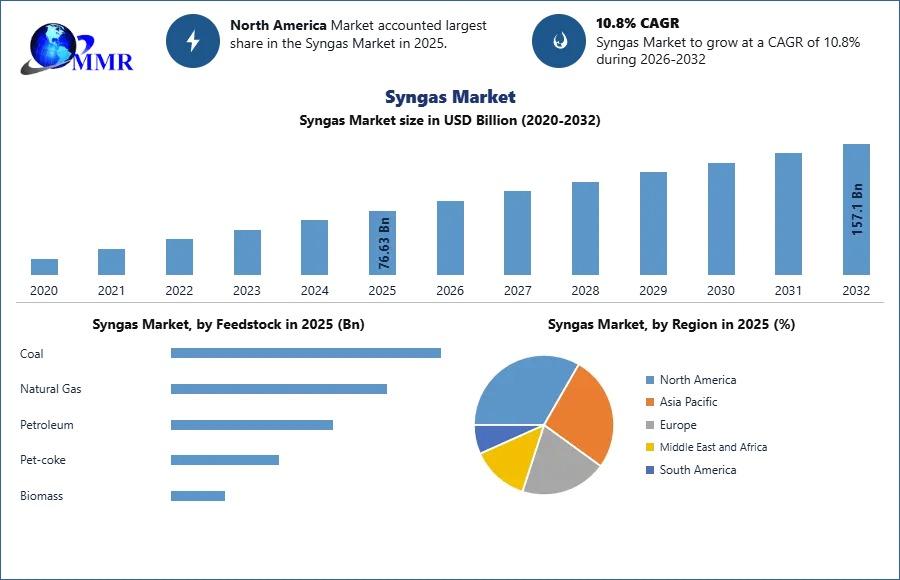
    The Syngas Market was valued at USD 76.63 billion in 2025 and is projected to reach approximately USD 157.1 billion by 2032, expanding at a compound annual growth rate (CAGR) of 10.8% during the forecast period from 2026 to 2032. Increasing demand for synthetic fuels, industrial chemicals, hydrogen production, and alternative energy sources is supporting market expansion. Growing investments in gasification technologies, sustainable fuel manufacturing, and industrial decarbonization are further creating significant opportunities for manufacturers and technology providers worldwide.

    Syngas Market Estimation, Growth Drivers, and Opportunities

    Synthesis gas, commonly known as syngas, is primarily composed of hydrogen and carbon monoxide. It is produced through processes such as coal gasification, natural gas reforming, and biomass gasification. Syngas serves as an important intermediate for manufacturing methanol, ammonia, synthetic natural gas, liquid fuels, and various industrial chemicals.

    The increasing requirement for reliable industrial feedstocks is a major market growth driver. Chemical manufacturers are adopting syngas-based processes to improve production flexibility and strengthen raw material availability. Additionally, growing hydrogen demand, investments in gas-to-liquid technologies, and the expansion of petrochemical manufacturing are accelerating market development.

    Get Your Free Sample Report Link : https://www.maximizemarketresearch.com/request-sample/68868/

    United States Market Trends and Investments

    The United States is witnessing increasing interest in syngas-related technologies, particularly across hydrogen, chemicals, refining, and alternative fuel industries. In January 2025, the U.S. Treasury Department and Internal Revenue Service released final rules for the Section 45V Clean Hydrogen Production Tax Credit, providing greater clarity and flexibility for qualifying hydrogen production projects.
    Syngas Market Opportunities and Projected Industry Developments Global Syngas Market to Reach USD 157.1 Billion by 2032, Driven by Growing Demand for Clean Energy and Industrial Chemicals Market Size, Growth, Trends, Opportunities, Competitive Landscape, and Forecast (2026–2032) The Syngas Market was valued at USD 76.63 billion in 2025 and is projected to reach approximately USD 157.1 billion by 2032, expanding at a compound annual growth rate (CAGR) of 10.8% during the forecast period from 2026 to 2032. Increasing demand for synthetic fuels, industrial chemicals, hydrogen production, and alternative energy sources is supporting market expansion. Growing investments in gasification technologies, sustainable fuel manufacturing, and industrial decarbonization are further creating significant opportunities for manufacturers and technology providers worldwide. Syngas Market Estimation, Growth Drivers, and Opportunities Synthesis gas, commonly known as syngas, is primarily composed of hydrogen and carbon monoxide. It is produced through processes such as coal gasification, natural gas reforming, and biomass gasification. Syngas serves as an important intermediate for manufacturing methanol, ammonia, synthetic natural gas, liquid fuels, and various industrial chemicals. The increasing requirement for reliable industrial feedstocks is a major market growth driver. Chemical manufacturers are adopting syngas-based processes to improve production flexibility and strengthen raw material availability. Additionally, growing hydrogen demand, investments in gas-to-liquid technologies, and the expansion of petrochemical manufacturing are accelerating market development. Get Your Free Sample Report Link : https://www.maximizemarketresearch.com/request-sample/68868/ United States Market Trends and Investments The United States is witnessing increasing interest in syngas-related technologies, particularly across hydrogen, chemicals, refining, and alternative fuel industries. In January 2025, the U.S. Treasury Department and Internal Revenue Service released final rules for the Section 45V Clean Hydrogen Production Tax Credit, providing greater clarity and flexibility for qualifying hydrogen production projects.
    0 Comments ·0 Shares ·140 Views

  • North America Motorcycle Market Trends Highlight Touring and Recreational Riding

    Market Estimation & Definition

    The North America Motorcycle Market continues to serve commuters, recreational riders and touring enthusiasts, supported by established manufacturers and a diverse range of motorcycle categories. According to Stellar Market Research, the North America Motorcycle Market size was valued at US$ 17.83 Bn. in 2025 and is expected to grow at a CAGR of 1.19% during the forecast period.

    A motorcycle is a two- or three-wheeled motor vehicle designed for commuting, leisure riding, long-distance travel, sports and off-road activities. The North American market includes a broad range of products, from mopeds and standard motorcycles to cruisers, adventure bikes and high-capacity touring models. The United States, Canada and Mexico form the geographic scope of the report.

    Download Free PDF Brochure: https://www.stellarmr.com/report/req_sample/North-America-Motorcycle-Market/760

    Market Growth Drivers & Opportunity

    Consumer interest in recreational riding and long-distance touring remains an important factor shaping motorcycle demand in North America. Motorcycles offer flexibility for personal mobility and appeal to buyers seeking alternatives to conventional passenger vehicles for selected journeys. In urban areas, their compact size can also make them practical for navigating traffic and finding parking.

    Technological improvements in motorcycle safety and rider connectivity are influencing purchasing decisions. Features such as anti-lock braking systems (ABS), enhanced braking technology and Bluetooth connectivity can improve the riding experience. Manufacturers are also refining comfort, performance and styling to meet the preferences of different rider groups.

    Fuel efficiency and changing transportation costs can create opportunities for motorcycles, particularly for short-distance travel. Electric motorcycles offer another potential growth avenue as manufacturers explore lower-emission mobility options and consumers assess alternatives to conventional engines. Government incentive programmes may support adoption in eligible locations, although availability and terms vary by jurisdiction.

    However, the market’s relatively modest projected growth rate highlights the importance of product differentiation and retaining customer interest. Purchase costs, insurance, maintenance, safety concerns and seasonal riding conditions can influence demand. Manufacturers and dealers can pursue opportunities through improved after-sales services, rider training, financing options and products designed for distinct experience levels.

    What Lies Ahead: Emerging Trends Shaping the Future

    Motorcycle development is increasingly focused on combining performance with rider safety and convenience. Advanced braking systems, digital displays, connected helmets and Bluetooth-enabled communication are helping manufacturers deliver more integrated riding experiences. Improvements in navigation and connectivity may also appeal to touring riders who travel long distances.

    Electric motorcycles represent a further area of opportunity as battery technology and charging infrastructure develop. Their adoption will depend on factors such as vehicle range, charging access, upfront prices and the availability of models suited to North American riding patterns.

    Product personalisation is another relevant trend. Adventure, cruiser, sport and touring motorcycles serve different consumer expectations, encouraging manufacturers to refine ergonomics, handling, engine performance and accessories. In a mature market with relatively slow forecast growth, customer loyalty, product reliability and ownership experience are likely to remain important competitive factors.

    Get More Report Details: https://www.stellarmr.com/report/North-America-Motorcycle-Market/760

    Segmentation Analysis

    Stellar Market Research segments the North America Motorcycle Market by motorcycle type, engine capacity and geography.

    By Motorcycle Type

    Adventure

    Cruiser

    Mopeds

    Sports

    Standard

    Touring

    By Engine Capacity

    Up to 150 CC

    151–300 CC

    301–500 CC

    501–800 CC

    801–1000 CC

    1001–1600 CC

    Above 1600 CC

    By Geography

    United States

    Canada

    Mexico

    The 801–1000 CC engine-capacity segment accounted for 31% of the market in 2024, according to the report. Its leading position reflects demand for motorcycles that balance performance and comfort. The United States is identified as the largest country market within North America.

    Country-Level Analysis: USA and Germany

    United States: The United States is the leading national market in the report’s North American coverage. A broad motorcycle ownership base, established dealerships, recreational riding culture and the presence of domestic manufacturers contribute to its importance. Companies such as Harley-Davidson, Polaris Industries and Zero Motorcycles are included among the report’s key players. Opportunities span premium touring models, cruisers, adventure motorcycles and electric products.

    Germany: Germany is not included in the report’s geographic scope because the study focuses on the United States, Canada and Mexico. Nevertheless, Germany is relevant to the wider motorcycle industry through manufacturers such as BMW Motorrad and its established engineering and automotive ecosystem. Germany-specific market estimates or growth rates should not be inferred from this North American report.

    Competitive Analysis

    Competition in the North America Motorcycle Market includes major international manufacturers and regional companies. Stellar Market Research identifies Honda, Yamaha, Kawasaki, Suzuki, Harley-Davidson, Polaris Industries, Zero Motorcycles, MSI Defense Solutions and American Suzuki Motor Corp. among the key players.

    Companies compete through brand reputation, performance, design, safety features, product range and dealer support. International manufacturers offer a wide variety of motorcycle styles and engine capacities, while established American brands benefit from strong associations with cruiser and touring segments. Electric motorcycle manufacturers are also positioning themselves around alternative powertrains and evolving mobility preferences.

    Download Free PDF Brochure: https://www.stellarmr.com/report/req_sample/North-America-Motorcycle-Market/760

    Press Release Conclusion

    The North America Motorcycle Market is expected to record measured growth through 2032, reaching a projected USD 19.38 billion. Demand will continue to reflect recreational riding, touring, commuting needs and advances in safety and connectivity. Electric models and product innovation offer additional opportunities, although affordability and practical ownership considerations will influence adoption. Manufacturers that align their product portfolios with rider preferences and strengthen customer support will be better positioned to compete across the United States, Canada and Mexico.

    About Stellar Market Research:

    Stellar Market Research is a multifaceted market research and consulting company with professionals from several industries. Some of the industries we cover include medical devices, pharmaceutical manufacturers, science and engineering, electronic components, industrial equipment, technology and communication, cars and automobiles, chemical products and substances, general merchandise, beverages, personal care, and automated systems. To mention a few, we provide market-verified industry estimations, technical trend analysis, crucial market research, strategic advice, competition analysis, production and demand analysis, and client impact studies.

    Contact Stellar Market Research:

    3rd Floor, Navale IT Park, Phase 2

    Pune Banglore Highway, Narhe,

    Pune, Maharashtra 411041, India

    [email protected]

    +91 20 6630 3320 | +91 9607365656
    North America Motorcycle Market Trends Highlight Touring and Recreational Riding Market Estimation & Definition The North America Motorcycle Market continues to serve commuters, recreational riders and touring enthusiasts, supported by established manufacturers and a diverse range of motorcycle categories. According to Stellar Market Research, the North America Motorcycle Market size was valued at US$ 17.83 Bn. in 2025 and is expected to grow at a CAGR of 1.19% during the forecast period. A motorcycle is a two- or three-wheeled motor vehicle designed for commuting, leisure riding, long-distance travel, sports and off-road activities. The North American market includes a broad range of products, from mopeds and standard motorcycles to cruisers, adventure bikes and high-capacity touring models. The United States, Canada and Mexico form the geographic scope of the report. Download Free PDF Brochure: https://www.stellarmr.com/report/req_sample/North-America-Motorcycle-Market/760 Market Growth Drivers & Opportunity Consumer interest in recreational riding and long-distance touring remains an important factor shaping motorcycle demand in North America. Motorcycles offer flexibility for personal mobility and appeal to buyers seeking alternatives to conventional passenger vehicles for selected journeys. In urban areas, their compact size can also make them practical for navigating traffic and finding parking. Technological improvements in motorcycle safety and rider connectivity are influencing purchasing decisions. Features such as anti-lock braking systems (ABS), enhanced braking technology and Bluetooth connectivity can improve the riding experience. Manufacturers are also refining comfort, performance and styling to meet the preferences of different rider groups. Fuel efficiency and changing transportation costs can create opportunities for motorcycles, particularly for short-distance travel. Electric motorcycles offer another potential growth avenue as manufacturers explore lower-emission mobility options and consumers assess alternatives to conventional engines. Government incentive programmes may support adoption in eligible locations, although availability and terms vary by jurisdiction. However, the market’s relatively modest projected growth rate highlights the importance of product differentiation and retaining customer interest. Purchase costs, insurance, maintenance, safety concerns and seasonal riding conditions can influence demand. Manufacturers and dealers can pursue opportunities through improved after-sales services, rider training, financing options and products designed for distinct experience levels. What Lies Ahead: Emerging Trends Shaping the Future Motorcycle development is increasingly focused on combining performance with rider safety and convenience. Advanced braking systems, digital displays, connected helmets and Bluetooth-enabled communication are helping manufacturers deliver more integrated riding experiences. Improvements in navigation and connectivity may also appeal to touring riders who travel long distances. Electric motorcycles represent a further area of opportunity as battery technology and charging infrastructure develop. Their adoption will depend on factors such as vehicle range, charging access, upfront prices and the availability of models suited to North American riding patterns. Product personalisation is another relevant trend. Adventure, cruiser, sport and touring motorcycles serve different consumer expectations, encouraging manufacturers to refine ergonomics, handling, engine performance and accessories. In a mature market with relatively slow forecast growth, customer loyalty, product reliability and ownership experience are likely to remain important competitive factors. Get More Report Details: https://www.stellarmr.com/report/North-America-Motorcycle-Market/760 Segmentation Analysis Stellar Market Research segments the North America Motorcycle Market by motorcycle type, engine capacity and geography. By Motorcycle Type Adventure Cruiser Mopeds Sports Standard Touring By Engine Capacity Up to 150 CC 151–300 CC 301–500 CC 501–800 CC 801–1000 CC 1001–1600 CC Above 1600 CC By Geography United States Canada Mexico The 801–1000 CC engine-capacity segment accounted for 31% of the market in 2024, according to the report. Its leading position reflects demand for motorcycles that balance performance and comfort. The United States is identified as the largest country market within North America. Country-Level Analysis: USA and Germany United States: The United States is the leading national market in the report’s North American coverage. A broad motorcycle ownership base, established dealerships, recreational riding culture and the presence of domestic manufacturers contribute to its importance. Companies such as Harley-Davidson, Polaris Industries and Zero Motorcycles are included among the report’s key players. Opportunities span premium touring models, cruisers, adventure motorcycles and electric products. Germany: Germany is not included in the report’s geographic scope because the study focuses on the United States, Canada and Mexico. Nevertheless, Germany is relevant to the wider motorcycle industry through manufacturers such as BMW Motorrad and its established engineering and automotive ecosystem. Germany-specific market estimates or growth rates should not be inferred from this North American report. Competitive Analysis Competition in the North America Motorcycle Market includes major international manufacturers and regional companies. Stellar Market Research identifies Honda, Yamaha, Kawasaki, Suzuki, Harley-Davidson, Polaris Industries, Zero Motorcycles, MSI Defense Solutions and American Suzuki Motor Corp. among the key players. Companies compete through brand reputation, performance, design, safety features, product range and dealer support. International manufacturers offer a wide variety of motorcycle styles and engine capacities, while established American brands benefit from strong associations with cruiser and touring segments. Electric motorcycle manufacturers are also positioning themselves around alternative powertrains and evolving mobility preferences. Download Free PDF Brochure: https://www.stellarmr.com/report/req_sample/North-America-Motorcycle-Market/760 Press Release Conclusion The North America Motorcycle Market is expected to record measured growth through 2032, reaching a projected USD 19.38 billion. Demand will continue to reflect recreational riding, touring, commuting needs and advances in safety and connectivity. Electric models and product innovation offer additional opportunities, although affordability and practical ownership considerations will influence adoption. Manufacturers that align their product portfolios with rider preferences and strengthen customer support will be better positioned to compete across the United States, Canada and Mexico. About Stellar Market Research: Stellar Market Research is a multifaceted market research and consulting company with professionals from several industries. Some of the industries we cover include medical devices, pharmaceutical manufacturers, science and engineering, electronic components, industrial equipment, technology and communication, cars and automobiles, chemical products and substances, general merchandise, beverages, personal care, and automated systems. To mention a few, we provide market-verified industry estimations, technical trend analysis, crucial market research, strategic advice, competition analysis, production and demand analysis, and client impact studies. Contact Stellar Market Research: 3rd Floor, Navale IT Park, Phase 2 Pune Banglore Highway, Narhe, Pune, Maharashtra 411041, India [email protected] +91 20 6630 3320 | +91 9607365656
    0 Comments ·0 Shares ·452 Views
  • Stellar Market Research has released a comprehensive intelligence study on the Wood Chips Market, revealing that the industry is undergoing a structural evolution driven by global decarbonization mandates and renewable energy transitions. Valued at USD 12.11 Billion in 2025, the market is projected to reach USD 23.60 Billion by 2032, expanding at a remarkable compound annual growth rate (CAGR) of 10% during the forecast period. The report underscores the strategic importance of wood chips as a versatile biomass feedstock critical for meeting international climate targets while ensuring reliable industrial and residential heat generation.

    The global energy matrix is undergoing a profound paradigm shift, moving decisively away from fossil fuel reliance toward decentralized renewable alternatives. Within this transformation, the wood chips market has emerged as a linchpin for circular bioeconomy initiatives. Driven by tightening carbon emission policies and the necessity for secure, localized heat and power sources, commercial enterprises and municipal utilities are actively restructuring their fuel supply chains.

    Key Findings from the Report
    Market Valuation & Trajectory: The global Wood Chips Market reached USD 12.11 Billion in 2025 and is projected to expand to USD 23.60 Billion by 2032 at a 10% CAGR.

    Dominant Product Segment: The Softwood segment commanded the largest market share at 46% in 2025, primarily driven by widespread utilization in garden mulching, playground surfacing, and high-volume industrial applications.

    Leading Application Category: Residential Heating dominated application channels with a 38% market share in 2025, supported by widespread global adoption of eco-friendly home heating solutions.

    Regional Dominance: The Asia-Pacific region captured a leading 39% market share in 2025, heavily reinforced by government feed-in-tariff subsidy schemes and expanding biomass project pipelines in countries like Japan.

    High-Growth Regional Frontier: Europe is forecast to register steady, high-value growth at a 9.92% CAGR over the forecast period, anchored by decentralized small-scale combined heat and power (CHP) installations.

    Pulp & Paper Integration: The increasing demand for wood chips as a primary raw material in pulp mills continues to provide a stable industrial baseline for continuous market expansion.

    Investment & Diversification Potential: Emerging interest in advanced applications—such as utilizing nanocrystalline cellulose (NCC) extracted from wood pulp for next-generation flexible electronics—is unlocking new commercial horizons for market stakeholders.

    For further information, click the following link:https://www.stellarmr.com/report/req_sample/Wood-Chips-Market/485

    Market Drivers and Restraints
    Driver 1: Accelerated Transition to Renewable Biomass Energy: Escalating depletion of conventional fossil fuels and stringent international climate protocols are compelling governments and utility providers to scale up biomass solid fuel utilization.

    Driver 2: Surging Demand from the Pulp and Paper Sector: Continuous capacity expansions across global pulp mills require reliable, high-grade wood chip inputs to satisfy paper, packaging, and derivative product manufacturing needs.

    Driver 3: Proliferation of Eco-Friendly Landscaping and Composting: Rising consumer and municipal preference for organic soil amendments, playground safety surfacing, and sustainable garden mulch acts as a consistent secondary growth catalyst.

    Restraint 1: Intense Competition from Alternative Biofuels: The growing popularity and commercial scaling of wood pellets as an alternative dense fuel pose a competitive threat, particularly in commercial power generation segments.

    Restraint 2: Strict GHG Emissions Compliance and Certification Hurdles: Regulatory burdens regarding greenhouse gas emissions standards and the high cost of acquiring sustainability-related forestry certifications can impede rapid supply chain scaling.

    Technology, Regulation, and Sustainability Trends
    The industry is experiencing profound operational transformation through the adoption of advanced digital log loaders, automated de-wrapping stations, and precision chipping technology designed to minimize waste and optimize fiber recovery. Regulatory frameworks are increasingly prioritizing carbon accountability; policy instruments such as carbon pricing and strict sustainability compliance require market players to maintain transparent, traceable sourcing operations. Simultaneously, ESG (Environmental, Social, and Governance) imperatives are accelerating reforestation partnerships and waste-to-energy circularity, ensuring that wood chip harvesting actively balances ecological restoration with commercial output.

    Regional Insights
    Asia-Pacific: Securing a commanding 39% market share in 2025, Asia-Pacific represents the epicenter of global consumption. Japan continues to spearhead regional expansion by leveraging robust Feed-in-Tariff (FiT) subsidy mechanisms to construct extensive biomass energy generation pipelines, while major developing economies scale up domestic pulp production infrastructure.

    Europe: Europe is poised to record a stellar 9.92% CAGR through the forecast period. The region's growth is anchored by established small-scale (sub-20MW) combined heat and power (CHP) infrastructure that predominantly utilizes locally sourced wood, satisfying rigorous EU renewable energy directives.

    North America: Supported by well-established commercial forestry networks in the United States and Canada, North America remains a highly consolidated market focused on supply chain optimization, advanced wood processing technology, and export efficiency.

    Recent Industry Developments
    River City Fibre LP (2025): Deployed a USD 600,000 modernization investment backed by local public-private funding to integrate an electric log loader and de-wrapping station in Kamloops, boosting low-value pulp log processing efficiency while cutting operational emissions.

    Eternali (2024): Expanded its Brazilian operational footprint by acquiring 3.3 hectares of land in Moju, Pará, to construct a dedicated wood chip production facility designed to feed regional biomass energy demands using locally sourced sawmill residues.

    Ørsted A/S (2024): Announced strategic plans to expand its European biomass power generation portfolio, driving substantial long-term demand commitments for sustainable wood chip fuel supplies.

    Great Northern Timber (2024): Partnered with local ecological conservation groups to initiate structured reforestation projects in harvested timber tracts, establishing a verifiable precedent for balancing commercial wood chip harvesting with active ecosystem restoration.

    Drax Group (2024): Committed a USD 300 million capital investment toward the construction of advanced biomass power generation and renewable energy infrastructure in Scotland, driving long-term market demand for sustainably certified wood chips.

    Competitive Landscape
    The global wood chips market exhibits a semi-consolidated competitive structure characterized by the active participation of major forestry conglomerates, specialized biomass processors, and regional market players. Leading industry participants are actively pursuing strategic supply chain integration, technological modernization, and long-term municipal procurement partnerships. Key companies profiled in the market intelligence landscape include Enviva Inc., Drax Group, Weyerhaeuser Company, West Fraser Timber Co. Ltd., International Paper Company, St. Boniface Pallet Company Ltd., EVOWORLD GmbH, and American Wood Resources. Major players are increasingly emphasizing certified sustainable forestry practices and processing efficiency to capture high-margin supply agreements across European and Asian energy corridors.

    Analyst Commentary
    "The wood chips market has transitioned far beyond a conventional forestry byproduct sector into an essential pillar of the global bio-energy and bio-materials economy," said a Senior Research Analyst at Stellar Market Research. "As corporate sustainability mandates and government decarbonization targets tighten through 2032, market participants that invest in supply chain traceability, advanced fiber processing efficiency, and localized sourcing networks will capture outsized value. The ability to guarantee compliant, low-carbon biomass feedstocks will ultimately separate market leaders from legacy followers."

    Future Outlook
    Looking ahead through the 2026–2032 forecast horizon, the wood chips market is expected to experience sustained, high-value expansion. Demand dynamics will increasingly pivot toward high-efficiency combined heat and power (CHP) applications and innovative high-tech bio-refining avenues, such as nanocrystalline cellulose production. While regulatory frameworks and carbon accounting standards will grow more stringent, they will simultaneously reward forward-thinking operators who embrace certified sustainable forestry. Supported by robust infrastructure investments across Asia-Pacific and Europe, the market is well-positioned to cement its role as a cornerstone of the global green energy transition.

    For further information, click the following link:https://www.stellarmr.com/report/req_sample/Wood-Chips-Market/485 

    About Stellar Market Research

    Stellar Market Research is a multifaceted market research and consulting company with professionals from several industries. Some of the industries we cover include medical devices, pharmaceutical manufacturers, science and engineering, electronic components, industrial equipment, technology and communication, cars and automobiles, chemical products and substances, general merchandise, beverages, personal care, and automated systems. To mention a few, we provide market-verified industry estimations, technical trend analysis, crucial market research, strategic advice, competition analysis, production and demand analysis, and client impact studies.

    Address
    Phase 3, Navale IT Zone, S.No. 51/2A/2, Office No. 202, 2nd floor, Near, Navale Brg, Narhe, Pune, Maharashtra 411041

    Email
    [email protected]

    Mobile
    +91 9607365656 #APAC Wood Chips Market, Japan Biomass Feed-in-Tariff, Asia Pacific Renewable Energy, Wood Pulp Export Asia, Biomass Imports APAC, Forest Biomass Supply Chain, Sustainable Energy Asia
    Stellar Market Research has released a comprehensive intelligence study on the Wood Chips Market, revealing that the industry is undergoing a structural evolution driven by global decarbonization mandates and renewable energy transitions. Valued at USD 12.11 Billion in 2025, the market is projected to reach USD 23.60 Billion by 2032, expanding at a remarkable compound annual growth rate (CAGR) of 10% during the forecast period. The report underscores the strategic importance of wood chips as a versatile biomass feedstock critical for meeting international climate targets while ensuring reliable industrial and residential heat generation. The global energy matrix is undergoing a profound paradigm shift, moving decisively away from fossil fuel reliance toward decentralized renewable alternatives. Within this transformation, the wood chips market has emerged as a linchpin for circular bioeconomy initiatives. Driven by tightening carbon emission policies and the necessity for secure, localized heat and power sources, commercial enterprises and municipal utilities are actively restructuring their fuel supply chains. Key Findings from the Report Market Valuation & Trajectory: The global Wood Chips Market reached USD 12.11 Billion in 2025 and is projected to expand to USD 23.60 Billion by 2032 at a 10% CAGR. Dominant Product Segment: The Softwood segment commanded the largest market share at 46% in 2025, primarily driven by widespread utilization in garden mulching, playground surfacing, and high-volume industrial applications. Leading Application Category: Residential Heating dominated application channels with a 38% market share in 2025, supported by widespread global adoption of eco-friendly home heating solutions. Regional Dominance: The Asia-Pacific region captured a leading 39% market share in 2025, heavily reinforced by government feed-in-tariff subsidy schemes and expanding biomass project pipelines in countries like Japan. High-Growth Regional Frontier: Europe is forecast to register steady, high-value growth at a 9.92% CAGR over the forecast period, anchored by decentralized small-scale combined heat and power (CHP) installations. Pulp & Paper Integration: The increasing demand for wood chips as a primary raw material in pulp mills continues to provide a stable industrial baseline for continuous market expansion. Investment & Diversification Potential: Emerging interest in advanced applications—such as utilizing nanocrystalline cellulose (NCC) extracted from wood pulp for next-generation flexible electronics—is unlocking new commercial horizons for market stakeholders. For further information, click the following link:https://www.stellarmr.com/report/req_sample/Wood-Chips-Market/485 Market Drivers and Restraints Driver 1: Accelerated Transition to Renewable Biomass Energy: Escalating depletion of conventional fossil fuels and stringent international climate protocols are compelling governments and utility providers to scale up biomass solid fuel utilization. Driver 2: Surging Demand from the Pulp and Paper Sector: Continuous capacity expansions across global pulp mills require reliable, high-grade wood chip inputs to satisfy paper, packaging, and derivative product manufacturing needs. Driver 3: Proliferation of Eco-Friendly Landscaping and Composting: Rising consumer and municipal preference for organic soil amendments, playground safety surfacing, and sustainable garden mulch acts as a consistent secondary growth catalyst. Restraint 1: Intense Competition from Alternative Biofuels: The growing popularity and commercial scaling of wood pellets as an alternative dense fuel pose a competitive threat, particularly in commercial power generation segments. Restraint 2: Strict GHG Emissions Compliance and Certification Hurdles: Regulatory burdens regarding greenhouse gas emissions standards and the high cost of acquiring sustainability-related forestry certifications can impede rapid supply chain scaling. Technology, Regulation, and Sustainability Trends The industry is experiencing profound operational transformation through the adoption of advanced digital log loaders, automated de-wrapping stations, and precision chipping technology designed to minimize waste and optimize fiber recovery. Regulatory frameworks are increasingly prioritizing carbon accountability; policy instruments such as carbon pricing and strict sustainability compliance require market players to maintain transparent, traceable sourcing operations. Simultaneously, ESG (Environmental, Social, and Governance) imperatives are accelerating reforestation partnerships and waste-to-energy circularity, ensuring that wood chip harvesting actively balances ecological restoration with commercial output. Regional Insights Asia-Pacific: Securing a commanding 39% market share in 2025, Asia-Pacific represents the epicenter of global consumption. Japan continues to spearhead regional expansion by leveraging robust Feed-in-Tariff (FiT) subsidy mechanisms to construct extensive biomass energy generation pipelines, while major developing economies scale up domestic pulp production infrastructure. Europe: Europe is poised to record a stellar 9.92% CAGR through the forecast period. The region's growth is anchored by established small-scale (sub-20MW) combined heat and power (CHP) infrastructure that predominantly utilizes locally sourced wood, satisfying rigorous EU renewable energy directives. North America: Supported by well-established commercial forestry networks in the United States and Canada, North America remains a highly consolidated market focused on supply chain optimization, advanced wood processing technology, and export efficiency. Recent Industry Developments River City Fibre LP (2025): Deployed a USD 600,000 modernization investment backed by local public-private funding to integrate an electric log loader and de-wrapping station in Kamloops, boosting low-value pulp log processing efficiency while cutting operational emissions. Eternali (2024): Expanded its Brazilian operational footprint by acquiring 3.3 hectares of land in Moju, Pará, to construct a dedicated wood chip production facility designed to feed regional biomass energy demands using locally sourced sawmill residues. Ørsted A/S (2024): Announced strategic plans to expand its European biomass power generation portfolio, driving substantial long-term demand commitments for sustainable wood chip fuel supplies. Great Northern Timber (2024): Partnered with local ecological conservation groups to initiate structured reforestation projects in harvested timber tracts, establishing a verifiable precedent for balancing commercial wood chip harvesting with active ecosystem restoration. Drax Group (2024): Committed a USD 300 million capital investment toward the construction of advanced biomass power generation and renewable energy infrastructure in Scotland, driving long-term market demand for sustainably certified wood chips. Competitive Landscape The global wood chips market exhibits a semi-consolidated competitive structure characterized by the active participation of major forestry conglomerates, specialized biomass processors, and regional market players. Leading industry participants are actively pursuing strategic supply chain integration, technological modernization, and long-term municipal procurement partnerships. Key companies profiled in the market intelligence landscape include Enviva Inc., Drax Group, Weyerhaeuser Company, West Fraser Timber Co. Ltd., International Paper Company, St. Boniface Pallet Company Ltd., EVOWORLD GmbH, and American Wood Resources. Major players are increasingly emphasizing certified sustainable forestry practices and processing efficiency to capture high-margin supply agreements across European and Asian energy corridors. Analyst Commentary "The wood chips market has transitioned far beyond a conventional forestry byproduct sector into an essential pillar of the global bio-energy and bio-materials economy," said a Senior Research Analyst at Stellar Market Research. "As corporate sustainability mandates and government decarbonization targets tighten through 2032, market participants that invest in supply chain traceability, advanced fiber processing efficiency, and localized sourcing networks will capture outsized value. The ability to guarantee compliant, low-carbon biomass feedstocks will ultimately separate market leaders from legacy followers." Future Outlook Looking ahead through the 2026–2032 forecast horizon, the wood chips market is expected to experience sustained, high-value expansion. Demand dynamics will increasingly pivot toward high-efficiency combined heat and power (CHP) applications and innovative high-tech bio-refining avenues, such as nanocrystalline cellulose production. While regulatory frameworks and carbon accounting standards will grow more stringent, they will simultaneously reward forward-thinking operators who embrace certified sustainable forestry. Supported by robust infrastructure investments across Asia-Pacific and Europe, the market is well-positioned to cement its role as a cornerstone of the global green energy transition. For further information, click the following link:https://www.stellarmr.com/report/req_sample/Wood-Chips-Market/485  About Stellar Market Research Stellar Market Research is a multifaceted market research and consulting company with professionals from several industries. Some of the industries we cover include medical devices, pharmaceutical manufacturers, science and engineering, electronic components, industrial equipment, technology and communication, cars and automobiles, chemical products and substances, general merchandise, beverages, personal care, and automated systems. To mention a few, we provide market-verified industry estimations, technical trend analysis, crucial market research, strategic advice, competition analysis, production and demand analysis, and client impact studies. Address Phase 3, Navale IT Zone, S.No. 51/2A/2, Office No. 202, 2nd floor, Near, Navale Brg, Narhe, Pune, Maharashtra 411041 Email [email protected] Mobile +91 9607365656 #APAC Wood Chips Market, Japan Biomass Feed-in-Tariff, Asia Pacific Renewable Energy, Wood Pulp Export Asia, Biomass Imports APAC, Forest Biomass Supply Chain, Sustainable Energy Asia
    0 Comments ·0 Shares ·539 Views
  • Classic Plus Beta Update: Major Bug Fixes, Class Changes, and Dungeon XP Balance
    https://www.mmoexp.com/Wow-forever/Gold.html
    With Classic Plus launching in just 26 days, the latest blue post delivers a large number of updates, bug fixes, and balance changes. The build focuses on improving gameplay systems, correcting class mechanics, refining quests, and creating a healthier balance between dungeon leveling and questing.
    Core Systems and Dungeon Improvements
    The update brings back classic looting behavior, allowing players to interact with creatures even when they do not drop loot. Visual flickering on large creatures has been fixed, along with creature behavior that could cause unintended long-distance pulls. In the City of Doran dungeon, players can once again swap multiple weapons during the same global cooldown, such as changing from a two-handed weapon to a sword and shield through a macro.
    Dungeon creature experience has increased by approximately 20%. A major experience bug has also been corrected: players grouped with higher-level characters should now receive experience based on their own level relative to the enemies. This is especially important in groups such as four level-20 players and one level-25 player, where the lower-level characters previously received extremely low experience.
    The cooldown manager now supports all classes, racial abilities, and trinkets, while consumable support will arrive later. Several controller and gamepad issues have also been addressed. Beta players received completion of the legacy challenge and 16 legacy points, while legacy talent respecs now cost one silver and become cheaper by one silver each hour.
    Items, Professions, and Quests
    Several item changes are included. New armor shoulder pieces have been reduced to the correct visual size, and Wolfshead Helmet now grants five additional energy when Shifting Power is used. Dungeon quest rewards have been adjusted, with some items lowered to uncommon rarity and several equipment requirements changed to level 35 or 40.
    Enchanters will notice reduced vendor prices for various crafted items, including wands. This affects the familiar tailoring-and-enchanting shuffle, where players created bags and wands and sold them to vendors or other players. Players planning their crafting budget may therefore want to track World of Warcraft: Forever Gold carefully.
    Quest updates improve markers, respawn rates, item delivery, and experience rewards across several zones. The Desolace quests connected to Gulkus and Morgum now require level 35 instead of 30. The Titan relic is returned for follow-up quests, Elixir of Pain Stanley no longer grants experience directly, and several mobs now spawn more evenly to reduce farming opportunities.
    Interface, PvP, and Final Testing
    PvP critical strikes no longer suffer reduced efficiency, while healing potions no longer break crowd-control effects. Will of the Forsaken can now be used while asleep or charmed. The interface adds clearer quest types, quest-level requirements, combo-point displays, improved inspection details, talent viewing, Discord voice options, and better group-finder communication.
    Only a few known issues remain, including some missing textures, profession-window icons, and a visual-only hunter pet critical-strike display problem. The limited number of known issues suggests that the final build is approaching.
    For players preparing for the launch, WOW Forever Gold may become a familiar search phrase when discussing in-game preparation, although the update itself focuses on balance and bug fixes rather than currency systems. Meanwhile, TBC players can look forward to ZA arriving on October 22, one day after the forever beta ends. The update ultimately shows that developers are responding to community feedback while protecting questing, social interaction, and the broader world experience. Players interested in MMO services may also encounter the MMOEXP game marketplace, but the central message of this build remains clear: Classic Plus is being refined for a fairer and more social launch.
    Classic Plus Beta Update: Major Bug Fixes, Class Changes, and Dungeon XP Balance https://www.mmoexp.com/Wow-forever/Gold.html With Classic Plus launching in just 26 days, the latest blue post delivers a large number of updates, bug fixes, and balance changes. The build focuses on improving gameplay systems, correcting class mechanics, refining quests, and creating a healthier balance between dungeon leveling and questing. Core Systems and Dungeon Improvements The update brings back classic looting behavior, allowing players to interact with creatures even when they do not drop loot. Visual flickering on large creatures has been fixed, along with creature behavior that could cause unintended long-distance pulls. In the City of Doran dungeon, players can once again swap multiple weapons during the same global cooldown, such as changing from a two-handed weapon to a sword and shield through a macro. Dungeon creature experience has increased by approximately 20%. A major experience bug has also been corrected: players grouped with higher-level characters should now receive experience based on their own level relative to the enemies. This is especially important in groups such as four level-20 players and one level-25 player, where the lower-level characters previously received extremely low experience. The cooldown manager now supports all classes, racial abilities, and trinkets, while consumable support will arrive later. Several controller and gamepad issues have also been addressed. Beta players received completion of the legacy challenge and 16 legacy points, while legacy talent respecs now cost one silver and become cheaper by one silver each hour. Items, Professions, and Quests Several item changes are included. New armor shoulder pieces have been reduced to the correct visual size, and Wolfshead Helmet now grants five additional energy when Shifting Power is used. Dungeon quest rewards have been adjusted, with some items lowered to uncommon rarity and several equipment requirements changed to level 35 or 40. Enchanters will notice reduced vendor prices for various crafted items, including wands. This affects the familiar tailoring-and-enchanting shuffle, where players created bags and wands and sold them to vendors or other players. Players planning their crafting budget may therefore want to track World of Warcraft: Forever Gold carefully. Quest updates improve markers, respawn rates, item delivery, and experience rewards across several zones. The Desolace quests connected to Gulkus and Morgum now require level 35 instead of 30. The Titan relic is returned for follow-up quests, Elixir of Pain Stanley no longer grants experience directly, and several mobs now spawn more evenly to reduce farming opportunities. Interface, PvP, and Final Testing PvP critical strikes no longer suffer reduced efficiency, while healing potions no longer break crowd-control effects. Will of the Forsaken can now be used while asleep or charmed. The interface adds clearer quest types, quest-level requirements, combo-point displays, improved inspection details, talent viewing, Discord voice options, and better group-finder communication. Only a few known issues remain, including some missing textures, profession-window icons, and a visual-only hunter pet critical-strike display problem. The limited number of known issues suggests that the final build is approaching. For players preparing for the launch, WOW Forever Gold may become a familiar search phrase when discussing in-game preparation, although the update itself focuses on balance and bug fixes rather than currency systems. Meanwhile, TBC players can look forward to ZA arriving on October 22, one day after the forever beta ends. The update ultimately shows that developers are responding to community feedback while protecting questing, social interaction, and the broader world experience. Players interested in MMO services may also encounter the MMOEXP game marketplace, but the central message of this build remains clear: Classic Plus is being refined for a fairer and more social launch.
    WoW Forever Goldを購入|WoW Forever Gold販売・価格情報|MMOEXP
    www.mmoexp.com
    MMOEXPでWoW Forever Goldを購入できます。対応サーバーと最新価格を比較し、注文内容を確認してオンラインで購入。迅速な配送、安全な決済、24時間365日のカスタマーサポートに対応し、必要なGoldをスムーズに受け取れます。購入前に在庫と現在の価格をご確認ください。今すぐ価格をチェック。
    0 Comments ·0 Shares ·265 Views
  • Isobutanol Market Growth, Demand and Future Industry Outlook

    Isobutanol Market Set to Reach USD 1.47 Billion by 2032, Driven by Growing Demand for Solvents, Chemical Intermediates and Sustainable Fuels

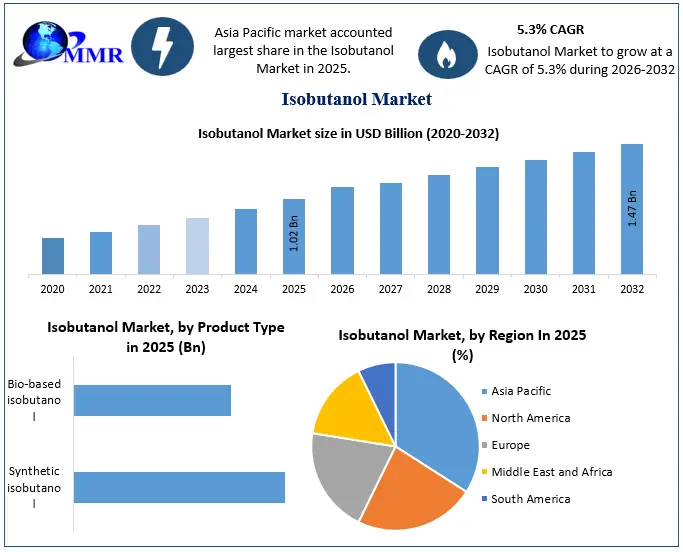
    The Isobutanol Market is entering a period of steady expansion as manufacturers across chemicals, coatings, oil & gas, pharmaceuticals and related industries increase their use of isobutanol as a versatile solvent and chemical intermediate. According to Maximize Market Research, the global Isobutanol Market size was valued at USD 1.02 billion in 2025 and is expected to grow at a CAGR of 5.3% from 2026 to 2032, reaching nearly USD 1.47 billion by 2032. Increasing industrial production, expanding applications in paints and coatings, demand for specialty chemical intermediates and growing interest in bio-based production technologies are expected to create attractive opportunities for market participants. Isobutanol's functional properties make it valuable in solvent formulations, coatings, chemical synthesis and fuel-related applications.

    U.S. Isobutanol Market Gains Momentum Through Industrial Demand and Low-Carbon Investment

    The United States remains an important market for isobutanol because of its large chemical manufacturing base, established refining infrastructure and expanding interest in renewable fuels. During 2025, industry activity highlighted both pricing pressure and investment in low-carbon technologies. Eastman announced a USD 0.05-per-pound increase on its N-Isobutyl Alcohol and selected Oxo products in North America and Latin America effective February 15, 2025, citing higher operating costs, particularly raw-material expenses. At the same time, Gevo completed its USD 210 million acquisition of Red Trail Energy's ethanol and carbon-capture assets in North Dakota in January 2025. The investment strengthens the company's low-carbon alcohol and renewable-fuels platform and creates an opportunity to develop additional alcohol-to-jet and related projects. Such developments demonstrate how U.S. producers are combining established alcohol infrastructure with carbon capture, renewable feedstocks and advanced conversion technologies. This trend can support longer-term opportunities for bio-based isobutanol and other renewable chemical products.

    Get a Free Sample Market Report Link : https://www.maximizemarketresearch.com/request-sample/56743/

    Synthetic Isobutanol Holds the Largest Market Share

    Based on the segmentation covered in the Maximize Market Research study, the market is analyzed according to Type, Application and Region. Among the segments, Synthetic Isobutanol represents the leading product category, supported by its established industrial manufacturing base, reliable availability and broad use in chemical and solvent applications. Synthetic production continues to benefit from mature production technologies and its ability to supply large-volume industrial requirements.

    Competitive Landscape: Companies Invest in Capacity, Sustainability and Advanced Chemistry

    The global Isobutanol Market remains competitive, with major chemical producers focusing on production reliability, downstream integration, product quality and technological development.

    Eastman Chemical Company maintains a significant position through its established Oxo alcohol portfolio and broad industrial customer base. In 2025, the company implemented a price increase for N-Isobutyl Alcohol in North America and Latin America because of elevated raw-material and operating costs. Its broad specialty-materials platform and application-development capabilities provide opportunities to optimize isobutanol-based products for coatings, construction, transportation and other markets.

    OQ Chemicals is strengthening its position through its extensive Oxo alcohol production network. Its Bay City, Texas operations are particularly important to the North American supply chain. Expansion of isobutanol production capacity in the United States is aligned with increasing demand from coatings, printing inks and chemical-intermediate manufacturers. Greater production capability can improve supply security while supporting downstream growth.

    BASF SE benefits from its global chemical manufacturing infrastructure and integrated approach to solvents, intermediates and performance chemicals. Continued investment in process efficiency, sustainable chemistry and specialty chemical applications can create additional opportunities for isobutanol-based formulations.

    Sasol Limited participates across the chemicals and solvents value chain, with its integrated production capabilities supporting industrial customers. The company's focus on operational efficiency and specialty chemical applications provides a platform for serving markets where performance solvents and chemical intermediates are required.

    Gevo Inc. represents an important emerging force in renewable alcohol and low-carbon chemical technologies. Its 2025 acquisition of Red Trail Energy for approximately USD 210 million added ethanol production and carbon-capture assets to its portfolio. The acquired site provides a platform for future sustainable aviation fuel and renewable-chemical projects, demonstrating how low-carbon alcohol technologies can become increasingly interconnected with the broader isobutanol and renewable chemicals ecosystem.

    Regional Analysis: United States, Germany, France, UK, Japan and China

    United States: The U.S. benefits from a strong petrochemical and chemical manufacturing ecosystem, extensive downstream solvent demand and growing investment in renewable fuels. Federal incentives supporting carbon reduction and renewable fuel production can encourage investment in low-carbon alcohol technologies.

    China: China offers substantial growth potential because of its large chemical manufacturing sector, expanding coatings industry and increasing demand for chemical intermediates. Domestic investment in integrated chemical complexes and downstream manufacturing is strengthening the country's role in global isobutanol supply.

    Germany: Germany's advanced chemical industry and emphasis on resource efficiency and sustainable manufacturing support demand for high-performance solvents and intermediates. European decarbonization initiatives can further encourage lower-carbon production routes.

    France: France is supported by its diversified chemical, coatings, automotive and industrial manufacturing industries. Increasing attention to sustainable chemistry and reduced-emission production can create opportunities for bio-based and advanced isobutanol technologies.

    United Kingdom: The UK market benefits from demand from specialty chemicals, coatings and industrial applications. Sustainability objectives and research into renewable chemicals may support the gradual adoption of bio-based alternatives.

    Japan: Japan's technologically advanced chemical and manufacturing industries create demand for high-purity and performance-oriented chemical materials. Applications in coatings, specialty chemicals and industrial formulations are expected to sustain demand for isobutanol.

    Key Players

    Key companies operating in the global Isobutanol Market include Eastman Chemical Company, OQ Chemicals, BASF SE, Sasol Limited and Gevo Inc. These companies compete through manufacturing capacity, product quality, technological innovation, supply-chain capabilities, sustainability initiatives and downstream application development.
    Isobutanol Market Growth, Demand and Future Industry Outlook Isobutanol Market Set to Reach USD 1.47 Billion by 2032, Driven by Growing Demand for Solvents, Chemical Intermediates and Sustainable Fuels The Isobutanol Market is entering a period of steady expansion as manufacturers across chemicals, coatings, oil & gas, pharmaceuticals and related industries increase their use of isobutanol as a versatile solvent and chemical intermediate. According to Maximize Market Research, the global Isobutanol Market size was valued at USD 1.02 billion in 2025 and is expected to grow at a CAGR of 5.3% from 2026 to 2032, reaching nearly USD 1.47 billion by 2032. Increasing industrial production, expanding applications in paints and coatings, demand for specialty chemical intermediates and growing interest in bio-based production technologies are expected to create attractive opportunities for market participants. Isobutanol's functional properties make it valuable in solvent formulations, coatings, chemical synthesis and fuel-related applications. U.S. Isobutanol Market Gains Momentum Through Industrial Demand and Low-Carbon Investment The United States remains an important market for isobutanol because of its large chemical manufacturing base, established refining infrastructure and expanding interest in renewable fuels. During 2025, industry activity highlighted both pricing pressure and investment in low-carbon technologies. Eastman announced a USD 0.05-per-pound increase on its N-Isobutyl Alcohol and selected Oxo products in North America and Latin America effective February 15, 2025, citing higher operating costs, particularly raw-material expenses. At the same time, Gevo completed its USD 210 million acquisition of Red Trail Energy's ethanol and carbon-capture assets in North Dakota in January 2025. The investment strengthens the company's low-carbon alcohol and renewable-fuels platform and creates an opportunity to develop additional alcohol-to-jet and related projects. Such developments demonstrate how U.S. producers are combining established alcohol infrastructure with carbon capture, renewable feedstocks and advanced conversion technologies. This trend can support longer-term opportunities for bio-based isobutanol and other renewable chemical products. Get a Free Sample Market Report Link : https://www.maximizemarketresearch.com/request-sample/56743/ Synthetic Isobutanol Holds the Largest Market Share Based on the segmentation covered in the Maximize Market Research study, the market is analyzed according to Type, Application and Region. Among the segments, Synthetic Isobutanol represents the leading product category, supported by its established industrial manufacturing base, reliable availability and broad use in chemical and solvent applications. Synthetic production continues to benefit from mature production technologies and its ability to supply large-volume industrial requirements. Competitive Landscape: Companies Invest in Capacity, Sustainability and Advanced Chemistry The global Isobutanol Market remains competitive, with major chemical producers focusing on production reliability, downstream integration, product quality and technological development. Eastman Chemical Company maintains a significant position through its established Oxo alcohol portfolio and broad industrial customer base. In 2025, the company implemented a price increase for N-Isobutyl Alcohol in North America and Latin America because of elevated raw-material and operating costs. Its broad specialty-materials platform and application-development capabilities provide opportunities to optimize isobutanol-based products for coatings, construction, transportation and other markets. OQ Chemicals is strengthening its position through its extensive Oxo alcohol production network. Its Bay City, Texas operations are particularly important to the North American supply chain. Expansion of isobutanol production capacity in the United States is aligned with increasing demand from coatings, printing inks and chemical-intermediate manufacturers. Greater production capability can improve supply security while supporting downstream growth. BASF SE benefits from its global chemical manufacturing infrastructure and integrated approach to solvents, intermediates and performance chemicals. Continued investment in process efficiency, sustainable chemistry and specialty chemical applications can create additional opportunities for isobutanol-based formulations. Sasol Limited participates across the chemicals and solvents value chain, with its integrated production capabilities supporting industrial customers. The company's focus on operational efficiency and specialty chemical applications provides a platform for serving markets where performance solvents and chemical intermediates are required. Gevo Inc. represents an important emerging force in renewable alcohol and low-carbon chemical technologies. Its 2025 acquisition of Red Trail Energy for approximately USD 210 million added ethanol production and carbon-capture assets to its portfolio. The acquired site provides a platform for future sustainable aviation fuel and renewable-chemical projects, demonstrating how low-carbon alcohol technologies can become increasingly interconnected with the broader isobutanol and renewable chemicals ecosystem. Regional Analysis: United States, Germany, France, UK, Japan and China United States: The U.S. benefits from a strong petrochemical and chemical manufacturing ecosystem, extensive downstream solvent demand and growing investment in renewable fuels. Federal incentives supporting carbon reduction and renewable fuel production can encourage investment in low-carbon alcohol technologies. China: China offers substantial growth potential because of its large chemical manufacturing sector, expanding coatings industry and increasing demand for chemical intermediates. Domestic investment in integrated chemical complexes and downstream manufacturing is strengthening the country's role in global isobutanol supply. Germany: Germany's advanced chemical industry and emphasis on resource efficiency and sustainable manufacturing support demand for high-performance solvents and intermediates. European decarbonization initiatives can further encourage lower-carbon production routes. France: France is supported by its diversified chemical, coatings, automotive and industrial manufacturing industries. Increasing attention to sustainable chemistry and reduced-emission production can create opportunities for bio-based and advanced isobutanol technologies. United Kingdom: The UK market benefits from demand from specialty chemicals, coatings and industrial applications. Sustainability objectives and research into renewable chemicals may support the gradual adoption of bio-based alternatives. Japan: Japan's technologically advanced chemical and manufacturing industries create demand for high-purity and performance-oriented chemical materials. Applications in coatings, specialty chemicals and industrial formulations are expected to sustain demand for isobutanol. Key Players Key companies operating in the global Isobutanol Market include Eastman Chemical Company, OQ Chemicals, BASF SE, Sasol Limited and Gevo Inc. These companies compete through manufacturing capacity, product quality, technological innovation, supply-chain capabilities, sustainability initiatives and downstream application development.
    0 Comments ·0 Shares ·734 Views
  • Tetraethylene Glycol TTEG High-Boiling Solvent Extraction Market to reach USD 590 Million by 2034 at 5.1% CAGR. Aromatic separation and petrochemical refining drive demand.

    View full report: https://www.24chemicalresearch.com/reports/309377/tetraethylene-glycol-tteg-highboiling-solvent-extraction-forecast-market

    #MarketResearch #TTEG #SolventExtraction #Petrochemicals #Aromatics
    Tetraethylene Glycol TTEG High-Boiling Solvent Extraction Market to reach USD 590 Million by 2034 at 5.1% CAGR. Aromatic separation and petrochemical refining drive demand. View full report: https://www.24chemicalresearch.com/reports/309377/tetraethylene-glycol-tteg-highboiling-solvent-extraction-forecast-market #MarketResearch #TTEG #SolventExtraction #Petrochemicals #Aromatics
    0 Comments ·0 Shares ·355 Views
  • Global FCC Refining Catalyst Market to reach USD 4.9 Billion by 2032 at 5.1% CAGR. Fuel demand and refinery upgrades drive catalyst consumption.

    View full report: https://www.24chemicalresearch.com/reports/267049/global-fcc-refining-catalyst-market

    #MarketResearch, #FCCCatalyst, #Refining, #OilAndGas, #Catalysts
    Global FCC Refining Catalyst Market to reach USD 4.9 Billion by 2032 at 5.1% CAGR. Fuel demand and refinery upgrades drive catalyst consumption. View full report: https://www.24chemicalresearch.com/reports/267049/global-fcc-refining-catalyst-market #MarketResearch, #FCCCatalyst, #Refining, #OilAndGas, #Catalysts
    0 Comments ·0 Shares ·317 Views