

• Geosynthetics Market Analysis, Growth Drivers and Emerging Industry Trends

    Top of Form

    Key Highlights

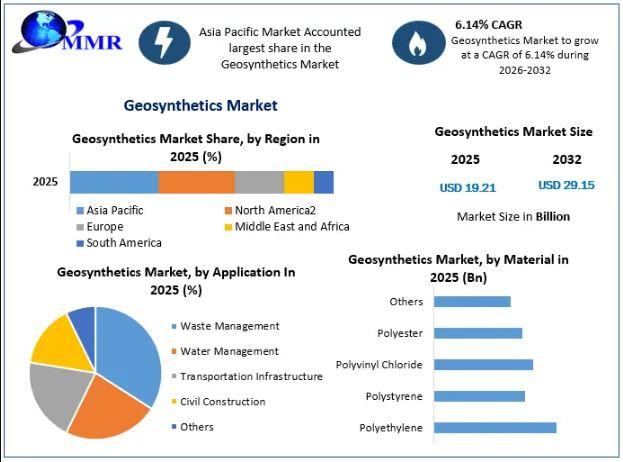
    The Geosynthetics Market was valued at USD 19.21 billion in 2025, establishing a substantial base for future infrastructure demand.
    Revenue is projected to reach nearly USD 29.15 billion by 2032, indicating expanding commercial opportunities.
    The market is forecast to grow at a 6.14% CAGR from 2026 to 2032, reflecting sustained adoption.
    Asia Pacific held regional supremacy in 2025, supported by urbanization and infrastructure development.
    Geotextiles remain a prominent product category because of their broad construction and soil-management applications.

    Market Overview

    The Geosynthetics Market has moved beyond being a specialized construction-material segment into a strategic component of modern infrastructure. These engineered materials improve soil performance through filtration, drainage, reinforcement, separation, stabilization, and containment. Their ability to reduce material usage and support longer-lasting infrastructure is strengthening their relevance for project developers.

    Geotextiles are widely applied in roads, embankments, erosion control, and landscaping, while geomembranes provide impermeable barriers for applications such as landfills and containment systems. Geogrids reinforce soil and distribute loads, helping improve the performance of roads, retaining structures, and embankments.

    Get Your Free Sample Report Link : https://www.maximizemarketresearch.com/request-sample/30009/

    Key Trends Driving Growth

    A major trend shaping the Geosynthetics Market is the growing emphasis on resilient infrastructure. Geogrids can reinforce road structures, while geotextiles support drainage and soil stabilization. These applications become particularly important as urban development increases pressure on transportation and drainage networks.

    Environmental protection is another important growth factor. Geomembranes are used for containment in landfills, reservoirs, dams, and mining facilities. Meanwhile, erosion-control products support shoreline protection and slope stabilization.

    The integration of geosynthetics with recycled materials also creates opportunities for more resource-efficient construction. Advanced applications, including systems integrated with monitoring technologies, could further expand their role in infrastructure management.

    Geosynthetics Market Analysis, Growth Drivers and Emerging Industry Trends Top of Form Key Highlights The Geosynthetics Market was valued at USD 19.21 billion in 2025, establishing a substantial base for future infrastructure demand. Revenue is projected to reach nearly USD 29.15 billion by 2032, indicating expanding commercial opportunities. The market is forecast to grow at a 6.14% CAGR from 2026 to 2032, reflecting sustained adoption. Asia Pacific held regional supremacy in 2025, supported by urbanization and infrastructure development. Geotextiles remain a prominent product category because of their broad construction and soil-management applications. Market Overview The Geosynthetics Market has moved beyond being a specialized construction-material segment into a strategic component of modern infrastructure. These engineered materials improve soil performance through filtration, drainage, reinforcement, separation, stabilization, and containment. Their ability to reduce material usage and support longer-lasting infrastructure is strengthening their relevance for project developers. Geotextiles are widely applied in roads, embankments, erosion control, and landscaping, while geomembranes provide impermeable barriers for applications such as landfills and containment systems. Geogrids reinforce soil and distribute loads, helping improve the performance of roads, retaining structures, and embankments. Get Your Free Sample Report Link : https://www.maximizemarketresearch.com/request-sample/30009/ Key Trends Driving Growth A major trend shaping the Geosynthetics Market is the growing emphasis on resilient infrastructure. Geogrids can reinforce road structures, while geotextiles support drainage and soil stabilization. These applications become particularly important as urban development increases pressure on transportation and drainage networks. Environmental protection is another important growth factor. Geomembranes are used for containment in landfills, reservoirs, dams, and mining facilities. Meanwhile, erosion-control products support shoreline protection and slope stabilization. The integration of geosynthetics with recycled materials also creates opportunities for more resource-efficient construction. Advanced applications, including systems integrated with monitoring technologies, could further expand their role in infrastructure management.
    Request Sample
    www.maximizemarketresearch.com
    for Request Sample fill the form
    0 Comments ·0 Shares ·356 Views
  • Flock Adhesives Market Trends, Opportunities and Growth Forecast

    Key Highlights

    Valued at USD 2.10 billion in 2024, creating a base for suppliers.
    Expected to reach nearly USD 3.30 billion by 2032, expanding commercial opportunities.
    Forecast to grow at a 5.8% CAGR from 2025 to 2032, indicating sustained expansion.
    Asia Pacific held the highest share in 2024, strengthening its strategic importance.
    Automotive, textiles, paper and packaging, and paints and coatings are key applications.

    Market Overview

    The Flock Adhesives Market was valued at USD 2.10 billion in 2024. This scale matters because flock adhesives enable small fiber particles to be placed on surfaces, enhancing aesthetics, tactile sensation, appearance and color. For manufacturers competing on both function and presentation, flocking can add value to finished products.

    Revenue is projected to reach nearly USD 3.30 billion by 2032. That increase gives suppliers an incentive to strengthen product portfolios, production capabilities and distribution networks. The Flock Adhesives Market is becoming a broader industrial opportunity rather than a narrow material segment.

    Why This Market Matters Now

    Automotive and packaging demand is a major driver because flock adhesives support high-efficiency applications. Textile demand, including flocking for garments and furniture, widens the customer base. For procurement teams, this diversification makes consistent performance and dependable supply increasingly important in the Flock Adhesives Market.

    Research and development and new product launches in developing economies are also supporting expansion. The Flock Adhesives Market therefore presents opportunities for companies that can adapt products to application needs while establishing stronger positions in emerging markets.

    Access a Free Sample Report Copy : https://www.maximizemarketresearch.com/request-sample/322/

    Key Trends Driving Growth

    Product performance is influencing purchasing decisions. Washability and flame retardance are highlighted as important opportunity areas, giving suppliers ways to differentiate formulations.

    Application diversification is another trend. Automotive, textiles, paper and packaging, and paints and coatings are covered as major application categories.

    Flock Adhesives Market Trends, Opportunities and Growth Forecast Key Highlights Valued at USD 2.10 billion in 2024, creating a base for suppliers. Expected to reach nearly USD 3.30 billion by 2032, expanding commercial opportunities. Forecast to grow at a 5.8% CAGR from 2025 to 2032, indicating sustained expansion. Asia Pacific held the highest share in 2024, strengthening its strategic importance. Automotive, textiles, paper and packaging, and paints and coatings are key applications. Market Overview The Flock Adhesives Market was valued at USD 2.10 billion in 2024. This scale matters because flock adhesives enable small fiber particles to be placed on surfaces, enhancing aesthetics, tactile sensation, appearance and color. For manufacturers competing on both function and presentation, flocking can add value to finished products. Revenue is projected to reach nearly USD 3.30 billion by 2032. That increase gives suppliers an incentive to strengthen product portfolios, production capabilities and distribution networks. The Flock Adhesives Market is becoming a broader industrial opportunity rather than a narrow material segment. Why This Market Matters Now Automotive and packaging demand is a major driver because flock adhesives support high-efficiency applications. Textile demand, including flocking for garments and furniture, widens the customer base. For procurement teams, this diversification makes consistent performance and dependable supply increasingly important in the Flock Adhesives Market. Research and development and new product launches in developing economies are also supporting expansion. The Flock Adhesives Market therefore presents opportunities for companies that can adapt products to application needs while establishing stronger positions in emerging markets. Access a Free Sample Report Copy : https://www.maximizemarketresearch.com/request-sample/322/ Key Trends Driving Growth Product performance is influencing purchasing decisions. Washability and flame retardance are highlighted as important opportunity areas, giving suppliers ways to differentiate formulations. Application diversification is another trend. Automotive, textiles, paper and packaging, and paints and coatings are covered as major application categories.
    Request Sample
    www.maximizemarketresearch.com
    for Request Sample fill the form
    0 Comments ·0 Shares ·373 Views
  • Water Soluble Polymers Market Growth Analysis, Demand Trends and Industry Outlook

    Key Highlights

    The Water Soluble Polymers Market reached US$48.35 billion in 2023, establishing a substantial commercial base.
    Revenue is projected to reach nearly US$68.76 billion by 2030, creating expansion opportunities.
    A 5.16% CAGR from 2024 to 2030 indicates sustained demand.
    Synthetic materials account for more than half of consumption and value.
    Water treatment is expected to hold the largest application share by 2030.
    Asia Pacific is expected to dominate through 2030.

    Market Overview

    The Water Soluble Polymers Market covers materials that dissolve, disperse or swell in water and modify aqueous systems through thickening, stabilization, coagulation, emulsification and dispersion. These functions make the materials valuable across several industrial processes.

    Valued at US$48.35 billion in 2023, the Water Soluble Polymers Market already has a broad industrial footprint. This scale confirms their established industrial role.

    Why This Market Matters Now

    Industrial users are increasingly focused on water consumption, treatment efficiency and process performance. In paper manufacturing, water-soluble polymers support dewatering, retention, and water and sludge treatment, helping improve productivity and paper quality.

    The Water Soluble Polymers Market benefits from applications in pharmaceuticals, food, paints, textiles, adhesives, coatings, detergents and personal care. This broad base gives producers multiple demand channels and reduces reliance on one end-use industry.

    Get a Sample Insight Report Now : https://www.maximizemarketresearch.com/request-sample/27404/

    Key Trends Driving Growth

    Rising demand for bio-based acrylamide and growing pharmaceutical applications are important growth drivers. Meanwhile, water treatment, enhanced oil recovery, drilling and fracking are creating additional requirements for polymer-based solutions.

    Personal care and detergent demand in India, China, the United States and Saudi Arabia is also supporting expansion. Because these polymers can act as thickeners, binders, film-formers, humectants, lubricants, dispersants and flocculants, suppliers can address varied formulation needs.

    Water Soluble Polymers Market Growth Analysis, Demand Trends and Industry Outlook Key Highlights The Water Soluble Polymers Market reached US$48.35 billion in 2023, establishing a substantial commercial base. Revenue is projected to reach nearly US$68.76 billion by 2030, creating expansion opportunities. A 5.16% CAGR from 2024 to 2030 indicates sustained demand. Synthetic materials account for more than half of consumption and value. Water treatment is expected to hold the largest application share by 2030. Asia Pacific is expected to dominate through 2030. Market Overview The Water Soluble Polymers Market covers materials that dissolve, disperse or swell in water and modify aqueous systems through thickening, stabilization, coagulation, emulsification and dispersion. These functions make the materials valuable across several industrial processes. Valued at US$48.35 billion in 2023, the Water Soluble Polymers Market already has a broad industrial footprint. This scale confirms their established industrial role. Why This Market Matters Now Industrial users are increasingly focused on water consumption, treatment efficiency and process performance. In paper manufacturing, water-soluble polymers support dewatering, retention, and water and sludge treatment, helping improve productivity and paper quality. The Water Soluble Polymers Market benefits from applications in pharmaceuticals, food, paints, textiles, adhesives, coatings, detergents and personal care. This broad base gives producers multiple demand channels and reduces reliance on one end-use industry. Get a Sample Insight Report Now : https://www.maximizemarketresearch.com/request-sample/27404/ Key Trends Driving Growth Rising demand for bio-based acrylamide and growing pharmaceutical applications are important growth drivers. Meanwhile, water treatment, enhanced oil recovery, drilling and fracking are creating additional requirements for polymer-based solutions. Personal care and detergent demand in India, China, the United States and Saudi Arabia is also supporting expansion. Because these polymers can act as thickeners, binders, film-formers, humectants, lubricants, dispersants and flocculants, suppliers can address varied formulation needs.
    Request Sample
    www.maximizemarketresearch.com
    for Request Sample fill the form
    0 Comments ·0 Shares ·490 Views
  • Water Soluble Polymers Market Industry Analysis, Growth Drivers and Future Outlook

    Key Highlights

    The Water Soluble Polymers Market reached US$48.35 billion in 2023, establishing a substantial commercial base.
    Revenue is projected to reach nearly US$68.76 billion by 2030, creating expansion opportunities.
    A 5.16% CAGR from 2024 to 2030 indicates sustained demand.
    Synthetic materials account for more than half of consumption and value.
    Water treatment is expected to hold the largest application share by 2030.
    Asia Pacific is expected to dominate through 2030.

    Market Overview

    The Water Soluble Polymers Market covers materials that dissolve, disperse or swell in water and modify aqueous systems through thickening, stabilization, coagulation, emulsification and dispersion. These functions make the materials valuable across several industrial processes.

    Valued at US$48.35 billion in 2023, the Water Soluble Polymers Market already has a broad industrial footprint. This scale confirms their established industrial role.

    Why This Market Matters Now

    Industrial users are increasingly focused on water consumption, treatment efficiency and process performance. In paper manufacturing, water-soluble polymers support dewatering, retention, and water and sludge treatment, helping improve productivity and paper quality.

    The Water Soluble Polymers Market benefits from applications in pharmaceuticals, food, paints, textiles, adhesives, coatings, detergents and personal care. This broad base gives producers multiple demand channels and reduces reliance on one end-use industry.

    Get a Sample Insight Report Now : https://www.maximizemarketresearch.com/request-sample/27404/

    Key Trends Driving Growth

    Rising demand for bio-based acrylamide and growing pharmaceutical applications are important growth drivers. Meanwhile, water treatment, enhanced oil recovery, drilling and fracking are creating additional requirements for polymer-based solutions.

    Personal care and detergent demand in India, China, the United States and Saudi Arabia is also supporting expansion. Because these polymers can act as thickeners, binders, film-formers, humectants, lubricants, dispersants and flocculants, suppliers can address varied formulation needs.

    Water Soluble Polymers Market Industry Analysis, Growth Drivers and Future Outlook Key Highlights The Water Soluble Polymers Market reached US$48.35 billion in 2023, establishing a substantial commercial base. Revenue is projected to reach nearly US$68.76 billion by 2030, creating expansion opportunities. A 5.16% CAGR from 2024 to 2030 indicates sustained demand. Synthetic materials account for more than half of consumption and value. Water treatment is expected to hold the largest application share by 2030. Asia Pacific is expected to dominate through 2030. Market Overview The Water Soluble Polymers Market covers materials that dissolve, disperse or swell in water and modify aqueous systems through thickening, stabilization, coagulation, emulsification and dispersion. These functions make the materials valuable across several industrial processes. Valued at US$48.35 billion in 2023, the Water Soluble Polymers Market already has a broad industrial footprint. This scale confirms their established industrial role. Why This Market Matters Now Industrial users are increasingly focused on water consumption, treatment efficiency and process performance. In paper manufacturing, water-soluble polymers support dewatering, retention, and water and sludge treatment, helping improve productivity and paper quality. The Water Soluble Polymers Market benefits from applications in pharmaceuticals, food, paints, textiles, adhesives, coatings, detergents and personal care. This broad base gives producers multiple demand channels and reduces reliance on one end-use industry. Get a Sample Insight Report Now : https://www.maximizemarketresearch.com/request-sample/27404/ Key Trends Driving Growth Rising demand for bio-based acrylamide and growing pharmaceutical applications are important growth drivers. Meanwhile, water treatment, enhanced oil recovery, drilling and fracking are creating additional requirements for polymer-based solutions. Personal care and detergent demand in India, China, the United States and Saudi Arabia is also supporting expansion. Because these polymers can act as thickeners, binders, film-formers, humectants, lubricants, dispersants and flocculants, suppliers can address varied formulation needs.
    Request Sample
    www.maximizemarketresearch.com
    for Request Sample fill the form
    0 Comments ·0 Shares ·483 Views
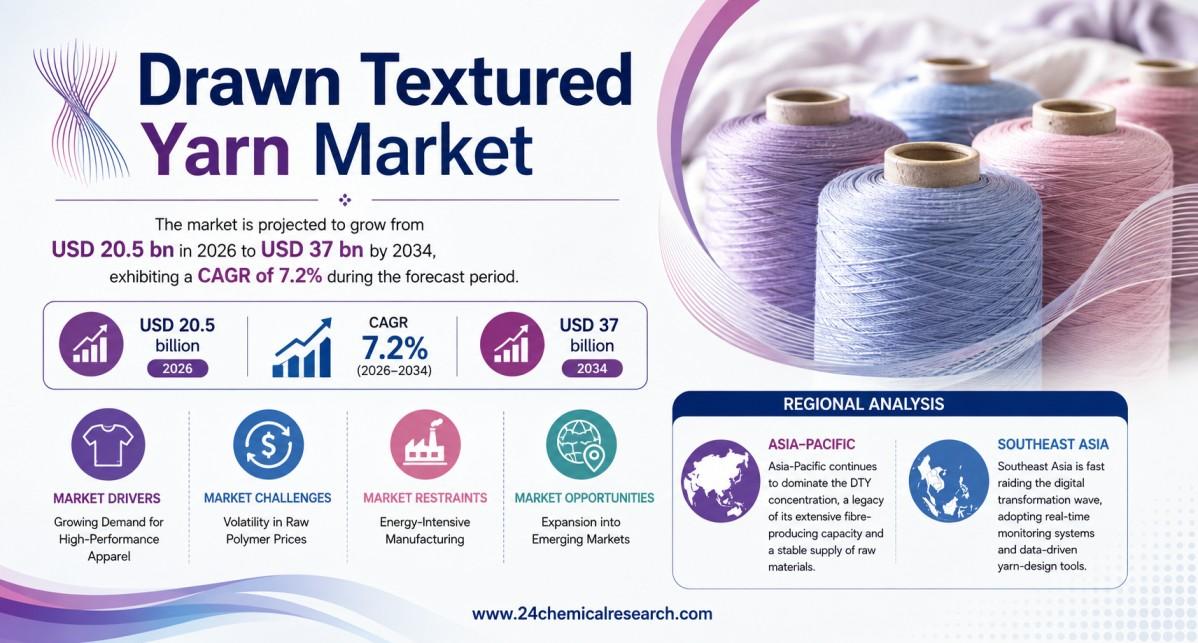
  • Global Drawn Textured Yarn (DTY) market to reach USD 37 Billion by 2034 at 7.2% CAGR. Asia-Pacific dominates, driven by apparel demand and sustainable yarns.

    Get the full report: https://www.24chemicalresearch.com/reports/281592/drawn-textured-yarn-market

    #MarketResearch, #DrawnTexturedYarn, #Textiles, #Apparel
    Global Drawn Textured Yarn (DTY) market to reach USD 37 Billion by 2034 at 7.2% CAGR. Asia-Pacific dominates, driven by apparel demand and sustainable yarns. Get the full report: https://www.24chemicalresearch.com/reports/281592/drawn-textured-yarn-market #MarketResearch, #DrawnTexturedYarn, #Textiles, #Apparel
    0 Comments ·0 Shares ·158 Views
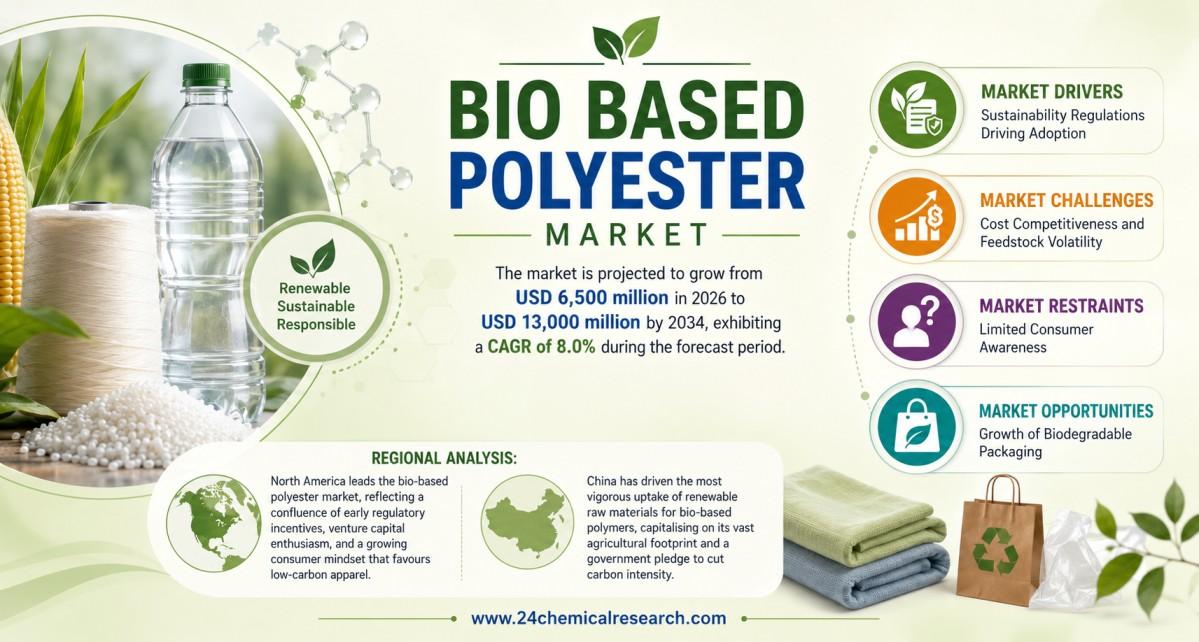
  • Global Bio-based Polyester Market to reach USD 13 Billion by 2034 at 8.0% CAGR. Sustainable textiles and circular economy drive renewable polymer demand.

    View full report: https://www.24chemicalresearch.com/reports/315878/biobased-polyester-market

    #MarketResearch #BiobasedPolyester #SustainableMaterials #CircularEconomy #GreenChemistry #Textiles
    Global Bio-based Polyester Market to reach USD 13 Billion by 2034 at 8.0% CAGR. Sustainable textiles and circular economy drive renewable polymer demand. View full report: https://www.24chemicalresearch.com/reports/315878/biobased-polyester-market #MarketResearch #BiobasedPolyester #SustainableMaterials #CircularEconomy #GreenChemistry #Textiles
    0 Comments ·0 Shares ·200 Views
  • Global UV Reflective Fabric Market to reach USD 7.1 Billion by 2032 at 6.8% CAGR. Safety regulations and green building drive reflective textile demand.

    View full report: https://www.24chemicalresearch.com/reports/273195/global-uv-reflective-fabric-market

    #MarketResearch #UVReflectiveFabric #SafetyTextiles #GreenBuilding #HighVisibility
    Global UV Reflective Fabric Market to reach USD 7.1 Billion by 2032 at 6.8% CAGR. Safety regulations and green building drive reflective textile demand. View full report: https://www.24chemicalresearch.com/reports/273195/global-uv-reflective-fabric-market #MarketResearch #UVReflectiveFabric #SafetyTextiles #GreenBuilding #HighVisibility
    0 Comments ·0 Shares ·182 Views
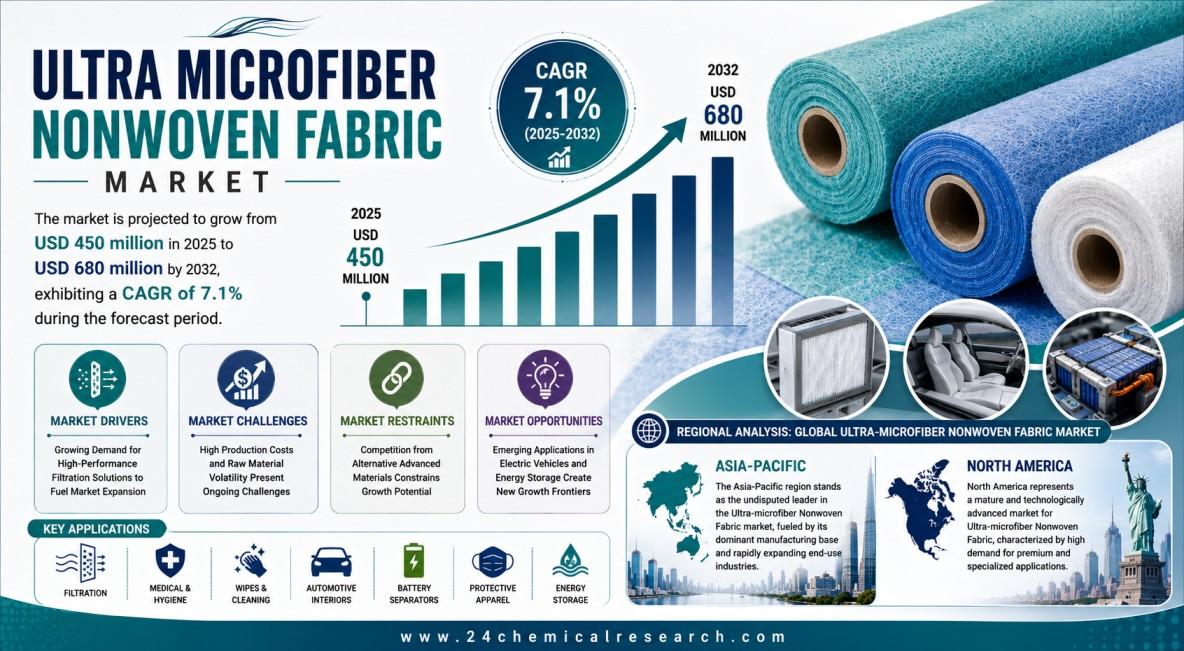
  • Global Ultra-microfiber Nonwoven Fabric Market to reach USD 680 Million by 2032 at 7.1% CAGR. Medical, filtration, and EV battery applications drive demand.

    View full report: https://www.24chemicalresearch.com/reports/266359/global-ultramicrofiber-nonwoven-fabric-market

    #MarketResearch #Ultramicrofiber #NonwovenFabric #MedicalTextiles #Filtration
    Global Ultra-microfiber Nonwoven Fabric Market to reach USD 680 Million by 2032 at 7.1% CAGR. Medical, filtration, and EV battery applications drive demand. View full report: https://www.24chemicalresearch.com/reports/266359/global-ultramicrofiber-nonwoven-fabric-market #MarketResearch #Ultramicrofiber #NonwovenFabric #MedicalTextiles #Filtration
    0 Comments ·0 Shares ·337 Views
  • Global Silicone Printing Ink Market to reach USD 951.8 Million by 2034 at 5.3% CAGR. Electronics, textiles, and packaging drive durable ink demand.

    View full report: https://www.24chemicalresearch.com/reports/304565/silicone-printing-ink-market

    #MarketResearch #SiliconePrintingInk #UVInk #TextilePrinting #Packaging
    Global Silicone Printing Ink Market to reach USD 951.8 Million by 2034 at 5.3% CAGR. Electronics, textiles, and packaging drive durable ink demand. View full report: https://www.24chemicalresearch.com/reports/304565/silicone-printing-ink-market #MarketResearch #SiliconePrintingInk #UVInk #TextilePrinting #Packaging
    0 Comments ·0 Shares ·188 Views
  • Global Piezo Inkjet Ink Market to reach USD 2.45 Billion by 2032 at 6.4% CAGR. Packaging, textiles, and wide-format printing drive digital ink demand.

    View full report: https://www.24chemicalresearch.com/reports/263065/global-piezo-inkjet-ink-forecast-market

    #MarketResearch #PiezoInkjetInk #DigitalPrinting #Packaging #TextilePrinting
    Global Piezo Inkjet Ink Market to reach USD 2.45 Billion by 2032 at 6.4% CAGR. Packaging, textiles, and wide-format printing drive digital ink demand. View full report: https://www.24chemicalresearch.com/reports/263065/global-piezo-inkjet-ink-forecast-market #MarketResearch #PiezoInkjetInk #DigitalPrinting #Packaging #TextilePrinting
    0 Comments ·0 Shares ·192 Views