


• The global High Capacity Power Bank Market is experiencing a transformative era of growth, with valuation projected to climb from USD 14.28 billion in 2025 to USD 24.54 billion by 2032. market is expanding at a steady CAGR of 8.04% throughout the forecast period. This upward trajectory underscores the critical strategic importance of reliable, high-capacity mobile energy storage amid ubiquitous device usage, remote work proliferation, and outdoor connectivity demands.

    The modern digital ecosystem relies heavily on smartphones, tablets, high-performance laptops, and portable consoles, yet battery longevity continues to lag behind processing power advancements. This performance gap has turned high-capacity power banks from niche outdoor accessories into vital enterprise and consumer utilities. Industry dynamics are shifting away from basic supplemental chargers toward sophisticated power stations featuring multi-port rapid charging, smart TFT displays, and integrated cables. For manufacturers and technology investors, the market presents lucrative opportunities in premiumization, smart energy management integration, and eco-friendly solar or hydrogen-based charging solutions that cater to urban professionals and mobile-first economies.

    Key Findings from the Report
    Market Valuation & Growth: The high-capacity power bank market is valued at USD 14.28 billion in 2025 and is projected to reach USD 24.54 billion by 2032, registering an 8.04% CAGR.

    Dominant Segment: Portable power banks remain the largest product category, driven by high versatility, USB-port compatibility, and robust demand across everyday consumer electronics.

    Fastest-Growing Segment: Lithium-polymer battery systems are expanding at the highest pace due to their lightweight form factor, design flexibility, and superior energy density.

    Application Insights: Consumer electronics constitute the dominant application sector, while commercial and industrial deployment (such as remote field operations and emergency response) represents the fastest-growing application vector.

    Leading Region: Asia-Pacific leads the global marketplace, anchored by high smartphone penetration, thriving electronics manufacturing hubs in China, and surging digital populations in India and Southeast Asia.

    Emerging Region: The Middle East and Africa represent the fastest-growing regional market, propelled by rapid infrastructure modernization and outdoor tourism expansion.

    Investment Relevance: Intense competition and shifting price points are forcing manufacturers to prioritize high-wattage fast-charging technologies (PD 3.1) and safety certifications to capture market share.

    For further information, click the following link:https://www.stellarmr.com/report/req_sample/high-capacity-power-bank-market/2845

    Market Drivers and Restraints
    Drivers
    Escalating Power Consumption of Handheld Devices: High-refresh-rate displays, 5G connectivity, and power-intensive mobile applications rapidly drain smartphone and laptop batteries, driving continuous daily consumer reliance on high-capacity auxiliary power.

    Proliferation of Fast-Charging Protocols: Innovations like Power Delivery (PD) 3.1 and multi-port high-wattage outputs allow users to charge laptops and tablets simultaneously, boosting consumer utility and purchase intent.

    Decline in Average Selling Prices (ASPs): Manufacturing efficiencies and component cost reductions are making premium 20,000mAh+ power banks more accessible to mainstream consumer demographics.

    Restraints
    Proliferation of Counterfeit and Substandard Products: The influx of low-grade, uncertified power banks operating with inferior cells creates safety hazards, consumer distrust, and unfair pricing pressures for compliant brands.

    Strict Regulatory and Compliance Hurdles: Comprehensive international safety testing mandates—such as BIS, CE, RoHS, and UL standards—increase compliance costs and time-to-market for new entrants.

    Technology, Regulation, and Sustainability Trends
    The industry is undergoing significant operational and technological transformation. Manufacturers are rapidly integrating smart TFT displays, retractable built-in cables, and Qi2 wireless magnetic charging compatibility to elevate user convenience. From a regulatory perspective, cross-border trade is governed by strict international tariffs (ranging from 2.7% to 25%) alongside compulsory regional certifications to mitigate overheating and fire hazards. Sustainability is also taking center stage; leading brands are increasingly adopting recycled plastics, energy-efficient manufacturing pipelines, and exploring solar-assisted charging modules to align with global ESG corporate goals.

    Regional Insights
    Asia-Pacific holds the dominant market share, supported by robust mobile phone shipments—such as India's massive smartphone user base exceeding 140 million annual units—and dominant manufacturing ecosystems in China, Japan, and South Korea. Meanwhile, North America and Europe maintain mature, highly quality-conscious markets where consumers readily invest in premium, high-wattage travel and enterprise power banks. The Middle East and Africa are emerging as high-growth hotspots, driven by ambitious smart-city investments, remote infrastructure projects, and expanding outdoor recreation sectors.

    Recent Industry Developments
    Anker Innovations (2026): Launched the Prime Power Bank (26K, 300W) in key markets, offering a 26,250mAh capacity with dual 140W USB-C ports capable of powering a MacBook Pro for extended professional workflows.

    UGREEN (2026): Introduced the Nexode 25,000mAh power bank featuring a 200W triple-port output and PD 3.1 support, charging a 16-inch laptop to 54% in just 30 minutes.

    UGREEN (2026): Expanded its rugged portfolio with a 48,000mAh Portable Power Station equipped with five simultaneous device-charging ports targeted at emergency preparedness and outdoor professionals.

    Anker Innovations (2025): Deployed upgraded AI-driven temperature control and smart digital display integration across its flagship high-capacity power bank lines to enhance user safety and real-time metric visibility.

    Baseus (2025): Expanded its sustainable product lineup by releasing high-capacity power banks manufactured using post-consumer recycled (PCR) materials, aligning with corporate sustainability directives.

    Competitive Landscape
    The global high-capacity power bank market is characterized by intense fragmentation and fierce competition between established consumer tech giants and agile original equipment manufacturers (OEMs). Key market participants—including Anker Innovations Limited, Xiaomi Corporation, Belkin International, Inc., Romoss Technology Co., Ltd., Baseus, Energizer Holdings, Inc., Samsung Electronics Co., Ltd., and ADATA Technology Co. Ltd.—are actively competing through aggressive pricing strategies, rapid product introductions, R&D investments in gallium nitride (GaN) technology, and multi-regional distribution partnerships.

    Analyst Commentary
    "The high-capacity power bank market has crossed the threshold from a simple gadget accessory sector into an essential pillar of mobile power infrastructure," notes a Senior Research Analyst at Stellar Market Research. "As mobile processors demand more power and remote lifestyles become permanent, differentiation will no longer rely solely on raw milliampere-hour capacity. Winners in this landscape will be brands that successfully master ultra-fast charging architectures, strict regulatory safety compliance, and intelligent power management."

    Future Outlook
    Through the remainder of the forecast period to 2032, the high-capacity power bank market is projected to witness accelerated integration with renewable energy solutions, such as portable solar charging matrices and hydrogen-fuel-based backups. Commercial adoption across field services, logistics, and emergency response will continue to outpace baseline consumer growth. While pricing pressures from unbranded competitors will persist, tier-one brands that leverage technological innovation, robust safety engineering, and sustainable manufacturing will capture premium market valuations.

    For further information, click the following link:https://www.stellarmr.com/report/req_sample/high-capacity-power-bank-market/2845
    About Stellar Market Research
    Stellar Market Research is a multifaceted market research and consulting company with professionals from several industries. Some of the industries we cover include medical devices, pharmaceutical manufacturers, science and engineering, electronic components, industrial equipment, technology and communication, cars and automobiles, chemical products and substances, general merchandise, beverages, personal care, and automated systems. To mention a few, we provide market-verified industry estimations, technical trend analysis, crucial market research, strategic advice, competition analysis, production and demand analysis, and client impact studies.

    Address
    Phase 3, Navale IT Zone, S.No. 51/2A/2, Office No. 202, 2nd floor, Near, Navale Brg, Narhe, Pune, Maharashtra 411041

    Email
    [email protected]

    Mobile
    +91 9607365656
    The global High Capacity Power Bank Market is experiencing a transformative era of growth, with valuation projected to climb from USD 14.28 billion in 2025 to USD 24.54 billion by 2032. market is expanding at a steady CAGR of 8.04% throughout the forecast period. This upward trajectory underscores the critical strategic importance of reliable, high-capacity mobile energy storage amid ubiquitous device usage, remote work proliferation, and outdoor connectivity demands. The modern digital ecosystem relies heavily on smartphones, tablets, high-performance laptops, and portable consoles, yet battery longevity continues to lag behind processing power advancements. This performance gap has turned high-capacity power banks from niche outdoor accessories into vital enterprise and consumer utilities. Industry dynamics are shifting away from basic supplemental chargers toward sophisticated power stations featuring multi-port rapid charging, smart TFT displays, and integrated cables. For manufacturers and technology investors, the market presents lucrative opportunities in premiumization, smart energy management integration, and eco-friendly solar or hydrogen-based charging solutions that cater to urban professionals and mobile-first economies. Key Findings from the Report Market Valuation & Growth: The high-capacity power bank market is valued at USD 14.28 billion in 2025 and is projected to reach USD 24.54 billion by 2032, registering an 8.04% CAGR. Dominant Segment: Portable power banks remain the largest product category, driven by high versatility, USB-port compatibility, and robust demand across everyday consumer electronics. Fastest-Growing Segment: Lithium-polymer battery systems are expanding at the highest pace due to their lightweight form factor, design flexibility, and superior energy density. Application Insights: Consumer electronics constitute the dominant application sector, while commercial and industrial deployment (such as remote field operations and emergency response) represents the fastest-growing application vector. Leading Region: Asia-Pacific leads the global marketplace, anchored by high smartphone penetration, thriving electronics manufacturing hubs in China, and surging digital populations in India and Southeast Asia. Emerging Region: The Middle East and Africa represent the fastest-growing regional market, propelled by rapid infrastructure modernization and outdoor tourism expansion. Investment Relevance: Intense competition and shifting price points are forcing manufacturers to prioritize high-wattage fast-charging technologies (PD 3.1) and safety certifications to capture market share. For further information, click the following link:https://www.stellarmr.com/report/req_sample/high-capacity-power-bank-market/2845 Market Drivers and Restraints Drivers Escalating Power Consumption of Handheld Devices: High-refresh-rate displays, 5G connectivity, and power-intensive mobile applications rapidly drain smartphone and laptop batteries, driving continuous daily consumer reliance on high-capacity auxiliary power. Proliferation of Fast-Charging Protocols: Innovations like Power Delivery (PD) 3.1 and multi-port high-wattage outputs allow users to charge laptops and tablets simultaneously, boosting consumer utility and purchase intent. Decline in Average Selling Prices (ASPs): Manufacturing efficiencies and component cost reductions are making premium 20,000mAh+ power banks more accessible to mainstream consumer demographics. Restraints Proliferation of Counterfeit and Substandard Products: The influx of low-grade, uncertified power banks operating with inferior cells creates safety hazards, consumer distrust, and unfair pricing pressures for compliant brands. Strict Regulatory and Compliance Hurdles: Comprehensive international safety testing mandates—such as BIS, CE, RoHS, and UL standards—increase compliance costs and time-to-market for new entrants. Technology, Regulation, and Sustainability Trends The industry is undergoing significant operational and technological transformation. Manufacturers are rapidly integrating smart TFT displays, retractable built-in cables, and Qi2 wireless magnetic charging compatibility to elevate user convenience. From a regulatory perspective, cross-border trade is governed by strict international tariffs (ranging from 2.7% to 25%) alongside compulsory regional certifications to mitigate overheating and fire hazards. Sustainability is also taking center stage; leading brands are increasingly adopting recycled plastics, energy-efficient manufacturing pipelines, and exploring solar-assisted charging modules to align with global ESG corporate goals. Regional Insights Asia-Pacific holds the dominant market share, supported by robust mobile phone shipments—such as India's massive smartphone user base exceeding 140 million annual units—and dominant manufacturing ecosystems in China, Japan, and South Korea. Meanwhile, North America and Europe maintain mature, highly quality-conscious markets where consumers readily invest in premium, high-wattage travel and enterprise power banks. The Middle East and Africa are emerging as high-growth hotspots, driven by ambitious smart-city investments, remote infrastructure projects, and expanding outdoor recreation sectors. Recent Industry Developments Anker Innovations (2026): Launched the Prime Power Bank (26K, 300W) in key markets, offering a 26,250mAh capacity with dual 140W USB-C ports capable of powering a MacBook Pro for extended professional workflows. UGREEN (2026): Introduced the Nexode 25,000mAh power bank featuring a 200W triple-port output and PD 3.1 support, charging a 16-inch laptop to 54% in just 30 minutes. UGREEN (2026): Expanded its rugged portfolio with a 48,000mAh Portable Power Station equipped with five simultaneous device-charging ports targeted at emergency preparedness and outdoor professionals. Anker Innovations (2025): Deployed upgraded AI-driven temperature control and smart digital display integration across its flagship high-capacity power bank lines to enhance user safety and real-time metric visibility. Baseus (2025): Expanded its sustainable product lineup by releasing high-capacity power banks manufactured using post-consumer recycled (PCR) materials, aligning with corporate sustainability directives. Competitive Landscape The global high-capacity power bank market is characterized by intense fragmentation and fierce competition between established consumer tech giants and agile original equipment manufacturers (OEMs). Key market participants—including Anker Innovations Limited, Xiaomi Corporation, Belkin International, Inc., Romoss Technology Co., Ltd., Baseus, Energizer Holdings, Inc., Samsung Electronics Co., Ltd., and ADATA Technology Co. Ltd.—are actively competing through aggressive pricing strategies, rapid product introductions, R&D investments in gallium nitride (GaN) technology, and multi-regional distribution partnerships. Analyst Commentary "The high-capacity power bank market has crossed the threshold from a simple gadget accessory sector into an essential pillar of mobile power infrastructure," notes a Senior Research Analyst at Stellar Market Research. "As mobile processors demand more power and remote lifestyles become permanent, differentiation will no longer rely solely on raw milliampere-hour capacity. Winners in this landscape will be brands that successfully master ultra-fast charging architectures, strict regulatory safety compliance, and intelligent power management." Future Outlook Through the remainder of the forecast period to 2032, the high-capacity power bank market is projected to witness accelerated integration with renewable energy solutions, such as portable solar charging matrices and hydrogen-fuel-based backups. Commercial adoption across field services, logistics, and emergency response will continue to outpace baseline consumer growth. While pricing pressures from unbranded competitors will persist, tier-one brands that leverage technological innovation, robust safety engineering, and sustainable manufacturing will capture premium market valuations. For further information, click the following link:https://www.stellarmr.com/report/req_sample/high-capacity-power-bank-market/2845 About Stellar Market Research Stellar Market Research is a multifaceted market research and consulting company with professionals from several industries. Some of the industries we cover include medical devices, pharmaceutical manufacturers, science and engineering, electronic components, industrial equipment, technology and communication, cars and automobiles, chemical products and substances, general merchandise, beverages, personal care, and automated systems. To mention a few, we provide market-verified industry estimations, technical trend analysis, crucial market research, strategic advice, competition analysis, production and demand analysis, and client impact studies. Address Phase 3, Navale IT Zone, S.No. 51/2A/2, Office No. 202, 2nd floor, Near, Navale Brg, Narhe, Pune, Maharashtra 411041 Email [email protected] Mobile +91 9607365656
    0 Comments ·0 Shares ·401 Views
  • Stellar Market Research today announced the release of its comprehensive intelligence report on the Instrument Transformer Market, highlighting a pivotal industry transformation driven by smart grid investments, renewable integration, and high-voltage direct current (HVDC) transmission upgrades.

    Traditionally viewed as passive electrical components, instrument transformers are experiencing a profound technological renaissance. The rapid acceleration of smart grid deployments, industrial automation, and the proliferation of digital substations utilizing IEC 61850 communication standards are redefining the market. Utilities and heavy industrial operators are increasingly pivoting toward optical and non-conventional instrument transformers (NCITs) to eliminate saturation risks, enhance cyber-secure data transmission, and reduce environmental footprints by eliminating oil-insulated infrastructure. This report provides critical decision-makers, grid operators, and institutional investors with granular intelligence on how technological convergence and decarbonization mandates are reshaping capital allocation across transmission and distribution (T&D) networks globally.

    Key Findings from the Report
    Market Valuation & Growth Trajectory: The global Instrument Transformer Market is projected to expand at a robust compound annual growth rate (CAGR) of over 6.2% throughout the forecast period, transitioning from a robust base year valuation toward substantial multi-billion-dollar milestones by 2033.

    Dominant Product Segment: Potential/Voltage Transformers (VTs) maintain the dominant market share, anchored by their indispensable role in revenue metering, system protection, and precise voltage regulation across high-voltage transmission corridors.

    Fastest-Growing Segment: Non-conventional and optical instrument transformers (NCITs) represent the fastest-growing segment, driven by digital substation retrofits, immunity to electromagnetic interference (EMI), and enhanced personnel safety.

    Voltage Class Breakdown: High-voltage (HV) and ultra-high-voltage (UHV) applications account for the largest revenue share, fueled by cross-border interconnections and long-distance bulk power evacuation projects.

    Regional Dominance: Asia-Pacific leads the global market, propelled by massive grid expansion programs in India, China, and Southeast Asia to accommodate surging electrification and renewable capacity additions.

    Emerging Regional Pocket: North America and Europe emerge as vital high-growth pockets, driven by aggressive replacement cycles for aging grid infrastructure and stringent regulatory mandates for grid resilience.

    Investment & Capital Focus: Private equity and strategic venture capital are heavily targeting manufacturers specializing in eco-friendly gas-insulated switchgear (GIS) compatible units and IoT-enabled smart sensors.

    For further information, click the following link:https://www.stellarmr.com/report/req_sample/instrument-transformer-market/2839
    Market Drivers and Restraints
    Drivers
    Accelerating Global Smart Grid & Digital Substation Investments: Utilities worldwide are committing billions to modernize transmission networks, integrating IoT sensors, automated fault detection, and digital communication protocols that necessitate advanced instrument transformers.

    Massive Integration of Renewable Energy Sources: The exponential growth of utility-scale solar and offshore wind farms requires precise monitoring and high-accuracy measurement equipment to stabilize intermittent power generation and maintain grid frequency.

    Rigorous Grid Reliability and Safety Mandates: Strict regulatory frameworks enforced by bodies such as the Federal Energy Regulatory Commission (FERC) and international counterparts compel utilities to upgrade outmoded protection relays, minimizing catastrophic blackouts.

    Restraints
    High Capital Expenditure for Advanced Retrofits: The transition from conventional electromagnetic transformers to optical or digital NCIT systems entails substantial upfront capital investments, creating budgetary friction for smaller municipal utilities.

    Supply Chain Vulnerabilities in Raw Materials: Persistent market price volatility in critical raw materials—including electrical steel, copper winding, and specialized insulating resins—continues to compress manufacturer profit margins and extend lead times.

    Technology, Regulation, and Sustainability Trends
    The instrument transformer sector is experiencing a profound operational transformation catalyzed by evolving environmental and technological standards. The industry is rapidly phasing out sulfur hexafluoride (SF6)—a potent greenhouse gas historically used for insulation—in favor of eco-friendly, dry-type, or alternative gas-insulated technologies that align with global Environmental, Social, and Governance (ESG) mandates. Furthermore, the integration of fiber-optic sensing and IoT-enabled condition monitoring allows real-time thermal and electrical profiling, enabling predictive maintenance that drastically reduces unplanned downtime. On the regulatory front, compliance with IEC 61850 interoperability standards has become a non-negotiable benchmark for market entry, compelling manufacturers to embed advanced digital communication interfaces directly into their hardware architecture.

    Regional Insights
    Asia-Pacific (APAC): Dominating the global landscape, APAC’s growth is anchored by massive state-backed grid modernization initiatives, such as India's revamped distribution sector schemes and China's UHV transmission superhighways. Rapid industrialization and rural electrification continue to drive immense volume demand.

    North America: Characterized by brownfield modernization, North American utilities are prioritizing grid hardening against extreme weather events and cyber-physical threats, accelerating the adoption of high-accuracy optical measurement solutions.

    Europe: Driven by the European Green Deal and ambitious offshore wind buildouts in the North Sea, Europe stands out for its stringent sustainability requirements, heavily favoring SF6-free and recyclable instrument transformer designs.

    Latin America & Middle East & Africa (MEA): Emerging as high-potential growth regions, MEA and Latin America are expanding inter-regional grid interconnectors and upgrading urban distribution networks to curb technical losses and accommodate mining and industrial loads.

    Recent Industry Developments
    ABB (2025): Launched an eco-efficient portfolio of medium-voltage instrument transformers utilizing alternative insulation gases, achieving a 99% reduction in global warming potential (GWP) and helping European utilities meet strict corporate carbon-neutrality targets.

    Siemens Energy (2025): Expanded its digital substation manufacturing capacity in Nuremberg, Germany, integrating advanced optical sensor calibration lines to meet a 35% surge in European orders for IEC 61850-compliant non-conventional instrument transformers.

    Schneider Electric (2024): Formed a strategic partnership with a leading IoT analytics firm to embed real-time thermal monitoring software directly into outdoor high-voltage current transformers, boosting asset lifespan by an estimated 20%.

    GE Vernova (2024): Secured a major multi-year supply agreement with a primary North American transmission grid operator to deploy advanced fiber-optic current sensors, significantly improving fault-detection speed across critical interstate corridors.

    Mitsubishi Electric (2026): Completed a strategic production facility expansion in India, aiming to scale up domestic manufacturing of high-voltage instrument transformers to support rapid regional grid buildouts under the National Infrastructure Pipeline.

    Competitive Landscape
    The global Instrument Transformer Market features a consolidated yet fiercely competitive landscape characterized by major multinational electrical equipment manufacturers leveraging mergers, strategic joint ventures, and technological differentiation. Key market leaders—including ABB, Siemens Energy, Schneider Electric, GE Vernova, Mitsubishi Electric, Arteche, Ritz Instrument Transformers, and Eaton Corporation—are actively focusing on portfolio expansion toward digital, SF6-free, and smart-sensor-embedded solutions. Leading players are also strengthening their regional distribution networks and engaging in long-term supply agreements with transmission system operators (TSOs) to secure dominant market positioning.

    Analyst Commentary
    "The instrument transformer market is no longer defined merely by electrical accuracy; it is now the foundational nerve center of the digital grid," said a Senior Research Analyst at Stellar Market Research. "As utilities race to integrate decentralized renewables and deploy AI-driven grid management systems, the ability to deliver real-time, cyber-secure, and eco-friendly measurement data will separate market leaders from legacy laggards. Strategic investments in non-conventional and optical sensing technologies are paramount for capturing long-term value through 2033."

    Future Outlook
    Looking ahead through the forecast period, demand for instrument transformers will remain closely tied to global decarbonization trajectories and accelerated electrification. As artificial intelligence and machine learning permeate substation automation, instrument transformers will increasingly function as smart edge-computing nodes capable of autonomous anomaly detection. Investment flows are projected to heavily favor manufacturers providing modular, interoperable, and fully recyclable hardware solutions, ensuring resilient growth amidst shifting geopolitical and regulatory paradigms.

    For further information, click the following link:https://www.stellarmr.com/report/req_sample/instrument-transformer-market/2839
    About Stellar Market Research
    Stellar Market Research is a multifaceted market research and consulting company with professionals from several industries. Some of the industries we cover include medical devices, pharmaceutical manufacturers, science and engineering, electronic components, industrial equipment, technology and communication, cars and automobiles, chemical products and substances, general merchandise, beverages, personal care, and automated systems. To mention a few, we provide market-verified industry estimations, technical trend analysis, crucial market research, strategic advice, competition analysis, production and demand analysis, and client impact studies.

    Address
    Phase 3, Navale IT Zone, S.No. 51/2A/2, Office No. 202, 2nd floor, Near, Navale Brg, Narhe, Pune, Maharashtra 411041

    Email
    [email protected]

    Mobile
    +91 9607365656
    Stellar Market Research today announced the release of its comprehensive intelligence report on the Instrument Transformer Market, highlighting a pivotal industry transformation driven by smart grid investments, renewable integration, and high-voltage direct current (HVDC) transmission upgrades. Traditionally viewed as passive electrical components, instrument transformers are experiencing a profound technological renaissance. The rapid acceleration of smart grid deployments, industrial automation, and the proliferation of digital substations utilizing IEC 61850 communication standards are redefining the market. Utilities and heavy industrial operators are increasingly pivoting toward optical and non-conventional instrument transformers (NCITs) to eliminate saturation risks, enhance cyber-secure data transmission, and reduce environmental footprints by eliminating oil-insulated infrastructure. This report provides critical decision-makers, grid operators, and institutional investors with granular intelligence on how technological convergence and decarbonization mandates are reshaping capital allocation across transmission and distribution (T&D) networks globally. Key Findings from the Report Market Valuation & Growth Trajectory: The global Instrument Transformer Market is projected to expand at a robust compound annual growth rate (CAGR) of over 6.2% throughout the forecast period, transitioning from a robust base year valuation toward substantial multi-billion-dollar milestones by 2033. Dominant Product Segment: Potential/Voltage Transformers (VTs) maintain the dominant market share, anchored by their indispensable role in revenue metering, system protection, and precise voltage regulation across high-voltage transmission corridors. Fastest-Growing Segment: Non-conventional and optical instrument transformers (NCITs) represent the fastest-growing segment, driven by digital substation retrofits, immunity to electromagnetic interference (EMI), and enhanced personnel safety. Voltage Class Breakdown: High-voltage (HV) and ultra-high-voltage (UHV) applications account for the largest revenue share, fueled by cross-border interconnections and long-distance bulk power evacuation projects. Regional Dominance: Asia-Pacific leads the global market, propelled by massive grid expansion programs in India, China, and Southeast Asia to accommodate surging electrification and renewable capacity additions. Emerging Regional Pocket: North America and Europe emerge as vital high-growth pockets, driven by aggressive replacement cycles for aging grid infrastructure and stringent regulatory mandates for grid resilience. Investment & Capital Focus: Private equity and strategic venture capital are heavily targeting manufacturers specializing in eco-friendly gas-insulated switchgear (GIS) compatible units and IoT-enabled smart sensors. For further information, click the following link:https://www.stellarmr.com/report/req_sample/instrument-transformer-market/2839 Market Drivers and Restraints Drivers Accelerating Global Smart Grid & Digital Substation Investments: Utilities worldwide are committing billions to modernize transmission networks, integrating IoT sensors, automated fault detection, and digital communication protocols that necessitate advanced instrument transformers. Massive Integration of Renewable Energy Sources: The exponential growth of utility-scale solar and offshore wind farms requires precise monitoring and high-accuracy measurement equipment to stabilize intermittent power generation and maintain grid frequency. Rigorous Grid Reliability and Safety Mandates: Strict regulatory frameworks enforced by bodies such as the Federal Energy Regulatory Commission (FERC) and international counterparts compel utilities to upgrade outmoded protection relays, minimizing catastrophic blackouts. Restraints High Capital Expenditure for Advanced Retrofits: The transition from conventional electromagnetic transformers to optical or digital NCIT systems entails substantial upfront capital investments, creating budgetary friction for smaller municipal utilities. Supply Chain Vulnerabilities in Raw Materials: Persistent market price volatility in critical raw materials—including electrical steel, copper winding, and specialized insulating resins—continues to compress manufacturer profit margins and extend lead times. Technology, Regulation, and Sustainability Trends The instrument transformer sector is experiencing a profound operational transformation catalyzed by evolving environmental and technological standards. The industry is rapidly phasing out sulfur hexafluoride (SF6)—a potent greenhouse gas historically used for insulation—in favor of eco-friendly, dry-type, or alternative gas-insulated technologies that align with global Environmental, Social, and Governance (ESG) mandates. Furthermore, the integration of fiber-optic sensing and IoT-enabled condition monitoring allows real-time thermal and electrical profiling, enabling predictive maintenance that drastically reduces unplanned downtime. On the regulatory front, compliance with IEC 61850 interoperability standards has become a non-negotiable benchmark for market entry, compelling manufacturers to embed advanced digital communication interfaces directly into their hardware architecture. Regional Insights Asia-Pacific (APAC): Dominating the global landscape, APAC’s growth is anchored by massive state-backed grid modernization initiatives, such as India's revamped distribution sector schemes and China's UHV transmission superhighways. Rapid industrialization and rural electrification continue to drive immense volume demand. North America: Characterized by brownfield modernization, North American utilities are prioritizing grid hardening against extreme weather events and cyber-physical threats, accelerating the adoption of high-accuracy optical measurement solutions. Europe: Driven by the European Green Deal and ambitious offshore wind buildouts in the North Sea, Europe stands out for its stringent sustainability requirements, heavily favoring SF6-free and recyclable instrument transformer designs. Latin America & Middle East & Africa (MEA): Emerging as high-potential growth regions, MEA and Latin America are expanding inter-regional grid interconnectors and upgrading urban distribution networks to curb technical losses and accommodate mining and industrial loads. Recent Industry Developments ABB (2025): Launched an eco-efficient portfolio of medium-voltage instrument transformers utilizing alternative insulation gases, achieving a 99% reduction in global warming potential (GWP) and helping European utilities meet strict corporate carbon-neutrality targets. Siemens Energy (2025): Expanded its digital substation manufacturing capacity in Nuremberg, Germany, integrating advanced optical sensor calibration lines to meet a 35% surge in European orders for IEC 61850-compliant non-conventional instrument transformers. Schneider Electric (2024): Formed a strategic partnership with a leading IoT analytics firm to embed real-time thermal monitoring software directly into outdoor high-voltage current transformers, boosting asset lifespan by an estimated 20%. GE Vernova (2024): Secured a major multi-year supply agreement with a primary North American transmission grid operator to deploy advanced fiber-optic current sensors, significantly improving fault-detection speed across critical interstate corridors. Mitsubishi Electric (2026): Completed a strategic production facility expansion in India, aiming to scale up domestic manufacturing of high-voltage instrument transformers to support rapid regional grid buildouts under the National Infrastructure Pipeline. Competitive Landscape The global Instrument Transformer Market features a consolidated yet fiercely competitive landscape characterized by major multinational electrical equipment manufacturers leveraging mergers, strategic joint ventures, and technological differentiation. Key market leaders—including ABB, Siemens Energy, Schneider Electric, GE Vernova, Mitsubishi Electric, Arteche, Ritz Instrument Transformers, and Eaton Corporation—are actively focusing on portfolio expansion toward digital, SF6-free, and smart-sensor-embedded solutions. Leading players are also strengthening their regional distribution networks and engaging in long-term supply agreements with transmission system operators (TSOs) to secure dominant market positioning. Analyst Commentary "The instrument transformer market is no longer defined merely by electrical accuracy; it is now the foundational nerve center of the digital grid," said a Senior Research Analyst at Stellar Market Research. "As utilities race to integrate decentralized renewables and deploy AI-driven grid management systems, the ability to deliver real-time, cyber-secure, and eco-friendly measurement data will separate market leaders from legacy laggards. Strategic investments in non-conventional and optical sensing technologies are paramount for capturing long-term value through 2033." Future Outlook Looking ahead through the forecast period, demand for instrument transformers will remain closely tied to global decarbonization trajectories and accelerated electrification. As artificial intelligence and machine learning permeate substation automation, instrument transformers will increasingly function as smart edge-computing nodes capable of autonomous anomaly detection. Investment flows are projected to heavily favor manufacturers providing modular, interoperable, and fully recyclable hardware solutions, ensuring resilient growth amidst shifting geopolitical and regulatory paradigms. For further information, click the following link:https://www.stellarmr.com/report/req_sample/instrument-transformer-market/2839 About Stellar Market Research Stellar Market Research is a multifaceted market research and consulting company with professionals from several industries. Some of the industries we cover include medical devices, pharmaceutical manufacturers, science and engineering, electronic components, industrial equipment, technology and communication, cars and automobiles, chemical products and substances, general merchandise, beverages, personal care, and automated systems. To mention a few, we provide market-verified industry estimations, technical trend analysis, crucial market research, strategic advice, competition analysis, production and demand analysis, and client impact studies. Address Phase 3, Navale IT Zone, S.No. 51/2A/2, Office No. 202, 2nd floor, Near, Navale Brg, Narhe, Pune, Maharashtra 411041 Email [email protected] Mobile +91 9607365656
    0 Comments ·0 Shares ·567 Views
  • Global Hydrogen Storage Market Growth Driven by Expanding Green Hydrogen Economy and Next-Generation Storage Technologies
    Market Overview

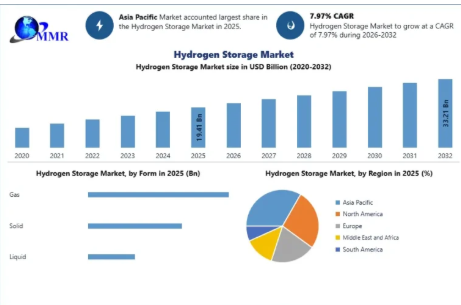
    The global Hydrogen Storage Market was valued at USD 19.41 Billion in 2025 and is projected to reach approximately USD 33.21 Billion by 2032, growing at a CAGR of 7.97% during the forecast period. The market is experiencing substantial growth due to increasing global investments in clean energy infrastructure, favorable government policies promoting hydrogen adoption, and rising demand for hydrogen across transportation, industrial manufacturing, power generation, and renewable energy storage. The transition toward low-carbon energy systems is significantly boosting the deployment of advanced hydrogen storage technologies.

    Get Full PDF Sample Copy of Report: (Including Full TOC, List )@https://www.maximizemarketresearch.com/request-sample/14920/

    Technology and Innovation Landscape

    The hydrogen storage industry is rapidly advancing through innovative technologies designed to improve efficiency, safety, and scalability. Major innovations include:

    High-pressure composite hydrogen storage cylinders
    Cryogenic liquid hydrogen storage systems
    Solid-state hydrogen storage using metal hydrides
    Large-scale underground hydrogen storage facilities

    These technologies improve storage density, enhance transportation efficiency, and support the commercialization of hydrogen as a sustainable energy source.

    Largest Market Segment Analysis

    The Physical-Based Hydrogen Storage segment continues to dominate the market due to its established commercial infrastructure, operational reliability, and extensive use in industrial hydrogen distribution and fuel cell transportation applications.

    Its scalability and proven performance make it the preferred storage technology worldwide.

    Fastest-Growing Segment Analysis

    The Material-Based Hydrogen Storage segment is expected to register the fastest growth during the forecast period.

    Advancements in nanotechnology, chemical hydrides, and advanced storage materials are enabling safer, lightweight, and higher-capacity hydrogen storage solutions for future clean energy applications.

    Regional Insights

    Asia-Pacific remains the largest regional market owing to extensive government support, significant hydrogen infrastructure investments, and growing deployment of hydrogen fuel cell technologies across China, Japan, South Korea, and India.

    Europe is anticipated to witness rapid growth due to ambitious decarbonization goals, increasing green hydrogen production, and expanding renewable energy integration projects.

    Competitive Landscape

    Leading companies continue to expand their market presence through strategic collaborations, infrastructure investments, and technological innovation.

    Key Players Include:
    Air Liquide
    Linde plc
    Air Products and Chemicals Inc.
    Worthington Industries
    McPhy Energy
    Hexagon Purus
    Chart Industries
    Luxfer Holdings PLC
    Plug Power Inc.
    ITM Power plc

    Get Full PDF Sample Copy of Report: (Including Full TOC, List )@https://www.maximizemarketresearch.com/request-sample/14920/

    Market Dynamics

    The market is driven by increasing renewable energy deployment, expanding hydrogen mobility initiatives, growing industrial decarbonization efforts, and strong government funding for hydrogen infrastructure.

    However, high capital investment requirements, hydrogen transportation complexities, and stringent safety standards remain key challenges. Despite these restraints, ongoing innovation in solid-state storage systems, underground storage technologies, and large-scale green hydrogen production is expected to create substantial growth opportunities during the forecast period.

    Get access to the full description of the report @https://www.maximizemarketresearch.com/market-report/global-hydrogen-storage-market/14920/

    About Maximize Market Research

    Maximize Market Research Pvt. Ltd. is a leading global market research and consulting company providing comprehensive market intelligence across energy, chemicals, automotive, manufacturing, industrial, healthcare, consumer goods, and technology sectors. Through detailed market analysis, competitive intelligence, and strategic consulting, the company helps businesses identify emerging opportunities, strengthen market positioning, and achieve sustainable long-term growth.
    Global Hydrogen Storage Market Growth Driven by Expanding Green Hydrogen Economy and Next-Generation Storage Technologies Market Overview The global Hydrogen Storage Market was valued at USD 19.41 Billion in 2025 and is projected to reach approximately USD 33.21 Billion by 2032, growing at a CAGR of 7.97% during the forecast period. The market is experiencing substantial growth due to increasing global investments in clean energy infrastructure, favorable government policies promoting hydrogen adoption, and rising demand for hydrogen across transportation, industrial manufacturing, power generation, and renewable energy storage. The transition toward low-carbon energy systems is significantly boosting the deployment of advanced hydrogen storage technologies. Get Full PDF Sample Copy of Report: (Including Full TOC, List )@https://www.maximizemarketresearch.com/request-sample/14920/ Technology and Innovation Landscape The hydrogen storage industry is rapidly advancing through innovative technologies designed to improve efficiency, safety, and scalability. Major innovations include: High-pressure composite hydrogen storage cylinders Cryogenic liquid hydrogen storage systems Solid-state hydrogen storage using metal hydrides Large-scale underground hydrogen storage facilities These technologies improve storage density, enhance transportation efficiency, and support the commercialization of hydrogen as a sustainable energy source. Largest Market Segment Analysis The Physical-Based Hydrogen Storage segment continues to dominate the market due to its established commercial infrastructure, operational reliability, and extensive use in industrial hydrogen distribution and fuel cell transportation applications. Its scalability and proven performance make it the preferred storage technology worldwide. Fastest-Growing Segment Analysis The Material-Based Hydrogen Storage segment is expected to register the fastest growth during the forecast period. Advancements in nanotechnology, chemical hydrides, and advanced storage materials are enabling safer, lightweight, and higher-capacity hydrogen storage solutions for future clean energy applications. Regional Insights Asia-Pacific remains the largest regional market owing to extensive government support, significant hydrogen infrastructure investments, and growing deployment of hydrogen fuel cell technologies across China, Japan, South Korea, and India. Europe is anticipated to witness rapid growth due to ambitious decarbonization goals, increasing green hydrogen production, and expanding renewable energy integration projects. Competitive Landscape Leading companies continue to expand their market presence through strategic collaborations, infrastructure investments, and technological innovation. Key Players Include: Air Liquide Linde plc Air Products and Chemicals Inc. Worthington Industries McPhy Energy Hexagon Purus Chart Industries Luxfer Holdings PLC Plug Power Inc. ITM Power plc Get Full PDF Sample Copy of Report: (Including Full TOC, List )@https://www.maximizemarketresearch.com/request-sample/14920/ Market Dynamics The market is driven by increasing renewable energy deployment, expanding hydrogen mobility initiatives, growing industrial decarbonization efforts, and strong government funding for hydrogen infrastructure. However, high capital investment requirements, hydrogen transportation complexities, and stringent safety standards remain key challenges. Despite these restraints, ongoing innovation in solid-state storage systems, underground storage technologies, and large-scale green hydrogen production is expected to create substantial growth opportunities during the forecast period. Get access to the full description of the report @https://www.maximizemarketresearch.com/market-report/global-hydrogen-storage-market/14920/ About Maximize Market Research Maximize Market Research Pvt. Ltd. is a leading global market research and consulting company providing comprehensive market intelligence across energy, chemicals, automotive, manufacturing, industrial, healthcare, consumer goods, and technology sectors. Through detailed market analysis, competitive intelligence, and strategic consulting, the company helps businesses identify emerging opportunities, strengthen market positioning, and achieve sustainable long-term growth.
    0 Comments ·0 Shares ·247 Views