• Parenting App Market Growth Drivers, Revenue Forecast, and Industry Analysis – Report by MMR

    Parenting App Market to Reach USD 3.71 Billion by 2032, Driven by Rising Digital Parenting and Child Safety Awareness

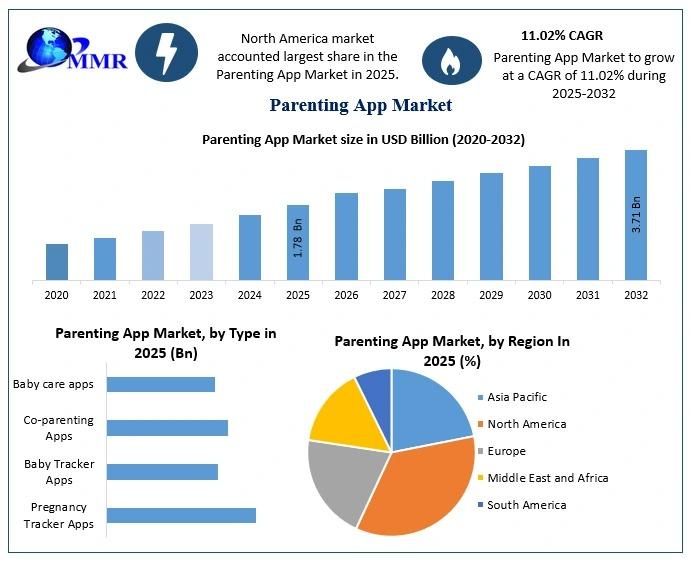
    The Parenting App Market is witnessing significant growth as parents increasingly adopt digital solutions to manage pregnancy, childcare, child development, health monitoring, and family activities. According to Maximize Market Research, the market was valued at USD 1.78 billion in 2025 and is projected to grow at a CAGR of 11.02% from 2026 to 2032, reaching approximately USD 3.71 billion by 2032. Increasing smartphone penetration, growing awareness of child health, demand for personalized parenting guidance, and rising concerns about children's digital safety are supporting market expansion.

    Market Estimation, Growth Drivers and Opportunities

    The Parenting App Market is experiencing strong demand as modern families increasingly depend on mobile applications for convenient and reliable parenting assistance. These applications provide pregnancy tracking, baby development monitoring, feeding schedules, sleep management, nutritional advice, health consultations, and educational resources.

    Increasing numbers of working parents and dual-income households are creating demand for applications that simplify childcare responsibilities. Smartphone accessibility and improvements in mobile technology are further encouraging adoption. Additionally, growing awareness of early childhood development and the importance of monitoring developmental milestones is supporting market growth.

    Artificial intelligence (AI), machine learning, and cloud-based technologies are creating new opportunities for application developers. AI-powered recommendations, personalized childcare guidance, automated reminders, and virtual consultations can improve user engagement. Integration of parental controls, location tracking, and screen-time management is also expanding the market's application areas.

    Request a Sample of the Full Market Report : https://www.maximizemarketresearch.com/request-sample/213688/

    United States Market Trends and Investment Outlook

    The United States represents an important market for parenting applications because of widespread smartphone adoption, growing digital awareness, and increasing demand for child safety solutions. During 2025, the market witnessed developments in AI-powered parenting assistance and parental control technologies. In February 2025, Riley, a parenting management application, raised USD 3.1 million in seed funding led by True Ventures to develop personalized, AI-powered parenting insights and baby activity tracking. Google also introduced improvements to Family Link in February 2025, including an updated interface, School time, and parent-managed contacts. In August 2025, Google expanded parental control options within Android settings, providing screen-time limits, downtime schedules, and content filtering. These developments demonstrate increasing investment and innovation in digital parenting solutions.

    Parenting App Market Growth Drivers, Revenue Forecast, and Industry Analysis – Report by MMR Parenting App Market to Reach USD 3.71 Billion by 2032, Driven by Rising Digital Parenting and Child Safety Awareness The Parenting App Market is witnessing significant growth as parents increasingly adopt digital solutions to manage pregnancy, childcare, child development, health monitoring, and family activities. According to Maximize Market Research, the market was valued at USD 1.78 billion in 2025 and is projected to grow at a CAGR of 11.02% from 2026 to 2032, reaching approximately USD 3.71 billion by 2032. Increasing smartphone penetration, growing awareness of child health, demand for personalized parenting guidance, and rising concerns about children's digital safety are supporting market expansion. Market Estimation, Growth Drivers and Opportunities The Parenting App Market is experiencing strong demand as modern families increasingly depend on mobile applications for convenient and reliable parenting assistance. These applications provide pregnancy tracking, baby development monitoring, feeding schedules, sleep management, nutritional advice, health consultations, and educational resources. Increasing numbers of working parents and dual-income households are creating demand for applications that simplify childcare responsibilities. Smartphone accessibility and improvements in mobile technology are further encouraging adoption. Additionally, growing awareness of early childhood development and the importance of monitoring developmental milestones is supporting market growth. Artificial intelligence (AI), machine learning, and cloud-based technologies are creating new opportunities for application developers. AI-powered recommendations, personalized childcare guidance, automated reminders, and virtual consultations can improve user engagement. Integration of parental controls, location tracking, and screen-time management is also expanding the market's application areas. Request a Sample of the Full Market Report : https://www.maximizemarketresearch.com/request-sample/213688/ United States Market Trends and Investment Outlook The United States represents an important market for parenting applications because of widespread smartphone adoption, growing digital awareness, and increasing demand for child safety solutions. During 2025, the market witnessed developments in AI-powered parenting assistance and parental control technologies. In February 2025, Riley, a parenting management application, raised USD 3.1 million in seed funding led by True Ventures to develop personalized, AI-powered parenting insights and baby activity tracking. Google also introduced improvements to Family Link in February 2025, including an updated interface, School time, and parent-managed contacts. In August 2025, Google expanded parental control options within Android settings, providing screen-time limits, downtime schedules, and content filtering. These developments demonstrate increasing investment and innovation in digital parenting solutions.
    0 Comments ·0 Shares ·79 Views
  • The Carbon Capture, Utilization, and Storage (CCUS) Market According to the latest research insights from Stellar Market Research, the global CCUS market is experiencing a paradigm shift, crossing critical valuation milestones as heavy industries accelerate decarbonization roadmaps to comply with stringent global emission frameworks.

    The global industrial landscape is undergoing a massive structural transformation, shifting from voluntary carbon-reduction pledges to mandatory, compliance-driven decarbonization. As international regulatory bodies enforce tighter carbon pricing mechanisms—such as the European Union’s Emissions Trading System (ETS) and Carbon Border Adjustment Mechanism (CBAM)—heavy-emitting sectors like power generation, cement, steel, and chemicals can no longer treat carbon management as an afterthought.

    Key Findings from the Report
    Valuation & Growth Trajectory: The global Carbon Capture, Utilization, and Storage Market is projected to exceed USD 25.3 Billion by 2033, registering a compound annual growth rate (CAGR) of 23.8% from the base year.

    Dominant Segment: The Capture service segment commands the largest market share, serving as the essential upstream entry point for all downstream utilization and permanent geologic storage workflows.

    High-Growth Industrial End-Use: The Chemicals & Petrochemicals sector stands out as a leading end-use vertical, propelled by inherent high-concentration CO2 byproduct streams and direct integration into existing petrochemical gas-separation infrastructure.

    Regional Powerhouse: North America retains the leading regional market share, heavily supported by robust federal tax credits (such as the expanded 45Q tax incentives) and well-established pipeline networks.

    Emerging Growth Epicenter: Europe is recognized as the fastest-growing regional market, catalyzed by the EU Green Deal, cross-border infrastructure projects (like Northern Lights), and rigorous carbon pricing enforcement.

    Technology Adoption Shifts: Membrane and advanced solvent-based absorption technologies are gaining rapid commercial preference over legacy systems due to lower operational footprints and superior energy efficiency.

    Investment Relevance: Venture capital and institutional investments in CCUS infrastructure projects have surged past multi-billion-dollar thresholds, attracting major energy majors and sovereign wealth funds.

    For further information, click the following link:https://www.stellarmr.com/report/req_sample/carbon-capture-utilization-storage-market/2817
    Market Drivers and Restraints
    Drivers
    Stringent Environmental Regulations and Carbon Pricing: Global implementation of rigorous carbon taxes, net-zero mandates, and emission caps compel corporations to adopt CCUS to evade heavy financial penalties.

    Lucrative Government Subsidies and Tax Credits: Generous fiscal frameworks—most notably the U.S. 45Q tax credit and European green industrial funding—significantly improve project internal rates of return (IRR).

    Corporate Net-Zero Commitments and ESG Pressures: Institutional investors and consumer markets increasingly demand verified Scope 1 and Scope 2 emission reductions, compelling heavy industries to scale up carbon capture adoption.

    Restraints
    Prohibitive Capital Expenditure (CapEx): High upfront costs associated with engineering, designing, and constructing industrial-scale capture facilities and dedicated pipeline grids can deter mid-sized market participants.

    Complex Regulatory and Permitting Bottlenecks: Lengthy approval processes for underground CO2 storage sites and cross-border transport rights frequently cause project development delays.

    Technology, Regulation, and Sustainability Trends
    The evolution of the CCUS ecosystem is fundamentally anchored in next-generation technology and regulatory convergence. Innovations in modular, scalable solid sorbents and direct air capture (DAC) systems are driving down per-ton capture costs. Simultaneously, regulatory frameworks are evolving past simple emissions reporting into liability frameworks for permanent carbon storage, ensuring long-term environmental integrity. From an ESG standpoint, integrating CCUS into heavy industrial clusters is now viewed as the ultimate corporate safeguard against stranded assets, ensuring regulatory compliance while opening doors to green-certified product premiumization.

    Regional Insights
    North America: Dominates the global landscape, underpinned by proactive federal policies, abundant enhanced oil recovery (EOR) infrastructure, and deep-pocketed energy conglomerates accelerating commercial-scale hubs in the U.S. Gulf Coast and Western Canada.

    Europe: Serves as the fastest-growing market, led by aggressive decarbonization targets in the UK, Norway, the Netherlands, and Germany. The rapid development of North Sea offshore storage formations and cross-border transport agreements is establishing Europe as a global benchmark for industrial carbon management.

    Asia-Pacific: Exhibits substantial long-term potential, led by emerging industrial hubs in India, China, and Japan, where expanding manufacturing bases are gradually implementing early-stage CCUS feasibility pilots and national carbon-trading frameworks.

    Recent Industry Developments
    ExxonMobil (2025): Expanded its low-carbon solutions portfolio by securing major industrial carbon capture and offtake agreements along the U.S. Gulf Coast, scaling regional sequestration capacity by over 5 million metric tons per annum.

    Linde plc (2025): Partnered with key clean-energy developers to engineer modular carbon capture units for chemical processing plants, reducing customer retrofitting downtime by 30%.

    Mitsubishi Heavy Industries, Ltd. (2026): Deployed its proprietary advanced KS-21 solvent technology at a commercial waste-to-energy facility in Europe, achieving record-high CO2 recovery rates exceeding 98%.

    Shell Plc (2025): Advanced construction milestones on the Northern Lights offshore CO2 transport and storage project in Norway, successfully securing cross-border industrial storage contracts across multiple European manufacturing sectors.

    Aker Solutions (2026): Secured a major engineering contract for a large-scale cement plant decarbonization project, utilizing standardized carbon capture modules to slash lifecycle operational costs.

    Competitive Landscape
    The global CCUS market features a highly competitive ecosystem populated by major oil and gas multinationals, industrial gas giants, specialized clean-tech engineering firms, and oilfield service providers. Key market leaders—including Exxon Mobil Corporation, Fluor Corporation, Linde plc, Shell Plc, Mitsubishi Heavy Industries, Ltd., Schlumberger Limited, Aker Solutions, and Honeywell International—are actively expanding their market presence through strategic joint ventures, cross-border infrastructure partnerships, and aggressive intellectual property acquisitions. Competitors are heavily focusing on modular scalability and end-to-end service integration, offering turnkey solutions from point-source capture to secure underground storage.

    Analyst Commentary
    "The carbon capture, utilization, and storage market has decisively transitioned from experimental pilot testing to a multi-billion-dollar commercial asset class," said a Senior Research Analyst at Stellar Market Research. "As regulatory compliance costs rise and green premiums take hold, industrial players can no longer view decarbonization as a compliance cost center. The companies successfully navigating the next decade will be those that treat captured carbon not as waste, but as a strategic feedstock and a core pillar of sustainable industrial profitability."

    Future Outlook
    Through the forecast period, the CCUS market is poised for exponential expansion. Driven by declining technology costs, expanding shared pipeline networks, and tightening global emissions caps, adoption is expected to branch out from oil, gas, and chemicals into hard-to-abate sectors like maritime shipping, cement, and primary steelmaking. Public-private partnerships will remain instrumental in de-risking early-stage megaprojects, ultimately embedding CCUS as an indispensable structural pillar of the global low-carbon economy.

    For further information, click the following link:https://www.stellarmr.com/report/req_sample/carbon-capture-utilization-storage-market/2817
    About Stellar Market Research
    Stellar Market Research is a multifaceted market research and consulting company with professionals from several industries. Some of the industries we cover include medical devices, pharmaceutical manufacturers, science and engineering, electronic components, industrial equipment, technology and communication, cars and automobiles, chemical products and substances, general merchandise, beverages, personal care, and automated systems. To mention a few, we provide market-verified industry estimations, technical trend analysis, crucial market research, strategic advice, competition analysis, production and demand analysis, and client impact studies.

    Address
    Phase 3, Navale IT Zone, S.No. 51/2A/2, Office No. 202, 2nd floor, Near, Navale Brg, Narhe, Pune, Maharashtra 411041

    Email
    [email protected]

    Mobile
    +91 9607365656

    The Carbon Capture, Utilization, and Storage (CCUS) Market According to the latest research insights from Stellar Market Research, the global CCUS market is experiencing a paradigm shift, crossing critical valuation milestones as heavy industries accelerate decarbonization roadmaps to comply with stringent global emission frameworks. The global industrial landscape is undergoing a massive structural transformation, shifting from voluntary carbon-reduction pledges to mandatory, compliance-driven decarbonization. As international regulatory bodies enforce tighter carbon pricing mechanisms—such as the European Union’s Emissions Trading System (ETS) and Carbon Border Adjustment Mechanism (CBAM)—heavy-emitting sectors like power generation, cement, steel, and chemicals can no longer treat carbon management as an afterthought. Key Findings from the Report Valuation & Growth Trajectory: The global Carbon Capture, Utilization, and Storage Market is projected to exceed USD 25.3 Billion by 2033, registering a compound annual growth rate (CAGR) of 23.8% from the base year. Dominant Segment: The Capture service segment commands the largest market share, serving as the essential upstream entry point for all downstream utilization and permanent geologic storage workflows. High-Growth Industrial End-Use: The Chemicals & Petrochemicals sector stands out as a leading end-use vertical, propelled by inherent high-concentration CO2 byproduct streams and direct integration into existing petrochemical gas-separation infrastructure. Regional Powerhouse: North America retains the leading regional market share, heavily supported by robust federal tax credits (such as the expanded 45Q tax incentives) and well-established pipeline networks. Emerging Growth Epicenter: Europe is recognized as the fastest-growing regional market, catalyzed by the EU Green Deal, cross-border infrastructure projects (like Northern Lights), and rigorous carbon pricing enforcement. Technology Adoption Shifts: Membrane and advanced solvent-based absorption technologies are gaining rapid commercial preference over legacy systems due to lower operational footprints and superior energy efficiency. Investment Relevance: Venture capital and institutional investments in CCUS infrastructure projects have surged past multi-billion-dollar thresholds, attracting major energy majors and sovereign wealth funds. For further information, click the following link:https://www.stellarmr.com/report/req_sample/carbon-capture-utilization-storage-market/2817 Market Drivers and Restraints Drivers Stringent Environmental Regulations and Carbon Pricing: Global implementation of rigorous carbon taxes, net-zero mandates, and emission caps compel corporations to adopt CCUS to evade heavy financial penalties. Lucrative Government Subsidies and Tax Credits: Generous fiscal frameworks—most notably the U.S. 45Q tax credit and European green industrial funding—significantly improve project internal rates of return (IRR). Corporate Net-Zero Commitments and ESG Pressures: Institutional investors and consumer markets increasingly demand verified Scope 1 and Scope 2 emission reductions, compelling heavy industries to scale up carbon capture adoption. Restraints Prohibitive Capital Expenditure (CapEx): High upfront costs associated with engineering, designing, and constructing industrial-scale capture facilities and dedicated pipeline grids can deter mid-sized market participants. Complex Regulatory and Permitting Bottlenecks: Lengthy approval processes for underground CO2 storage sites and cross-border transport rights frequently cause project development delays. Technology, Regulation, and Sustainability Trends The evolution of the CCUS ecosystem is fundamentally anchored in next-generation technology and regulatory convergence. Innovations in modular, scalable solid sorbents and direct air capture (DAC) systems are driving down per-ton capture costs. Simultaneously, regulatory frameworks are evolving past simple emissions reporting into liability frameworks for permanent carbon storage, ensuring long-term environmental integrity. From an ESG standpoint, integrating CCUS into heavy industrial clusters is now viewed as the ultimate corporate safeguard against stranded assets, ensuring regulatory compliance while opening doors to green-certified product premiumization. Regional Insights North America: Dominates the global landscape, underpinned by proactive federal policies, abundant enhanced oil recovery (EOR) infrastructure, and deep-pocketed energy conglomerates accelerating commercial-scale hubs in the U.S. Gulf Coast and Western Canada. Europe: Serves as the fastest-growing market, led by aggressive decarbonization targets in the UK, Norway, the Netherlands, and Germany. The rapid development of North Sea offshore storage formations and cross-border transport agreements is establishing Europe as a global benchmark for industrial carbon management. Asia-Pacific: Exhibits substantial long-term potential, led by emerging industrial hubs in India, China, and Japan, where expanding manufacturing bases are gradually implementing early-stage CCUS feasibility pilots and national carbon-trading frameworks. Recent Industry Developments ExxonMobil (2025): Expanded its low-carbon solutions portfolio by securing major industrial carbon capture and offtake agreements along the U.S. Gulf Coast, scaling regional sequestration capacity by over 5 million metric tons per annum. Linde plc (2025): Partnered with key clean-energy developers to engineer modular carbon capture units for chemical processing plants, reducing customer retrofitting downtime by 30%. Mitsubishi Heavy Industries, Ltd. (2026): Deployed its proprietary advanced KS-21 solvent technology at a commercial waste-to-energy facility in Europe, achieving record-high CO2 recovery rates exceeding 98%. Shell Plc (2025): Advanced construction milestones on the Northern Lights offshore CO2 transport and storage project in Norway, successfully securing cross-border industrial storage contracts across multiple European manufacturing sectors. Aker Solutions (2026): Secured a major engineering contract for a large-scale cement plant decarbonization project, utilizing standardized carbon capture modules to slash lifecycle operational costs. Competitive Landscape The global CCUS market features a highly competitive ecosystem populated by major oil and gas multinationals, industrial gas giants, specialized clean-tech engineering firms, and oilfield service providers. Key market leaders—including Exxon Mobil Corporation, Fluor Corporation, Linde plc, Shell Plc, Mitsubishi Heavy Industries, Ltd., Schlumberger Limited, Aker Solutions, and Honeywell International—are actively expanding their market presence through strategic joint ventures, cross-border infrastructure partnerships, and aggressive intellectual property acquisitions. Competitors are heavily focusing on modular scalability and end-to-end service integration, offering turnkey solutions from point-source capture to secure underground storage. Analyst Commentary "The carbon capture, utilization, and storage market has decisively transitioned from experimental pilot testing to a multi-billion-dollar commercial asset class," said a Senior Research Analyst at Stellar Market Research. "As regulatory compliance costs rise and green premiums take hold, industrial players can no longer view decarbonization as a compliance cost center. The companies successfully navigating the next decade will be those that treat captured carbon not as waste, but as a strategic feedstock and a core pillar of sustainable industrial profitability." Future Outlook Through the forecast period, the CCUS market is poised for exponential expansion. Driven by declining technology costs, expanding shared pipeline networks, and tightening global emissions caps, adoption is expected to branch out from oil, gas, and chemicals into hard-to-abate sectors like maritime shipping, cement, and primary steelmaking. Public-private partnerships will remain instrumental in de-risking early-stage megaprojects, ultimately embedding CCUS as an indispensable structural pillar of the global low-carbon economy. For further information, click the following link:https://www.stellarmr.com/report/req_sample/carbon-capture-utilization-storage-market/2817 About Stellar Market Research Stellar Market Research is a multifaceted market research and consulting company with professionals from several industries. Some of the industries we cover include medical devices, pharmaceutical manufacturers, science and engineering, electronic components, industrial equipment, technology and communication, cars and automobiles, chemical products and substances, general merchandise, beverages, personal care, and automated systems. To mention a few, we provide market-verified industry estimations, technical trend analysis, crucial market research, strategic advice, competition analysis, production and demand analysis, and client impact studies. Address Phase 3, Navale IT Zone, S.No. 51/2A/2, Office No. 202, 2nd floor, Near, Navale Brg, Narhe, Pune, Maharashtra 411041 Email [email protected] Mobile +91 9607365656

    0 Comments ·0 Shares ·63 Views

  • Motor Control Center Market Opportunities Grow Across Manufacturing Industries

    Market Estimation & Definition

    The global Motor Control Center (MCC) Market is gaining momentum as industries invest in automation, electrical safety, and efficient motor management. According to Stellar Market Research, the market was valued at USD 6.55 billion in 2025 and is projected to reach USD 9.86 billion by 2032, registering a compound annual growth rate (CAGR) of 6.02% during 2026–2032.

    A motor control center is an assembly of enclosed electrical sections connected through a common power bus. It houses equipment used to control, protect, and monitor electric motors, including circuit breakers, relays, variable speed drives, and programmable controllers. MCCs are widely used in industrial plants, commercial facilities, oil and gas operations, mining, and manufacturing, where reliable motor performance is essential for continuous operations.

    Download Free PDF Brochure: https://www.stellarmr.com/report/req_sample/motor-control-center-market/2606

    Market Growth Drivers & Opportunity

    Industrial automation is a major driver of the Motor Control Center Market. Manufacturing facilities increasingly require integrated systems that improve productivity, reduce downtime, and protect electrical equipment. MCCs combine motor control and protection functions within a centralized arrangement, helping operators manage complex industrial processes more efficiently.

    Demand from the oil and gas industry also supports market expansion. Refineries and processing facilities use electric motors to operate pumps, compressors, drilling equipment, and production systems. Mining, food and beverage, automotive, and metal-processing industries similarly depend on reliable motor control solutions.

    The growing adoption of intelligent motor control centers creates additional opportunities. These systems offer advanced diagnostics, remote monitoring, improved communication, and more precise control. However, fluctuations in raw material prices and competition from alternative technologies can affect purchasing decisions. Manufacturers that provide reliable equipment, advanced protection features, and cost-effective solutions are well positioned to address evolving industrial requirements.

    What Lies Ahead: Emerging Trends Shaping the Future

    Intelligent motor control centers are expected to gain importance as industries move toward connected manufacturing environments. Microprocessor-based controls, communication networks, and diagnostic tools enable operators to identify potential equipment problems earlier and reduce unplanned downtime.

    Energy efficiency is another important trend. Variable speed drives help regulate motor speeds according to operational requirements, potentially reducing unnecessary energy consumption. As industries seek to improve operating efficiency and meet sustainability objectives, demand for integrated motor management solutions is expected to increase.

    Industrial infrastructure modernization also presents opportunities. Investments in manufacturing facilities, utilities, power generation, and process industries can support demand for both new installations and replacement systems. Modular designs and enhanced monitoring capabilities may further improve installation flexibility and maintenance planning.

    Get More Report Details: https://www.stellarmr.com/report/motor-control-center-market/2606

    Segmentation Analysis

    According to Stellar Market Research, the Motor Control Center Market is segmented by standard, component, type, end-user, and region.

    By Standard: NEMA, IEC.
    By Component: Busbars, Circuit Breakers and Fuses, Overload Relays, Variable Speed Drives, Soft Starters.
    By Type: Conventional Motor Control Center, Intelligent Motor Control Center.
    By End-User: Oil & Gas, Iron & Steel, Minerals & Mining, Food & Beverage, Automotive, Commercial, Others.
    By Region: North America, Europe, Asia Pacific, South America, Middle East & Africa.
    Intelligent motor control centers are gaining traction because of their advanced safety, diagnostic, and communication capabilities. Circuit breakers and fuses are important components for electrical protection, while variable speed drives support motor regulation and efficiency. Oil and gas represents the leading end-user segment due to its extensive use of motor-driven equipment. Asia Pacific held the largest regional share in 2025, supported by industrial development and investment in infrastructure.

    Country-Level Analysis: USA and Germany

    United States: The United States is an important market for motor control centers, supported by industrial automation, oil and gas operations, and demand for modern electrical infrastructure. General Electric Company, Rockwell Automation, Tesco Controls, and Powell Industries are among the US-based companies listed in the report. Investment in industrial facilities and equipment modernization provides opportunities for advanced motor control technologies.

    Germany: Germany plays an important role in the European market due to its established manufacturing and industrial engineering sectors. Siemens AG and Rittal are among the Germany-based companies identified in the report. Demand for automation, electrical protection, and efficient motor management supports the adoption of motor control solutions. The report includes Germany in its regional coverage but does not provide separate headline market valuations for either country.

    Competitive Analysis

    The Motor Control Center Market features global electrical equipment manufacturers and specialized industrial automation providers. Key players identified by Stellar Market Research include ABB, Siemens AG, General Electric Company, Schneider Electric SE, Rockwell Automation, Mitsubishi Electric Corporation, Eaton, Fuji Electric, WEG, Larsen & Toubro, Rittal, Ingeteam, LSIS, and Powell Industries.

    Competition is shaped by equipment reliability, electrical safety, energy efficiency, digital monitoring, and compatibility with industrial automation systems. Companies that combine advanced control capabilities with dependable technical support and flexible product configurations may strengthen their competitive position.

    Download Free PDF Brochure: https://www.stellarmr.com/report/req_sample/motor-control-center-market/2606

    Press Release Conclusion

    The Motor Control Center Market is positioned for steady growth as industries prioritize automation, energy efficiency, and reliable electrical operations. With the market projected to reach USD 9.86 billion by 2032, opportunities are emerging across oil and gas, manufacturing, mining, automotive, and commercial applications.

    Although raw material price fluctuations and evolving technologies present challenges, intelligent motor control centers, advanced diagnostics, and improved motor management are expected to support future demand. Companies investing in reliable, efficient, and connected control solutions will be well positioned to benefit from continuing industrial modernization.

    About Stellar Market Research:

    Stellar Market Research is a multifaceted market research and consulting company with professionals from several industries. Some of the industries we cover include medical devices, pharmaceutical manufacturers, science and engineering, electronic components, industrial equipment, technology and communication, cars and automobiles, chemical products and substances, general merchandise, beverages, personal care, and automated systems. To mention a few, we provide market-verified industry estimations, technical trend analysis, crucial market research, strategic advice, competition analysis, production and demand analysis, and client impact studies.

    Contact Stellar Market Research:

    3rd Floor, Navale IT Park, Phase 2

    Pune Banglore Highway, Narhe,

    Pune, Maharashtra 411041, India

    [email protected]

    +91 20 6630 3320 | +91 9607365656
    Motor Control Center Market Opportunities Grow Across Manufacturing Industries Market Estimation & Definition The global Motor Control Center (MCC) Market is gaining momentum as industries invest in automation, electrical safety, and efficient motor management. According to Stellar Market Research, the market was valued at USD 6.55 billion in 2025 and is projected to reach USD 9.86 billion by 2032, registering a compound annual growth rate (CAGR) of 6.02% during 2026–2032. A motor control center is an assembly of enclosed electrical sections connected through a common power bus. It houses equipment used to control, protect, and monitor electric motors, including circuit breakers, relays, variable speed drives, and programmable controllers. MCCs are widely used in industrial plants, commercial facilities, oil and gas operations, mining, and manufacturing, where reliable motor performance is essential for continuous operations. Download Free PDF Brochure: https://www.stellarmr.com/report/req_sample/motor-control-center-market/2606 Market Growth Drivers & Opportunity Industrial automation is a major driver of the Motor Control Center Market. Manufacturing facilities increasingly require integrated systems that improve productivity, reduce downtime, and protect electrical equipment. MCCs combine motor control and protection functions within a centralized arrangement, helping operators manage complex industrial processes more efficiently. Demand from the oil and gas industry also supports market expansion. Refineries and processing facilities use electric motors to operate pumps, compressors, drilling equipment, and production systems. Mining, food and beverage, automotive, and metal-processing industries similarly depend on reliable motor control solutions. The growing adoption of intelligent motor control centers creates additional opportunities. These systems offer advanced diagnostics, remote monitoring, improved communication, and more precise control. However, fluctuations in raw material prices and competition from alternative technologies can affect purchasing decisions. Manufacturers that provide reliable equipment, advanced protection features, and cost-effective solutions are well positioned to address evolving industrial requirements. What Lies Ahead: Emerging Trends Shaping the Future Intelligent motor control centers are expected to gain importance as industries move toward connected manufacturing environments. Microprocessor-based controls, communication networks, and diagnostic tools enable operators to identify potential equipment problems earlier and reduce unplanned downtime. Energy efficiency is another important trend. Variable speed drives help regulate motor speeds according to operational requirements, potentially reducing unnecessary energy consumption. As industries seek to improve operating efficiency and meet sustainability objectives, demand for integrated motor management solutions is expected to increase. Industrial infrastructure modernization also presents opportunities. Investments in manufacturing facilities, utilities, power generation, and process industries can support demand for both new installations and replacement systems. Modular designs and enhanced monitoring capabilities may further improve installation flexibility and maintenance planning. Get More Report Details: https://www.stellarmr.com/report/motor-control-center-market/2606 Segmentation Analysis According to Stellar Market Research, the Motor Control Center Market is segmented by standard, component, type, end-user, and region. By Standard: NEMA, IEC. By Component: Busbars, Circuit Breakers and Fuses, Overload Relays, Variable Speed Drives, Soft Starters. By Type: Conventional Motor Control Center, Intelligent Motor Control Center. By End-User: Oil & Gas, Iron & Steel, Minerals & Mining, Food & Beverage, Automotive, Commercial, Others. By Region: North America, Europe, Asia Pacific, South America, Middle East & Africa. Intelligent motor control centers are gaining traction because of their advanced safety, diagnostic, and communication capabilities. Circuit breakers and fuses are important components for electrical protection, while variable speed drives support motor regulation and efficiency. Oil and gas represents the leading end-user segment due to its extensive use of motor-driven equipment. Asia Pacific held the largest regional share in 2025, supported by industrial development and investment in infrastructure. Country-Level Analysis: USA and Germany United States: The United States is an important market for motor control centers, supported by industrial automation, oil and gas operations, and demand for modern electrical infrastructure. General Electric Company, Rockwell Automation, Tesco Controls, and Powell Industries are among the US-based companies listed in the report. Investment in industrial facilities and equipment modernization provides opportunities for advanced motor control technologies. Germany: Germany plays an important role in the European market due to its established manufacturing and industrial engineering sectors. Siemens AG and Rittal are among the Germany-based companies identified in the report. Demand for automation, electrical protection, and efficient motor management supports the adoption of motor control solutions. The report includes Germany in its regional coverage but does not provide separate headline market valuations for either country. Competitive Analysis The Motor Control Center Market features global electrical equipment manufacturers and specialized industrial automation providers. Key players identified by Stellar Market Research include ABB, Siemens AG, General Electric Company, Schneider Electric SE, Rockwell Automation, Mitsubishi Electric Corporation, Eaton, Fuji Electric, WEG, Larsen & Toubro, Rittal, Ingeteam, LSIS, and Powell Industries. Competition is shaped by equipment reliability, electrical safety, energy efficiency, digital monitoring, and compatibility with industrial automation systems. Companies that combine advanced control capabilities with dependable technical support and flexible product configurations may strengthen their competitive position. Download Free PDF Brochure: https://www.stellarmr.com/report/req_sample/motor-control-center-market/2606 Press Release Conclusion The Motor Control Center Market is positioned for steady growth as industries prioritize automation, energy efficiency, and reliable electrical operations. With the market projected to reach USD 9.86 billion by 2032, opportunities are emerging across oil and gas, manufacturing, mining, automotive, and commercial applications. Although raw material price fluctuations and evolving technologies present challenges, intelligent motor control centers, advanced diagnostics, and improved motor management are expected to support future demand. Companies investing in reliable, efficient, and connected control solutions will be well positioned to benefit from continuing industrial modernization. About Stellar Market Research: Stellar Market Research is a multifaceted market research and consulting company with professionals from several industries. Some of the industries we cover include medical devices, pharmaceutical manufacturers, science and engineering, electronic components, industrial equipment, technology and communication, cars and automobiles, chemical products and substances, general merchandise, beverages, personal care, and automated systems. To mention a few, we provide market-verified industry estimations, technical trend analysis, crucial market research, strategic advice, competition analysis, production and demand analysis, and client impact studies. Contact Stellar Market Research: 3rd Floor, Navale IT Park, Phase 2 Pune Banglore Highway, Narhe, Pune, Maharashtra 411041, India [email protected] +91 20 6630 3320 | +91 9607365656
    0 Comments ·0 Shares ·68 Views
  • The Industrial Boiler Market, projecting explosive valuation milestones through the next decade. According to the report, the market was valued at USD 17.12 billion in 2025 and is poised to scale up to USD 24.01 billion by 2032, expanding at a compound annual growth rate (CAGR) of 4.07%. This strategic growth trajectory underscores the critical role of high-efficiency thermal energy systems in enabling global industrial decarbonization, chemical processing, and smart manufacturing transformations.

    The global industrial landscape is undergoing a profound structural pivot. Driven by aggressive net-zero commitments and escalating carbon taxation, heavy industries are moving away from legacy, carbon-heavy coal-fired infrastructure toward advanced hybrid, hydrogen-ready, and ultra-efficient natural gas boilers. Simultaneously, the deployment of IoT-enabled automated combustion controls is redefining plant operations, turning traditional boilers from mere energy units into intelligent data nodes that optimize fuel efficiency and minimize downtime. This dual transition toward sustainability and digitization is opening lucrative avenues for equipment retrofitting, greenfield manufacturing expansions, and integrated smart-boiler services worldwide.

    Key Findings from the Report
    Valuation Milestone: The industrial boiler market reached a baseline valuation of USD 17.12 billion in 2025.

    Growth Trajectory: The market is projected to expand steadily at a 4.07% CAGR throughout the forecast period from 2026 to 2032.

    Dominant Segment (Type/Capacity): Water-tube and package boilers command the largest revenue shares, backed by high thermal efficiency and rapid steam generation capabilities required in heavy continuous-duty applications.

    Leading Application: The chemicals and petrochemicals sector remains the dominant end-user vertical, accounting for over one-third of total thermal energy equipment demand.

    Fuel Preferences: Natural gas continues to capture primary adoption share due to tightening emissions legislation, though biomass and hydrogen-compatible systems are registering the fastest incremental traction.

    Regional Dominance: The Asia-Pacific region leads global consumption, powered by expansive chemical hubs, textile manufacturing, and heavy industrialization in China and India.

    Investment Relevance: Capital expenditure is heavily skewed toward energy-efficient retrofits, IoT sensor integration, and low-emission boiler replacements.

    For further information, click the following link:https://www.stellarmr.com/report/req_sample/Industrial-Boiler-Market/339
    Market Drivers and Restraints
    Drivers
    Stringent Environmental Regulations: Global mandates capping greenhouse gas emissions force legacy plants to upgrade or replace high-polluting subcritical boilers with advanced low-NOx and low-CO2 alternatives.

    Industrial Expansion in Emerging Economies: Rapid manufacturing build-outs across Asia-Pacific and Latin America amplify the baseline demand for stable, high-capacity industrial steam generation.

    Rise of Energy-Efficient & Smart Technologies: Integration of IoT, predictive maintenance algorithms, and real-time fuel-to-steam efficiency monitoring drives widespread commercial adoption.

    Restraints
    High Initial Capital Outlay: The substantial upfront capital expenditure required for premium, low-emission boilers and auxiliary retrofitting can deter small and medium-scale enterprises (SMEs).

    Supply Chain Bottlenecks for Specialized Materials: Constraints in acquiring high-grade heat-resistant alloys and specialized automation components can cause project deployment delays.

    Technology, Regulation, and Sustainability Trends
    The industrial boiler ecosystem is experiencing an unprecedented convergence of digital technology and environmental compliance. Modern units are increasingly equipped with digital twins and IoT-enabled telemetry, allowing operators to monitor thermal efficiency, predict tube failures, and automate air-fuel ratios in real time. On the regulatory front, compliance frameworks such as the European Union’s Industrial Emissions Directive (IED) and stringent regional pollution control standards are penalizing high-emission operations, accelerating the phase-out of traditional coal units. Consequently, sustainability has shifted from a corporate PR objective to a core engineering requirement, with manufacturers prioritizing hydrogen-blended combustion capabilities and biomass co-firing.

    Regional Insights
    Asia-Pacific (Leading Region): APAC maintains its crown as the dominant and fastest-growing regional market. Accelerated by massive chemical corridor expansions in India, China, and Southeast Asia, local industries are aggressively modernizing legacy thermal infrastructure to match surging domestic manufacturing output.

    North America: Driven by rigorous EPA standards and widespread availability of affordable shale gas, North American industries are prioritizing high-efficiency package boilers and smart-grid integrated thermal systems.

    Europe: Europe spearheads the sustainability charge, focusing heavily on hydrogen-ready boilers, waste-heat recovery systems, and strict compliance with ultra-low carbon frameworks.

    Recent Industry Developments
    Thermax Ltd. (2025): Launched a new line of hybrid electric-steam industrial boilers designed to help chemical plants utilize surplus renewable energy, cutting direct fossil fuel consumption by up to 30%.

    Babcock & Wilcox (2025): Secured a major multi-million dollar contract to supply advanced, low-emission biomass-fired boilers for a municipal-industrial energy project in Europe, expanding its green-energy footprint.

    Siemens AG (2026): Partnered with leading boiler manufacturers to integrate industrial IoT edge controllers, delivering real-time thermodynamic efficiency optimization across heavy manufacturing lines.

    Cleaver-Brooks (2025): Expanded its North American manufacturing capacity with a specialized production line dedicated to ultra-low NOx packaged firetube boilers to meet strict regional clean air standards.

    Mitsubishi Heavy Industries (2026): Achieved successful commercial validation of its 100% hydrogen-ready combustion burner technology for industrial utility boilers, marking a critical milestone for net-zero heavy industry.

    Competitive Landscape
    The global industrial boiler market features a consolidated yet fiercely competitive landscape characterized by major engineering conglomerates and specialized thermal tech providers. Key players include Thermax Ltd., Siemens AG, Bharat Heavy Electricals Ltd. (BHEL), Mitsubishi Heavy Industries, Cleaver-Brooks, and Babcock & Wilcox. Leading corporations are focusing heavily on strategic mergers, acquisitions, and joint ventures to expand their geographic footprint and enhance their green-energy portfolios. Product differentiation is increasingly anchored around digital control integration, aftermarket servicing efficiency, and hydrogen fuel adaptability.

    Analyst Commentary
    "The industrial boiler market is no longer driven purely by basic steam generation capacity; it is undergoing a fundamental technological realignment centered around decarbonization and intelligence," said a Senior Research Analyst at Stellar Market Research. "As regulatory frameworks tighten globally, plant operators are moving past short-term cost-cutting. They are heavily investing in smart, fuel-flexible, and hydrogen-ready systems that future-proof their operations against both carbon taxation and volatile fuel pricing."

    Future Outlook
    Through the forecast horizon, the industrial boiler market will experience accelerated convergence between traditional heavy manufacturing and digital automation. Demand will increasingly pivot toward modular, scalable, and multi-fuel-capable systems that can seamlessly transition between natural gas, biomass, and green hydrogen. With emerging economies continuing to build out robust industrial infrastructure and developed nations prioritizing deep decarbonization retrofits, market participants that successfully embed advanced IoT diagnostics and carbon-neutral technologies into their core portfolios will capture dominant long-term market share.

    For further information, click the following link:https://www.stellarmr.com/report/req_sample/Industrial-Boiler-Market/339
    About Stellar Market Research
    Stellar Market Research is a multifaceted market research and consulting company with professionals from several industries. Some of the industries we cover include medical devices, pharmaceutical manufacturers, science and engineering, electronic components, industrial equipment, technology and communication, cars and automobiles, chemical products and substances, general merchandise, beverages, personal care, and automated systems. To mention a few, we provide market-verified industry estimations, technical trend analysis, crucial market research, strategic advice, competition analysis, production and demand analysis, and client impact studies.

    Address
    Phase 3, Navale IT Zone, S.No. 51/2A/2, Office No. 202, 2nd floor, Near, Navale Brg, Narhe, Pune, Maharashtra 411041

    Email
    [email protected]

    Mobile
    +91 9607365656

    The Industrial Boiler Market, projecting explosive valuation milestones through the next decade. According to the report, the market was valued at USD 17.12 billion in 2025 and is poised to scale up to USD 24.01 billion by 2032, expanding at a compound annual growth rate (CAGR) of 4.07%. This strategic growth trajectory underscores the critical role of high-efficiency thermal energy systems in enabling global industrial decarbonization, chemical processing, and smart manufacturing transformations. The global industrial landscape is undergoing a profound structural pivot. Driven by aggressive net-zero commitments and escalating carbon taxation, heavy industries are moving away from legacy, carbon-heavy coal-fired infrastructure toward advanced hybrid, hydrogen-ready, and ultra-efficient natural gas boilers. Simultaneously, the deployment of IoT-enabled automated combustion controls is redefining plant operations, turning traditional boilers from mere energy units into intelligent data nodes that optimize fuel efficiency and minimize downtime. This dual transition toward sustainability and digitization is opening lucrative avenues for equipment retrofitting, greenfield manufacturing expansions, and integrated smart-boiler services worldwide. Key Findings from the Report Valuation Milestone: The industrial boiler market reached a baseline valuation of USD 17.12 billion in 2025. Growth Trajectory: The market is projected to expand steadily at a 4.07% CAGR throughout the forecast period from 2026 to 2032. Dominant Segment (Type/Capacity): Water-tube and package boilers command the largest revenue shares, backed by high thermal efficiency and rapid steam generation capabilities required in heavy continuous-duty applications. Leading Application: The chemicals and petrochemicals sector remains the dominant end-user vertical, accounting for over one-third of total thermal energy equipment demand. Fuel Preferences: Natural gas continues to capture primary adoption share due to tightening emissions legislation, though biomass and hydrogen-compatible systems are registering the fastest incremental traction. Regional Dominance: The Asia-Pacific region leads global consumption, powered by expansive chemical hubs, textile manufacturing, and heavy industrialization in China and India. Investment Relevance: Capital expenditure is heavily skewed toward energy-efficient retrofits, IoT sensor integration, and low-emission boiler replacements. For further information, click the following link:https://www.stellarmr.com/report/req_sample/Industrial-Boiler-Market/339 Market Drivers and Restraints Drivers Stringent Environmental Regulations: Global mandates capping greenhouse gas emissions force legacy plants to upgrade or replace high-polluting subcritical boilers with advanced low-NOx and low-CO2 alternatives. Industrial Expansion in Emerging Economies: Rapid manufacturing build-outs across Asia-Pacific and Latin America amplify the baseline demand for stable, high-capacity industrial steam generation. Rise of Energy-Efficient & Smart Technologies: Integration of IoT, predictive maintenance algorithms, and real-time fuel-to-steam efficiency monitoring drives widespread commercial adoption. Restraints High Initial Capital Outlay: The substantial upfront capital expenditure required for premium, low-emission boilers and auxiliary retrofitting can deter small and medium-scale enterprises (SMEs). Supply Chain Bottlenecks for Specialized Materials: Constraints in acquiring high-grade heat-resistant alloys and specialized automation components can cause project deployment delays. Technology, Regulation, and Sustainability Trends The industrial boiler ecosystem is experiencing an unprecedented convergence of digital technology and environmental compliance. Modern units are increasingly equipped with digital twins and IoT-enabled telemetry, allowing operators to monitor thermal efficiency, predict tube failures, and automate air-fuel ratios in real time. On the regulatory front, compliance frameworks such as the European Union’s Industrial Emissions Directive (IED) and stringent regional pollution control standards are penalizing high-emission operations, accelerating the phase-out of traditional coal units. Consequently, sustainability has shifted from a corporate PR objective to a core engineering requirement, with manufacturers prioritizing hydrogen-blended combustion capabilities and biomass co-firing. Regional Insights Asia-Pacific (Leading Region): APAC maintains its crown as the dominant and fastest-growing regional market. Accelerated by massive chemical corridor expansions in India, China, and Southeast Asia, local industries are aggressively modernizing legacy thermal infrastructure to match surging domestic manufacturing output. North America: Driven by rigorous EPA standards and widespread availability of affordable shale gas, North American industries are prioritizing high-efficiency package boilers and smart-grid integrated thermal systems. Europe: Europe spearheads the sustainability charge, focusing heavily on hydrogen-ready boilers, waste-heat recovery systems, and strict compliance with ultra-low carbon frameworks. Recent Industry Developments Thermax Ltd. (2025): Launched a new line of hybrid electric-steam industrial boilers designed to help chemical plants utilize surplus renewable energy, cutting direct fossil fuel consumption by up to 30%. Babcock & Wilcox (2025): Secured a major multi-million dollar contract to supply advanced, low-emission biomass-fired boilers for a municipal-industrial energy project in Europe, expanding its green-energy footprint. Siemens AG (2026): Partnered with leading boiler manufacturers to integrate industrial IoT edge controllers, delivering real-time thermodynamic efficiency optimization across heavy manufacturing lines. Cleaver-Brooks (2025): Expanded its North American manufacturing capacity with a specialized production line dedicated to ultra-low NOx packaged firetube boilers to meet strict regional clean air standards. Mitsubishi Heavy Industries (2026): Achieved successful commercial validation of its 100% hydrogen-ready combustion burner technology for industrial utility boilers, marking a critical milestone for net-zero heavy industry. Competitive Landscape The global industrial boiler market features a consolidated yet fiercely competitive landscape characterized by major engineering conglomerates and specialized thermal tech providers. Key players include Thermax Ltd., Siemens AG, Bharat Heavy Electricals Ltd. (BHEL), Mitsubishi Heavy Industries, Cleaver-Brooks, and Babcock & Wilcox. Leading corporations are focusing heavily on strategic mergers, acquisitions, and joint ventures to expand their geographic footprint and enhance their green-energy portfolios. Product differentiation is increasingly anchored around digital control integration, aftermarket servicing efficiency, and hydrogen fuel adaptability. Analyst Commentary "The industrial boiler market is no longer driven purely by basic steam generation capacity; it is undergoing a fundamental technological realignment centered around decarbonization and intelligence," said a Senior Research Analyst at Stellar Market Research. "As regulatory frameworks tighten globally, plant operators are moving past short-term cost-cutting. They are heavily investing in smart, fuel-flexible, and hydrogen-ready systems that future-proof their operations against both carbon taxation and volatile fuel pricing." Future Outlook Through the forecast horizon, the industrial boiler market will experience accelerated convergence between traditional heavy manufacturing and digital automation. Demand will increasingly pivot toward modular, scalable, and multi-fuel-capable systems that can seamlessly transition between natural gas, biomass, and green hydrogen. With emerging economies continuing to build out robust industrial infrastructure and developed nations prioritizing deep decarbonization retrofits, market participants that successfully embed advanced IoT diagnostics and carbon-neutral technologies into their core portfolios will capture dominant long-term market share. For further information, click the following link:https://www.stellarmr.com/report/req_sample/Industrial-Boiler-Market/339 About Stellar Market Research Stellar Market Research is a multifaceted market research and consulting company with professionals from several industries. Some of the industries we cover include medical devices, pharmaceutical manufacturers, science and engineering, electronic components, industrial equipment, technology and communication, cars and automobiles, chemical products and substances, general merchandise, beverages, personal care, and automated systems. To mention a few, we provide market-verified industry estimations, technical trend analysis, crucial market research, strategic advice, competition analysis, production and demand analysis, and client impact studies. Address Phase 3, Navale IT Zone, S.No. 51/2A/2, Office No. 202, 2nd floor, Near, Navale Brg, Narhe, Pune, Maharashtra 411041 Email [email protected] Mobile +91 9607365656
    0 Comments ·0 Shares ·329 Views
  • Best Homeopathic Medicine for IBS with Bloating and Gas

    Irritable Bowel Syndrome (IBS) is a common digestive disorder that can cause abdominal pain, cramping, bloating, excessive gas, constipation, diarrhea, or alternating bowel habits. Stress, certain foods, and changes in bowel function may contribute to IBS symptoms. If you are looking for information about the best homeopathic medicines for IBS, explore available products and learn about dietary habits and lifestyle changes that support digestive health.

    Excel Pharma offers E-Digestive Syrup (AKG-34), a homeopathic product listed for various digestive complaints, including bloating, flatulence, abdominal cramps, indigestion, and constipation. According to the product page, the formulation contains Piper Nigrum, Nux Vomica, Thymus Serpyllum, Asafoetida, Hydrastis Canadensis, Lycopodium Clavatum, Coriandrum Sativum, and Carbo Vegetabilis. Explore the product details, ingredients, directions, and precautions before use. Homeopathy has not been reliably proven effective for treating IBS. Consult a qualified healthcare professional for an accurate diagnosis and evidence-based treatment options.

    For consultation, call +91 98155 67678. For product details and orders, WhatsApp +91 7347341717.

    Explore more: https://www.excelpharma.co.in/product-category/diseases/digestive-problem/homeopathic-medicine-for-irritable-bowel-syndrome/

    #BestHomeopathicMedicineForIBS #IBS #IrritableBowelSyndrome #IBSTreatment #DigestiveHealth #Bloating #AbdominalPain #Constipation #Diarrhea #ExcelPharma #EDigestiveSyrup #AKG34 #HomeopathyIndia
    Best Homeopathic Medicine for IBS with Bloating and Gas Irritable Bowel Syndrome (IBS) is a common digestive disorder that can cause abdominal pain, cramping, bloating, excessive gas, constipation, diarrhea, or alternating bowel habits. Stress, certain foods, and changes in bowel function may contribute to IBS symptoms. If you are looking for information about the best homeopathic medicines for IBS, explore available products and learn about dietary habits and lifestyle changes that support digestive health. Excel Pharma offers E-Digestive Syrup (AKG-34), a homeopathic product listed for various digestive complaints, including bloating, flatulence, abdominal cramps, indigestion, and constipation. According to the product page, the formulation contains Piper Nigrum, Nux Vomica, Thymus Serpyllum, Asafoetida, Hydrastis Canadensis, Lycopodium Clavatum, Coriandrum Sativum, and Carbo Vegetabilis. Explore the product details, ingredients, directions, and precautions before use. Homeopathy has not been reliably proven effective for treating IBS. Consult a qualified healthcare professional for an accurate diagnosis and evidence-based treatment options. For consultation, call +91 98155 67678. For product details and orders, WhatsApp +91 7347341717. Explore more: https://www.excelpharma.co.in/product-category/diseases/digestive-problem/homeopathic-medicine-for-irritable-bowel-syndrome/ #BestHomeopathicMedicineForIBS #IBS #IrritableBowelSyndrome #IBSTreatment #DigestiveHealth #Bloating #AbdominalPain #Constipation #Diarrhea #ExcelPharma #EDigestiveSyrup #AKG34 #HomeopathyIndia
    Homeopathic IBS Medicine: Remedies, Diet and Daily Tips
    www.excelpharma.co.in
    Homeopathic IBS medicine explained: remedies used for bloating, cramps and bowel changes, plus simple diet tips. Book a talk with our homeopathic doctor.
    0 Comments ·0 Shares ·412 Views
  • Stellar Market Research today announced the release of its comprehensive intelligence report on the Instrument Transformer Market, highlighting a pivotal industry transformation driven by smart grid investments, renewable integration, and high-voltage direct current (HVDC) transmission upgrades.

    Traditionally viewed as passive electrical components, instrument transformers are experiencing a profound technological renaissance. The rapid acceleration of smart grid deployments, industrial automation, and the proliferation of digital substations utilizing IEC 61850 communication standards are redefining the market. Utilities and heavy industrial operators are increasingly pivoting toward optical and non-conventional instrument transformers (NCITs) to eliminate saturation risks, enhance cyber-secure data transmission, and reduce environmental footprints by eliminating oil-insulated infrastructure. This report provides critical decision-makers, grid operators, and institutional investors with granular intelligence on how technological convergence and decarbonization mandates are reshaping capital allocation across transmission and distribution (T&D) networks globally.

    Key Findings from the Report
    Market Valuation & Growth Trajectory: The global Instrument Transformer Market is projected to expand at a robust compound annual growth rate (CAGR) of over 6.2% throughout the forecast period, transitioning from a robust base year valuation toward substantial multi-billion-dollar milestones by 2033.

    Dominant Product Segment: Potential/Voltage Transformers (VTs) maintain the dominant market share, anchored by their indispensable role in revenue metering, system protection, and precise voltage regulation across high-voltage transmission corridors.

    Fastest-Growing Segment: Non-conventional and optical instrument transformers (NCITs) represent the fastest-growing segment, driven by digital substation retrofits, immunity to electromagnetic interference (EMI), and enhanced personnel safety.

    Voltage Class Breakdown: High-voltage (HV) and ultra-high-voltage (UHV) applications account for the largest revenue share, fueled by cross-border interconnections and long-distance bulk power evacuation projects.

    Regional Dominance: Asia-Pacific leads the global market, propelled by massive grid expansion programs in India, China, and Southeast Asia to accommodate surging electrification and renewable capacity additions.

    Emerging Regional Pocket: North America and Europe emerge as vital high-growth pockets, driven by aggressive replacement cycles for aging grid infrastructure and stringent regulatory mandates for grid resilience.

    Investment & Capital Focus: Private equity and strategic venture capital are heavily targeting manufacturers specializing in eco-friendly gas-insulated switchgear (GIS) compatible units and IoT-enabled smart sensors.

    For further information, click the following link:https://www.stellarmr.com/report/req_sample/instrument-transformer-market/2839
    Market Drivers and Restraints
    Drivers
    Accelerating Global Smart Grid & Digital Substation Investments: Utilities worldwide are committing billions to modernize transmission networks, integrating IoT sensors, automated fault detection, and digital communication protocols that necessitate advanced instrument transformers.

    Massive Integration of Renewable Energy Sources: The exponential growth of utility-scale solar and offshore wind farms requires precise monitoring and high-accuracy measurement equipment to stabilize intermittent power generation and maintain grid frequency.

    Rigorous Grid Reliability and Safety Mandates: Strict regulatory frameworks enforced by bodies such as the Federal Energy Regulatory Commission (FERC) and international counterparts compel utilities to upgrade outmoded protection relays, minimizing catastrophic blackouts.

    Restraints
    High Capital Expenditure for Advanced Retrofits: The transition from conventional electromagnetic transformers to optical or digital NCIT systems entails substantial upfront capital investments, creating budgetary friction for smaller municipal utilities.

    Supply Chain Vulnerabilities in Raw Materials: Persistent market price volatility in critical raw materials—including electrical steel, copper winding, and specialized insulating resins—continues to compress manufacturer profit margins and extend lead times.

    Technology, Regulation, and Sustainability Trends
    The instrument transformer sector is experiencing a profound operational transformation catalyzed by evolving environmental and technological standards. The industry is rapidly phasing out sulfur hexafluoride (SF6)—a potent greenhouse gas historically used for insulation—in favor of eco-friendly, dry-type, or alternative gas-insulated technologies that align with global Environmental, Social, and Governance (ESG) mandates. Furthermore, the integration of fiber-optic sensing and IoT-enabled condition monitoring allows real-time thermal and electrical profiling, enabling predictive maintenance that drastically reduces unplanned downtime. On the regulatory front, compliance with IEC 61850 interoperability standards has become a non-negotiable benchmark for market entry, compelling manufacturers to embed advanced digital communication interfaces directly into their hardware architecture.

    Regional Insights
    Asia-Pacific (APAC): Dominating the global landscape, APAC’s growth is anchored by massive state-backed grid modernization initiatives, such as India's revamped distribution sector schemes and China's UHV transmission superhighways. Rapid industrialization and rural electrification continue to drive immense volume demand.

    North America: Characterized by brownfield modernization, North American utilities are prioritizing grid hardening against extreme weather events and cyber-physical threats, accelerating the adoption of high-accuracy optical measurement solutions.

    Europe: Driven by the European Green Deal and ambitious offshore wind buildouts in the North Sea, Europe stands out for its stringent sustainability requirements, heavily favoring SF6-free and recyclable instrument transformer designs.

    Latin America & Middle East & Africa (MEA): Emerging as high-potential growth regions, MEA and Latin America are expanding inter-regional grid interconnectors and upgrading urban distribution networks to curb technical losses and accommodate mining and industrial loads.

    Recent Industry Developments
    ABB (2025): Launched an eco-efficient portfolio of medium-voltage instrument transformers utilizing alternative insulation gases, achieving a 99% reduction in global warming potential (GWP) and helping European utilities meet strict corporate carbon-neutrality targets.

    Siemens Energy (2025): Expanded its digital substation manufacturing capacity in Nuremberg, Germany, integrating advanced optical sensor calibration lines to meet a 35% surge in European orders for IEC 61850-compliant non-conventional instrument transformers.

    Schneider Electric (2024): Formed a strategic partnership with a leading IoT analytics firm to embed real-time thermal monitoring software directly into outdoor high-voltage current transformers, boosting asset lifespan by an estimated 20%.

    GE Vernova (2024): Secured a major multi-year supply agreement with a primary North American transmission grid operator to deploy advanced fiber-optic current sensors, significantly improving fault-detection speed across critical interstate corridors.

    Mitsubishi Electric (2026): Completed a strategic production facility expansion in India, aiming to scale up domestic manufacturing of high-voltage instrument transformers to support rapid regional grid buildouts under the National Infrastructure Pipeline.

    Competitive Landscape
    The global Instrument Transformer Market features a consolidated yet fiercely competitive landscape characterized by major multinational electrical equipment manufacturers leveraging mergers, strategic joint ventures, and technological differentiation. Key market leaders—including ABB, Siemens Energy, Schneider Electric, GE Vernova, Mitsubishi Electric, Arteche, Ritz Instrument Transformers, and Eaton Corporation—are actively focusing on portfolio expansion toward digital, SF6-free, and smart-sensor-embedded solutions. Leading players are also strengthening their regional distribution networks and engaging in long-term supply agreements with transmission system operators (TSOs) to secure dominant market positioning.

    Analyst Commentary
    "The instrument transformer market is no longer defined merely by electrical accuracy; it is now the foundational nerve center of the digital grid," said a Senior Research Analyst at Stellar Market Research. "As utilities race to integrate decentralized renewables and deploy AI-driven grid management systems, the ability to deliver real-time, cyber-secure, and eco-friendly measurement data will separate market leaders from legacy laggards. Strategic investments in non-conventional and optical sensing technologies are paramount for capturing long-term value through 2033."

    Future Outlook
    Looking ahead through the forecast period, demand for instrument transformers will remain closely tied to global decarbonization trajectories and accelerated electrification. As artificial intelligence and machine learning permeate substation automation, instrument transformers will increasingly function as smart edge-computing nodes capable of autonomous anomaly detection. Investment flows are projected to heavily favor manufacturers providing modular, interoperable, and fully recyclable hardware solutions, ensuring resilient growth amidst shifting geopolitical and regulatory paradigms.

    For further information, click the following link:https://www.stellarmr.com/report/req_sample/instrument-transformer-market/2839
    About Stellar Market Research
    Stellar Market Research is a multifaceted market research and consulting company with professionals from several industries. Some of the industries we cover include medical devices, pharmaceutical manufacturers, science and engineering, electronic components, industrial equipment, technology and communication, cars and automobiles, chemical products and substances, general merchandise, beverages, personal care, and automated systems. To mention a few, we provide market-verified industry estimations, technical trend analysis, crucial market research, strategic advice, competition analysis, production and demand analysis, and client impact studies.

    Address
    Phase 3, Navale IT Zone, S.No. 51/2A/2, Office No. 202, 2nd floor, Near, Navale Brg, Narhe, Pune, Maharashtra 411041

    Email
    [email protected]

    Mobile
    +91 9607365656
    Stellar Market Research today announced the release of its comprehensive intelligence report on the Instrument Transformer Market, highlighting a pivotal industry transformation driven by smart grid investments, renewable integration, and high-voltage direct current (HVDC) transmission upgrades. Traditionally viewed as passive electrical components, instrument transformers are experiencing a profound technological renaissance. The rapid acceleration of smart grid deployments, industrial automation, and the proliferation of digital substations utilizing IEC 61850 communication standards are redefining the market. Utilities and heavy industrial operators are increasingly pivoting toward optical and non-conventional instrument transformers (NCITs) to eliminate saturation risks, enhance cyber-secure data transmission, and reduce environmental footprints by eliminating oil-insulated infrastructure. This report provides critical decision-makers, grid operators, and institutional investors with granular intelligence on how technological convergence and decarbonization mandates are reshaping capital allocation across transmission and distribution (T&D) networks globally. Key Findings from the Report Market Valuation & Growth Trajectory: The global Instrument Transformer Market is projected to expand at a robust compound annual growth rate (CAGR) of over 6.2% throughout the forecast period, transitioning from a robust base year valuation toward substantial multi-billion-dollar milestones by 2033. Dominant Product Segment: Potential/Voltage Transformers (VTs) maintain the dominant market share, anchored by their indispensable role in revenue metering, system protection, and precise voltage regulation across high-voltage transmission corridors. Fastest-Growing Segment: Non-conventional and optical instrument transformers (NCITs) represent the fastest-growing segment, driven by digital substation retrofits, immunity to electromagnetic interference (EMI), and enhanced personnel safety. Voltage Class Breakdown: High-voltage (HV) and ultra-high-voltage (UHV) applications account for the largest revenue share, fueled by cross-border interconnections and long-distance bulk power evacuation projects. Regional Dominance: Asia-Pacific leads the global market, propelled by massive grid expansion programs in India, China, and Southeast Asia to accommodate surging electrification and renewable capacity additions. Emerging Regional Pocket: North America and Europe emerge as vital high-growth pockets, driven by aggressive replacement cycles for aging grid infrastructure and stringent regulatory mandates for grid resilience. Investment & Capital Focus: Private equity and strategic venture capital are heavily targeting manufacturers specializing in eco-friendly gas-insulated switchgear (GIS) compatible units and IoT-enabled smart sensors. For further information, click the following link:https://www.stellarmr.com/report/req_sample/instrument-transformer-market/2839 Market Drivers and Restraints Drivers Accelerating Global Smart Grid & Digital Substation Investments: Utilities worldwide are committing billions to modernize transmission networks, integrating IoT sensors, automated fault detection, and digital communication protocols that necessitate advanced instrument transformers. Massive Integration of Renewable Energy Sources: The exponential growth of utility-scale solar and offshore wind farms requires precise monitoring and high-accuracy measurement equipment to stabilize intermittent power generation and maintain grid frequency. Rigorous Grid Reliability and Safety Mandates: Strict regulatory frameworks enforced by bodies such as the Federal Energy Regulatory Commission (FERC) and international counterparts compel utilities to upgrade outmoded protection relays, minimizing catastrophic blackouts. Restraints High Capital Expenditure for Advanced Retrofits: The transition from conventional electromagnetic transformers to optical or digital NCIT systems entails substantial upfront capital investments, creating budgetary friction for smaller municipal utilities. Supply Chain Vulnerabilities in Raw Materials: Persistent market price volatility in critical raw materials—including electrical steel, copper winding, and specialized insulating resins—continues to compress manufacturer profit margins and extend lead times. Technology, Regulation, and Sustainability Trends The instrument transformer sector is experiencing a profound operational transformation catalyzed by evolving environmental and technological standards. The industry is rapidly phasing out sulfur hexafluoride (SF6)—a potent greenhouse gas historically used for insulation—in favor of eco-friendly, dry-type, or alternative gas-insulated technologies that align with global Environmental, Social, and Governance (ESG) mandates. Furthermore, the integration of fiber-optic sensing and IoT-enabled condition monitoring allows real-time thermal and electrical profiling, enabling predictive maintenance that drastically reduces unplanned downtime. On the regulatory front, compliance with IEC 61850 interoperability standards has become a non-negotiable benchmark for market entry, compelling manufacturers to embed advanced digital communication interfaces directly into their hardware architecture. Regional Insights Asia-Pacific (APAC): Dominating the global landscape, APAC’s growth is anchored by massive state-backed grid modernization initiatives, such as India's revamped distribution sector schemes and China's UHV transmission superhighways. Rapid industrialization and rural electrification continue to drive immense volume demand. North America: Characterized by brownfield modernization, North American utilities are prioritizing grid hardening against extreme weather events and cyber-physical threats, accelerating the adoption of high-accuracy optical measurement solutions. Europe: Driven by the European Green Deal and ambitious offshore wind buildouts in the North Sea, Europe stands out for its stringent sustainability requirements, heavily favoring SF6-free and recyclable instrument transformer designs. Latin America & Middle East & Africa (MEA): Emerging as high-potential growth regions, MEA and Latin America are expanding inter-regional grid interconnectors and upgrading urban distribution networks to curb technical losses and accommodate mining and industrial loads. Recent Industry Developments ABB (2025): Launched an eco-efficient portfolio of medium-voltage instrument transformers utilizing alternative insulation gases, achieving a 99% reduction in global warming potential (GWP) and helping European utilities meet strict corporate carbon-neutrality targets. Siemens Energy (2025): Expanded its digital substation manufacturing capacity in Nuremberg, Germany, integrating advanced optical sensor calibration lines to meet a 35% surge in European orders for IEC 61850-compliant non-conventional instrument transformers. Schneider Electric (2024): Formed a strategic partnership with a leading IoT analytics firm to embed real-time thermal monitoring software directly into outdoor high-voltage current transformers, boosting asset lifespan by an estimated 20%. GE Vernova (2024): Secured a major multi-year supply agreement with a primary North American transmission grid operator to deploy advanced fiber-optic current sensors, significantly improving fault-detection speed across critical interstate corridors. Mitsubishi Electric (2026): Completed a strategic production facility expansion in India, aiming to scale up domestic manufacturing of high-voltage instrument transformers to support rapid regional grid buildouts under the National Infrastructure Pipeline. Competitive Landscape The global Instrument Transformer Market features a consolidated yet fiercely competitive landscape characterized by major multinational electrical equipment manufacturers leveraging mergers, strategic joint ventures, and technological differentiation. Key market leaders—including ABB, Siemens Energy, Schneider Electric, GE Vernova, Mitsubishi Electric, Arteche, Ritz Instrument Transformers, and Eaton Corporation—are actively focusing on portfolio expansion toward digital, SF6-free, and smart-sensor-embedded solutions. Leading players are also strengthening their regional distribution networks and engaging in long-term supply agreements with transmission system operators (TSOs) to secure dominant market positioning. Analyst Commentary "The instrument transformer market is no longer defined merely by electrical accuracy; it is now the foundational nerve center of the digital grid," said a Senior Research Analyst at Stellar Market Research. "As utilities race to integrate decentralized renewables and deploy AI-driven grid management systems, the ability to deliver real-time, cyber-secure, and eco-friendly measurement data will separate market leaders from legacy laggards. Strategic investments in non-conventional and optical sensing technologies are paramount for capturing long-term value through 2033." Future Outlook Looking ahead through the forecast period, demand for instrument transformers will remain closely tied to global decarbonization trajectories and accelerated electrification. As artificial intelligence and machine learning permeate substation automation, instrument transformers will increasingly function as smart edge-computing nodes capable of autonomous anomaly detection. Investment flows are projected to heavily favor manufacturers providing modular, interoperable, and fully recyclable hardware solutions, ensuring resilient growth amidst shifting geopolitical and regulatory paradigms. For further information, click the following link:https://www.stellarmr.com/report/req_sample/instrument-transformer-market/2839 About Stellar Market Research Stellar Market Research is a multifaceted market research and consulting company with professionals from several industries. Some of the industries we cover include medical devices, pharmaceutical manufacturers, science and engineering, electronic components, industrial equipment, technology and communication, cars and automobiles, chemical products and substances, general merchandise, beverages, personal care, and automated systems. To mention a few, we provide market-verified industry estimations, technical trend analysis, crucial market research, strategic advice, competition analysis, production and demand analysis, and client impact studies. Address Phase 3, Navale IT Zone, S.No. 51/2A/2, Office No. 202, 2nd floor, Near, Navale Brg, Narhe, Pune, Maharashtra 411041 Email [email protected] Mobile +91 9607365656
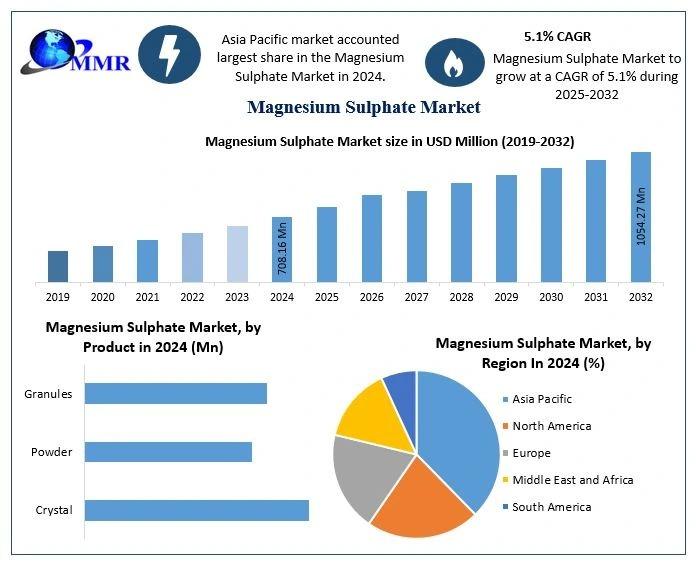
    0 Comments ·0 Shares ·407 Views
  • Magnesium Sulphate Market Industry Analysis, Demand, and Revenue Forecast Report by MMR

    Magnesium Sulphate Market to Reach USD 1,054.27 Million by 2032, Driven by Agricultural Demand and Pharmaceutical Applications

    The Magnesium Sulphate Market is witnessing steady growth, supported by rising agricultural productivity requirements, expanding pharmaceutical applications, and increasing demand from industrial manufacturing. According to Maximize Market Research, the market was valued at USD 708.16 million in 2024 and is projected to reach approximately USD 1,054.27 million by 2032, growing at a compound annual growth rate (CAGR) of 5.1% from 2025 to 2032. Increasing interest in efficient nutrient management, specialty chemicals, and high-quality pharmaceutical formulations is expected to create new opportunities for manufacturers and investors.

    Market Estimation, Growth Drivers and Opportunities

    Magnesium sulphate, commonly known as Epsom salt in certain applications, is an important inorganic compound used across agriculture, healthcare, food processing, personal care, water treatment, paints, textiles, and chemical manufacturing. Its versatility makes it a valuable ingredient for industries seeking reliable magnesium and sulphur sources.

    Agriculture remains a major growth driver because magnesium supports chlorophyll formation, photosynthesis, and plant development, while sulphur contributes to essential plant functions. Growing food requirements, soil nutrient deficiencies, and the adoption of balanced fertilization practices are increasing demand for magnesium sulphate-based fertilizers. Farmers are increasingly interested in improving crop yields and nutrient-use efficiency, creating opportunities for agricultural-grade products.

    Pharmaceutical demand also supports market expansion. Magnesium sulphate is used in clinical settings, including the management of pre-eclampsia and eclampsia, subject to appropriate medical supervision. Demand for dependable pharmaceutical ingredients and ready-to-use injectable formulations creates opportunities for manufacturers that can meet stringent quality and regulatory requirements.

    Get a Sample Insight Report Now : https://www.maximizemarketresearch.com/request-sample/148167/

    Magnesium Sulphate Market Industry Analysis, Demand, and Revenue Forecast Report by MMR Magnesium Sulphate Market to Reach USD 1,054.27 Million by 2032, Driven by Agricultural Demand and Pharmaceutical Applications The Magnesium Sulphate Market is witnessing steady growth, supported by rising agricultural productivity requirements, expanding pharmaceutical applications, and increasing demand from industrial manufacturing. According to Maximize Market Research, the market was valued at USD 708.16 million in 2024 and is projected to reach approximately USD 1,054.27 million by 2032, growing at a compound annual growth rate (CAGR) of 5.1% from 2025 to 2032. Increasing interest in efficient nutrient management, specialty chemicals, and high-quality pharmaceutical formulations is expected to create new opportunities for manufacturers and investors. Market Estimation, Growth Drivers and Opportunities Magnesium sulphate, commonly known as Epsom salt in certain applications, is an important inorganic compound used across agriculture, healthcare, food processing, personal care, water treatment, paints, textiles, and chemical manufacturing. Its versatility makes it a valuable ingredient for industries seeking reliable magnesium and sulphur sources. Agriculture remains a major growth driver because magnesium supports chlorophyll formation, photosynthesis, and plant development, while sulphur contributes to essential plant functions. Growing food requirements, soil nutrient deficiencies, and the adoption of balanced fertilization practices are increasing demand for magnesium sulphate-based fertilizers. Farmers are increasingly interested in improving crop yields and nutrient-use efficiency, creating opportunities for agricultural-grade products. Pharmaceutical demand also supports market expansion. Magnesium sulphate is used in clinical settings, including the management of pre-eclampsia and eclampsia, subject to appropriate medical supervision. Demand for dependable pharmaceutical ingredients and ready-to-use injectable formulations creates opportunities for manufacturers that can meet stringent quality and regulatory requirements. Get a Sample Insight Report Now : https://www.maximizemarketresearch.com/request-sample/148167/
    0 Comments ·0 Shares ·136 Views
  • QX Broker: Learn Quotex Demo Trading and Market Analysis

    QX Broker provides informative resources about Quotex demo accounts, trading indicators, and market analysis. Learn how to observe price fluctuations, explore different trading instruments, and practice trading concepts using virtual funds without risking real money during demo sessions.

    More visit:- https://pressbulletin.site/what-are-the-key-features-of-the-quotex-trading-platform/
    QX Broker: Learn Quotex Demo Trading and Market Analysis QX Broker provides informative resources about Quotex demo accounts, trading indicators, and market analysis. Learn how to observe price fluctuations, explore different trading instruments, and practice trading concepts using virtual funds without risking real money during demo sessions. More visit:- https://pressbulletin.site/what-are-the-key-features-of-the-quotex-trading-platform/
    Key Features of the Quotex Trading Platform
    pressbulletin.site
    Explore the key features of the Quotex trading platform, including demo accounts, technical indicators, market charts, trading tools, and mobile access.
    0 Comments ·0 Shares ·64 Views
  • Stellar Market Research, a premier market intelligence and business consulting firm, has released an in-depth strategic analysis report on the Nutricosmetics Market. The comprehensive study evaluates current dynamics, shifts in consumer behavior, and technological catalysts transforming the global landscape. According to the report, the market was valued at USD 7.69 billion in 2025 and is projected to scale to USD 15.34 billion by 2034, registering a robust compound annual growth rate (CAGR) of approximately 7.9% to 8.31% over the forecast period.

    The convergence of personal care, dermatology, and nutraceutical science has catalyzed a paradigm shift in how consumers approach anti-aging and daily beauty regimens. Moving beyond topical cosmetics, the global market is experiencing unprecedented demand for ingestible solutions that target skin elasticity, hair vitality, and nail strength at a cellular level. This structural transformation is heavily propelled by heightened consumer literacy regarding holistic wellness, preventative health, and the limitations of surface-level cosmetic treatments.

    Key Findings from the Report

    Market Valuation & Growth Trajectory: The global nutricosmetics market, valued at USD 7.69 billion in 2025, is on a high-growth trajectory, poised to reach USD 15.34 billion by 2034, expanding at a steady CAGR of ~7.9% to 8.31%.

    Dominant Product & Segment Share: Dietary supplements (capsules, tablets, and powders) lead product-type demand, capturing over 60% of the market share due to consumer familiarity, ease of precise dosing, and seamless integration into daily wellness routines.

    Application Insights: Skin care applications hold the largest revenue share, driven by surging consumer preference for anti-aging, hydration, and UV-protection ingestibles, while hair care emerges as the fastest-growing application category.

    Ingredient Leadership: Collagen peptides dominate the active ingredient base, capturing a dominant share supported by strong consumer awareness surrounding skin matrix support and joint-beauty synergies.

    Leading Geographic Hub: North America commands the largest regional revenue share, anchored by advanced retail channels, high disposable incomes, and robust regulatory oversight by the FDA that bolsters consumer confidence.

    Fastest-Growing Region: Asia-Pacific is projected to record the highest regional CAGR through the forecast period, powered by deeply entrenched cultural traditions of functional foods and preventive health in Japan and South Korea.

    Distribution Channel Evolution: Online retail channels represent the primary sales avenue, fueled by direct-to-consumer (D2C) subscription models, digital beauty education, and targeted social media marketing.

    For further information, click the following link: https://www.stellarmr.com/report/req_sample/Nutricosmetics-Market/2625
    Market Drivers and Restraints
    Drivers
    Rising Consumer Preference for Preventive Health & Wellness: A cultural shift toward proactive self-care has accelerated consumer willingness to invest in ingestible beauty products that promise long-term systemic benefits over quick fixes.

    Advancements in Bioactive Extraction & Delivery Systems: Innovations in bioavailability—such as advanced hydrolyzed peptides, liposomal delivery, and biomimetic ingredients—are substantially enhancing product efficacy and consumer results.

    Proliferation of D2C Subscription Models & Digital Personalization: E-commerce platforms and AI-driven skin diagnostic tools allow brands to offer tailored supplement regimens, successfully lowering adoption friction and driving repeat purchases.

    Restraints
    Strict and Fragmented Regulatory Frameworks: Navigating cross-border compliance regarding health claims, ingredient approvals (such as novel foods in Europe), and substantiating beauty-from-within claims presents a significant hurdle for market entrants.

    High Price Points for Premium Formulations: Premium clinical ingredients and specialized manufacturing processes often result in elevated retail price points, limiting market penetration among price-sensitive consumer segments.

    Technology, Regulation, and Sustainability Trends
    The nutricosmetics sector is undergoing a profound operational transformation driven by technology and sustainability. Artificial intelligence and mobile diagnostic apps are increasingly utilized to analyze individual skin metrics and deliver customized supplement formulations. Concurrently, regulatory bodies are enforcing stricter documentation standards for substantiating skin and hair health claims, compelling brands to invest heavily in clinical trials.

    On the environmental front, sustainability (ESG) has become a core competitive differentiator. Manufacturers are rapidly transitioning to eco-friendly packaging—such as paper-based canisters and biodegradable pouches—and adopting traceable, ethically sourced marine and plant-derived ingredients to satisfy eco-conscious consumers.

    Regional Insights
    North America: Maintaining a dominant regional market share, North America benefits from robust venture capital activity, widespread adoption of personalized nutrition, and mainstream retail expansion into metabolic and inner-beauty aisles.

    Asia-Pacific: Poised for the fastest regional growth, Asia-Pacific thrives on mature consumer habits in Japan and South Korea, where fermented botanicals, collagen drinks, and functional foods are deeply woven into daily lifestyle and heritage routines.

    Europe: Driven by stringent European Food Safety Authority (EFSA) standards, Europe prioritizes clean-label transparency, rigorous product safety, and aggressive corporate sustainability mandates.

    Recent Industry Developments
    L'Oréal (2026): Entered the nutricosmetics space with the launch of Vichy Laboratories Liftactiv Collagen Supplements, designed to support cellular health and natural collagen synthesis for both men and women.

    Solabia Group (2026): Completed the strategic acquisition of Mibelle Biochemistry in July 2026, expanding its biotech-oriented active ingredient portfolio and accelerating formulation capabilities for global beauty brands.

    TOSLA & Geltor (2026): Partnered to launch the Signaling Collagen liquid shot, a vegan-certified ingestible featuring biomimetic type 21 signaling collagen polypeptides to improve skin architecture.

    Nutrafol (2026): Expanded its life-stage product portfolio with the launch of the Men 50+ Hair Growth Nutraceutical, addressing targeted hair-thinning pathways in aging demographics.

    Amway / Nutrilite (2026): Won the Cellular Longevity from Within category at INNOCOS for its CelAct Cellular Aging Support formulation, highlighting the industry's pivot toward cellular health innovations.

    Competitive Landscape
    The global nutricosmetics market features a dynamic mix of established multinational health-science conglomerates, specialized beauty giants, and agile direct-to-consumer disruptors. Leading players are focusing on strategic mergers, biotech acquisitions, and clean-label product extensions to capture market share. Key market participants include Nestlé Health Science, Shiseido Company, L'Oréal, Amway (Nutrilite), Solabia Group (Mibelle Biochemistry), Nutrafol, and Ritual, among others. Competitive advantage increasingly relies on clinical validation, transparent sourcing, and personalized digital subscription ecosystems.

    Analyst Commentary
    "The nutricosmetics sector is no longer viewed as an experimental crossover between food and cosmetics; it has matured into a science-driven category defined by clinical validation and cellular health," said a Senior Research Analyst at Stellar Market Research. "As consumers increasingly look inward to manage long-term skin vitality and healthy aging, brands that successfully combine bioavailable active ingredients with transparent, sustainable supply chains will command the next wave of market leadership."

    Future Outlook
    Through the forecast period, the nutricosmetics market is anticipated to experience accelerated mainstream adoption. Growth will be heavily underpins by continuous technological innovations in biotechnology, precision nutrition, and multi-functional format diversification (such as functional gummies, liquid ampoules, and daily convenience sachets). Regulatory compliance will tighten, filtering out unsubstantiated claims and favoring science-led market leaders. Strategic cross-sector collaborations between pharmaceutical labs, cosmetic powerhouses, and biotech innovators will further redefine the boundaries of modern beauty and wellness.

    For further information, click the following link: https://www.stellarmr.com/report/req_sample/Nutricosmetics-Market/2625
    About Stellar Market Research
    Stellar Market Research is a multifaceted market research and consulting company with professionals from several industries. Some of the industries we cover include medical devices, pharmaceutical manufacturers, science and engineering, electronic components, industrial equipment, technology and communication, cars and automobiles, chemical products and substances, general merchandise, beverages, personal care, and automated systems. To mention a few, we provide market-verified industry estimations, technical trend analysis, crucial market research, strategic advice, competition analysis, production and demand analysis, and client impact studies.

    Address
    Phase 3, Navale IT Zone, S.No. 51/2A/2, Office No. 202, 2nd floor, Near, Navale Brg, Narhe, Pune, Maharashtra 411041

    Email
    [email protected]

    Mobile
    +91 9607365656
    Stellar Market Research, a premier market intelligence and business consulting firm, has released an in-depth strategic analysis report on the Nutricosmetics Market. The comprehensive study evaluates current dynamics, shifts in consumer behavior, and technological catalysts transforming the global landscape. According to the report, the market was valued at USD 7.69 billion in 2025 and is projected to scale to USD 15.34 billion by 2034, registering a robust compound annual growth rate (CAGR) of approximately 7.9% to 8.31% over the forecast period. The convergence of personal care, dermatology, and nutraceutical science has catalyzed a paradigm shift in how consumers approach anti-aging and daily beauty regimens. Moving beyond topical cosmetics, the global market is experiencing unprecedented demand for ingestible solutions that target skin elasticity, hair vitality, and nail strength at a cellular level. This structural transformation is heavily propelled by heightened consumer literacy regarding holistic wellness, preventative health, and the limitations of surface-level cosmetic treatments. Key Findings from the Report Market Valuation & Growth Trajectory: The global nutricosmetics market, valued at USD 7.69 billion in 2025, is on a high-growth trajectory, poised to reach USD 15.34 billion by 2034, expanding at a steady CAGR of ~7.9% to 8.31%. Dominant Product & Segment Share: Dietary supplements (capsules, tablets, and powders) lead product-type demand, capturing over 60% of the market share due to consumer familiarity, ease of precise dosing, and seamless integration into daily wellness routines. Application Insights: Skin care applications hold the largest revenue share, driven by surging consumer preference for anti-aging, hydration, and UV-protection ingestibles, while hair care emerges as the fastest-growing application category. Ingredient Leadership: Collagen peptides dominate the active ingredient base, capturing a dominant share supported by strong consumer awareness surrounding skin matrix support and joint-beauty synergies. Leading Geographic Hub: North America commands the largest regional revenue share, anchored by advanced retail channels, high disposable incomes, and robust regulatory oversight by the FDA that bolsters consumer confidence. Fastest-Growing Region: Asia-Pacific is projected to record the highest regional CAGR through the forecast period, powered by deeply entrenched cultural traditions of functional foods and preventive health in Japan and South Korea. Distribution Channel Evolution: Online retail channels represent the primary sales avenue, fueled by direct-to-consumer (D2C) subscription models, digital beauty education, and targeted social media marketing. For further information, click the following link: https://www.stellarmr.com/report/req_sample/Nutricosmetics-Market/2625 Market Drivers and Restraints Drivers Rising Consumer Preference for Preventive Health & Wellness: A cultural shift toward proactive self-care has accelerated consumer willingness to invest in ingestible beauty products that promise long-term systemic benefits over quick fixes. Advancements in Bioactive Extraction & Delivery Systems: Innovations in bioavailability—such as advanced hydrolyzed peptides, liposomal delivery, and biomimetic ingredients—are substantially enhancing product efficacy and consumer results. Proliferation of D2C Subscription Models & Digital Personalization: E-commerce platforms and AI-driven skin diagnostic tools allow brands to offer tailored supplement regimens, successfully lowering adoption friction and driving repeat purchases. Restraints Strict and Fragmented Regulatory Frameworks: Navigating cross-border compliance regarding health claims, ingredient approvals (such as novel foods in Europe), and substantiating beauty-from-within claims presents a significant hurdle for market entrants. High Price Points for Premium Formulations: Premium clinical ingredients and specialized manufacturing processes often result in elevated retail price points, limiting market penetration among price-sensitive consumer segments. Technology, Regulation, and Sustainability Trends The nutricosmetics sector is undergoing a profound operational transformation driven by technology and sustainability. Artificial intelligence and mobile diagnostic apps are increasingly utilized to analyze individual skin metrics and deliver customized supplement formulations. Concurrently, regulatory bodies are enforcing stricter documentation standards for substantiating skin and hair health claims, compelling brands to invest heavily in clinical trials. On the environmental front, sustainability (ESG) has become a core competitive differentiator. Manufacturers are rapidly transitioning to eco-friendly packaging—such as paper-based canisters and biodegradable pouches—and adopting traceable, ethically sourced marine and plant-derived ingredients to satisfy eco-conscious consumers. Regional Insights North America: Maintaining a dominant regional market share, North America benefits from robust venture capital activity, widespread adoption of personalized nutrition, and mainstream retail expansion into metabolic and inner-beauty aisles. Asia-Pacific: Poised for the fastest regional growth, Asia-Pacific thrives on mature consumer habits in Japan and South Korea, where fermented botanicals, collagen drinks, and functional foods are deeply woven into daily lifestyle and heritage routines. Europe: Driven by stringent European Food Safety Authority (EFSA) standards, Europe prioritizes clean-label transparency, rigorous product safety, and aggressive corporate sustainability mandates. Recent Industry Developments L'Oréal (2026): Entered the nutricosmetics space with the launch of Vichy Laboratories Liftactiv Collagen Supplements, designed to support cellular health and natural collagen synthesis for both men and women. Solabia Group (2026): Completed the strategic acquisition of Mibelle Biochemistry in July 2026, expanding its biotech-oriented active ingredient portfolio and accelerating formulation capabilities for global beauty brands. TOSLA & Geltor (2026): Partnered to launch the Signaling Collagen liquid shot, a vegan-certified ingestible featuring biomimetic type 21 signaling collagen polypeptides to improve skin architecture. Nutrafol (2026): Expanded its life-stage product portfolio with the launch of the Men 50+ Hair Growth Nutraceutical, addressing targeted hair-thinning pathways in aging demographics. Amway / Nutrilite (2026): Won the Cellular Longevity from Within category at INNOCOS for its CelAct Cellular Aging Support formulation, highlighting the industry's pivot toward cellular health innovations. Competitive Landscape The global nutricosmetics market features a dynamic mix of established multinational health-science conglomerates, specialized beauty giants, and agile direct-to-consumer disruptors. Leading players are focusing on strategic mergers, biotech acquisitions, and clean-label product extensions to capture market share. Key market participants include Nestlé Health Science, Shiseido Company, L'Oréal, Amway (Nutrilite), Solabia Group (Mibelle Biochemistry), Nutrafol, and Ritual, among others. Competitive advantage increasingly relies on clinical validation, transparent sourcing, and personalized digital subscription ecosystems. Analyst Commentary "The nutricosmetics sector is no longer viewed as an experimental crossover between food and cosmetics; it has matured into a science-driven category defined by clinical validation and cellular health," said a Senior Research Analyst at Stellar Market Research. "As consumers increasingly look inward to manage long-term skin vitality and healthy aging, brands that successfully combine bioavailable active ingredients with transparent, sustainable supply chains will command the next wave of market leadership." Future Outlook Through the forecast period, the nutricosmetics market is anticipated to experience accelerated mainstream adoption. Growth will be heavily underpins by continuous technological innovations in biotechnology, precision nutrition, and multi-functional format diversification (such as functional gummies, liquid ampoules, and daily convenience sachets). Regulatory compliance will tighten, filtering out unsubstantiated claims and favoring science-led market leaders. Strategic cross-sector collaborations between pharmaceutical labs, cosmetic powerhouses, and biotech innovators will further redefine the boundaries of modern beauty and wellness. For further information, click the following link: https://www.stellarmr.com/report/req_sample/Nutricosmetics-Market/2625 About Stellar Market Research Stellar Market Research is a multifaceted market research and consulting company with professionals from several industries. Some of the industries we cover include medical devices, pharmaceutical manufacturers, science and engineering, electronic components, industrial equipment, technology and communication, cars and automobiles, chemical products and substances, general merchandise, beverages, personal care, and automated systems. To mention a few, we provide market-verified industry estimations, technical trend analysis, crucial market research, strategic advice, competition analysis, production and demand analysis, and client impact studies. Address Phase 3, Navale IT Zone, S.No. 51/2A/2, Office No. 202, 2nd floor, Near, Navale Brg, Narhe, Pune, Maharashtra 411041 Email [email protected] Mobile +91 9607365656

    0 Comments ·0 Shares ·205 Views
  • The Guar Gum Market is projected to achieve monumental growth. According to a comprehensive market intelligence report published by Stellar Market Research, the global market size was valued at USD 1.11 billion in 2025 and is poised to expand at a robust compound annual growth rate (CAGR) of 7.4% from 2026 to 2034, reaching nearly USD 2.1 billion by the end of the forecast period.

    The global guar gum landscape is undergoing a structural pivot defined by dual-engine demand: high-performance energy extraction and health-conscious consumerism. Processed primarily from the endosperm of the cluster bean (Cyamopsis tetragonoloba), guar gum’s unique ability to form hydrogen bonds with water molecules makes it an irreplaceable natural hydrocolloid.

    Key Findings from the Report
    Valuation & Growth Trajectory: The global guar gum market reached USD 1.11 billion in 2025 and is projected to scale to USD 2.1 billion by 2034, registering a 7.4% CAGR.

    Grade Segment Dominance: The Food grade segment held the leading market share in 2025, propelled by surging demand for clean-label, low-fat, and convenience foods.

    Application Segment Insights: The Oil & Gas application segment captured the largest market share (37.62%) in 2025, heavily driven by North American shale gas extraction and global drilling projects.

    Functional Insights: Stabilizers and emulsifiers dominated functional segments with a 54.38% market share in 2025, expanding at a projected 6.9% CAGR due to widespread utility in dairy, confectionery, and personal care.

    Geographical Leadership: North America commanded a 43.2% market share in 2025, underpinned by extensive shale operations and robust processed food consumption.

    Production Hub: Asia-Pacific—led by India, which accounts for approximately 65% to 78% of global exports and production—remains the indispensable agricultural backbone of the supply chain.

    Investment Relevance: Rising trade volumes (such as India exporting over 417,000 metric tons valued at USD 541.65 million) highlight immense investment opportunities in seed quality, processing efficiency, and supply chain logistics.

    For further information, click the following link:https://www.stellarmr.com/report/req_sample/guar-gum-market/2828

    Market Drivers and Restraints
    Drivers:
    Shale Gas Exploration and Drilling Expansion: The rapid expansion of hydraulic fracturing in North America and emerging regions requires high-viscosity friction reducers, cementing guar gum's critical role in energy extraction.

    Explosion of Clean-Label and Convenience Foods: Changing lifestyles, urban work hours, and rising disposable incomes have elevated convenience food consumption, driving demand for natural stabilizers in soups, sauces, bakery items, and frozen desserts.

    Nutritional and Health Benefits: Heightened consumer focus on functional foods that improve glucose tolerance, reduce serum LDL cholesterol, and provide soluble dietary fiber is accelerating plant hydrocolloid utilization.

    Restraints:
    Raw Material Price Volatility: Unpredictable weather patterns, monsoon variability, and fluctuating crop yields in key agricultural belts cause sharp raw material price swings.

    Limited R&D and Infrastructure Deficits: A historical lack of specialized research facilities, certified seed breeding programs, and modernized processing machinery in primary producing regions constrains yield optimization and technological upgrading.

    Technology, Regulation, and Sustainability Trends
    The guar gum industry is undergoing rapid modernization driven by evolving compliance standards and technological integration. Regulatory bodies like the U.S. Food and Drug Administration (FDA) recognize guar gum as safe (GRAS) within specified limits, fostering consumer trust.

    On the operational front, processors are adopting advanced thermal-mechanical processing techniques to enhance powder solubility, lower microbial loads, and tailor viscosity profiles for specialized industrial uses. Furthermore, sustainability and ESG considerations are taking center stage; agricultural stakeholders are promoting climate-resilient cluster bean farming, micro-irrigation, and certified seed adoption to reduce environmental footprints and stabilize farmer incomes against climate shocks.

    Regional Insights
    North America: Dominating the global landscape with a 43.2% market share in 2025, North America's leadership is anchored by extensive shale oil and gas operations in Texas and widespread adoption of functional, low-calorie convenience foods. The U.S. alone accounts for over 41% of global guar gum imports.

    Asia-Pacific: Serving as the world's primary cultivation hub, India and Pakistan drive global supply. India contributes roughly 65% to 78% of global exports, with robust export growth heading into Western markets. Domestic cultivation is also expanding in response to international demand.

    Europe & Emerging Markets: Europe maintains steady demand driven by stringent clean-label food standards and pharmaceutical binder applications, while emerging markets in the Middle East and Latin America show rising promise in water treatment and mining sectors.

    Recent Industry Developments
    VedaOils (2025): Expanded its organic cosmetic-grade guar gum powder portfolio, capturing a wider footprint in natural personal care formulations and increasing eco-friendly product output by 15%.

    Sunita Hydrocolloids (2024): Invested in upgraded hydro-thermal processing units at its Rajasthan facility, boosting high-viscosity industrial-grade production capacity by 20% to meet North American oilfield demands.

    APEDA & Indian Exporters Consortium (2025): Implemented streamlined agricultural export quality certification protocols, stabilizing outbound shipments which crossed 417,000 metric tons valued at over USD 541 million.

    Global Hydrocolloids (2024): Formed a strategic supply partnership with major North American oilfield service providers, securing long-term delivery contracts for frac-grade fracturing guar.

    Agricultural Universities of Rajasthan & Gujarat (2024): Launched collaborative drought-resistant cluster bean seed development initiatives, improving agricultural yields by 8–10% for participating regional farmers.

    Competitive Landscape
    The global guar gum market features a consolidated yet competitive landscape characterized by integrated processors, specialized refiners, and multinational ingredient suppliers. Leading players are focusing on backward integration, strategic export partnerships, and customized grade formulations for pharmaceutical and oilfield applications.

    Key market participants profiled in the report include Sunita Hydrocolloids, Vikas WSP Ltd., Hindustan Gum & Chemicals Ltd., Cargill, Inc., Ashland Global Holdings Inc., Kerry Group, and Lotus Gums & Chemicals. These companies actively deploy capacity expansions, joint ventures, and customized bio-polymer innovations to reinforce their market positioning.

    Analyst Commentary
    "The guar gum market has evolved far beyond traditional food stabilization into a high-tech biopolymer essential for modern energy extraction and advanced pharmaceutical drug delivery," said a Senior Research Analyst at Stellar Market Research. "While agricultural volatility and processing infrastructure bottlenecks remain challenges, the pivot toward sustainable, plant-based hydrocolloids and enhanced shale exploration guarantees a lucrative pathway for stakeholders willing to invest in R&D and supply chain transparency through 2034."

    Future Outlook
    Looking toward 2034, the guar gum market is set for sustained evolution. Demand will increasingly favor high-purity, enzymatically modified, and sustainably sourced derivatives. Investment will concentrate on digitalizing agricultural supply chains, establishing dedicated R&D institutes for cluster bean genetics, and optimizing eco-friendly extraction technologies. As regulatory frameworks tighten around synthetic additives, natural hydrocolloids like guar gum will secure an irreplaceable strategic role across industrial ecosystems worldwide.

    For further information, click the following link:https://www.stellarmr.com/report/req_sample/guar-gum-market/2828

    About Stellar Market Research

    Stellar Market Research is a multifaceted market research and consulting company with professionals from several industries. Some of the industries we cover include medical devices, pharmaceutical manufacturers, science and engineering, electronic components, industrial equipment, technology and communication, cars and automobiles, chemical products and substances, general merchandise, beverages, personal care, and automated systems. To mention a few, we provide market-verified industry estimations, technical trend analysis, crucial market research, strategic advice, competition analysis, production and demand analysis, and client impact studies.

    Address
    Phase 3, Navale IT Zone, S.No. 51/2A/2, Office No. 202, 2nd floor, Near, Navale Brg, Narhe, Pune, Maharashtra 411041

    Email
    [email protected]

    Mobile
    +91 9607365656
    The Guar Gum Market is projected to achieve monumental growth. According to a comprehensive market intelligence report published by Stellar Market Research, the global market size was valued at USD 1.11 billion in 2025 and is poised to expand at a robust compound annual growth rate (CAGR) of 7.4% from 2026 to 2034, reaching nearly USD 2.1 billion by the end of the forecast period. The global guar gum landscape is undergoing a structural pivot defined by dual-engine demand: high-performance energy extraction and health-conscious consumerism. Processed primarily from the endosperm of the cluster bean (Cyamopsis tetragonoloba), guar gum’s unique ability to form hydrogen bonds with water molecules makes it an irreplaceable natural hydrocolloid. Key Findings from the Report Valuation & Growth Trajectory: The global guar gum market reached USD 1.11 billion in 2025 and is projected to scale to USD 2.1 billion by 2034, registering a 7.4% CAGR. Grade Segment Dominance: The Food grade segment held the leading market share in 2025, propelled by surging demand for clean-label, low-fat, and convenience foods. Application Segment Insights: The Oil & Gas application segment captured the largest market share (37.62%) in 2025, heavily driven by North American shale gas extraction and global drilling projects. Functional Insights: Stabilizers and emulsifiers dominated functional segments with a 54.38% market share in 2025, expanding at a projected 6.9% CAGR due to widespread utility in dairy, confectionery, and personal care. Geographical Leadership: North America commanded a 43.2% market share in 2025, underpinned by extensive shale operations and robust processed food consumption. Production Hub: Asia-Pacific—led by India, which accounts for approximately 65% to 78% of global exports and production—remains the indispensable agricultural backbone of the supply chain. Investment Relevance: Rising trade volumes (such as India exporting over 417,000 metric tons valued at USD 541.65 million) highlight immense investment opportunities in seed quality, processing efficiency, and supply chain logistics. For further information, click the following link:https://www.stellarmr.com/report/req_sample/guar-gum-market/2828 Market Drivers and Restraints Drivers: Shale Gas Exploration and Drilling Expansion: The rapid expansion of hydraulic fracturing in North America and emerging regions requires high-viscosity friction reducers, cementing guar gum's critical role in energy extraction. Explosion of Clean-Label and Convenience Foods: Changing lifestyles, urban work hours, and rising disposable incomes have elevated convenience food consumption, driving demand for natural stabilizers in soups, sauces, bakery items, and frozen desserts. Nutritional and Health Benefits: Heightened consumer focus on functional foods that improve glucose tolerance, reduce serum LDL cholesterol, and provide soluble dietary fiber is accelerating plant hydrocolloid utilization. Restraints: Raw Material Price Volatility: Unpredictable weather patterns, monsoon variability, and fluctuating crop yields in key agricultural belts cause sharp raw material price swings. Limited R&D and Infrastructure Deficits: A historical lack of specialized research facilities, certified seed breeding programs, and modernized processing machinery in primary producing regions constrains yield optimization and technological upgrading. Technology, Regulation, and Sustainability Trends The guar gum industry is undergoing rapid modernization driven by evolving compliance standards and technological integration. Regulatory bodies like the U.S. Food and Drug Administration (FDA) recognize guar gum as safe (GRAS) within specified limits, fostering consumer trust. On the operational front, processors are adopting advanced thermal-mechanical processing techniques to enhance powder solubility, lower microbial loads, and tailor viscosity profiles for specialized industrial uses. Furthermore, sustainability and ESG considerations are taking center stage; agricultural stakeholders are promoting climate-resilient cluster bean farming, micro-irrigation, and certified seed adoption to reduce environmental footprints and stabilize farmer incomes against climate shocks. Regional Insights North America: Dominating the global landscape with a 43.2% market share in 2025, North America's leadership is anchored by extensive shale oil and gas operations in Texas and widespread adoption of functional, low-calorie convenience foods. The U.S. alone accounts for over 41% of global guar gum imports. Asia-Pacific: Serving as the world's primary cultivation hub, India and Pakistan drive global supply. India contributes roughly 65% to 78% of global exports, with robust export growth heading into Western markets. Domestic cultivation is also expanding in response to international demand. Europe & Emerging Markets: Europe maintains steady demand driven by stringent clean-label food standards and pharmaceutical binder applications, while emerging markets in the Middle East and Latin America show rising promise in water treatment and mining sectors. Recent Industry Developments VedaOils (2025): Expanded its organic cosmetic-grade guar gum powder portfolio, capturing a wider footprint in natural personal care formulations and increasing eco-friendly product output by 15%. Sunita Hydrocolloids (2024): Invested in upgraded hydro-thermal processing units at its Rajasthan facility, boosting high-viscosity industrial-grade production capacity by 20% to meet North American oilfield demands. APEDA & Indian Exporters Consortium (2025): Implemented streamlined agricultural export quality certification protocols, stabilizing outbound shipments which crossed 417,000 metric tons valued at over USD 541 million. Global Hydrocolloids (2024): Formed a strategic supply partnership with major North American oilfield service providers, securing long-term delivery contracts for frac-grade fracturing guar. Agricultural Universities of Rajasthan & Gujarat (2024): Launched collaborative drought-resistant cluster bean seed development initiatives, improving agricultural yields by 8–10% for participating regional farmers. Competitive Landscape The global guar gum market features a consolidated yet competitive landscape characterized by integrated processors, specialized refiners, and multinational ingredient suppliers. Leading players are focusing on backward integration, strategic export partnerships, and customized grade formulations for pharmaceutical and oilfield applications. Key market participants profiled in the report include Sunita Hydrocolloids, Vikas WSP Ltd., Hindustan Gum & Chemicals Ltd., Cargill, Inc., Ashland Global Holdings Inc., Kerry Group, and Lotus Gums & Chemicals. These companies actively deploy capacity expansions, joint ventures, and customized bio-polymer innovations to reinforce their market positioning. Analyst Commentary "The guar gum market has evolved far beyond traditional food stabilization into a high-tech biopolymer essential for modern energy extraction and advanced pharmaceutical drug delivery," said a Senior Research Analyst at Stellar Market Research. "While agricultural volatility and processing infrastructure bottlenecks remain challenges, the pivot toward sustainable, plant-based hydrocolloids and enhanced shale exploration guarantees a lucrative pathway for stakeholders willing to invest in R&D and supply chain transparency through 2034." Future Outlook Looking toward 2034, the guar gum market is set for sustained evolution. Demand will increasingly favor high-purity, enzymatically modified, and sustainably sourced derivatives. Investment will concentrate on digitalizing agricultural supply chains, establishing dedicated R&D institutes for cluster bean genetics, and optimizing eco-friendly extraction technologies. As regulatory frameworks tighten around synthetic additives, natural hydrocolloids like guar gum will secure an irreplaceable strategic role across industrial ecosystems worldwide. For further information, click the following link:https://www.stellarmr.com/report/req_sample/guar-gum-market/2828 About Stellar Market Research Stellar Market Research is a multifaceted market research and consulting company with professionals from several industries. Some of the industries we cover include medical devices, pharmaceutical manufacturers, science and engineering, electronic components, industrial equipment, technology and communication, cars and automobiles, chemical products and substances, general merchandise, beverages, personal care, and automated systems. To mention a few, we provide market-verified industry estimations, technical trend analysis, crucial market research, strategic advice, competition analysis, production and demand analysis, and client impact studies. Address Phase 3, Navale IT Zone, S.No. 51/2A/2, Office No. 202, 2nd floor, Near, Navale Brg, Narhe, Pune, Maharashtra 411041 Email [email protected] Mobile +91 9607365656
    0 Comments ·0 Shares ·989 Views
  • When expenses come up unexpectedly, having access to the right financial option can make a difference. Fast Funding helps you explore options to Personal Loan Apply Online in Pune for needs such as medical bills, education, home repairs, or other personal expenses. You can start the application process online, check the eligibility requirements, and understand which documents may be needed. This allows you to review your options before making a financial commitment. If you are planning to apply for a personal loan, take time to compare interest rates, processing fees, repayment periods, and monthly installments. Fast Funding helps you learn about the application process and available options in Pune. Get in touch to understand the next steps and choose an option that fits your needs. Loan approval depends on loan criteria and eligibility.
    https://fastfunding.in/personal-loan.html
    When expenses come up unexpectedly, having access to the right financial option can make a difference. Fast Funding helps you explore options to Personal Loan Apply Online in Pune for needs such as medical bills, education, home repairs, or other personal expenses. You can start the application process online, check the eligibility requirements, and understand which documents may be needed. This allows you to review your options before making a financial commitment. If you are planning to apply for a personal loan, take time to compare interest rates, processing fees, repayment periods, and monthly installments. Fast Funding helps you learn about the application process and available options in Pune. Get in touch to understand the next steps and choose an option that fits your needs. Loan approval depends on loan criteria and eligibility. https://fastfunding.in/personal-loan.html
    0 Comments ·0 Shares ·844 Views
  • Cell Line Authentication DNA Test in India for Lab-based Researchers

    Lab-based researchers invest immense time, skill, and resources into uncovering medical solutions and advancing scientific innovation. High-impact research requires precision, rigorous protocols, and reliable experimental models. However, using unverified or cross-contaminated cell cultures can invalidate experimental data, waste funding, and hinder publication efforts.

    DNA Forensics Laboratory Pvt. Ltd. is a leading provider of accredited genetic testing solutions in India. We offer highly accurate, reliable Cell Line Authentication DNA testing services tailored for academic, clinical, and industrial researchers to ensure data reproducibility and journal compliance.

    Call us at +91 8010177771 or WhatsApp us at +91 9266615552.

    For more details, read our blog.

    #celllineauthentication #researchaccuracy #laboratorytesting #dnatestingindia #cellculture testing
    Cell Line Authentication DNA Test in India for Lab-based Researchers Lab-based researchers invest immense time, skill, and resources into uncovering medical solutions and advancing scientific innovation. High-impact research requires precision, rigorous protocols, and reliable experimental models. However, using unverified or cross-contaminated cell cultures can invalidate experimental data, waste funding, and hinder publication efforts. DNA Forensics Laboratory Pvt. Ltd. is a leading provider of accredited genetic testing solutions in India. We offer highly accurate, reliable Cell Line Authentication DNA testing services tailored for academic, clinical, and industrial researchers to ensure data reproducibility and journal compliance. Call us at +91 8010177771 or WhatsApp us at +91 9266615552. For more details, read our blog. #celllineauthentication #researchaccuracy #laboratorytesting #dnatestingindia #cellculture testing
    Cell Line Authentication DNA Test in India for Lab-based Researchers
    dnaforensicslab1.wordpress.com
    You put in long hours in your lab, chasing cures and building new treatments. This work needs patience and careful steps at every stage. But all that effort can go to waste if you work with the wro…
    0 Comments ·0 Shares ·208 Views
More Results