

• Filler Masterbatch Market Gains Momentum from Lightweight Material Requirements

    Market Estimation & Definition

    The global Filler Masterbatch Market is experiencing strong growth as manufacturers increasingly use specialised additives to improve plastic product performance and optimise production costs. According to Stellar Market Research, the market was valued at USD 455.56 million in 2025 and is projected to reach USD 1,048.97 million by 2034, registering a compound annual growth rate (CAGR) of 9.71% during the 2026–2034 forecast period.

    Filler masterbatch is a concentrated mixture of fillers, additives and carrier resins incorporated into base polymers during plastic manufacturing. It is commonly used to improve properties such as stiffness, opacity, dimensional stability and processing performance while reducing the overall consumption of expensive polymer materials. Applications extend across packaging, automotive components, household appliances, construction materials, wire and cable manufacturing and consumer goods.

    Download Free PDF Brochure: https://www.stellarmr.com/report/req_sample/Filler-Masterbatch-Market/1436

    Market Growth Drivers & Opportunity

    Increasing demand for plastic products across multiple industries is a major factor supporting the Filler Masterbatch Market. Packaging manufacturers use filler masterbatch to improve material performance and manage production expenses. Growth in e-commerce, food packaging and consumer product distribution is increasing the need for cost-effective plastic materials.

    The automotive industry provides another important growth opportunity. Manufacturers are increasingly using lightweight polymer components to reduce vehicle weight and improve fuel efficiency. Filler masterbatch helps modify plastic properties for selected automotive interior and exterior applications. Expansion of automotive production, particularly across Asia Pacific, is creating additional demand.

    Construction activity also contributes to market development. Plastic-based pipes, profiles, sheets and other building materials require specific mechanical and functional properties. Filler masterbatch supports manufacturers seeking consistent product performance and economical production processes.

    The market also offers opportunities through recycled and environmentally conscious formulations. Manufacturers are exploring filler masterbatches compatible with recycled polymers, bio-based materials and biodegradable plastics. However, raw material price fluctuations, quality consistency requirements and competition from alternative materials remain important challenges. Companies must maintain product quality while complying with changing regulations governing plastic additives and environmental performance.

    What Lies Ahead: Emerging Trends Shaping the Future

    Material innovation is expected to influence the future of the Filler Masterbatch Market. Research into advanced fillers and nanocomposite materials is creating possibilities for improved strength, stiffness and heat resistance. These developments may help manufacturers address specialised requirements across automotive, electrical and construction applications.

    Sustainability is another important industry trend. Growing attention to plastic waste and circular-economy practices is encouraging manufacturers to develop formulations suitable for recycled plastic materials. Recycled-polymer-compatible masterbatches may help processors improve material utilisation while supporting more resource-efficient production.

    Lightweight plastic components are also gaining importance in automotive and packaging applications. Manufacturers are seeking materials that combine functional performance with lower production costs. Filler masterbatch suppliers that improve dispersion, processing efficiency and final-product consistency may benefit from this demand.

    In addition, investment in production technology and quality-control systems will remain important. Consistent filler distribution and compatibility with different polymer grades are essential for maintaining product reliability across large-scale manufacturing operations.

    Get More Report Details: https://www.stellarmr.com/report/Filler-Masterbatch-Market/1436

    Segmentation Analysis

    According to Stellar Market Research, the Filler Masterbatch Market is segmented by type, application and region.

    By Type

    Polypropylene (PP) Filler Masterbatch
    Polyethylene (PE) Filler Masterbatch
    Others (PVC, ABS, Nylon, etc.)
    The PP filler masterbatch segment held the largest market share in 2025, supported by demand for polypropylene across packaging, automotive and construction applications. PE filler masterbatch also represents an important category, with increasing use in wire and cable manufacturing.

    By Application

    Packaging
    Automotive/Household Appliances
    Wire and Cable
    Building and Construction
    Consumer Goods
    Others
    Packaging dominated the application segment in 2025, driven by demand for strong, lightweight and economical plastic packaging materials. Automotive and household appliances represent additional opportunities as manufacturers increase their use of polymer components.

    By Region

    North America
    Europe
    Asia Pacific
    Middle East and Africa
    South America
    Asia Pacific accounted for more than 40% of the global market in 2025, with China leading regional demand, followed by India and Southeast Asia.

    Country-Level Analysis: USA and Germany

    United States: The USA is an important market for filler masterbatch, supported by its established plastics, packaging, automotive and construction industries. Demand for cost-efficient polymer processing and improved plastic product performance creates opportunities for masterbatch suppliers. Heritage Plastics, Inc. is among the key companies identified in the report. Growth opportunities are linked to packaging innovation, automotive components and the use of recycled polymers.

    Germany: Germany represents a significant European market, supported by its advanced automotive manufacturing, engineering and plastics-processing industries. Demand for lightweight automotive components, industrial plastics and sustainable packaging provides opportunities for filler masterbatch manufacturers. The report includes Germany in its European country-level coverage but does not provide a separate national market valuation.

    Competitive Analysis

    The Filler Masterbatch Market includes specialised masterbatch producers and plastic material manufacturers competing through product quality, pricing, technical capabilities and distribution networks. Key players identified by Stellar Market Research include PMJ Joint Stock Company, PHU LAM Import Export Company Limited, A DONG Plastic Joint Stock Company (ADC Plastic JSC), Vina Color, Pha Le Plastics Manufacturing, An Tien Industries, US Masterbatch JSC, Eco Green Plastic JSC, Megaplast, Plastiblends India Ltd., Alok Masterbatches Pvt. Ltd., Bajaj Superpack India Ltd., Shivam Polychem Masterbatch SA (Pty) Ltd. and Heritage Plastics, Inc.

    Competition is shaped by product consistency, polymer compatibility, filler dispersion, manufacturing capacity and cost efficiency. Companies are investing in research and development to improve formulations and develop products compatible with evolving polymer technologies. Strategic partnerships with plastic processors and expansion into high-growth packaging and automotive applications are also important competitive approaches.

    Download Free PDF Brochure: https://www.stellarmr.com/report/req_sample/Filler-Masterbatch-Market/1436

    Press Release Conclusion

    The global Filler Masterbatch Market is projected to reach USD 1,048.97 million by 2034, supported by expanding plastics consumption and demand from packaging, automotive, construction and consumer goods industries. PP filler masterbatch and packaging applications remain important market segments, while Asia Pacific continues to lead regional demand. Innovation in recycled-polymer-compatible formulations, advanced fillers and lightweight plastic materials is expected to create further opportunities. Manufacturers focusing on product consistency, sustainable solutions and cost-effective production will be well positioned to compete in the evolving market.

    About Stellar Market Research:

    Stellar Market Research is a multifaceted market research and consulting company with professionals from several industries. Some of the industries we cover include medical devices, pharmaceutical manufacturers, science and engineering, electronic components, industrial equipment, technology and communication, cars and automobiles, chemical products and substances, general merchandise, beverages, personal care, and automated systems. To mention a few, we provide market-verified industry estimations, technical trend analysis, crucial market research, strategic advice, competition analysis, production and demand analysis, and client impact studies.

    Contact Stellar Market Research:

    3rd Floor, Navale IT Park, Phase 2

    Pune Banglore Highway, Narhe,

    Pune, Maharashtra 411041, India

    [email protected]

    +91 20 6630 3320 | +91 9607365656
    Filler Masterbatch Market Gains Momentum from Lightweight Material Requirements Market Estimation & Definition The global Filler Masterbatch Market is experiencing strong growth as manufacturers increasingly use specialised additives to improve plastic product performance and optimise production costs. According to Stellar Market Research, the market was valued at USD 455.56 million in 2025 and is projected to reach USD 1,048.97 million by 2034, registering a compound annual growth rate (CAGR) of 9.71% during the 2026–2034 forecast period. Filler masterbatch is a concentrated mixture of fillers, additives and carrier resins incorporated into base polymers during plastic manufacturing. It is commonly used to improve properties such as stiffness, opacity, dimensional stability and processing performance while reducing the overall consumption of expensive polymer materials. Applications extend across packaging, automotive components, household appliances, construction materials, wire and cable manufacturing and consumer goods. Download Free PDF Brochure: https://www.stellarmr.com/report/req_sample/Filler-Masterbatch-Market/1436 Market Growth Drivers & Opportunity Increasing demand for plastic products across multiple industries is a major factor supporting the Filler Masterbatch Market. Packaging manufacturers use filler masterbatch to improve material performance and manage production expenses. Growth in e-commerce, food packaging and consumer product distribution is increasing the need for cost-effective plastic materials. The automotive industry provides another important growth opportunity. Manufacturers are increasingly using lightweight polymer components to reduce vehicle weight and improve fuel efficiency. Filler masterbatch helps modify plastic properties for selected automotive interior and exterior applications. Expansion of automotive production, particularly across Asia Pacific, is creating additional demand. Construction activity also contributes to market development. Plastic-based pipes, profiles, sheets and other building materials require specific mechanical and functional properties. Filler masterbatch supports manufacturers seeking consistent product performance and economical production processes. The market also offers opportunities through recycled and environmentally conscious formulations. Manufacturers are exploring filler masterbatches compatible with recycled polymers, bio-based materials and biodegradable plastics. However, raw material price fluctuations, quality consistency requirements and competition from alternative materials remain important challenges. Companies must maintain product quality while complying with changing regulations governing plastic additives and environmental performance. What Lies Ahead: Emerging Trends Shaping the Future Material innovation is expected to influence the future of the Filler Masterbatch Market. Research into advanced fillers and nanocomposite materials is creating possibilities for improved strength, stiffness and heat resistance. These developments may help manufacturers address specialised requirements across automotive, electrical and construction applications. Sustainability is another important industry trend. Growing attention to plastic waste and circular-economy practices is encouraging manufacturers to develop formulations suitable for recycled plastic materials. Recycled-polymer-compatible masterbatches may help processors improve material utilisation while supporting more resource-efficient production. Lightweight plastic components are also gaining importance in automotive and packaging applications. Manufacturers are seeking materials that combine functional performance with lower production costs. Filler masterbatch suppliers that improve dispersion, processing efficiency and final-product consistency may benefit from this demand. In addition, investment in production technology and quality-control systems will remain important. Consistent filler distribution and compatibility with different polymer grades are essential for maintaining product reliability across large-scale manufacturing operations. Get More Report Details: https://www.stellarmr.com/report/Filler-Masterbatch-Market/1436 Segmentation Analysis According to Stellar Market Research, the Filler Masterbatch Market is segmented by type, application and region. By Type Polypropylene (PP) Filler Masterbatch Polyethylene (PE) Filler Masterbatch Others (PVC, ABS, Nylon, etc.) The PP filler masterbatch segment held the largest market share in 2025, supported by demand for polypropylene across packaging, automotive and construction applications. PE filler masterbatch also represents an important category, with increasing use in wire and cable manufacturing. By Application Packaging Automotive/Household Appliances Wire and Cable Building and Construction Consumer Goods Others Packaging dominated the application segment in 2025, driven by demand for strong, lightweight and economical plastic packaging materials. Automotive and household appliances represent additional opportunities as manufacturers increase their use of polymer components. By Region North America Europe Asia Pacific Middle East and Africa South America Asia Pacific accounted for more than 40% of the global market in 2025, with China leading regional demand, followed by India and Southeast Asia. Country-Level Analysis: USA and Germany United States: The USA is an important market for filler masterbatch, supported by its established plastics, packaging, automotive and construction industries. Demand for cost-efficient polymer processing and improved plastic product performance creates opportunities for masterbatch suppliers. Heritage Plastics, Inc. is among the key companies identified in the report. Growth opportunities are linked to packaging innovation, automotive components and the use of recycled polymers. Germany: Germany represents a significant European market, supported by its advanced automotive manufacturing, engineering and plastics-processing industries. Demand for lightweight automotive components, industrial plastics and sustainable packaging provides opportunities for filler masterbatch manufacturers. The report includes Germany in its European country-level coverage but does not provide a separate national market valuation. Competitive Analysis The Filler Masterbatch Market includes specialised masterbatch producers and plastic material manufacturers competing through product quality, pricing, technical capabilities and distribution networks. Key players identified by Stellar Market Research include PMJ Joint Stock Company, PHU LAM Import Export Company Limited, A DONG Plastic Joint Stock Company (ADC Plastic JSC), Vina Color, Pha Le Plastics Manufacturing, An Tien Industries, US Masterbatch JSC, Eco Green Plastic JSC, Megaplast, Plastiblends India Ltd., Alok Masterbatches Pvt. Ltd., Bajaj Superpack India Ltd., Shivam Polychem Masterbatch SA (Pty) Ltd. and Heritage Plastics, Inc. Competition is shaped by product consistency, polymer compatibility, filler dispersion, manufacturing capacity and cost efficiency. Companies are investing in research and development to improve formulations and develop products compatible with evolving polymer technologies. Strategic partnerships with plastic processors and expansion into high-growth packaging and automotive applications are also important competitive approaches. Download Free PDF Brochure: https://www.stellarmr.com/report/req_sample/Filler-Masterbatch-Market/1436 Press Release Conclusion The global Filler Masterbatch Market is projected to reach USD 1,048.97 million by 2034, supported by expanding plastics consumption and demand from packaging, automotive, construction and consumer goods industries. PP filler masterbatch and packaging applications remain important market segments, while Asia Pacific continues to lead regional demand. Innovation in recycled-polymer-compatible formulations, advanced fillers and lightweight plastic materials is expected to create further opportunities. Manufacturers focusing on product consistency, sustainable solutions and cost-effective production will be well positioned to compete in the evolving market. About Stellar Market Research: Stellar Market Research is a multifaceted market research and consulting company with professionals from several industries. Some of the industries we cover include medical devices, pharmaceutical manufacturers, science and engineering, electronic components, industrial equipment, technology and communication, cars and automobiles, chemical products and substances, general merchandise, beverages, personal care, and automated systems. To mention a few, we provide market-verified industry estimations, technical trend analysis, crucial market research, strategic advice, competition analysis, production and demand analysis, and client impact studies. Contact Stellar Market Research: 3rd Floor, Navale IT Park, Phase 2 Pune Banglore Highway, Narhe, Pune, Maharashtra 411041, India [email protected] +91 20 6630 3320 | +91 9607365656
    0 Comments ·0 Shares ·78 Views

  • The Mexico Prefilled Syringes Market is valued at USD 70.9 million in 2026 and is projected to scale to USD 99.6 million by 2031, expanding at a steady compound annual growth rate (CAGR) of 7.0% over the forecast period.

    The market shift is anchored by a surging preference for ready-to-administer drug delivery formats that support home-based care and outpatient treatments for chronic conditions such as diabetes, rheumatoid arthritis, and oncology applications. With expanding middle-class demographics demanding superior healthcare solutions and institutional payers prioritizing clinical efficiency, pharmaceutical developers are aggressively shifting their product portfolios toward advanced prefilled syringe systems. This pivot is unlocking high-value commercial opportunities for both international device manufacturers and local contract development and manufacturing organizations (CDMOs).

    Key Findings from the Report
    Market Valuation & Trajectory: The Mexico prefilled syringes market stands at USD 70.9 million in 2026, scaling toward USD 99.6 million by 2031 at a 7.0% CAGR.

    Dominant Segment Dynamics: Conventional prefilled syringes currently command the largest market share owing to established clinical familiarity and cost-effectiveness across public health institutions.

    Fastest-Growing Segment: Safety prefilled syringes and dual-chamber designs are registering the fastest growth rates, propelled by stringent needlestick prevention mandates and the stability requirements of combination biologic drugs.

    Material Breakdown: Glass prefilled syringes retain leadership due to superior barrier properties against oxygen and moisture, though high-performance polymer (plastic) syringes are gaining traction in emergency care and self-administration.

    Application Leadership: Metabolic disorders (specifically diabetes and insulin management) alongside autoimmune therapies represent the primary revenue-generating therapeutic applications.

    Regional Distribution: Urban healthcare hubs centered around Mexico City, Monterrey, and Guadalajara represent the leading consumer regions, concentrating specialized clinics and advanced hospital networks.

    Investment Relevance: Rising public-private partnerships (PPPs) in healthcare infrastructure modernization are creating lucrative entry points for foreign device manufacturers seeking local distribution channels.

    For further information, click the following link:https://www.stellarmr.com/report/req_sample/Mexico-Prefilled-Syringes-Market/1646
    Market Drivers and Restraints
    Drivers
    Surging Prevalence of Chronic Diseases: An escalating burden of diabetes, cardiovascular disorders, and autoimmune conditions necessitates long-term, routine injectable therapies, naturally boosting demand for patient-friendly prefilled delivery systems.

    Expansion of Injectable Biologics: The proliferation of complex biologic drugs and therapeutic proteins requires specialized containment solutions that prevent degradation and maintain precise dosing integrity.

    Healthcare Infrastructure Modernization: Ongoing investments by both public health institutions (such as IMSS and ISSSTE) and private healthcare networks are expanding patient access to advanced medical devices across urban and semi-urban centers.

    Restraints
    High Manufacturing and Packaging Costs: Strict regulatory validation and specialized containment engineering make prefilled syringes significantly more expensive than traditional vial-and-syringe formats, challenging price-sensitive public procurement budgets.

    Packaging Material Interactions: Complex drug-device interactions—such as silicone oil-induced protein aggregation in biologics—pose technical hurdles that can delay product approvals and commercialization timelines.

    Technology, Regulation, and Sustainability Trends
    The Mexican prefilled syringes ecosystem is experiencing rapid evolution across digital integration and regulatory compliance. Pharmaceutical companies are increasingly deploying smart syringe technologies embedded with RFID and near-field communication (NFC) tags to track cold-chain compliance and monitor patient adherence.

    On the regulatory front, the Federal Commission for the Protection against Sanitary Risk (COFEPRIS) is tightening validation pathways for combination products, pushing manufacturers toward rigorous container closure integrity (CCI) testing. Simultaneously, sustainability imperatives are reshaping packaging engineering. Industry leaders are introducing eco-friendly, recyclable cyclic olefin polymers (COP) and reduced-glass designs to minimize carbon footprints while fulfilling stringent medical waste disposal guidelines.

    Regional Insights
    Regional demand is heavily concentrated in tier-1 metropolitan corridors like Mexico City, Jalisco, and Nuevo León, where advanced private hospital groups and specialized treatment centers are concentrated. These regions benefit from robust cold-chain logistics and higher disposable incomes, facilitating rapid adoption of premium biologic therapies.

    Meanwhile, emerging regional markets in central and southern Mexican states are experiencing gradual infrastructure upgrades. Government initiatives aimed at decentralizing healthcare services and expanding rural clinic capabilities are steadily unlocking secondary demand pockets for essential vaccination and insulin delivery devices.

    Recent Industry Developments
    Becton, Dickinson and Company (BD) (2025): Expanded its regional distribution agreements in Latin America, focusing on advanced safety-engineered prefilled syringe systems to support Mexican hospital networks, resulting in an estimated 14% improvement in clinical needlestick safety compliance.

    Gerresheimer AG (2025): Invested in enhanced production capabilities for high-purity tubular glass vials and prefilled syringe barrels, boosting regional supply chain resilience for Mexican biopharmaceutical formulators.

    Pfizer Inc. (2024): Partnered with local Mexican health authorities to streamline the cold-chain distribution of prefilled biologic injector pens, reducing transit-related wastage by nearly 18%.

    West Pharmaceutical Services, Inc. (2024): Introduced advanced elastomer plunger stoppers tailored for sensitive biologic formulations in Mexico, successfully reducing extractable contamination risks for regional drug manufacturers.

    Takeda Pharmaceutical Company Limited (2025): Rolled out self-administration prefilled delivery kits for rare chronic diseases in private Mexican clinics, improving patient convenience and treatment adherence metrics by over 22%.

    Competitive Landscape
    The Mexico prefilled syringes market is characterized by a consolidated mix of multinational medical device giants and specialized packaging leaders. Key players dominating the landscape include Becton, Dickinson and Company (BD), Gerresheimer AG, West Pharmaceutical Services, Schott AG, and Nipro Corporation.

    Leading market participants are deploying aggressive competitive strategies, including local distribution partnerships, portfolio diversification into custom dual-chamber systems, and long-term supply contracts with major biopharmaceutical developers. Companies are focusing heavily on customization to cater to viscous biologic formulations and expanding their cold-chain logistics footprint across Latin America.

    Analyst Commentary
    "The Mexican prefilled syringe market is transitioning from a niche procurement category into a cornerstone of modern pharmaceutical delivery," said a Senior Research Analyst at Stellar Market Research. "As biologics and chronic disease therapies dominate clinical pipelines, healthcare providers can no longer compromise on safety, dosage accuracy, or patient compliance. Manufacturers that invest in advanced polymer materials, robust containment integrity, and localized supply chain partnerships will capture exceptional growth as the market heads toward USD 99.6 million by 2031."

    Future Outlook
    Over the forecast period through 2031, the Mexico prefilled syringes market is poised for sustained, value-driven expansion. Demand will increasingly pivot toward customized and dual-chamber designs capable of handling complex, reconstitution-requiring biologic drugs.

    Investment flows will concentrate on digital tracking integration and green manufacturing practices. While cost pressures within public healthcare tenders will remain a challenge, the undeniable clinical advantages of prefilled delivery systems—coupled with rising middle-class healthcare expectations—will secure their position as the gold standard of injectable drug administration in Mexico.

    For further information, click the following link:https://www.stellarmr.com/report/req_sample/Mexico-Prefilled-Syringes-Market/1646
    About Stellar Market Research
    Stellar Market Research is a multifaceted market research and consulting company with professionals from several industries. Some of the industries we cover include medical devices, pharmaceutical manufacturers, science and engineering, electronic components, industrial equipment, technology and communication, cars and automobiles, chemical products and substances, general merchandise, beverages, personal care, and automated systems. To mention a few, we provide market-verified industry estimations, technical trend analysis, crucial market research, strategic advice, competition analysis, production and demand analysis, and client impact studies.

    Address
    Phase 3, Navale IT Zone, S.No. 51/2A/2, Office No. 202, 2nd floor, Near, Navale Brg, Narhe, Pune, Maharashtra 411041

    Email
    [email protected]

    Mobile
    +91 9607365656

    The Mexico Prefilled Syringes Market is valued at USD 70.9 million in 2026 and is projected to scale to USD 99.6 million by 2031, expanding at a steady compound annual growth rate (CAGR) of 7.0% over the forecast period. The market shift is anchored by a surging preference for ready-to-administer drug delivery formats that support home-based care and outpatient treatments for chronic conditions such as diabetes, rheumatoid arthritis, and oncology applications. With expanding middle-class demographics demanding superior healthcare solutions and institutional payers prioritizing clinical efficiency, pharmaceutical developers are aggressively shifting their product portfolios toward advanced prefilled syringe systems. This pivot is unlocking high-value commercial opportunities for both international device manufacturers and local contract development and manufacturing organizations (CDMOs). Key Findings from the Report Market Valuation & Trajectory: The Mexico prefilled syringes market stands at USD 70.9 million in 2026, scaling toward USD 99.6 million by 2031 at a 7.0% CAGR. Dominant Segment Dynamics: Conventional prefilled syringes currently command the largest market share owing to established clinical familiarity and cost-effectiveness across public health institutions. Fastest-Growing Segment: Safety prefilled syringes and dual-chamber designs are registering the fastest growth rates, propelled by stringent needlestick prevention mandates and the stability requirements of combination biologic drugs. Material Breakdown: Glass prefilled syringes retain leadership due to superior barrier properties against oxygen and moisture, though high-performance polymer (plastic) syringes are gaining traction in emergency care and self-administration. Application Leadership: Metabolic disorders (specifically diabetes and insulin management) alongside autoimmune therapies represent the primary revenue-generating therapeutic applications. Regional Distribution: Urban healthcare hubs centered around Mexico City, Monterrey, and Guadalajara represent the leading consumer regions, concentrating specialized clinics and advanced hospital networks. Investment Relevance: Rising public-private partnerships (PPPs) in healthcare infrastructure modernization are creating lucrative entry points for foreign device manufacturers seeking local distribution channels. For further information, click the following link:https://www.stellarmr.com/report/req_sample/Mexico-Prefilled-Syringes-Market/1646 Market Drivers and Restraints Drivers Surging Prevalence of Chronic Diseases: An escalating burden of diabetes, cardiovascular disorders, and autoimmune conditions necessitates long-term, routine injectable therapies, naturally boosting demand for patient-friendly prefilled delivery systems. Expansion of Injectable Biologics: The proliferation of complex biologic drugs and therapeutic proteins requires specialized containment solutions that prevent degradation and maintain precise dosing integrity. Healthcare Infrastructure Modernization: Ongoing investments by both public health institutions (such as IMSS and ISSSTE) and private healthcare networks are expanding patient access to advanced medical devices across urban and semi-urban centers. Restraints High Manufacturing and Packaging Costs: Strict regulatory validation and specialized containment engineering make prefilled syringes significantly more expensive than traditional vial-and-syringe formats, challenging price-sensitive public procurement budgets. Packaging Material Interactions: Complex drug-device interactions—such as silicone oil-induced protein aggregation in biologics—pose technical hurdles that can delay product approvals and commercialization timelines. Technology, Regulation, and Sustainability Trends The Mexican prefilled syringes ecosystem is experiencing rapid evolution across digital integration and regulatory compliance. Pharmaceutical companies are increasingly deploying smart syringe technologies embedded with RFID and near-field communication (NFC) tags to track cold-chain compliance and monitor patient adherence. On the regulatory front, the Federal Commission for the Protection against Sanitary Risk (COFEPRIS) is tightening validation pathways for combination products, pushing manufacturers toward rigorous container closure integrity (CCI) testing. Simultaneously, sustainability imperatives are reshaping packaging engineering. Industry leaders are introducing eco-friendly, recyclable cyclic olefin polymers (COP) and reduced-glass designs to minimize carbon footprints while fulfilling stringent medical waste disposal guidelines. Regional Insights Regional demand is heavily concentrated in tier-1 metropolitan corridors like Mexico City, Jalisco, and Nuevo León, where advanced private hospital groups and specialized treatment centers are concentrated. These regions benefit from robust cold-chain logistics and higher disposable incomes, facilitating rapid adoption of premium biologic therapies. Meanwhile, emerging regional markets in central and southern Mexican states are experiencing gradual infrastructure upgrades. Government initiatives aimed at decentralizing healthcare services and expanding rural clinic capabilities are steadily unlocking secondary demand pockets for essential vaccination and insulin delivery devices. Recent Industry Developments Becton, Dickinson and Company (BD) (2025): Expanded its regional distribution agreements in Latin America, focusing on advanced safety-engineered prefilled syringe systems to support Mexican hospital networks, resulting in an estimated 14% improvement in clinical needlestick safety compliance. Gerresheimer AG (2025): Invested in enhanced production capabilities for high-purity tubular glass vials and prefilled syringe barrels, boosting regional supply chain resilience for Mexican biopharmaceutical formulators. Pfizer Inc. (2024): Partnered with local Mexican health authorities to streamline the cold-chain distribution of prefilled biologic injector pens, reducing transit-related wastage by nearly 18%. West Pharmaceutical Services, Inc. (2024): Introduced advanced elastomer plunger stoppers tailored for sensitive biologic formulations in Mexico, successfully reducing extractable contamination risks for regional drug manufacturers. Takeda Pharmaceutical Company Limited (2025): Rolled out self-administration prefilled delivery kits for rare chronic diseases in private Mexican clinics, improving patient convenience and treatment adherence metrics by over 22%. Competitive Landscape The Mexico prefilled syringes market is characterized by a consolidated mix of multinational medical device giants and specialized packaging leaders. Key players dominating the landscape include Becton, Dickinson and Company (BD), Gerresheimer AG, West Pharmaceutical Services, Schott AG, and Nipro Corporation. Leading market participants are deploying aggressive competitive strategies, including local distribution partnerships, portfolio diversification into custom dual-chamber systems, and long-term supply contracts with major biopharmaceutical developers. Companies are focusing heavily on customization to cater to viscous biologic formulations and expanding their cold-chain logistics footprint across Latin America. Analyst Commentary "The Mexican prefilled syringe market is transitioning from a niche procurement category into a cornerstone of modern pharmaceutical delivery," said a Senior Research Analyst at Stellar Market Research. "As biologics and chronic disease therapies dominate clinical pipelines, healthcare providers can no longer compromise on safety, dosage accuracy, or patient compliance. Manufacturers that invest in advanced polymer materials, robust containment integrity, and localized supply chain partnerships will capture exceptional growth as the market heads toward USD 99.6 million by 2031." Future Outlook Over the forecast period through 2031, the Mexico prefilled syringes market is poised for sustained, value-driven expansion. Demand will increasingly pivot toward customized and dual-chamber designs capable of handling complex, reconstitution-requiring biologic drugs. Investment flows will concentrate on digital tracking integration and green manufacturing practices. While cost pressures within public healthcare tenders will remain a challenge, the undeniable clinical advantages of prefilled delivery systems—coupled with rising middle-class healthcare expectations—will secure their position as the gold standard of injectable drug administration in Mexico. For further information, click the following link:https://www.stellarmr.com/report/req_sample/Mexico-Prefilled-Syringes-Market/1646 About Stellar Market Research Stellar Market Research is a multifaceted market research and consulting company with professionals from several industries. Some of the industries we cover include medical devices, pharmaceutical manufacturers, science and engineering, electronic components, industrial equipment, technology and communication, cars and automobiles, chemical products and substances, general merchandise, beverages, personal care, and automated systems. To mention a few, we provide market-verified industry estimations, technical trend analysis, crucial market research, strategic advice, competition analysis, production and demand analysis, and client impact studies. Address Phase 3, Navale IT Zone, S.No. 51/2A/2, Office No. 202, 2nd floor, Near, Navale Brg, Narhe, Pune, Maharashtra 411041 Email [email protected] Mobile +91 9607365656
    0 Comments ·0 Shares ·127 Views
  • Automotive Sensor Market Outlook, Industry Developments and Strategic Insights 2032 – Report by MMR

    Automotive Sensor Market Report Overview

    The forecasting process primarily hinges on the analysis of historical data alongside current trends in the Automotive Sensor Market. This comprehensive data collection employs a blend of primary and secondary research methodologies. The report encompasses vital components such as market size, share, regional analysis, dynamics, CAGR, and future trends. This holistic approach renders the report an invaluable guide for investors, as it offers an insightful and forward-looking perspective on the Automotive Sensor industry.

    Automotive Sensor Market Projection:

    Automotive Sensor Market was valued at USD 15.80 Bn. in 2025 and the total Global Automotive Sensor Market revenue is Expected to grow at a CAGR of 8.2% from 2026 to 2034 reaching nearly USD 32.13 Bn. by 2034.

    Please connect with our representative, who will ensure you to get a report sample here @https://www.maximizemarketresearch.com/request-sample/13878/

    Automotive Sensor Market Report Scope and Research Methodology

    The report presents historical data and forecasts on a global, regional, and country level, delivering an in-depth examination of Automotive Sensor market trends within each segment and their respective sub-segments . Maximize Market Research employs data triangulation as the primary research methodology, encompassing an evaluation of how data variables impact the Automotive Sensor market, data mining, and validation via primary sources such as industry experts.

    The analysis of complex Automotive Sensor industry data has been presented in straightforward language within the research report. SWOT analysis was leveraged to outline the strengths, weaknesses, opportunities, and threats for key players in the industry. To estimate the market size, a bottom-up approach was employed.

    Automotive Sensor Market Regional Analysis

    The report provides a detailed analysis of the Automotive Sensor market dynamics, Government initiatives and stringent rules and regulations influencing the market in each region. A detailed analysis of the market in North America, Asia Pacific, Europe, Middle East and Africa and South America are included in the report.

    Automotive Sensor Market Segmentation

    by Type

    Oxygen sensor
    Mass airflow sensor
    Radar sensors
    LiDAR
    Pressure sensors
    Engine speed sensor
    Others

    by Technology

    MEMS (Micro-Electro-Mechanical Systems)
    Hall-Effect
    Ultrasonic
    Infrared (IR)
    Radar
    LiDAR
    Others (Optical, Magnetic, Capacitive)

    by Application

    Powertrain
    Chassis
    Body Electronics
    Safety & Security
    Telematics
    Others

    by Sales Channel

    OEM (Original Equipment Manufacturer)
    Aftermarket

    Request Free Sample Copy:https://www.maximizemarketresearch.com/request-sample/13878/

    Automotive Sensor Key Players

    North America:
    1. Texas Instruments (United States)
    2. Sensata Technologies (United States)
    3. Delphi Technologies (United Kingdom)
    4. Allegro Microsystems (United States)
    5. Aptiv PLC (Ireland)
    6. Analog Devices, Inc. (United States)
    7. CTS Corporation (United States)
    8. Honeywell International Inc. (United States)
    9. 3M (United States)

    Europe:
    10. Bosch (Germany)
    11. Continental AG (Germany)
    12. STMicroelectronics (Switzerland)
    13. Melexis NV (Belgium)
    14. HELLA GmbH & Co. KGaA (Germany)
    15. ZF Friedrichshafen AG (Germany)
    16. Valeo SA (France)
    17. First Sensor AG (Germany)
    18. AMS AG (Austria)
    19. Elmos Semiconductor AG (Germany)
    20. Infineon Technologies AG (Germany)
    21. TE Connectivity (Switzerland)

    Asia Pacific:
    22. Denso Corporation (Japan)
    23. Panasonic Corporation (Japan)
    24. Murata Manufacturing Co., Ltd. (Japan)
    25. Renesas Electronics Corporation (Japan)
    26. ROHM Semiconductor (Japan)
    27. Omron Corporation (Japan)
    28. Nidec Corporation (Japan)
    29. Mitsubishi Electric Corporation (Japan)
    30. Aisin Seiki Co., Ltd. (Japan)

    Key Questions answered in the Automotive Sensor Market Report are:

    What is the expected CAGR of the Automotive Sensor market during the forecast period?
    What are the Automotive Sensor market segments?
    Which region of the Automotive Sensor market is expected to grow at a high rate during the forecast period?
    What is the expected CAGR of the Automotive Sensor market during the forecast period?
    What are the emerging trends in the Automotive Sensor market?
    What are the factors restraining the Automotive Sensor market growth?
    Key offerings:

    Market Share, Size, and Forecast by Revenue|2026-2034
    Market Dynamics- Growth drivers, Restraints, Investment Opportunities, and key trends
    Market Segmentation- A detailed analysis of each segment and their segments
    Competitive Landscape - Leading key players and other prominent key players.
    Trending Reports:

    Compact Spinning Machine Market https://www.maximizemarketresearch.com/market-report/compact-spinning-machine-market/76452/
    Global Automatic Tea Bag Packaging Equipment Market https://www.maximizemarketresearch.com/market-report/global-automatic-tea-bag-packaging-equipment-market/22079/
    Global Aircraft Underwater Location Beacon Market https://www.maximizemarketresearch.com/market-report/global-aircraft-underwater-location-beacon-market/81207/
    About Maximize Market Research:

    Maximize Market Research is a multifaceted market research and consulting company with professionals from several industries. Some of the industries we cover include medical devices, pharmaceutical manufacturers, science and engineering, electronic components, industrial equipment, technology and communication, cars and automobiles, chemical products and substances, general merchandise, beverages, personal care, and automated systems. To mention a few, we provide market-verified industry estimations, technical trend analysis, crucial market research, strategic advice, competition analysis, production and demand analysis, and client impact studies.

    Contact Maximize Market Research:

    3rd Floor, Navale IT Park, Phase 2

    Pune Banglore Highway, Narhe,

    Pune, Maharashtra 411041, India

    [email protected]

    +91 96071 95908, +91 9607365656
    Automotive Sensor Market Outlook, Industry Developments and Strategic Insights 2032 – Report by MMR Automotive Sensor Market Report Overview The forecasting process primarily hinges on the analysis of historical data alongside current trends in the Automotive Sensor Market. This comprehensive data collection employs a blend of primary and secondary research methodologies. The report encompasses vital components such as market size, share, regional analysis, dynamics, CAGR, and future trends. This holistic approach renders the report an invaluable guide for investors, as it offers an insightful and forward-looking perspective on the Automotive Sensor industry. Automotive Sensor Market Projection: Automotive Sensor Market was valued at USD 15.80 Bn. in 2025 and the total Global Automotive Sensor Market revenue is Expected to grow at a CAGR of 8.2% from 2026 to 2034 reaching nearly USD 32.13 Bn. by 2034. Please connect with our representative, who will ensure you to get a report sample here @https://www.maximizemarketresearch.com/request-sample/13878/ Automotive Sensor Market Report Scope and Research Methodology The report presents historical data and forecasts on a global, regional, and country level, delivering an in-depth examination of Automotive Sensor market trends within each segment and their respective sub-segments . Maximize Market Research employs data triangulation as the primary research methodology, encompassing an evaluation of how data variables impact the Automotive Sensor market, data mining, and validation via primary sources such as industry experts. The analysis of complex Automotive Sensor industry data has been presented in straightforward language within the research report. SWOT analysis was leveraged to outline the strengths, weaknesses, opportunities, and threats for key players in the industry. To estimate the market size, a bottom-up approach was employed. Automotive Sensor Market Regional Analysis The report provides a detailed analysis of the Automotive Sensor market dynamics, Government initiatives and stringent rules and regulations influencing the market in each region. A detailed analysis of the market in North America, Asia Pacific, Europe, Middle East and Africa and South America are included in the report. Automotive Sensor Market Segmentation by Type Oxygen sensor Mass airflow sensor Radar sensors LiDAR Pressure sensors Engine speed sensor Others by Technology MEMS (Micro-Electro-Mechanical Systems) Hall-Effect Ultrasonic Infrared (IR) Radar LiDAR Others (Optical, Magnetic, Capacitive) by Application Powertrain Chassis Body Electronics Safety & Security Telematics Others by Sales Channel OEM (Original Equipment Manufacturer) Aftermarket Request Free Sample Copy:https://www.maximizemarketresearch.com/request-sample/13878/ Automotive Sensor Key Players North America: 1. Texas Instruments (United States) 2. Sensata Technologies (United States) 3. Delphi Technologies (United Kingdom) 4. Allegro Microsystems (United States) 5. Aptiv PLC (Ireland) 6. Analog Devices, Inc. (United States) 7. CTS Corporation (United States) 8. Honeywell International Inc. (United States) 9. 3M (United States) Europe: 10. Bosch (Germany) 11. Continental AG (Germany) 12. STMicroelectronics (Switzerland) 13. Melexis NV (Belgium) 14. HELLA GmbH & Co. KGaA (Germany) 15. ZF Friedrichshafen AG (Germany) 16. Valeo SA (France) 17. First Sensor AG (Germany) 18. AMS AG (Austria) 19. Elmos Semiconductor AG (Germany) 20. Infineon Technologies AG (Germany) 21. TE Connectivity (Switzerland) Asia Pacific: 22. Denso Corporation (Japan) 23. Panasonic Corporation (Japan) 24. Murata Manufacturing Co., Ltd. (Japan) 25. Renesas Electronics Corporation (Japan) 26. ROHM Semiconductor (Japan) 27. Omron Corporation (Japan) 28. Nidec Corporation (Japan) 29. Mitsubishi Electric Corporation (Japan) 30. Aisin Seiki Co., Ltd. (Japan) Key Questions answered in the Automotive Sensor Market Report are: What is the expected CAGR of the Automotive Sensor market during the forecast period? What are the Automotive Sensor market segments? Which region of the Automotive Sensor market is expected to grow at a high rate during the forecast period? What is the expected CAGR of the Automotive Sensor market during the forecast period? What are the emerging trends in the Automotive Sensor market? What are the factors restraining the Automotive Sensor market growth? Key offerings: Market Share, Size, and Forecast by Revenue|2026-2034 Market Dynamics- Growth drivers, Restraints, Investment Opportunities, and key trends Market Segmentation- A detailed analysis of each segment and their segments Competitive Landscape - Leading key players and other prominent key players. Trending Reports: Compact Spinning Machine Market https://www.maximizemarketresearch.com/market-report/compact-spinning-machine-market/76452/ Global Automatic Tea Bag Packaging Equipment Market https://www.maximizemarketresearch.com/market-report/global-automatic-tea-bag-packaging-equipment-market/22079/ Global Aircraft Underwater Location Beacon Market https://www.maximizemarketresearch.com/market-report/global-aircraft-underwater-location-beacon-market/81207/ About Maximize Market Research: Maximize Market Research is a multifaceted market research and consulting company with professionals from several industries. Some of the industries we cover include medical devices, pharmaceutical manufacturers, science and engineering, electronic components, industrial equipment, technology and communication, cars and automobiles, chemical products and substances, general merchandise, beverages, personal care, and automated systems. To mention a few, we provide market-verified industry estimations, technical trend analysis, crucial market research, strategic advice, competition analysis, production and demand analysis, and client impact studies. Contact Maximize Market Research: 3rd Floor, Navale IT Park, Phase 2 Pune Banglore Highway, Narhe, Pune, Maharashtra 411041, India [email protected] +91 96071 95908, +91 9607365656
    0 Comments ·0 Shares ·109 Views
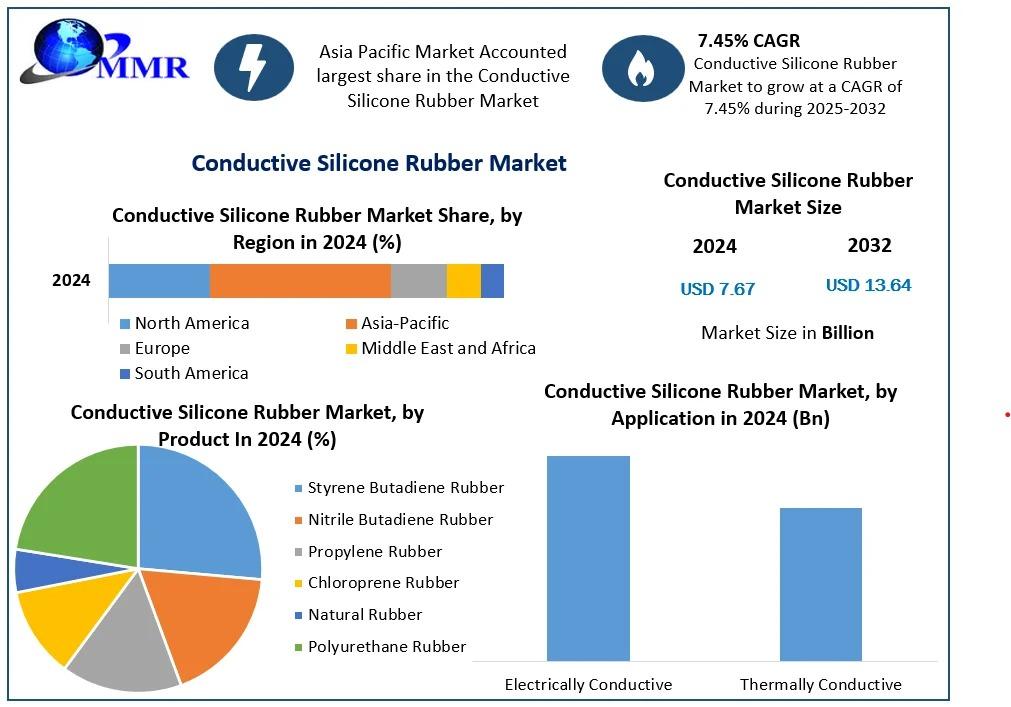
  • Conductive Silicone Rubber Market Analysis and Projected Industry Growth

    Conductive Silicone Rubber Market to Reach USD 13.64 Billion by 2032, Driven by Automotive Electrification and Advanced Electronics

    The Conductive Silicone Rubber Market is gaining momentum as manufacturers seek materials combining conductivity, flexibility, durability and reliable performance. According to Maximize Market Research, the market was valued at USD 7.67 billion in 2024 and is projected to reach USD 13.64 billion by 2032, registering a CAGR of 7.45% during 2025–2032.

    Market Estimation, Growth Drivers and Opportunities

    Conductive silicone rubber consists of silicone compounds engineered to conduct electricity or transfer heat. Its ability to provide electromagnetic interference (EMI) and radio-frequency interference (RFI) shielding while retaining flexibility and environmental resistance makes it useful in electronic enclosures, sensors, circuit boards, communication equipment, LEDs and industrial components.

    Growth is supported by rising electronic content in vehicles and industrial machinery, electric-vehicle adoption, and demand from solar energy and LED applications. Expanding 5G infrastructure, data centres, automation and compact devices create opportunities for materials that protect sensitive components from interference and heat.

    United States: Trends and Investment

    The United States is an important demand centre due to its automotive, aerospace, electronics and semiconductor industries. In June 2025, Micron announced plans to invest approximately USD 200 billion in US semiconductor manufacturing and research and development, including new and expanded facilities in Idaho, New York and Virginia and advanced high-bandwidth memory packaging capabilities. Although this investment is not specific to conductive silicone rubber, it is expected to expand the domestic electronics ecosystem and demand for materials used in component protection, thermal management and EMI shielding.

    Get Your Free Sample Report Link : https://www.maximizemarketresearch.com/request-sample/70722/

    Conductive Silicone Rubber Market Analysis and Projected Industry Growth Conductive Silicone Rubber Market to Reach USD 13.64 Billion by 2032, Driven by Automotive Electrification and Advanced Electronics The Conductive Silicone Rubber Market is gaining momentum as manufacturers seek materials combining conductivity, flexibility, durability and reliable performance. According to Maximize Market Research, the market was valued at USD 7.67 billion in 2024 and is projected to reach USD 13.64 billion by 2032, registering a CAGR of 7.45% during 2025–2032. Market Estimation, Growth Drivers and Opportunities Conductive silicone rubber consists of silicone compounds engineered to conduct electricity or transfer heat. Its ability to provide electromagnetic interference (EMI) and radio-frequency interference (RFI) shielding while retaining flexibility and environmental resistance makes it useful in electronic enclosures, sensors, circuit boards, communication equipment, LEDs and industrial components. Growth is supported by rising electronic content in vehicles and industrial machinery, electric-vehicle adoption, and demand from solar energy and LED applications. Expanding 5G infrastructure, data centres, automation and compact devices create opportunities for materials that protect sensitive components from interference and heat. United States: Trends and Investment The United States is an important demand centre due to its automotive, aerospace, electronics and semiconductor industries. In June 2025, Micron announced plans to invest approximately USD 200 billion in US semiconductor manufacturing and research and development, including new and expanded facilities in Idaho, New York and Virginia and advanced high-bandwidth memory packaging capabilities. Although this investment is not specific to conductive silicone rubber, it is expected to expand the domestic electronics ecosystem and demand for materials used in component protection, thermal management and EMI shielding. Get Your Free Sample Report Link : https://www.maximizemarketresearch.com/request-sample/70722/
    0 Comments ·0 Shares ·369 Views
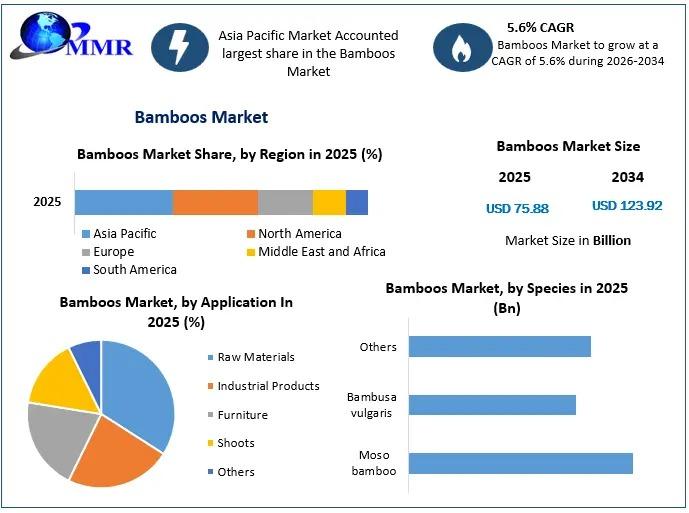
  • Bamboos Market Size and Share Outlook Driven by Eco-Friendly Product Demand Report by MMR

    Bamboos Market to Reach USD 123.92 Billion by 2034, Driven by Sustainable Construction and Industrial Applications

    The Bamboos Market is projected to grow at a CAGR of 5.6% from 2026 to 2034, supported by increasing demand for renewable materials, eco-friendly packaging, engineered building products, and sustainable industrial solutions.

    Bamboos Market Overview and Market Estimation

    The global Bamboos Market was valued at USD 75.88 billion in 2025 and is expected to reach approximately USD 123.92 billion by 2034, expanding at a compound annual growth rate (CAGR) of 5.6% during the forecast period from 2026 to 2034. The market is gaining momentum as industries increasingly explore renewable alternatives to conventional timber, plastics, and other resource-intensive materials.

    Bamboo is a rapidly renewable natural resource with applications across construction, furniture, flooring, textiles, pulp and paper, packaging, and food products. Its versatility, lightweight structure, and potential for responsible cultivation make it an attractive material for manufacturers seeking to improve resource efficiency and meet sustainability objectives.

    Major growth drivers include rising investment in sustainable infrastructure, increasing environmental awareness, expanding demand for renewable building materials, and the development of advanced bamboo-processing technologies. Engineered bamboo products are creating additional opportunities in residential construction, commercial interiors, outdoor decking, and architectural applications.

    Get a Free Sample Market Report Link : https://www.maximizemarketresearch.com/request-sample/126098/

    Bamboos Market Size and Share Outlook Driven by Eco-Friendly Product Demand Report by MMR Bamboos Market to Reach USD 123.92 Billion by 2034, Driven by Sustainable Construction and Industrial Applications The Bamboos Market is projected to grow at a CAGR of 5.6% from 2026 to 2034, supported by increasing demand for renewable materials, eco-friendly packaging, engineered building products, and sustainable industrial solutions. Bamboos Market Overview and Market Estimation The global Bamboos Market was valued at USD 75.88 billion in 2025 and is expected to reach approximately USD 123.92 billion by 2034, expanding at a compound annual growth rate (CAGR) of 5.6% during the forecast period from 2026 to 2034. The market is gaining momentum as industries increasingly explore renewable alternatives to conventional timber, plastics, and other resource-intensive materials. Bamboo is a rapidly renewable natural resource with applications across construction, furniture, flooring, textiles, pulp and paper, packaging, and food products. Its versatility, lightweight structure, and potential for responsible cultivation make it an attractive material for manufacturers seeking to improve resource efficiency and meet sustainability objectives. Major growth drivers include rising investment in sustainable infrastructure, increasing environmental awareness, expanding demand for renewable building materials, and the development of advanced bamboo-processing technologies. Engineered bamboo products are creating additional opportunities in residential construction, commercial interiors, outdoor decking, and architectural applications. Get a Free Sample Market Report Link : https://www.maximizemarketresearch.com/request-sample/126098/
    0 Comments ·0 Shares ·381 Views
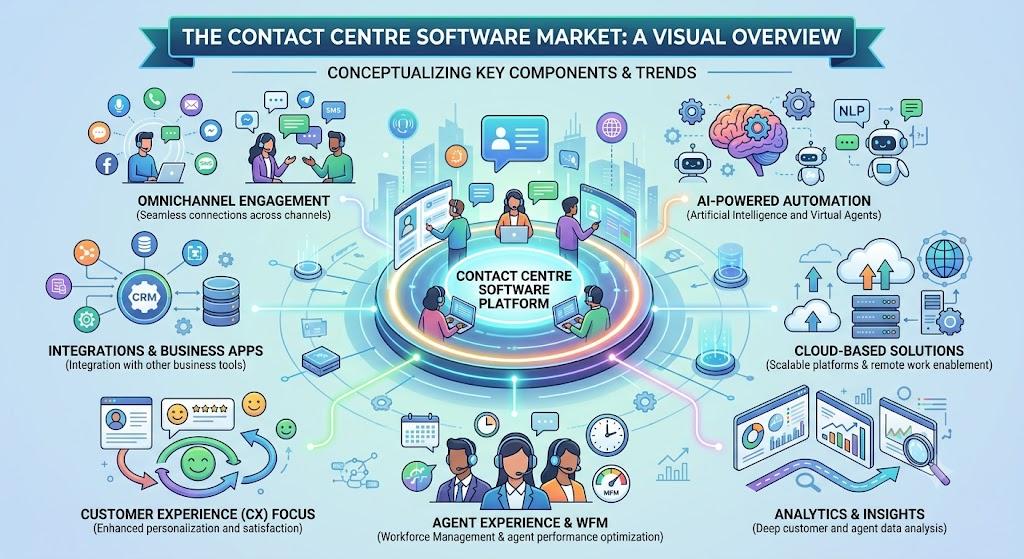
  • Contact Centre Software Market Competitive Strategies and Software Developments Report by MMR

    Unveiling the Latest Trends in the Contact Centre Software Market

    Maximize Market Research, a leading business consultancy firm, has released a comprehensive analysis of the Contact Centre Software Market. The report offers valuable business insights, including demand and pricing analysis, as well as an overview of the competitive landscape. It provides a detailed examination of the current state of the Contact Centre Software market, with projections extending through 2032

    Unlock more insights—request a free sample report now :https://www.maximizemarketresearch.com/request-sample/11596/

    Defining the Contact Centre Software Market Scope Through Comprehensive Research

    The Contact Centre Software market research delivers an in-depth analysis of key factors influencing industry growth, along with potential challenges that may arise. It provides stakeholders with a comprehensive understanding of the competitive landscape, including insights into leading companies, their product offerings, and emerging investment opportunities within the market. The report integrates both qualitative and quantitative insights, offering a well-rounded perspective on the industry’s current and future trajectory. Additionally, the MMR report includes a detailed competitive analysis, examining market players, their strategies, and key trends shaping the industry. The research is based on a blend of primary and secondary data sources, such as government publications, company websites, annual reports, and expert opinions from industry professionals and academics. Furthermore, the report identifies new market demands and trends, providing a thorough explanation of their impact on the Contact Centre Software market’s evolution. By addressing consumer preferences, regulatory frameworks, and technological advancements, the study equips businesses with actionable insights to navigate the industry’s dynamic landscape effectively.

    Explore Regional Insights and Market Dynamics in the Contact Centre Software Industry

    This report provides an in-depth regional analysis, covering essential aspects such as market size, growth rate, and trade activities, including imports and exports across different regions. By examining the geographic distribution of the Contact Centre Software market, the study offers a clear understanding of industry trends and market conditions in various countries.

    The Contact Centre Software market spans across North America, Europe, Asia Pacific, Latin America, Africa, and the Middle East, with each region presenting unique opportunities and challenges. This comprehensive analysis helps businesses identify regional growth potential, competitive landscapes, and key market drivers, enabling strategic decision-making in a dynamic global market

    Unlock the Key Market Segments Powering Contact Centre Software Industry Growth :

    Global Contact Centre Software Market size was valued at USD 61.87 Bn in 2025 and is expected to reach USD 349.93 Bn by 2034, at a CAGR of 21.23%.

    Gain more details with a free sample report. Inquire now :https://www.maximizemarketresearch.com/request-sample/11596/

    Breaking Down the Contact Centre Software Market: Key Segments Shaping the Industry

    By Component

    Solution
    Services

    By Deployment Mode

    Cloud
    On-Premises

    By Organization Size

    Small and Medium Enterprises
    Large Enterprises

    By Vertical

    Education
    Healthcare
    Consumer Goods and Retail
    Government and Public Sector
    Finance and Banking
    Travel and Hospitality
    Others

    Meet the Industry Leaders Revolutionizing the Contact Centre Software Market

    Global
    1. Genesys (Daly City, California, USA)
    2. Cisco Systems (San Jose, California, USA)
    3. Avaya (Durham, North Carolina, USA)
    4. SAP (Walldorf, Germany)
    5. Oracle (Austin, Texas, USA)

    North America
    1. Five9 (San Ramon, California, USA)
    2. NICE inContact (Sandy, Utah, USA)
    3. Zendesk (San Francisco, California, USA)
    4. Twilio (San Francisco, California, USA)
    5. Aspect Software (Phoenix, Arizona, USA)
    6. Vonage (Holmdel, New Jersey, USA)
    7. 8x8 (San Jose, California, USA)
    8. RingCentral (Belmont, California, USA)
    9. Oracle (Austin, Texas, USA)
    10. Microsoft Corporation (Redmond, Washington, USA)
    11. Talkdesk (San Francisco, California, USA)
    12. Kustomer (New York, New York, USA)
    13. Mitel (Ottawa, Ontario, Canada)
    14. HubSpot (Cambridge, Massachusetts, USA)
    15. Salesforce (San Francisco, California, USA)
    16. Freshworks (San Mateo, California, USA)
    17. Pegasystems (Cambridge, Massachusetts, USA)
    18. Zoom Video Communications (San Jose, California, USA)
    19. LivePerson (New York, New York, USA)

    Uncover Key Insights Answering the Biggest Questions in the Contact Centre Software Market

    What is Contact Centre Software ?
    What is the growth rate of the Contact Centre Software Market?
    Which are the factors expected to drive the Contact Centre Software market growth?
    What is the CAGR at which the Contact Centre Software market will grow during the forecast period?
    What are the different segments of the Contact Centre Software Market?
    Which is the fastest growing region in the Contact Centre Software market?
    What growth strategies are the players considering to increase their presence in Contact Centre Software ?
    What are the upcoming opportunities and trends for the Contact Centre Software Market?
    What are the recent industry trends that can be implemented to generate additional revenue streams for the Contact Centre Software Market?
    Who are the leading companies and what are their portfolios in Contact Centre Software Market?
    What segments are covered in the Contact Centre Software Market?
    Who are the key players in the Contact Centre Software market?
    Gain a Competitive Edge – Access Market Insights Through the Sample Link @https://www.maximizemarketresearch.com/market-report/contact-central-software-market/11596/

    Explore the Revolutionary Products Powering Market Success

    Past Size and Competitive Landscape
    Past Pricing and price curve by region
    Size, Share, Size Forecast by different segment
    Dynamics Growth Drivers, Restraints, Opportunities, and Key Trends by Region
    Segmentation A detailed analysis by segment with their sub-segments and Region
    Competitive Landscape Profiles of selected key players by region from a strategic perspective
    Explore Our Trending Reports to Stay Ahead of Industry Shifts :

    Specialty Amines Market https://www.maximizemarketresearch.com/market-report/global-specialty-amines-market/102420/
    Global Clay Blocks Market https://www.maximizemarketresearch.com/market-report/global-clay-blocks-market/85825/
    Global Packaging Additives Market https://www.maximizemarketresearch.com/market-report/global-packaging-additives-market/27383/

    Connect with Maximize Market Research for Expert Insights In-Depth Analysis :

    +91 9607365656

    [email protected]
    Contact Centre Software Market Competitive Strategies and Software Developments Report by MMR Unveiling the Latest Trends in the Contact Centre Software Market Maximize Market Research, a leading business consultancy firm, has released a comprehensive analysis of the Contact Centre Software Market. The report offers valuable business insights, including demand and pricing analysis, as well as an overview of the competitive landscape. It provides a detailed examination of the current state of the Contact Centre Software market, with projections extending through 2032 Unlock more insights—request a free sample report now :https://www.maximizemarketresearch.com/request-sample/11596/ Defining the Contact Centre Software Market Scope Through Comprehensive Research The Contact Centre Software market research delivers an in-depth analysis of key factors influencing industry growth, along with potential challenges that may arise. It provides stakeholders with a comprehensive understanding of the competitive landscape, including insights into leading companies, their product offerings, and emerging investment opportunities within the market. The report integrates both qualitative and quantitative insights, offering a well-rounded perspective on the industry’s current and future trajectory. Additionally, the MMR report includes a detailed competitive analysis, examining market players, their strategies, and key trends shaping the industry. The research is based on a blend of primary and secondary data sources, such as government publications, company websites, annual reports, and expert opinions from industry professionals and academics. Furthermore, the report identifies new market demands and trends, providing a thorough explanation of their impact on the Contact Centre Software market’s evolution. By addressing consumer preferences, regulatory frameworks, and technological advancements, the study equips businesses with actionable insights to navigate the industry’s dynamic landscape effectively. Explore Regional Insights and Market Dynamics in the Contact Centre Software Industry This report provides an in-depth regional analysis, covering essential aspects such as market size, growth rate, and trade activities, including imports and exports across different regions. By examining the geographic distribution of the Contact Centre Software market, the study offers a clear understanding of industry trends and market conditions in various countries. The Contact Centre Software market spans across North America, Europe, Asia Pacific, Latin America, Africa, and the Middle East, with each region presenting unique opportunities and challenges. This comprehensive analysis helps businesses identify regional growth potential, competitive landscapes, and key market drivers, enabling strategic decision-making in a dynamic global market Unlock the Key Market Segments Powering Contact Centre Software Industry Growth : Global Contact Centre Software Market size was valued at USD 61.87 Bn in 2025 and is expected to reach USD 349.93 Bn by 2034, at a CAGR of 21.23%. Gain more details with a free sample report. Inquire now :https://www.maximizemarketresearch.com/request-sample/11596/ Breaking Down the Contact Centre Software Market: Key Segments Shaping the Industry By Component Solution Services By Deployment Mode Cloud On-Premises By Organization Size Small and Medium Enterprises Large Enterprises By Vertical Education Healthcare Consumer Goods and Retail Government and Public Sector Finance and Banking Travel and Hospitality Others Meet the Industry Leaders Revolutionizing the Contact Centre Software Market Global 1. Genesys (Daly City, California, USA) 2. Cisco Systems (San Jose, California, USA) 3. Avaya (Durham, North Carolina, USA) 4. SAP (Walldorf, Germany) 5. Oracle (Austin, Texas, USA) North America 1. Five9 (San Ramon, California, USA) 2. NICE inContact (Sandy, Utah, USA) 3. Zendesk (San Francisco, California, USA) 4. Twilio (San Francisco, California, USA) 5. Aspect Software (Phoenix, Arizona, USA) 6. Vonage (Holmdel, New Jersey, USA) 7. 8x8 (San Jose, California, USA) 8. RingCentral (Belmont, California, USA) 9. Oracle (Austin, Texas, USA) 10. Microsoft Corporation (Redmond, Washington, USA) 11. Talkdesk (San Francisco, California, USA) 12. Kustomer (New York, New York, USA) 13. Mitel (Ottawa, Ontario, Canada) 14. HubSpot (Cambridge, Massachusetts, USA) 15. Salesforce (San Francisco, California, USA) 16. Freshworks (San Mateo, California, USA) 17. Pegasystems (Cambridge, Massachusetts, USA) 18. Zoom Video Communications (San Jose, California, USA) 19. LivePerson (New York, New York, USA) Uncover Key Insights Answering the Biggest Questions in the Contact Centre Software Market What is Contact Centre Software ? What is the growth rate of the Contact Centre Software Market? Which are the factors expected to drive the Contact Centre Software market growth? What is the CAGR at which the Contact Centre Software market will grow during the forecast period? What are the different segments of the Contact Centre Software Market? Which is the fastest growing region in the Contact Centre Software market? What growth strategies are the players considering to increase their presence in Contact Centre Software ? What are the upcoming opportunities and trends for the Contact Centre Software Market? What are the recent industry trends that can be implemented to generate additional revenue streams for the Contact Centre Software Market? Who are the leading companies and what are their portfolios in Contact Centre Software Market? What segments are covered in the Contact Centre Software Market? Who are the key players in the Contact Centre Software market? Gain a Competitive Edge – Access Market Insights Through the Sample Link @https://www.maximizemarketresearch.com/market-report/contact-central-software-market/11596/ Explore the Revolutionary Products Powering Market Success Past Size and Competitive Landscape Past Pricing and price curve by region Size, Share, Size Forecast by different segment Dynamics Growth Drivers, Restraints, Opportunities, and Key Trends by Region Segmentation A detailed analysis by segment with their sub-segments and Region Competitive Landscape Profiles of selected key players by region from a strategic perspective Explore Our Trending Reports to Stay Ahead of Industry Shifts : Specialty Amines Market https://www.maximizemarketresearch.com/market-report/global-specialty-amines-market/102420/ Global Clay Blocks Market https://www.maximizemarketresearch.com/market-report/global-clay-blocks-market/85825/ Global Packaging Additives Market https://www.maximizemarketresearch.com/market-report/global-packaging-additives-market/27383/ Connect with Maximize Market Research for Expert Insights In-Depth Analysis : +91 9607365656 [email protected]
    0 Comments ·0 Shares ·401 Views
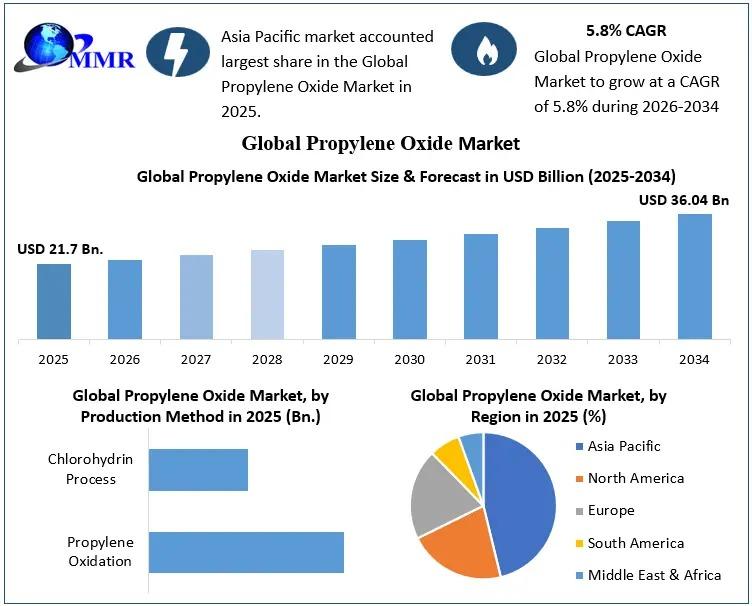
  • Propylene Oxide Market Demand, Growth Drivers, and Future Outlook Report by MMR

    Propylene Oxide Market to Reach USD 36.04 Billion by 2034, Driven by Polyurethane Demand and Industrial Applications

    Market Overview

    The Propylene Oxide Market was valued at USD 21.7 billion in 2025 and is projected to reach USD 36.04 billion by 2034, registering a compound annual growth rate (CAGR) of 5.8% during the forecast period from 2026 to 2034. Increasing demand for polyurethane foams, expanding automotive production, infrastructure development, and the growing use of propylene oxide derivatives across industrial applications are supporting market expansion. Manufacturers are also focusing on production efficiency, supply chain optimization, and advanced chemical processing technologies to strengthen their competitive positions.

    Market Estimation, Growth Drivers, and Opportunities

    Propylene oxide is an important chemical intermediate used to manufacture polyether polyols, propylene glycol, glycol ethers, and specialty surfactants. These derivatives serve multiple industries, including automotive, construction, packaging, furniture and bedding, electronics, pharmaceuticals, and personal care.

    The market's growth is primarily driven by rising demand for polyurethane materials. Polyether polyols, produced using propylene oxide, are essential ingredients in flexible and rigid polyurethane foams used in mattresses, furniture, automotive seating, building insulation, and refrigeration systems. Increasing construction activity and demand for energy-efficient buildings are creating additional opportunities for polyurethane-based insulation materials.

    The expansion of electric vehicle manufacturing also supports market development. Polyurethane materials are used in vehicle interiors, cushioning, adhesives, coatings, and selected battery-related applications. Furthermore, propylene glycol is widely used in pharmaceutical formulations, cosmetics, food processing, and industrial fluids, creating opportunities across diverse downstream markets.

    Get a Sample Insight Report Now : https://www.maximizemarketresearch.com/request-sample/2515/

    United States Market Trends and Investment Outlook

    The United States remains an important market because of its established petrochemical infrastructure, integrated feedstock supply chains, and demand from automotive, construction, and industrial manufacturing sectors. In March 2025, LyondellBasell announced an investment to expand propylene production capacity at its Channelview Complex near Houston.
    Propylene Oxide Market Demand, Growth Drivers, and Future Outlook Report by MMR Propylene Oxide Market to Reach USD 36.04 Billion by 2034, Driven by Polyurethane Demand and Industrial Applications Market Overview The Propylene Oxide Market was valued at USD 21.7 billion in 2025 and is projected to reach USD 36.04 billion by 2034, registering a compound annual growth rate (CAGR) of 5.8% during the forecast period from 2026 to 2034. Increasing demand for polyurethane foams, expanding automotive production, infrastructure development, and the growing use of propylene oxide derivatives across industrial applications are supporting market expansion. Manufacturers are also focusing on production efficiency, supply chain optimization, and advanced chemical processing technologies to strengthen their competitive positions. Market Estimation, Growth Drivers, and Opportunities Propylene oxide is an important chemical intermediate used to manufacture polyether polyols, propylene glycol, glycol ethers, and specialty surfactants. These derivatives serve multiple industries, including automotive, construction, packaging, furniture and bedding, electronics, pharmaceuticals, and personal care. The market's growth is primarily driven by rising demand for polyurethane materials. Polyether polyols, produced using propylene oxide, are essential ingredients in flexible and rigid polyurethane foams used in mattresses, furniture, automotive seating, building insulation, and refrigeration systems. Increasing construction activity and demand for energy-efficient buildings are creating additional opportunities for polyurethane-based insulation materials. The expansion of electric vehicle manufacturing also supports market development. Polyurethane materials are used in vehicle interiors, cushioning, adhesives, coatings, and selected battery-related applications. Furthermore, propylene glycol is widely used in pharmaceutical formulations, cosmetics, food processing, and industrial fluids, creating opportunities across diverse downstream markets. Get a Sample Insight Report Now : https://www.maximizemarketresearch.com/request-sample/2515/ United States Market Trends and Investment Outlook The United States remains an important market because of its established petrochemical infrastructure, integrated feedstock supply chains, and demand from automotive, construction, and industrial manufacturing sectors. In March 2025, LyondellBasell announced an investment to expand propylene production capacity at its Channelview Complex near Houston.
    0 Comments ·0 Shares ·444 Views
  • Snack Food Packaging Market Trends Highlight Sustainable Material Adoption

    Market Estimation & Definition

    The global Snack Food Packaging Market is expected to experience steady growth as consumer demand for convenient, ready-to-eat snacks increases worldwide. According to Stellar Market Research, the market was valued at USD 21.05 billion in 2025 and is projected to reach USD 28.65 billion by 2032, registering a compound annual growth rate (CAGR) of 4.5% from 2026 to 2032.

    Snack food packaging includes materials and formats designed to protect products such as chips, bakery snacks, confectionery, nuts, and dried fruits. Packaging helps preserve freshness, maintain product quality, prevent contamination, and improve convenience during transportation, storage, and consumption. It also plays an important role in product presentation, branding, and consumer purchasing decisions.

    Download Free PDF Brochure: https://www.stellarmr.com/report/req_sample/Snack-Food-Packaging-Market/2139

    Market Growth Drivers & Opportunity

    The increasing consumption of packaged snacks is a major driver of the Snack Food Packaging Market. Busy lifestyles, urbanization, and changing eating habits are encouraging consumers to choose portable food products that can be consumed at home, at work, or while travelling. This trend is increasing demand for packaging that offers convenience, durability, and effective product protection.

    The expansion of supermarkets, convenience stores, and online grocery platforms is creating additional opportunities. Manufacturers require packaging that can withstand transportation, maintain product quality, and attract consumer attention across retail channels. Flexible packaging is particularly useful because it is lightweight, easy to store, and adaptable to different product sizes.

    Sustainability is another important growth opportunity. Packaging manufacturers are exploring paper-based alternatives, recyclable materials, and designs that reduce material consumption. However, maintaining barrier performance while improving recyclability remains a challenge. Fluctuating raw material costs, environmental concerns associated with plastic waste, and changing packaging regulations may also influence manufacturers' investment decisions.

    What Lies Ahead: Emerging Trends Shaping the Future

    Sustainable packaging innovation is expected to influence future market development. Manufacturers are exploring paper-based materials, recyclable flexible formats, and packaging structures that provide effective protection with less material. These developments are especially relevant as food brands respond to growing environmental awareness and packaging-related regulations.

    Flexible packaging is also likely to remain important because of its lightweight structure, storage efficiency, and versatility. Resealable pouches and convenient single-serving formats can improve the consumer experience while helping brands differentiate their products.

    Digital printing offers another opportunity by enabling shorter production runs, faster design changes, and more customized packaging. Modified atmosphere packaging and advanced barrier materials can help preserve freshness and extend shelf life for selected snack products. Companies that combine product protection, appealing design, and improved environmental performance may be better positioned to meet changing market requirements.

    Get More Report Details: https://www.stellarmr.com/report/Snack-Food-Packaging-Market/2139

    Segmentation Analysis

    According to Stellar Market Research, the Snack Food Packaging Market is segmented by type, material, application, and region.

    By Type: Flexible Packaging, Rigid Packaging, Others.
    By Material: Plastic, Paper, Metal, Others.
    By Application: Bakery Snacks, Candy & Confections, Chips, Savory Snacks, Nuts & Dried Fruits, Others.
    By Region: North America, Europe, Asia Pacific, Middle East and Africa, South America.
    Flexible packaging provides advantages in transportation, storage, and product presentation, while rigid packaging offers structural protection for products that require stronger containers. Plastic remains widely used because of its lightweight construction, flexibility, and sealing capabilities. Paper-based and alternative materials provide opportunities for companies responding to sustainability priorities.

    The report identifies Asia Pacific as a key regional growth area, with China holding a significant position and India offering opportunities through increasing demand for savory snacks.

    Country-Level Analysis: USA and Germany

    United States: The United States is an important market for snack food packaging, supported by established packaged-food brands, extensive retail distribution, and demand for convenient snack products. Companies such as Sonoco Products Company, Berry Global Group, Sealed Air Corporation, American Packaging Corporation, Bryce Corporation, and ProAmpac are among the industry participants identified in the report. Packaging innovation, shelf-life performance, and sustainable material development are relevant areas of competition.

    Germany: Germany is included in the report's European regional coverage. Its established food manufacturing and packaging industries provide opportunities for flexible packaging, recyclable materials, and improved product-protection technologies. The report identifies European participants such as Constantia Flexibles and DS Smith. However, the report does not provide separate headline market valuations for the United States or Germany.

    Competitive Analysis

    The Snack Food Packaging Market includes global packaging manufacturers and specialized flexible-packaging suppliers. Key players identified by Stellar Market Research include Amcor Plc, Huhtamaki Oyj, Sonoco Products Company, Insta Polypack, Berry Global Group, Safepack Solutions, IIC Packaging, Graham Packaging Holdings, Swiss Pack, Sealed Air Corporation, American Packaging Corporation, Bryce Corporation, Clondalkin Flexible Packaging, ProAmpac, Modern-Pak, WestRock Company, Constantia Flexibles, and DS Smith plc.

    Competition is shaped by packaging performance, production efficiency, pricing, design flexibility, sustainability, and the ability to meet food-safety requirements. Companies investing in recyclable materials, innovative packaging formats, and advanced printing technologies may strengthen their position as brands seek packaging that combines convenience with environmental responsibility.

    Download Free PDF Brochure: https://www.stellarmr.com/report/req_sample/Snack-Food-Packaging-Market/2139

    Press Release Conclusion

    The Snack Food Packaging Market is projected to grow steadily, reaching USD 28.65 billion by 2032 as demand for convenient snacks and effective packaging solutions continues to rise. Flexible formats, material innovation, and product-protection technologies are expected to create opportunities across bakery snacks, confectionery, chips, savory snacks, nuts, and dried fruits.

    Although sustainability requirements, raw material costs, and packaging regulations present challenges, investment in recyclable materials, digital printing, and efficient packaging designs can support future development. Companies that balance product quality, convenience, cost efficiency, and environmental performance will be well positioned to benefit from the market's expansion.

    About Stellar Market Research:

    Stellar Market Research is a multifaceted market research and consulting company with professionals from several industries. Some of the industries we cover include medical devices, pharmaceutical manufacturers, science and engineering, electronic components, industrial equipment, technology and communication, cars and automobiles, chemical products and substances, general merchandise, beverages, personal care, and automated systems. To mention a few, we provide market-verified industry estimations, technical trend analysis, crucial market research, strategic advice, competition analysis, production and demand analysis, and client impact studies.

    Contact Stellar Market Research:

    3rd Floor, Navale IT Park, Phase 2

    Pune Banglore Highway, Narhe,

    Pune, Maharashtra 411041, India

    [email protected]

    +91 20 6630 3320 | +91 9607365656
    Snack Food Packaging Market Trends Highlight Sustainable Material Adoption Market Estimation & Definition The global Snack Food Packaging Market is expected to experience steady growth as consumer demand for convenient, ready-to-eat snacks increases worldwide. According to Stellar Market Research, the market was valued at USD 21.05 billion in 2025 and is projected to reach USD 28.65 billion by 2032, registering a compound annual growth rate (CAGR) of 4.5% from 2026 to 2032. Snack food packaging includes materials and formats designed to protect products such as chips, bakery snacks, confectionery, nuts, and dried fruits. Packaging helps preserve freshness, maintain product quality, prevent contamination, and improve convenience during transportation, storage, and consumption. It also plays an important role in product presentation, branding, and consumer purchasing decisions. Download Free PDF Brochure: https://www.stellarmr.com/report/req_sample/Snack-Food-Packaging-Market/2139 Market Growth Drivers & Opportunity The increasing consumption of packaged snacks is a major driver of the Snack Food Packaging Market. Busy lifestyles, urbanization, and changing eating habits are encouraging consumers to choose portable food products that can be consumed at home, at work, or while travelling. This trend is increasing demand for packaging that offers convenience, durability, and effective product protection. The expansion of supermarkets, convenience stores, and online grocery platforms is creating additional opportunities. Manufacturers require packaging that can withstand transportation, maintain product quality, and attract consumer attention across retail channels. Flexible packaging is particularly useful because it is lightweight, easy to store, and adaptable to different product sizes. Sustainability is another important growth opportunity. Packaging manufacturers are exploring paper-based alternatives, recyclable materials, and designs that reduce material consumption. However, maintaining barrier performance while improving recyclability remains a challenge. Fluctuating raw material costs, environmental concerns associated with plastic waste, and changing packaging regulations may also influence manufacturers' investment decisions. What Lies Ahead: Emerging Trends Shaping the Future Sustainable packaging innovation is expected to influence future market development. Manufacturers are exploring paper-based materials, recyclable flexible formats, and packaging structures that provide effective protection with less material. These developments are especially relevant as food brands respond to growing environmental awareness and packaging-related regulations. Flexible packaging is also likely to remain important because of its lightweight structure, storage efficiency, and versatility. Resealable pouches and convenient single-serving formats can improve the consumer experience while helping brands differentiate their products. Digital printing offers another opportunity by enabling shorter production runs, faster design changes, and more customized packaging. Modified atmosphere packaging and advanced barrier materials can help preserve freshness and extend shelf life for selected snack products. Companies that combine product protection, appealing design, and improved environmental performance may be better positioned to meet changing market requirements. Get More Report Details: https://www.stellarmr.com/report/Snack-Food-Packaging-Market/2139 Segmentation Analysis According to Stellar Market Research, the Snack Food Packaging Market is segmented by type, material, application, and region. By Type: Flexible Packaging, Rigid Packaging, Others. By Material: Plastic, Paper, Metal, Others. By Application: Bakery Snacks, Candy & Confections, Chips, Savory Snacks, Nuts & Dried Fruits, Others. By Region: North America, Europe, Asia Pacific, Middle East and Africa, South America. Flexible packaging provides advantages in transportation, storage, and product presentation, while rigid packaging offers structural protection for products that require stronger containers. Plastic remains widely used because of its lightweight construction, flexibility, and sealing capabilities. Paper-based and alternative materials provide opportunities for companies responding to sustainability priorities. The report identifies Asia Pacific as a key regional growth area, with China holding a significant position and India offering opportunities through increasing demand for savory snacks. Country-Level Analysis: USA and Germany United States: The United States is an important market for snack food packaging, supported by established packaged-food brands, extensive retail distribution, and demand for convenient snack products. Companies such as Sonoco Products Company, Berry Global Group, Sealed Air Corporation, American Packaging Corporation, Bryce Corporation, and ProAmpac are among the industry participants identified in the report. Packaging innovation, shelf-life performance, and sustainable material development are relevant areas of competition. Germany: Germany is included in the report's European regional coverage. Its established food manufacturing and packaging industries provide opportunities for flexible packaging, recyclable materials, and improved product-protection technologies. The report identifies European participants such as Constantia Flexibles and DS Smith. However, the report does not provide separate headline market valuations for the United States or Germany. Competitive Analysis The Snack Food Packaging Market includes global packaging manufacturers and specialized flexible-packaging suppliers. Key players identified by Stellar Market Research include Amcor Plc, Huhtamaki Oyj, Sonoco Products Company, Insta Polypack, Berry Global Group, Safepack Solutions, IIC Packaging, Graham Packaging Holdings, Swiss Pack, Sealed Air Corporation, American Packaging Corporation, Bryce Corporation, Clondalkin Flexible Packaging, ProAmpac, Modern-Pak, WestRock Company, Constantia Flexibles, and DS Smith plc. Competition is shaped by packaging performance, production efficiency, pricing, design flexibility, sustainability, and the ability to meet food-safety requirements. Companies investing in recyclable materials, innovative packaging formats, and advanced printing technologies may strengthen their position as brands seek packaging that combines convenience with environmental responsibility. Download Free PDF Brochure: https://www.stellarmr.com/report/req_sample/Snack-Food-Packaging-Market/2139 Press Release Conclusion The Snack Food Packaging Market is projected to grow steadily, reaching USD 28.65 billion by 2032 as demand for convenient snacks and effective packaging solutions continues to rise. Flexible formats, material innovation, and product-protection technologies are expected to create opportunities across bakery snacks, confectionery, chips, savory snacks, nuts, and dried fruits. Although sustainability requirements, raw material costs, and packaging regulations present challenges, investment in recyclable materials, digital printing, and efficient packaging designs can support future development. Companies that balance product quality, convenience, cost efficiency, and environmental performance will be well positioned to benefit from the market's expansion. About Stellar Market Research: Stellar Market Research is a multifaceted market research and consulting company with professionals from several industries. Some of the industries we cover include medical devices, pharmaceutical manufacturers, science and engineering, electronic components, industrial equipment, technology and communication, cars and automobiles, chemical products and substances, general merchandise, beverages, personal care, and automated systems. To mention a few, we provide market-verified industry estimations, technical trend analysis, crucial market research, strategic advice, competition analysis, production and demand analysis, and client impact studies. Contact Stellar Market Research: 3rd Floor, Navale IT Park, Phase 2 Pune Banglore Highway, Narhe, Pune, Maharashtra 411041, India [email protected] +91 20 6630 3320 | +91 9607365656
    0 Comments ·0 Shares ·195 Views
  • Stellar Market Research, a premier market intelligence and business consulting firm, has released an in-depth strategic analysis report on the Nutricosmetics Market. The comprehensive study evaluates current dynamics, shifts in consumer behavior, and technological catalysts transforming the global landscape. According to the report, the market was valued at USD 7.69 billion in 2025 and is projected to scale to USD 15.34 billion by 2034, registering a robust compound annual growth rate (CAGR) of approximately 7.9% to 8.31% over the forecast period.

    The convergence of personal care, dermatology, and nutraceutical science has catalyzed a paradigm shift in how consumers approach anti-aging and daily beauty regimens. Moving beyond topical cosmetics, the global market is experiencing unprecedented demand for ingestible solutions that target skin elasticity, hair vitality, and nail strength at a cellular level. This structural transformation is heavily propelled by heightened consumer literacy regarding holistic wellness, preventative health, and the limitations of surface-level cosmetic treatments.

    Key Findings from the Report

    Market Valuation & Growth Trajectory: The global nutricosmetics market, valued at USD 7.69 billion in 2025, is on a high-growth trajectory, poised to reach USD 15.34 billion by 2034, expanding at a steady CAGR of ~7.9% to 8.31%.

    Dominant Product & Segment Share: Dietary supplements (capsules, tablets, and powders) lead product-type demand, capturing over 60% of the market share due to consumer familiarity, ease of precise dosing, and seamless integration into daily wellness routines.

    Application Insights: Skin care applications hold the largest revenue share, driven by surging consumer preference for anti-aging, hydration, and UV-protection ingestibles, while hair care emerges as the fastest-growing application category.

    Ingredient Leadership: Collagen peptides dominate the active ingredient base, capturing a dominant share supported by strong consumer awareness surrounding skin matrix support and joint-beauty synergies.

    Leading Geographic Hub: North America commands the largest regional revenue share, anchored by advanced retail channels, high disposable incomes, and robust regulatory oversight by the FDA that bolsters consumer confidence.

    Fastest-Growing Region: Asia-Pacific is projected to record the highest regional CAGR through the forecast period, powered by deeply entrenched cultural traditions of functional foods and preventive health in Japan and South Korea.

    Distribution Channel Evolution: Online retail channels represent the primary sales avenue, fueled by direct-to-consumer (D2C) subscription models, digital beauty education, and targeted social media marketing.

    For further information, click the following link: https://www.stellarmr.com/report/req_sample/Nutricosmetics-Market/2625
    Market Drivers and Restraints
    Drivers
    Rising Consumer Preference for Preventive Health & Wellness: A cultural shift toward proactive self-care has accelerated consumer willingness to invest in ingestible beauty products that promise long-term systemic benefits over quick fixes.

    Advancements in Bioactive Extraction & Delivery Systems: Innovations in bioavailability—such as advanced hydrolyzed peptides, liposomal delivery, and biomimetic ingredients—are substantially enhancing product efficacy and consumer results.

    Proliferation of D2C Subscription Models & Digital Personalization: E-commerce platforms and AI-driven skin diagnostic tools allow brands to offer tailored supplement regimens, successfully lowering adoption friction and driving repeat purchases.

    Restraints
    Strict and Fragmented Regulatory Frameworks: Navigating cross-border compliance regarding health claims, ingredient approvals (such as novel foods in Europe), and substantiating beauty-from-within claims presents a significant hurdle for market entrants.

    High Price Points for Premium Formulations: Premium clinical ingredients and specialized manufacturing processes often result in elevated retail price points, limiting market penetration among price-sensitive consumer segments.

    Technology, Regulation, and Sustainability Trends
    The nutricosmetics sector is undergoing a profound operational transformation driven by technology and sustainability. Artificial intelligence and mobile diagnostic apps are increasingly utilized to analyze individual skin metrics and deliver customized supplement formulations. Concurrently, regulatory bodies are enforcing stricter documentation standards for substantiating skin and hair health claims, compelling brands to invest heavily in clinical trials.

    On the environmental front, sustainability (ESG) has become a core competitive differentiator. Manufacturers are rapidly transitioning to eco-friendly packaging—such as paper-based canisters and biodegradable pouches—and adopting traceable, ethically sourced marine and plant-derived ingredients to satisfy eco-conscious consumers.

    Regional Insights
    North America: Maintaining a dominant regional market share, North America benefits from robust venture capital activity, widespread adoption of personalized nutrition, and mainstream retail expansion into metabolic and inner-beauty aisles.

    Asia-Pacific: Poised for the fastest regional growth, Asia-Pacific thrives on mature consumer habits in Japan and South Korea, where fermented botanicals, collagen drinks, and functional foods are deeply woven into daily lifestyle and heritage routines.

    Europe: Driven by stringent European Food Safety Authority (EFSA) standards, Europe prioritizes clean-label transparency, rigorous product safety, and aggressive corporate sustainability mandates.

    Recent Industry Developments
    L'Oréal (2026): Entered the nutricosmetics space with the launch of Vichy Laboratories Liftactiv Collagen Supplements, designed to support cellular health and natural collagen synthesis for both men and women.

    Solabia Group (2026): Completed the strategic acquisition of Mibelle Biochemistry in July 2026, expanding its biotech-oriented active ingredient portfolio and accelerating formulation capabilities for global beauty brands.

    TOSLA & Geltor (2026): Partnered to launch the Signaling Collagen liquid shot, a vegan-certified ingestible featuring biomimetic type 21 signaling collagen polypeptides to improve skin architecture.

    Nutrafol (2026): Expanded its life-stage product portfolio with the launch of the Men 50+ Hair Growth Nutraceutical, addressing targeted hair-thinning pathways in aging demographics.

    Amway / Nutrilite (2026): Won the Cellular Longevity from Within category at INNOCOS for its CelAct Cellular Aging Support formulation, highlighting the industry's pivot toward cellular health innovations.

    Competitive Landscape
    The global nutricosmetics market features a dynamic mix of established multinational health-science conglomerates, specialized beauty giants, and agile direct-to-consumer disruptors. Leading players are focusing on strategic mergers, biotech acquisitions, and clean-label product extensions to capture market share. Key market participants include Nestlé Health Science, Shiseido Company, L'Oréal, Amway (Nutrilite), Solabia Group (Mibelle Biochemistry), Nutrafol, and Ritual, among others. Competitive advantage increasingly relies on clinical validation, transparent sourcing, and personalized digital subscription ecosystems.

    Analyst Commentary
    "The nutricosmetics sector is no longer viewed as an experimental crossover between food and cosmetics; it has matured into a science-driven category defined by clinical validation and cellular health," said a Senior Research Analyst at Stellar Market Research. "As consumers increasingly look inward to manage long-term skin vitality and healthy aging, brands that successfully combine bioavailable active ingredients with transparent, sustainable supply chains will command the next wave of market leadership."

    Future Outlook
    Through the forecast period, the nutricosmetics market is anticipated to experience accelerated mainstream adoption. Growth will be heavily underpins by continuous technological innovations in biotechnology, precision nutrition, and multi-functional format diversification (such as functional gummies, liquid ampoules, and daily convenience sachets). Regulatory compliance will tighten, filtering out unsubstantiated claims and favoring science-led market leaders. Strategic cross-sector collaborations between pharmaceutical labs, cosmetic powerhouses, and biotech innovators will further redefine the boundaries of modern beauty and wellness.

    For further information, click the following link: https://www.stellarmr.com/report/req_sample/Nutricosmetics-Market/2625
    About Stellar Market Research
    Stellar Market Research is a multifaceted market research and consulting company with professionals from several industries. Some of the industries we cover include medical devices, pharmaceutical manufacturers, science and engineering, electronic components, industrial equipment, technology and communication, cars and automobiles, chemical products and substances, general merchandise, beverages, personal care, and automated systems. To mention a few, we provide market-verified industry estimations, technical trend analysis, crucial market research, strategic advice, competition analysis, production and demand analysis, and client impact studies.

    Address
    Phase 3, Navale IT Zone, S.No. 51/2A/2, Office No. 202, 2nd floor, Near, Navale Brg, Narhe, Pune, Maharashtra 411041

    Email
    [email protected]

    Mobile
    +91 9607365656
    Stellar Market Research, a premier market intelligence and business consulting firm, has released an in-depth strategic analysis report on the Nutricosmetics Market. The comprehensive study evaluates current dynamics, shifts in consumer behavior, and technological catalysts transforming the global landscape. According to the report, the market was valued at USD 7.69 billion in 2025 and is projected to scale to USD 15.34 billion by 2034, registering a robust compound annual growth rate (CAGR) of approximately 7.9% to 8.31% over the forecast period. The convergence of personal care, dermatology, and nutraceutical science has catalyzed a paradigm shift in how consumers approach anti-aging and daily beauty regimens. Moving beyond topical cosmetics, the global market is experiencing unprecedented demand for ingestible solutions that target skin elasticity, hair vitality, and nail strength at a cellular level. This structural transformation is heavily propelled by heightened consumer literacy regarding holistic wellness, preventative health, and the limitations of surface-level cosmetic treatments. Key Findings from the Report Market Valuation & Growth Trajectory: The global nutricosmetics market, valued at USD 7.69 billion in 2025, is on a high-growth trajectory, poised to reach USD 15.34 billion by 2034, expanding at a steady CAGR of ~7.9% to 8.31%. Dominant Product & Segment Share: Dietary supplements (capsules, tablets, and powders) lead product-type demand, capturing over 60% of the market share due to consumer familiarity, ease of precise dosing, and seamless integration into daily wellness routines. Application Insights: Skin care applications hold the largest revenue share, driven by surging consumer preference for anti-aging, hydration, and UV-protection ingestibles, while hair care emerges as the fastest-growing application category. Ingredient Leadership: Collagen peptides dominate the active ingredient base, capturing a dominant share supported by strong consumer awareness surrounding skin matrix support and joint-beauty synergies. Leading Geographic Hub: North America commands the largest regional revenue share, anchored by advanced retail channels, high disposable incomes, and robust regulatory oversight by the FDA that bolsters consumer confidence. Fastest-Growing Region: Asia-Pacific is projected to record the highest regional CAGR through the forecast period, powered by deeply entrenched cultural traditions of functional foods and preventive health in Japan and South Korea. Distribution Channel Evolution: Online retail channels represent the primary sales avenue, fueled by direct-to-consumer (D2C) subscription models, digital beauty education, and targeted social media marketing. For further information, click the following link: https://www.stellarmr.com/report/req_sample/Nutricosmetics-Market/2625 Market Drivers and Restraints Drivers Rising Consumer Preference for Preventive Health & Wellness: A cultural shift toward proactive self-care has accelerated consumer willingness to invest in ingestible beauty products that promise long-term systemic benefits over quick fixes. Advancements in Bioactive Extraction & Delivery Systems: Innovations in bioavailability—such as advanced hydrolyzed peptides, liposomal delivery, and biomimetic ingredients—are substantially enhancing product efficacy and consumer results. Proliferation of D2C Subscription Models & Digital Personalization: E-commerce platforms and AI-driven skin diagnostic tools allow brands to offer tailored supplement regimens, successfully lowering adoption friction and driving repeat purchases. Restraints Strict and Fragmented Regulatory Frameworks: Navigating cross-border compliance regarding health claims, ingredient approvals (such as novel foods in Europe), and substantiating beauty-from-within claims presents a significant hurdle for market entrants. High Price Points for Premium Formulations: Premium clinical ingredients and specialized manufacturing processes often result in elevated retail price points, limiting market penetration among price-sensitive consumer segments. Technology, Regulation, and Sustainability Trends The nutricosmetics sector is undergoing a profound operational transformation driven by technology and sustainability. Artificial intelligence and mobile diagnostic apps are increasingly utilized to analyze individual skin metrics and deliver customized supplement formulations. Concurrently, regulatory bodies are enforcing stricter documentation standards for substantiating skin and hair health claims, compelling brands to invest heavily in clinical trials. On the environmental front, sustainability (ESG) has become a core competitive differentiator. Manufacturers are rapidly transitioning to eco-friendly packaging—such as paper-based canisters and biodegradable pouches—and adopting traceable, ethically sourced marine and plant-derived ingredients to satisfy eco-conscious consumers. Regional Insights North America: Maintaining a dominant regional market share, North America benefits from robust venture capital activity, widespread adoption of personalized nutrition, and mainstream retail expansion into metabolic and inner-beauty aisles. Asia-Pacific: Poised for the fastest regional growth, Asia-Pacific thrives on mature consumer habits in Japan and South Korea, where fermented botanicals, collagen drinks, and functional foods are deeply woven into daily lifestyle and heritage routines. Europe: Driven by stringent European Food Safety Authority (EFSA) standards, Europe prioritizes clean-label transparency, rigorous product safety, and aggressive corporate sustainability mandates. Recent Industry Developments L'Oréal (2026): Entered the nutricosmetics space with the launch of Vichy Laboratories Liftactiv Collagen Supplements, designed to support cellular health and natural collagen synthesis for both men and women. Solabia Group (2026): Completed the strategic acquisition of Mibelle Biochemistry in July 2026, expanding its biotech-oriented active ingredient portfolio and accelerating formulation capabilities for global beauty brands. TOSLA & Geltor (2026): Partnered to launch the Signaling Collagen liquid shot, a vegan-certified ingestible featuring biomimetic type 21 signaling collagen polypeptides to improve skin architecture. Nutrafol (2026): Expanded its life-stage product portfolio with the launch of the Men 50+ Hair Growth Nutraceutical, addressing targeted hair-thinning pathways in aging demographics. Amway / Nutrilite (2026): Won the Cellular Longevity from Within category at INNOCOS for its CelAct Cellular Aging Support formulation, highlighting the industry's pivot toward cellular health innovations. Competitive Landscape The global nutricosmetics market features a dynamic mix of established multinational health-science conglomerates, specialized beauty giants, and agile direct-to-consumer disruptors. Leading players are focusing on strategic mergers, biotech acquisitions, and clean-label product extensions to capture market share. Key market participants include Nestlé Health Science, Shiseido Company, L'Oréal, Amway (Nutrilite), Solabia Group (Mibelle Biochemistry), Nutrafol, and Ritual, among others. Competitive advantage increasingly relies on clinical validation, transparent sourcing, and personalized digital subscription ecosystems. Analyst Commentary "The nutricosmetics sector is no longer viewed as an experimental crossover between food and cosmetics; it has matured into a science-driven category defined by clinical validation and cellular health," said a Senior Research Analyst at Stellar Market Research. "As consumers increasingly look inward to manage long-term skin vitality and healthy aging, brands that successfully combine bioavailable active ingredients with transparent, sustainable supply chains will command the next wave of market leadership." Future Outlook Through the forecast period, the nutricosmetics market is anticipated to experience accelerated mainstream adoption. Growth will be heavily underpins by continuous technological innovations in biotechnology, precision nutrition, and multi-functional format diversification (such as functional gummies, liquid ampoules, and daily convenience sachets). Regulatory compliance will tighten, filtering out unsubstantiated claims and favoring science-led market leaders. Strategic cross-sector collaborations between pharmaceutical labs, cosmetic powerhouses, and biotech innovators will further redefine the boundaries of modern beauty and wellness. For further information, click the following link: https://www.stellarmr.com/report/req_sample/Nutricosmetics-Market/2625 About Stellar Market Research Stellar Market Research is a multifaceted market research and consulting company with professionals from several industries. Some of the industries we cover include medical devices, pharmaceutical manufacturers, science and engineering, electronic components, industrial equipment, technology and communication, cars and automobiles, chemical products and substances, general merchandise, beverages, personal care, and automated systems. To mention a few, we provide market-verified industry estimations, technical trend analysis, crucial market research, strategic advice, competition analysis, production and demand analysis, and client impact studies. Address Phase 3, Navale IT Zone, S.No. 51/2A/2, Office No. 202, 2nd floor, Near, Navale Brg, Narhe, Pune, Maharashtra 411041 Email [email protected] Mobile +91 9607365656
    0 Comments ·0 Shares ·256 Views
  • Coffee Production Market Expands with Increasing Demand for Specialty Coffee

    Coffee Production Market size was valued at US$ 505.43 Bn. in 2025 and the total revenue is expected to grow at 4.28% through 2026 to 2032, reaching nearly US$ 677.75 Bn. by 2032.

    Coffee is one of the world's most widely consumed beverages, supporting millions of livelihoods and driving a global industry that spans farming, processing, trading, roasting, and retail. As consumer preferences continue to evolve and demand for premium, sustainably sourced coffee grows, the coffee production market is undergoing significant transformation. Advances in agricultural technology, climate-resilient farming practices, and growing investments in sustainable production are reshaping the future of the industry.

    Download Free PDF Brochure: https://www.stellarmr.com/report/req_sample/Coffee-Production-Market/667

    Understanding the Coffee Production Market

    The coffee production market encompasses the cultivation, harvesting, processing, and distribution of coffee beans for commercial use. The industry involves a complex supply chain that begins with coffee farmers and extends to processors, exporters, manufacturers, retailers, and foodservice providers.

    Coffee is primarily cultivated in tropical regions across Latin America, Africa, and Asia-Pacific, where climatic conditions support the growth of Arabica and Robusta coffee varieties. Increasing global consumption, expanding café culture, and the popularity of specialty coffee continue to fuel demand across both developed and emerging economies.

    Today, coffee production is no longer focused solely on increasing output. Producers are placing greater emphasis on quality improvement, sustainable farming methods, traceability, and environmental responsibility to meet changing consumer expectations.

    Key Factors Driving Market Growth

    Several factors are contributing to the steady expansion of the coffee production market.

    One of the primary growth drivers is the rising global consumption of coffee. Increasing urbanization, changing lifestyles, and growing disposable incomes have encouraged consumers to include coffee as part of their daily routine. Younger consumers, in particular, are exploring premium coffee experiences, specialty blends, and artisanal brewing methods.

    The rapid expansion of coffee shop chains and independent cafés has further strengthened demand for high-quality coffee beans. Specialty coffee has become a major trend, encouraging producers to focus on superior bean quality, unique flavor profiles, and sustainable sourcing practices.

    Technological advancements are also improving production efficiency. Precision agriculture, drone-based farm monitoring, satellite imaging, and data-driven irrigation systems are helping farmers optimize yields while reducing resource consumption. These innovations support better crop management and improve resilience against changing weather conditions.

    Sustainability Becomes a Competitive Advantage

    Sustainability has become one of the defining characteristics of modern coffee production.

    Consumers increasingly want to know where their coffee comes from and whether it has been produced responsibly. As a result, coffee growers and manufacturers are adopting environmentally friendly farming techniques, reducing chemical usage, conserving water resources, and promoting biodiversity.

    Certification programs focusing on sustainable agriculture and ethical sourcing are becoming more common across the global coffee supply chain. Companies are also investing in carbon reduction initiatives and regenerative farming practices to strengthen long-term environmental sustainability.

    Climate change remains one of the industry's biggest challenges. Rising temperatures, unpredictable rainfall patterns, and increasing pest infestations threaten coffee-producing regions worldwide. Consequently, research institutions and agricultural organizations are developing climate-resilient coffee varieties capable of maintaining productivity under changing environmental conditions.

    Emerging Trends Shaping the Coffee Production Industry

    Several emerging trends are expected to redefine the coffee production market over the next decade.

    Premiumization continues to influence purchasing behavior, with consumers increasingly seeking single-origin coffee, organic products, and specialty blends that offer distinctive taste experiences. This trend encourages farmers to prioritize quality over volume.

    Digital technologies are transforming coffee farming through precision agriculture and artificial intelligence. Smart sensors, automated irrigation systems, and predictive weather analytics enable producers to improve efficiency while reducing production costs.

    Supply chain transparency is another important trend. Blockchain technology and digital traceability systems allow consumers and businesses to verify the origin of coffee beans, strengthening trust and supporting responsible sourcing initiatives.

    Demand for sustainable packaging is also increasing as companies seek environmentally friendly alternatives to conventional materials. Recyclable, biodegradable, and compostable packaging solutions are becoming increasingly important for coffee brands looking to reduce their environmental footprint.

    Market Segmentation Overview

    The coffee production market can be broadly segmented based on product type, production method, distribution channel, and end use.

    By product type, Arabica coffee continues to dominate due to its superior flavor profile and widespread popularity in premium coffee products. Robusta coffee remains an important segment because of its higher caffeine content, disease resistance, and extensive use in instant coffee production.

    Production methods include conventional and organic farming. Organic coffee production is witnessing increasing demand as consumers become more conscious of health and environmental sustainability.

    Distribution channels include direct trade, exporters, wholesalers, retailers, and online platforms. Digital commerce is expanding rapidly, providing producers with greater market access and improving supply chain efficiency.

    End users include coffee manufacturers, cafés, restaurants, hotels, institutional buyers, and household consumers, all contributing to consistent market demand.

    Regional Market Outlook

    Latin America continues to play a central role in global coffee production due to favorable climatic conditions and extensive cultivation areas. Countries in the region remain major exporters serving international markets.

    The Asia-Pacific region is emerging as both a major producer and consumer of coffee. Rising disposable incomes, expanding café culture, and increasing urbanization are driving regional demand while encouraging investments in domestic coffee production.

    Europe remains one of the world's largest coffee-consuming regions. Growing interest in premium coffee, specialty beverages, and ethically sourced products continues to support imports and long-term market growth.

    North America also represents a significant market characterized by strong demand for specialty coffee, ready-to-drink beverages, and premium roasting products.

    Challenges Facing the Industry

    Despite positive growth prospects, the coffee production market faces several challenges.

    Climate change poses ongoing risks to crop yields and production stability. Labor shortages in coffee-producing regions, fluctuating commodity prices, and supply chain disruptions also create uncertainty for producers.

    Maintaining profitability while meeting sustainability requirements requires significant investment in technology, training, and infrastructure. Smallholder farmers, who account for a large share of global coffee production, often require financial support and technical assistance to adopt modern agricultural practices.

    Competitive Landscape

    J.M. Smucker (United States)
    Eight O’ Clock (India)
    AMT (United Kingdom)
    Dulce Café (South Africa)
    Lavazza (Italy)
    Keurig Green Mountain (United States)
    Nestle SA (Switzerland)
    The Coca Cola Company (United States)
    JAB Holding Company (Luxembourg)
    Starbucks Coffee Company (United States)
    Download Free PDF Brochure: https://www.stellarmr.com/report/req_sample/Coffee-Production-Market/667

    Conclusion

    The global coffee production market is evolving rapidly as sustainability, technological innovation, and premium consumer preferences reshape the industry. Growing worldwide demand for high-quality coffee, combined with advances in precision agriculture and environmentally responsible farming, presents significant opportunities for producers across the value chain.

    While climate change and supply chain challenges remain important considerations, ongoing investments in resilient farming practices and digital technologies are helping secure the industry's future. As consumers continue to value quality, transparency, and sustainability, the coffee production market is well positioned for long-term growth and innovation, making it one of the most dynamic segments within the global food and beverage industry.

    About Stellar Market Research:

    Stellar Market Research is a multifaceted market research and consulting company with professionals from several industries. Some of the industries we cover include medical devices, pharmaceutical manufacturers, science and engineering, electronic components, industrial equipment, technology and communication, cars and automobiles, chemical products and substances, general merchandise, beverages, personal care, and automated systems. To mention a few, we provide market-verified industry estimations, technical trend analysis, crucial market research, strategic advice, competition analysis, production and demand analysis, and client impact studies.

    Contact Stellar Market Research:

    3rd Floor, Navale IT Park, Phase 2

    Pune Banglore Highway, Narhe,

    Pune, Maharashtra 411041, India

    [email protected]

    +91 20 6630 3320 | +91 9607365656

    Coffee Production Market Expands with Increasing Demand for Specialty Coffee Coffee Production Market size was valued at US$ 505.43 Bn. in 2025 and the total revenue is expected to grow at 4.28% through 2026 to 2032, reaching nearly US$ 677.75 Bn. by 2032. Coffee is one of the world's most widely consumed beverages, supporting millions of livelihoods and driving a global industry that spans farming, processing, trading, roasting, and retail. As consumer preferences continue to evolve and demand for premium, sustainably sourced coffee grows, the coffee production market is undergoing significant transformation. Advances in agricultural technology, climate-resilient farming practices, and growing investments in sustainable production are reshaping the future of the industry. Download Free PDF Brochure: https://www.stellarmr.com/report/req_sample/Coffee-Production-Market/667 Understanding the Coffee Production Market The coffee production market encompasses the cultivation, harvesting, processing, and distribution of coffee beans for commercial use. The industry involves a complex supply chain that begins with coffee farmers and extends to processors, exporters, manufacturers, retailers, and foodservice providers. Coffee is primarily cultivated in tropical regions across Latin America, Africa, and Asia-Pacific, where climatic conditions support the growth of Arabica and Robusta coffee varieties. Increasing global consumption, expanding café culture, and the popularity of specialty coffee continue to fuel demand across both developed and emerging economies. Today, coffee production is no longer focused solely on increasing output. Producers are placing greater emphasis on quality improvement, sustainable farming methods, traceability, and environmental responsibility to meet changing consumer expectations. Key Factors Driving Market Growth Several factors are contributing to the steady expansion of the coffee production market. One of the primary growth drivers is the rising global consumption of coffee. Increasing urbanization, changing lifestyles, and growing disposable incomes have encouraged consumers to include coffee as part of their daily routine. Younger consumers, in particular, are exploring premium coffee experiences, specialty blends, and artisanal brewing methods. The rapid expansion of coffee shop chains and independent cafés has further strengthened demand for high-quality coffee beans. Specialty coffee has become a major trend, encouraging producers to focus on superior bean quality, unique flavor profiles, and sustainable sourcing practices. Technological advancements are also improving production efficiency. Precision agriculture, drone-based farm monitoring, satellite imaging, and data-driven irrigation systems are helping farmers optimize yields while reducing resource consumption. These innovations support better crop management and improve resilience against changing weather conditions. Sustainability Becomes a Competitive Advantage Sustainability has become one of the defining characteristics of modern coffee production. Consumers increasingly want to know where their coffee comes from and whether it has been produced responsibly. As a result, coffee growers and manufacturers are adopting environmentally friendly farming techniques, reducing chemical usage, conserving water resources, and promoting biodiversity. Certification programs focusing on sustainable agriculture and ethical sourcing are becoming more common across the global coffee supply chain. Companies are also investing in carbon reduction initiatives and regenerative farming practices to strengthen long-term environmental sustainability. Climate change remains one of the industry's biggest challenges. Rising temperatures, unpredictable rainfall patterns, and increasing pest infestations threaten coffee-producing regions worldwide. Consequently, research institutions and agricultural organizations are developing climate-resilient coffee varieties capable of maintaining productivity under changing environmental conditions. Emerging Trends Shaping the Coffee Production Industry Several emerging trends are expected to redefine the coffee production market over the next decade. Premiumization continues to influence purchasing behavior, with consumers increasingly seeking single-origin coffee, organic products, and specialty blends that offer distinctive taste experiences. This trend encourages farmers to prioritize quality over volume. Digital technologies are transforming coffee farming through precision agriculture and artificial intelligence. Smart sensors, automated irrigation systems, and predictive weather analytics enable producers to improve efficiency while reducing production costs. Supply chain transparency is another important trend. Blockchain technology and digital traceability systems allow consumers and businesses to verify the origin of coffee beans, strengthening trust and supporting responsible sourcing initiatives. Demand for sustainable packaging is also increasing as companies seek environmentally friendly alternatives to conventional materials. Recyclable, biodegradable, and compostable packaging solutions are becoming increasingly important for coffee brands looking to reduce their environmental footprint. Market Segmentation Overview The coffee production market can be broadly segmented based on product type, production method, distribution channel, and end use. By product type, Arabica coffee continues to dominate due to its superior flavor profile and widespread popularity in premium coffee products. Robusta coffee remains an important segment because of its higher caffeine content, disease resistance, and extensive use in instant coffee production. Production methods include conventional and organic farming. Organic coffee production is witnessing increasing demand as consumers become more conscious of health and environmental sustainability. Distribution channels include direct trade, exporters, wholesalers, retailers, and online platforms. Digital commerce is expanding rapidly, providing producers with greater market access and improving supply chain efficiency. End users include coffee manufacturers, cafés, restaurants, hotels, institutional buyers, and household consumers, all contributing to consistent market demand. Regional Market Outlook Latin America continues to play a central role in global coffee production due to favorable climatic conditions and extensive cultivation areas. Countries in the region remain major exporters serving international markets. The Asia-Pacific region is emerging as both a major producer and consumer of coffee. Rising disposable incomes, expanding café culture, and increasing urbanization are driving regional demand while encouraging investments in domestic coffee production. Europe remains one of the world's largest coffee-consuming regions. Growing interest in premium coffee, specialty beverages, and ethically sourced products continues to support imports and long-term market growth. North America also represents a significant market characterized by strong demand for specialty coffee, ready-to-drink beverages, and premium roasting products. Challenges Facing the Industry Despite positive growth prospects, the coffee production market faces several challenges. Climate change poses ongoing risks to crop yields and production stability. Labor shortages in coffee-producing regions, fluctuating commodity prices, and supply chain disruptions also create uncertainty for producers. Maintaining profitability while meeting sustainability requirements requires significant investment in technology, training, and infrastructure. Smallholder farmers, who account for a large share of global coffee production, often require financial support and technical assistance to adopt modern agricultural practices. Competitive Landscape J.M. Smucker (United States) Eight O’ Clock (India) AMT (United Kingdom) Dulce Café (South Africa) Lavazza (Italy) Keurig Green Mountain (United States) Nestle SA (Switzerland) The Coca Cola Company (United States) JAB Holding Company (Luxembourg) Starbucks Coffee Company (United States) Download Free PDF Brochure: https://www.stellarmr.com/report/req_sample/Coffee-Production-Market/667 Conclusion The global coffee production market is evolving rapidly as sustainability, technological innovation, and premium consumer preferences reshape the industry. Growing worldwide demand for high-quality coffee, combined with advances in precision agriculture and environmentally responsible farming, presents significant opportunities for producers across the value chain. While climate change and supply chain challenges remain important considerations, ongoing investments in resilient farming practices and digital technologies are helping secure the industry's future. As consumers continue to value quality, transparency, and sustainability, the coffee production market is well positioned for long-term growth and innovation, making it one of the most dynamic segments within the global food and beverage industry. About Stellar Market Research: Stellar Market Research is a multifaceted market research and consulting company with professionals from several industries. Some of the industries we cover include medical devices, pharmaceutical manufacturers, science and engineering, electronic components, industrial equipment, technology and communication, cars and automobiles, chemical products and substances, general merchandise, beverages, personal care, and automated systems. To mention a few, we provide market-verified industry estimations, technical trend analysis, crucial market research, strategic advice, competition analysis, production and demand analysis, and client impact studies. Contact Stellar Market Research: 3rd Floor, Navale IT Park, Phase 2 Pune Banglore Highway, Narhe, Pune, Maharashtra 411041, India [email protected] +91 20 6630 3320 | +91 9607365656
    0 Comments ·0 Shares ·318 Views
  • Stellar Market Research has released a comprehensive intelligence study on the Wood Chips Market, revealing that the industry is undergoing a structural evolution driven by global decarbonization mandates and renewable energy transitions. Valued at USD 12.11 Billion in 2025, the market is projected to reach USD 23.60 Billion by 2032, expanding at a remarkable compound annual growth rate (CAGR) of 10% during the forecast period. The report underscores the strategic importance of wood chips as a versatile biomass feedstock critical for meeting international climate targets while ensuring reliable industrial and residential heat generation.

    The global energy matrix is undergoing a profound paradigm shift, moving decisively away from fossil fuel reliance toward decentralized renewable alternatives. Within this transformation, the wood chips market has emerged as a linchpin for circular bioeconomy initiatives. Driven by tightening carbon emission policies and the necessity for secure, localized heat and power sources, commercial enterprises and municipal utilities are actively restructuring their fuel supply chains.

    Key Findings from the Report
    Market Valuation & Trajectory: The global Wood Chips Market reached USD 12.11 Billion in 2025 and is projected to expand to USD 23.60 Billion by 2032 at a 10% CAGR.

    Dominant Product Segment: The Softwood segment commanded the largest market share at 46% in 2025, primarily driven by widespread utilization in garden mulching, playground surfacing, and high-volume industrial applications.

    Leading Application Category: Residential Heating dominated application channels with a 38% market share in 2025, supported by widespread global adoption of eco-friendly home heating solutions.

    Regional Dominance: The Asia-Pacific region captured a leading 39% market share in 2025, heavily reinforced by government feed-in-tariff subsidy schemes and expanding biomass project pipelines in countries like Japan.

    High-Growth Regional Frontier: Europe is forecast to register steady, high-value growth at a 9.92% CAGR over the forecast period, anchored by decentralized small-scale combined heat and power (CHP) installations.

    Pulp & Paper Integration: The increasing demand for wood chips as a primary raw material in pulp mills continues to provide a stable industrial baseline for continuous market expansion.

    Investment & Diversification Potential: Emerging interest in advanced applications—such as utilizing nanocrystalline cellulose (NCC) extracted from wood pulp for next-generation flexible electronics—is unlocking new commercial horizons for market stakeholders.

    For further information, click the following link:https://www.stellarmr.com/report/req_sample/Wood-Chips-Market/485

    Market Drivers and Restraints
    Driver 1: Accelerated Transition to Renewable Biomass Energy: Escalating depletion of conventional fossil fuels and stringent international climate protocols are compelling governments and utility providers to scale up biomass solid fuel utilization.

    Driver 2: Surging Demand from the Pulp and Paper Sector: Continuous capacity expansions across global pulp mills require reliable, high-grade wood chip inputs to satisfy paper, packaging, and derivative product manufacturing needs.

    Driver 3: Proliferation of Eco-Friendly Landscaping and Composting: Rising consumer and municipal preference for organic soil amendments, playground safety surfacing, and sustainable garden mulch acts as a consistent secondary growth catalyst.

    Restraint 1: Intense Competition from Alternative Biofuels: The growing popularity and commercial scaling of wood pellets as an alternative dense fuel pose a competitive threat, particularly in commercial power generation segments.

    Restraint 2: Strict GHG Emissions Compliance and Certification Hurdles: Regulatory burdens regarding greenhouse gas emissions standards and the high cost of acquiring sustainability-related forestry certifications can impede rapid supply chain scaling.

    Technology, Regulation, and Sustainability Trends
    The industry is experiencing profound operational transformation through the adoption of advanced digital log loaders, automated de-wrapping stations, and precision chipping technology designed to minimize waste and optimize fiber recovery. Regulatory frameworks are increasingly prioritizing carbon accountability; policy instruments such as carbon pricing and strict sustainability compliance require market players to maintain transparent, traceable sourcing operations. Simultaneously, ESG (Environmental, Social, and Governance) imperatives are accelerating reforestation partnerships and waste-to-energy circularity, ensuring that wood chip harvesting actively balances ecological restoration with commercial output.

    Regional Insights
    Asia-Pacific: Securing a commanding 39% market share in 2025, Asia-Pacific represents the epicenter of global consumption. Japan continues to spearhead regional expansion by leveraging robust Feed-in-Tariff (FiT) subsidy mechanisms to construct extensive biomass energy generation pipelines, while major developing economies scale up domestic pulp production infrastructure.

    Europe: Europe is poised to record a stellar 9.92% CAGR through the forecast period. The region's growth is anchored by established small-scale (sub-20MW) combined heat and power (CHP) infrastructure that predominantly utilizes locally sourced wood, satisfying rigorous EU renewable energy directives.

    North America: Supported by well-established commercial forestry networks in the United States and Canada, North America remains a highly consolidated market focused on supply chain optimization, advanced wood processing technology, and export efficiency.

    Recent Industry Developments
    River City Fibre LP (2025): Deployed a USD 600,000 modernization investment backed by local public-private funding to integrate an electric log loader and de-wrapping station in Kamloops, boosting low-value pulp log processing efficiency while cutting operational emissions.

    Eternali (2024): Expanded its Brazilian operational footprint by acquiring 3.3 hectares of land in Moju, Pará, to construct a dedicated wood chip production facility designed to feed regional biomass energy demands using locally sourced sawmill residues.

    Ørsted A/S (2024): Announced strategic plans to expand its European biomass power generation portfolio, driving substantial long-term demand commitments for sustainable wood chip fuel supplies.

    Great Northern Timber (2024): Partnered with local ecological conservation groups to initiate structured reforestation projects in harvested timber tracts, establishing a verifiable precedent for balancing commercial wood chip harvesting with active ecosystem restoration.

    Drax Group (2024): Committed a USD 300 million capital investment toward the construction of advanced biomass power generation and renewable energy infrastructure in Scotland, driving long-term market demand for sustainably certified wood chips.

    Competitive Landscape
    The global wood chips market exhibits a semi-consolidated competitive structure characterized by the active participation of major forestry conglomerates, specialized biomass processors, and regional market players. Leading industry participants are actively pursuing strategic supply chain integration, technological modernization, and long-term municipal procurement partnerships. Key companies profiled in the market intelligence landscape include Enviva Inc., Drax Group, Weyerhaeuser Company, West Fraser Timber Co. Ltd., International Paper Company, St. Boniface Pallet Company Ltd., EVOWORLD GmbH, and American Wood Resources. Major players are increasingly emphasizing certified sustainable forestry practices and processing efficiency to capture high-margin supply agreements across European and Asian energy corridors.

    Analyst Commentary
    "The wood chips market has transitioned far beyond a conventional forestry byproduct sector into an essential pillar of the global bio-energy and bio-materials economy," said a Senior Research Analyst at Stellar Market Research. "As corporate sustainability mandates and government decarbonization targets tighten through 2032, market participants that invest in supply chain traceability, advanced fiber processing efficiency, and localized sourcing networks will capture outsized value. The ability to guarantee compliant, low-carbon biomass feedstocks will ultimately separate market leaders from legacy followers."

    Future Outlook
    Looking ahead through the 2026–2032 forecast horizon, the wood chips market is expected to experience sustained, high-value expansion. Demand dynamics will increasingly pivot toward high-efficiency combined heat and power (CHP) applications and innovative high-tech bio-refining avenues, such as nanocrystalline cellulose production. While regulatory frameworks and carbon accounting standards will grow more stringent, they will simultaneously reward forward-thinking operators who embrace certified sustainable forestry. Supported by robust infrastructure investments across Asia-Pacific and Europe, the market is well-positioned to cement its role as a cornerstone of the global green energy transition.

    For further information, click the following link:https://www.stellarmr.com/report/req_sample/Wood-Chips-Market/485 

    About Stellar Market Research

    Stellar Market Research is a multifaceted market research and consulting company with professionals from several industries. Some of the industries we cover include medical devices, pharmaceutical manufacturers, science and engineering, electronic components, industrial equipment, technology and communication, cars and automobiles, chemical products and substances, general merchandise, beverages, personal care, and automated systems. To mention a few, we provide market-verified industry estimations, technical trend analysis, crucial market research, strategic advice, competition analysis, production and demand analysis, and client impact studies.

    Address
    Phase 3, Navale IT Zone, S.No. 51/2A/2, Office No. 202, 2nd floor, Near, Navale Brg, Narhe, Pune, Maharashtra 411041

    Email
    [email protected]

    Mobile
    +91 9607365656 #APAC Wood Chips Market, Japan Biomass Feed-in-Tariff, Asia Pacific Renewable Energy, Wood Pulp Export Asia, Biomass Imports APAC, Forest Biomass Supply Chain, Sustainable Energy Asia
    Stellar Market Research has released a comprehensive intelligence study on the Wood Chips Market, revealing that the industry is undergoing a structural evolution driven by global decarbonization mandates and renewable energy transitions. Valued at USD 12.11 Billion in 2025, the market is projected to reach USD 23.60 Billion by 2032, expanding at a remarkable compound annual growth rate (CAGR) of 10% during the forecast period. The report underscores the strategic importance of wood chips as a versatile biomass feedstock critical for meeting international climate targets while ensuring reliable industrial and residential heat generation. The global energy matrix is undergoing a profound paradigm shift, moving decisively away from fossil fuel reliance toward decentralized renewable alternatives. Within this transformation, the wood chips market has emerged as a linchpin for circular bioeconomy initiatives. Driven by tightening carbon emission policies and the necessity for secure, localized heat and power sources, commercial enterprises and municipal utilities are actively restructuring their fuel supply chains. Key Findings from the Report Market Valuation & Trajectory: The global Wood Chips Market reached USD 12.11 Billion in 2025 and is projected to expand to USD 23.60 Billion by 2032 at a 10% CAGR. Dominant Product Segment: The Softwood segment commanded the largest market share at 46% in 2025, primarily driven by widespread utilization in garden mulching, playground surfacing, and high-volume industrial applications. Leading Application Category: Residential Heating dominated application channels with a 38% market share in 2025, supported by widespread global adoption of eco-friendly home heating solutions. Regional Dominance: The Asia-Pacific region captured a leading 39% market share in 2025, heavily reinforced by government feed-in-tariff subsidy schemes and expanding biomass project pipelines in countries like Japan. High-Growth Regional Frontier: Europe is forecast to register steady, high-value growth at a 9.92% CAGR over the forecast period, anchored by decentralized small-scale combined heat and power (CHP) installations. Pulp & Paper Integration: The increasing demand for wood chips as a primary raw material in pulp mills continues to provide a stable industrial baseline for continuous market expansion. Investment & Diversification Potential: Emerging interest in advanced applications—such as utilizing nanocrystalline cellulose (NCC) extracted from wood pulp for next-generation flexible electronics—is unlocking new commercial horizons for market stakeholders. For further information, click the following link:https://www.stellarmr.com/report/req_sample/Wood-Chips-Market/485 Market Drivers and Restraints Driver 1: Accelerated Transition to Renewable Biomass Energy: Escalating depletion of conventional fossil fuels and stringent international climate protocols are compelling governments and utility providers to scale up biomass solid fuel utilization. Driver 2: Surging Demand from the Pulp and Paper Sector: Continuous capacity expansions across global pulp mills require reliable, high-grade wood chip inputs to satisfy paper, packaging, and derivative product manufacturing needs. Driver 3: Proliferation of Eco-Friendly Landscaping and Composting: Rising consumer and municipal preference for organic soil amendments, playground safety surfacing, and sustainable garden mulch acts as a consistent secondary growth catalyst. Restraint 1: Intense Competition from Alternative Biofuels: The growing popularity and commercial scaling of wood pellets as an alternative dense fuel pose a competitive threat, particularly in commercial power generation segments. Restraint 2: Strict GHG Emissions Compliance and Certification Hurdles: Regulatory burdens regarding greenhouse gas emissions standards and the high cost of acquiring sustainability-related forestry certifications can impede rapid supply chain scaling. Technology, Regulation, and Sustainability Trends The industry is experiencing profound operational transformation through the adoption of advanced digital log loaders, automated de-wrapping stations, and precision chipping technology designed to minimize waste and optimize fiber recovery. Regulatory frameworks are increasingly prioritizing carbon accountability; policy instruments such as carbon pricing and strict sustainability compliance require market players to maintain transparent, traceable sourcing operations. Simultaneously, ESG (Environmental, Social, and Governance) imperatives are accelerating reforestation partnerships and waste-to-energy circularity, ensuring that wood chip harvesting actively balances ecological restoration with commercial output. Regional Insights Asia-Pacific: Securing a commanding 39% market share in 2025, Asia-Pacific represents the epicenter of global consumption. Japan continues to spearhead regional expansion by leveraging robust Feed-in-Tariff (FiT) subsidy mechanisms to construct extensive biomass energy generation pipelines, while major developing economies scale up domestic pulp production infrastructure. Europe: Europe is poised to record a stellar 9.92% CAGR through the forecast period. The region's growth is anchored by established small-scale (sub-20MW) combined heat and power (CHP) infrastructure that predominantly utilizes locally sourced wood, satisfying rigorous EU renewable energy directives. North America: Supported by well-established commercial forestry networks in the United States and Canada, North America remains a highly consolidated market focused on supply chain optimization, advanced wood processing technology, and export efficiency. Recent Industry Developments River City Fibre LP (2025): Deployed a USD 600,000 modernization investment backed by local public-private funding to integrate an electric log loader and de-wrapping station in Kamloops, boosting low-value pulp log processing efficiency while cutting operational emissions. Eternali (2024): Expanded its Brazilian operational footprint by acquiring 3.3 hectares of land in Moju, Pará, to construct a dedicated wood chip production facility designed to feed regional biomass energy demands using locally sourced sawmill residues. Ørsted A/S (2024): Announced strategic plans to expand its European biomass power generation portfolio, driving substantial long-term demand commitments for sustainable wood chip fuel supplies. Great Northern Timber (2024): Partnered with local ecological conservation groups to initiate structured reforestation projects in harvested timber tracts, establishing a verifiable precedent for balancing commercial wood chip harvesting with active ecosystem restoration. Drax Group (2024): Committed a USD 300 million capital investment toward the construction of advanced biomass power generation and renewable energy infrastructure in Scotland, driving long-term market demand for sustainably certified wood chips. Competitive Landscape The global wood chips market exhibits a semi-consolidated competitive structure characterized by the active participation of major forestry conglomerates, specialized biomass processors, and regional market players. Leading industry participants are actively pursuing strategic supply chain integration, technological modernization, and long-term municipal procurement partnerships. Key companies profiled in the market intelligence landscape include Enviva Inc., Drax Group, Weyerhaeuser Company, West Fraser Timber Co. Ltd., International Paper Company, St. Boniface Pallet Company Ltd., EVOWORLD GmbH, and American Wood Resources. Major players are increasingly emphasizing certified sustainable forestry practices and processing efficiency to capture high-margin supply agreements across European and Asian energy corridors. Analyst Commentary "The wood chips market has transitioned far beyond a conventional forestry byproduct sector into an essential pillar of the global bio-energy and bio-materials economy," said a Senior Research Analyst at Stellar Market Research. "As corporate sustainability mandates and government decarbonization targets tighten through 2032, market participants that invest in supply chain traceability, advanced fiber processing efficiency, and localized sourcing networks will capture outsized value. The ability to guarantee compliant, low-carbon biomass feedstocks will ultimately separate market leaders from legacy followers." Future Outlook Looking ahead through the 2026–2032 forecast horizon, the wood chips market is expected to experience sustained, high-value expansion. Demand dynamics will increasingly pivot toward high-efficiency combined heat and power (CHP) applications and innovative high-tech bio-refining avenues, such as nanocrystalline cellulose production. While regulatory frameworks and carbon accounting standards will grow more stringent, they will simultaneously reward forward-thinking operators who embrace certified sustainable forestry. Supported by robust infrastructure investments across Asia-Pacific and Europe, the market is well-positioned to cement its role as a cornerstone of the global green energy transition. For further information, click the following link:https://www.stellarmr.com/report/req_sample/Wood-Chips-Market/485  About Stellar Market Research Stellar Market Research is a multifaceted market research and consulting company with professionals from several industries. Some of the industries we cover include medical devices, pharmaceutical manufacturers, science and engineering, electronic components, industrial equipment, technology and communication, cars and automobiles, chemical products and substances, general merchandise, beverages, personal care, and automated systems. To mention a few, we provide market-verified industry estimations, technical trend analysis, crucial market research, strategic advice, competition analysis, production and demand analysis, and client impact studies. Address Phase 3, Navale IT Zone, S.No. 51/2A/2, Office No. 202, 2nd floor, Near, Navale Brg, Narhe, Pune, Maharashtra 411041 Email [email protected] Mobile +91 9607365656 #APAC Wood Chips Market, Japan Biomass Feed-in-Tariff, Asia Pacific Renewable Energy, Wood Pulp Export Asia, Biomass Imports APAC, Forest Biomass Supply Chain, Sustainable Energy Asia
    0 Comments ·0 Shares ·534 Views
  • Belarus Potato Chips Market Opportunities Expand Across Retail Networks

    Market Estimation & Definition

    The Belarus Potato Chips Market is expected to maintain steady growth as changing consumer lifestyles, expanding retail networks, and increasing demand for convenient snack foods support consumption. According to Stellar Market Research, the market was valued at USD 35.49 million in 2023 and is projected to reach USD 47.98 million by 2030, registering a compound annual growth rate (CAGR) of 4.4% during 2024–2030.

    Potato chips are snack products manufactured from thinly sliced potatoes that are typically fried or baked and seasoned with salt or other flavorings. Their convenience, portability, variety, and shelf life make them popular among consumers seeking ready-to-eat food options. In Belarus, the market's development is influenced by consumer purchasing habits, product availability, retail expansion, and manufacturers' ability to offer appealing flavors at competitive prices.

    Download Free PDF Brochure: https://www.stellarmr.com/report/req_sample/Belarus-Potato-Chips-Market/603

    Market Growth Drivers & Opportunity

    The demand for convenient food products is a major driver of the Belarus Potato Chips Market. Busy lifestyles and changing eating habits encourage consumers to purchase packaged snacks for consumption at home, during travel, or between meals. Economic development, urbanization, and changes in consumer spending patterns also create opportunities for snack manufacturers.

    The expansion of organized retail is another important factor. Supermarkets and other food retailers provide greater product visibility, wider selections, and opportunities for promotional pricing. Improved distribution networks can help manufacturers reach consumers across different locations while supporting consistent product availability.

    Product innovation presents further opportunities. Manufacturers can expand their offerings through new seasonings, locally appealing flavors, and variations in texture and packaging. Rising health awareness is also encouraging interest in baked products and options marketed with reduced fat or simpler ingredients. However, changing consumer preferences, competition from alternative snacks, price sensitivity, and fluctuations in raw material costs may limit growth. Companies must balance product innovation with affordability and consistent quality.

    What Lies Ahead: Emerging Trends Shaping the Future

    Innovation in flavors and product formats is expected to remain important to market development. Traditional plain and salted chips continue to appeal to consumers, while flavored products offer manufacturers opportunities to attract younger buyers and consumers looking for new taste experiences. Local flavor development and targeted promotional campaigns can help brands differentiate their products.

    Health-conscious purchasing may also influence product development. Baked chips and products positioned around ingredient transparency or reduced-fat formulations offer alternatives for consumers seeking different snack choices. Nevertheless, manufacturers must ensure that new products maintain the taste, texture, and value consumers expect.

    Digital retail is another area of opportunity. Online stores enable consumers to compare products, explore different flavors, and purchase packaged snacks conveniently. As digital shopping becomes more established, manufacturers and retailers may benefit from improved product discovery, promotional campaigns, and broader distribution options.

    Get More Report Details: https://www.stellarmr.com/report/Belarus-Potato-Chips-Market/603

    Segmentation Analysis

    According to the Stellar Market Research report, the Belarus Potato Chips Market is segmented by product type, distribution channel, and variant.

    By Product Type: Plain, Salted, Flavored.
    By Distribution Channel: Supermarkets, Specialty Stores, Online Stores, Others.
    By Variant: Fried, Baked.
    The plain potato chips segment held the largest share in 2023 and is expected to maintain strong demand, supported by familiarity, affordability, and widespread availability. Flavored chips offer additional growth potential, with the report projecting a CAGR of 3.8% for this segment during the forecast period.

    Supermarkets accounted for the largest distribution-channel share in 2023, benefiting from product variety, promotions, and convenient shopping. Online stores offer opportunities through easy product comparison and access to a wider selection. Fried and baked chips serve consumers with different preferences for taste, texture, and preparation methods.

    Country-Level Analysis: USA and Germany

    United States: The United States is relevant to the competitive landscape through major snack-food companies identified in the report, including PepsiCo, Kraft Foods, Utz Quality Foods, and The Campbell Soup Company. Their broad product portfolios and established distribution capabilities illustrate how brand recognition, product variety, and retail reach can influence competition. These companies' inclusion does not establish a separate US market valuation for Belarusian potato chips.

    Germany: Germany is represented by Intersnack Group GmbH & Co. KG, a key player listed in the report. The company's presence highlights the relevance of established European snack manufacturers and product-development capabilities. However, the report focuses on Belarus, and it does not provide separate market-size estimates for the United States or Germany.

    Competitive Analysis

    The Belarus Potato Chips Market includes established international snack companies and other competitors seeking to strengthen their product portfolios and market positions. Key players listed by Stellar Market Research include PepsiCo, Inc., Kraft Foods, Kellogg's, Burts Potato Chips Ltd., Calbee Inc., Utz Quality Foods, Inc., The Campbell Soup Company, Great Lakes Potato Chip Co., Intersnack Group GmbH & Co. KG, Herr Foods Inc., and Snyder's-Lance.

    Competition is shaped by pricing, brand recognition, distribution coverage, flavor innovation, and product quality. Companies that respond effectively to local preferences while maintaining reliable supply and competitive pricing can strengthen their position. Retail partnerships and product launches may also help businesses reach new customer groups.

    Download Free PDF Brochure: https://www.stellarmr.com/report/req_sample/Belarus-Potato-Chips-Market/603

    Press Release Conclusion

    The Belarus Potato Chips Market is projected to grow steadily through 2030, supported by demand for convenient snacks, organized retail expansion, and continued product innovation. With the market forecast to reach USD 47.98 million by 2030, opportunities remain in flavored products, alternative preparation methods, and online distribution.

    Although competition, health concerns, and raw material price fluctuations present challenges, manufacturers that combine affordability, quality, and consumer-focused innovation may be better positioned to capture future demand. The ability to adapt product offerings and distribution strategies to changing purchasing habits will remain important to long-term market development.

    About Stellar Market Research:

    Stellar Market Research is a multifaceted market research and consulting company with professionals from several industries. Some of the industries we cover include medical devices, pharmaceutical manufacturers, science and engineering, electronic components, industrial equipment, technology and communication, cars and automobiles, chemical products and substances, general merchandise, beverages, personal care, and automated systems. To mention a few, we provide market-verified industry estimations, technical trend analysis, crucial market research, strategic advice, competition analysis, production and demand analysis, and client impact studies.
    Contact Stellar Market Research:

    3rd Floor, Navale IT Park, Phase 2

    Pune Banglore Highway, Narhe,

    Pune, Maharashtra 411041, India

    [email protected]

    +91 20 6630 3320 | +91 9607365656
    Belarus Potato Chips Market Opportunities Expand Across Retail Networks Market Estimation & Definition The Belarus Potato Chips Market is expected to maintain steady growth as changing consumer lifestyles, expanding retail networks, and increasing demand for convenient snack foods support consumption. According to Stellar Market Research, the market was valued at USD 35.49 million in 2023 and is projected to reach USD 47.98 million by 2030, registering a compound annual growth rate (CAGR) of 4.4% during 2024–2030. Potato chips are snack products manufactured from thinly sliced potatoes that are typically fried or baked and seasoned with salt or other flavorings. Their convenience, portability, variety, and shelf life make them popular among consumers seeking ready-to-eat food options. In Belarus, the market's development is influenced by consumer purchasing habits, product availability, retail expansion, and manufacturers' ability to offer appealing flavors at competitive prices. Download Free PDF Brochure: https://www.stellarmr.com/report/req_sample/Belarus-Potato-Chips-Market/603 Market Growth Drivers & Opportunity The demand for convenient food products is a major driver of the Belarus Potato Chips Market. Busy lifestyles and changing eating habits encourage consumers to purchase packaged snacks for consumption at home, during travel, or between meals. Economic development, urbanization, and changes in consumer spending patterns also create opportunities for snack manufacturers. The expansion of organized retail is another important factor. Supermarkets and other food retailers provide greater product visibility, wider selections, and opportunities for promotional pricing. Improved distribution networks can help manufacturers reach consumers across different locations while supporting consistent product availability. Product innovation presents further opportunities. Manufacturers can expand their offerings through new seasonings, locally appealing flavors, and variations in texture and packaging. Rising health awareness is also encouraging interest in baked products and options marketed with reduced fat or simpler ingredients. However, changing consumer preferences, competition from alternative snacks, price sensitivity, and fluctuations in raw material costs may limit growth. Companies must balance product innovation with affordability and consistent quality. What Lies Ahead: Emerging Trends Shaping the Future Innovation in flavors and product formats is expected to remain important to market development. Traditional plain and salted chips continue to appeal to consumers, while flavored products offer manufacturers opportunities to attract younger buyers and consumers looking for new taste experiences. Local flavor development and targeted promotional campaigns can help brands differentiate their products. Health-conscious purchasing may also influence product development. Baked chips and products positioned around ingredient transparency or reduced-fat formulations offer alternatives for consumers seeking different snack choices. Nevertheless, manufacturers must ensure that new products maintain the taste, texture, and value consumers expect. Digital retail is another area of opportunity. Online stores enable consumers to compare products, explore different flavors, and purchase packaged snacks conveniently. As digital shopping becomes more established, manufacturers and retailers may benefit from improved product discovery, promotional campaigns, and broader distribution options. Get More Report Details: https://www.stellarmr.com/report/Belarus-Potato-Chips-Market/603 Segmentation Analysis According to the Stellar Market Research report, the Belarus Potato Chips Market is segmented by product type, distribution channel, and variant. By Product Type: Plain, Salted, Flavored. By Distribution Channel: Supermarkets, Specialty Stores, Online Stores, Others. By Variant: Fried, Baked. The plain potato chips segment held the largest share in 2023 and is expected to maintain strong demand, supported by familiarity, affordability, and widespread availability. Flavored chips offer additional growth potential, with the report projecting a CAGR of 3.8% for this segment during the forecast period. Supermarkets accounted for the largest distribution-channel share in 2023, benefiting from product variety, promotions, and convenient shopping. Online stores offer opportunities through easy product comparison and access to a wider selection. Fried and baked chips serve consumers with different preferences for taste, texture, and preparation methods. Country-Level Analysis: USA and Germany United States: The United States is relevant to the competitive landscape through major snack-food companies identified in the report, including PepsiCo, Kraft Foods, Utz Quality Foods, and The Campbell Soup Company. Their broad product portfolios and established distribution capabilities illustrate how brand recognition, product variety, and retail reach can influence competition. These companies' inclusion does not establish a separate US market valuation for Belarusian potato chips. Germany: Germany is represented by Intersnack Group GmbH & Co. KG, a key player listed in the report. The company's presence highlights the relevance of established European snack manufacturers and product-development capabilities. However, the report focuses on Belarus, and it does not provide separate market-size estimates for the United States or Germany. Competitive Analysis The Belarus Potato Chips Market includes established international snack companies and other competitors seeking to strengthen their product portfolios and market positions. Key players listed by Stellar Market Research include PepsiCo, Inc., Kraft Foods, Kellogg's, Burts Potato Chips Ltd., Calbee Inc., Utz Quality Foods, Inc., The Campbell Soup Company, Great Lakes Potato Chip Co., Intersnack Group GmbH & Co. KG, Herr Foods Inc., and Snyder's-Lance. Competition is shaped by pricing, brand recognition, distribution coverage, flavor innovation, and product quality. Companies that respond effectively to local preferences while maintaining reliable supply and competitive pricing can strengthen their position. Retail partnerships and product launches may also help businesses reach new customer groups. Download Free PDF Brochure: https://www.stellarmr.com/report/req_sample/Belarus-Potato-Chips-Market/603 Press Release Conclusion The Belarus Potato Chips Market is projected to grow steadily through 2030, supported by demand for convenient snacks, organized retail expansion, and continued product innovation. With the market forecast to reach USD 47.98 million by 2030, opportunities remain in flavored products, alternative preparation methods, and online distribution. Although competition, health concerns, and raw material price fluctuations present challenges, manufacturers that combine affordability, quality, and consumer-focused innovation may be better positioned to capture future demand. The ability to adapt product offerings and distribution strategies to changing purchasing habits will remain important to long-term market development. About Stellar Market Research: Stellar Market Research is a multifaceted market research and consulting company with professionals from several industries. Some of the industries we cover include medical devices, pharmaceutical manufacturers, science and engineering, electronic components, industrial equipment, technology and communication, cars and automobiles, chemical products and substances, general merchandise, beverages, personal care, and automated systems. To mention a few, we provide market-verified industry estimations, technical trend analysis, crucial market research, strategic advice, competition analysis, production and demand analysis, and client impact studies. Contact Stellar Market Research: 3rd Floor, Navale IT Park, Phase 2 Pune Banglore Highway, Narhe, Pune, Maharashtra 411041, India [email protected] +91 20 6630 3320 | +91 9607365656
    0 Comments ·0 Shares ·256 Views
More Results