• Magnesium Sulphate Market Industry Analysis, Demand, and Revenue Forecast Report by MMR

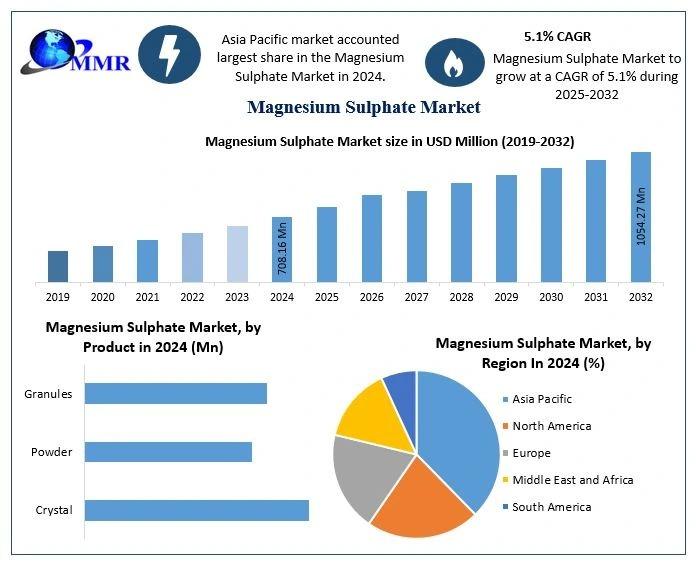
    Magnesium Sulphate Market to Reach USD 1,054.27 Million by 2032, Driven by Agricultural Demand and Pharmaceutical Applications

    The Magnesium Sulphate Market is witnessing steady growth, supported by rising agricultural productivity requirements, expanding pharmaceutical applications, and increasing demand from industrial manufacturing. According to Maximize Market Research, the market was valued at USD 708.16 million in 2024 and is projected to reach approximately USD 1,054.27 million by 2032, growing at a compound annual growth rate (CAGR) of 5.1% from 2025 to 2032. Increasing interest in efficient nutrient management, specialty chemicals, and high-quality pharmaceutical formulations is expected to create new opportunities for manufacturers and investors.

    Market Estimation, Growth Drivers and Opportunities

    Magnesium sulphate, commonly known as Epsom salt in certain applications, is an important inorganic compound used across agriculture, healthcare, food processing, personal care, water treatment, paints, textiles, and chemical manufacturing. Its versatility makes it a valuable ingredient for industries seeking reliable magnesium and sulphur sources.

    Agriculture remains a major growth driver because magnesium supports chlorophyll formation, photosynthesis, and plant development, while sulphur contributes to essential plant functions. Growing food requirements, soil nutrient deficiencies, and the adoption of balanced fertilization practices are increasing demand for magnesium sulphate-based fertilizers. Farmers are increasingly interested in improving crop yields and nutrient-use efficiency, creating opportunities for agricultural-grade products.

    Pharmaceutical demand also supports market expansion. Magnesium sulphate is used in clinical settings, including the management of pre-eclampsia and eclampsia, subject to appropriate medical supervision. Demand for dependable pharmaceutical ingredients and ready-to-use injectable formulations creates opportunities for manufacturers that can meet stringent quality and regulatory requirements.

    Get a Sample Insight Report Now : https://www.maximizemarketresearch.com/request-sample/148167/

    Magnesium Sulphate Market Industry Analysis, Demand, and Revenue Forecast Report by MMR Magnesium Sulphate Market to Reach USD 1,054.27 Million by 2032, Driven by Agricultural Demand and Pharmaceutical Applications The Magnesium Sulphate Market is witnessing steady growth, supported by rising agricultural productivity requirements, expanding pharmaceutical applications, and increasing demand from industrial manufacturing. According to Maximize Market Research, the market was valued at USD 708.16 million in 2024 and is projected to reach approximately USD 1,054.27 million by 2032, growing at a compound annual growth rate (CAGR) of 5.1% from 2025 to 2032. Increasing interest in efficient nutrient management, specialty chemicals, and high-quality pharmaceutical formulations is expected to create new opportunities for manufacturers and investors. Market Estimation, Growth Drivers and Opportunities Magnesium sulphate, commonly known as Epsom salt in certain applications, is an important inorganic compound used across agriculture, healthcare, food processing, personal care, water treatment, paints, textiles, and chemical manufacturing. Its versatility makes it a valuable ingredient for industries seeking reliable magnesium and sulphur sources. Agriculture remains a major growth driver because magnesium supports chlorophyll formation, photosynthesis, and plant development, while sulphur contributes to essential plant functions. Growing food requirements, soil nutrient deficiencies, and the adoption of balanced fertilization practices are increasing demand for magnesium sulphate-based fertilizers. Farmers are increasingly interested in improving crop yields and nutrient-use efficiency, creating opportunities for agricultural-grade products. Pharmaceutical demand also supports market expansion. Magnesium sulphate is used in clinical settings, including the management of pre-eclampsia and eclampsia, subject to appropriate medical supervision. Demand for dependable pharmaceutical ingredients and ready-to-use injectable formulations creates opportunities for manufacturers that can meet stringent quality and regulatory requirements. Get a Sample Insight Report Now : https://www.maximizemarketresearch.com/request-sample/148167/
    0 Comments ·0 Shares ·200 Views
  • Acetaldehyde Market Demands and Projected Industry Growth with 6.5% CAGR Forecast Report by MMR

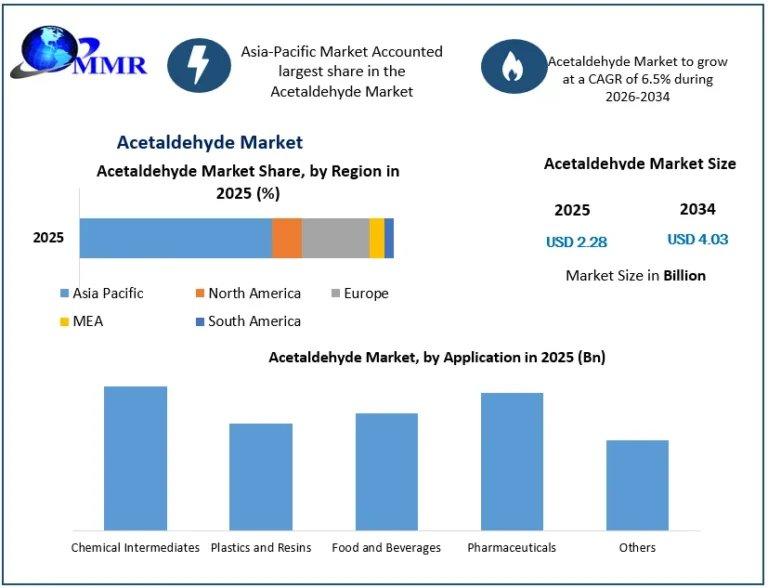
    Acetaldehyde Market to Reach USD 4.03 Billion by 2034, Driven by Chemical Manufacturing and Industrial Demand

    The Acetaldehyde Market is witnessing steady growth, supported by increasing demand for intermediate chemicals, pharmaceutical ingredients, agrochemicals, and specialty chemical production. According to Maximize Market Research, the market was valued at USD 2.28 billion in 2025 and is projected to reach nearly USD 4.03 billion by 2034, growing at a compound annual growth rate (CAGR) of 6.5% during the forecast period from 2026 to 2034. Expanding industrial applications, technological improvements in chemical processing, and investments in manufacturing infrastructure are expected to create new opportunities for market participants.

    Market Estimation, Growth Drivers, and Opportunities

    The Acetaldehyde Market is benefiting from its importance as a chemical intermediate used in producing acetic acid derivatives, pentaerythritol, pyridine and pyridine derivatives, and other industrial chemicals. These downstream products serve diverse industries, including pharmaceuticals, agriculture, paints and coatings, plastics, adhesives, and specialty chemicals. Growing industrial production and the need for reliable chemical feedstocks are strengthening demand across established and emerging manufacturing economies.

    The market's expansion is also supported by increasing consumption of agrochemicals, pharmaceutical compounds, and performance-oriented materials. Acetaldehyde plays an important role in synthesizing chemicals used in agricultural formulations and industrial manufacturing. As manufacturers seek consistent product quality, operational efficiency, and dependable raw material supplies, investments in production optimization and process control are creating additional opportunities.

    However, fluctuating feedstock prices, stringent environmental regulations, occupational exposure concerns, and the need for safe handling and storage can challenge market development. Manufacturers that improve process efficiency, reduce emissions, strengthen workplace safety, and optimize resource utilization will be better positioned to capture long-term growth. The projected increase from USD 2.28 billion in 2025 to USD 4.03 billion by 2034 highlights the commercial potential of the industry.

    Get a Sample Insight Report Now : https://www.maximizemarketresearch.com/request-sample/6262/

    US Market Trends and Investment Outlook

    The United States remains an important market for acetaldehyde because of its established chemical manufacturing infrastructure, advanced industrial capabilities, and demand for downstream chemical products. In 2025, investment priorities across the American chemical industry continued to emphasize manufacturing efficiency, supply-chain resilience, energy management, and lower-emission production technologies.
    Acetaldehyde Market Demands and Projected Industry Growth with 6.5% CAGR Forecast Report by MMR Acetaldehyde Market to Reach USD 4.03 Billion by 2034, Driven by Chemical Manufacturing and Industrial Demand The Acetaldehyde Market is witnessing steady growth, supported by increasing demand for intermediate chemicals, pharmaceutical ingredients, agrochemicals, and specialty chemical production. According to Maximize Market Research, the market was valued at USD 2.28 billion in 2025 and is projected to reach nearly USD 4.03 billion by 2034, growing at a compound annual growth rate (CAGR) of 6.5% during the forecast period from 2026 to 2034. Expanding industrial applications, technological improvements in chemical processing, and investments in manufacturing infrastructure are expected to create new opportunities for market participants. Market Estimation, Growth Drivers, and Opportunities The Acetaldehyde Market is benefiting from its importance as a chemical intermediate used in producing acetic acid derivatives, pentaerythritol, pyridine and pyridine derivatives, and other industrial chemicals. These downstream products serve diverse industries, including pharmaceuticals, agriculture, paints and coatings, plastics, adhesives, and specialty chemicals. Growing industrial production and the need for reliable chemical feedstocks are strengthening demand across established and emerging manufacturing economies. The market's expansion is also supported by increasing consumption of agrochemicals, pharmaceutical compounds, and performance-oriented materials. Acetaldehyde plays an important role in synthesizing chemicals used in agricultural formulations and industrial manufacturing. As manufacturers seek consistent product quality, operational efficiency, and dependable raw material supplies, investments in production optimization and process control are creating additional opportunities. However, fluctuating feedstock prices, stringent environmental regulations, occupational exposure concerns, and the need for safe handling and storage can challenge market development. Manufacturers that improve process efficiency, reduce emissions, strengthen workplace safety, and optimize resource utilization will be better positioned to capture long-term growth. The projected increase from USD 2.28 billion in 2025 to USD 4.03 billion by 2034 highlights the commercial potential of the industry. Get a Sample Insight Report Now : https://www.maximizemarketresearch.com/request-sample/6262/ US Market Trends and Investment Outlook The United States remains an important market for acetaldehyde because of its established chemical manufacturing infrastructure, advanced industrial capabilities, and demand for downstream chemical products. In 2025, investment priorities across the American chemical industry continued to emphasize manufacturing efficiency, supply-chain resilience, energy management, and lower-emission production technologies.
    0 Comments ·0 Shares ·394 Views
  • Bio-Based Paints and Coatings Market: Renewable Materials Reshape Formulations

    Description:
    Bio-based paints and coatings are gaining attention as manufacturers use renewable materials such as plant oils, sugars, starches, lignin, and cellulose in coating formulations. The shift is supported by sustainability goals, lower fossil-fuel dependence, VOC reduction, and demand for environmentally responsible products.

    According to MarkNtel Advisors, the bio-based paints and coatings market was valued at USD 12.11 billion in 2025 and is projected to reach USD 19.28 billion by 2032, growing at a CAGR of 6.3% during 2026–2032. Europe holds a significant market share, while architectural coatings remain a major application area.

    Read the Full Bio-Based Paints & Coatings Market Report:
    https://www.marknteladvisors.com/research-library/bio-based-paints-coatings-market.html
    Bio-Based Paints and Coatings Market: Renewable Materials Reshape Formulations Description: Bio-based paints and coatings are gaining attention as manufacturers use renewable materials such as plant oils, sugars, starches, lignin, and cellulose in coating formulations. The shift is supported by sustainability goals, lower fossil-fuel dependence, VOC reduction, and demand for environmentally responsible products. According to MarkNtel Advisors, the bio-based paints and coatings market was valued at USD 12.11 billion in 2025 and is projected to reach USD 19.28 billion by 2032, growing at a CAGR of 6.3% during 2026–2032. Europe holds a significant market share, while architectural coatings remain a major application area. 👉 Read the Full Bio-Based Paints & Coatings Market Report: https://www.marknteladvisors.com/research-library/bio-based-paints-coatings-market.html
    Bio-based Paints and Coatings Market Growth Analysis 2032
    www.marknteladvisors.com
    Bio-based Paints and Coatings Market to reach USD 19.28 billion by 2032 at a 6.3% CAGR. Discover Europe-led trends, growth drivers and forecasts.
    0 Comments ·0 Shares ·452 Views
  • Isobutanol Market Growth, Demand and Future Industry Outlook

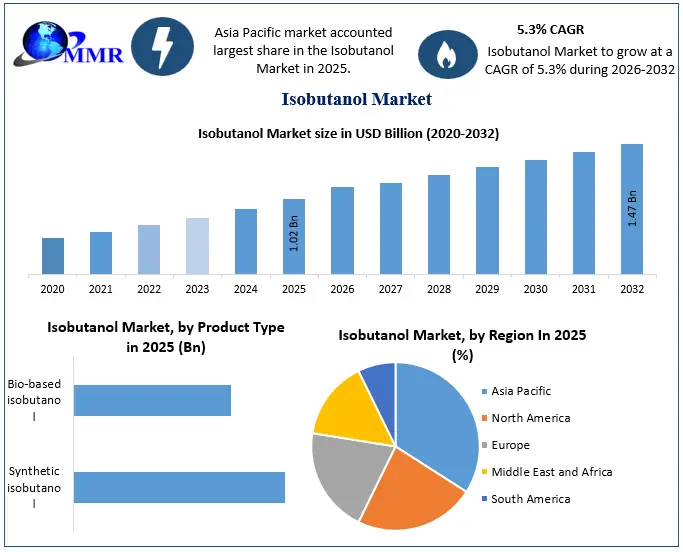
    Isobutanol Market Set to Reach USD 1.47 Billion by 2032, Driven by Growing Demand for Solvents, Chemical Intermediates and Sustainable Fuels

    The Isobutanol Market is entering a period of steady expansion as manufacturers across chemicals, coatings, oil & gas, pharmaceuticals and related industries increase their use of isobutanol as a versatile solvent and chemical intermediate. According to Maximize Market Research, the global Isobutanol Market size was valued at USD 1.02 billion in 2025 and is expected to grow at a CAGR of 5.3% from 2026 to 2032, reaching nearly USD 1.47 billion by 2032. Increasing industrial production, expanding applications in paints and coatings, demand for specialty chemical intermediates and growing interest in bio-based production technologies are expected to create attractive opportunities for market participants. Isobutanol's functional properties make it valuable in solvent formulations, coatings, chemical synthesis and fuel-related applications.

    U.S. Isobutanol Market Gains Momentum Through Industrial Demand and Low-Carbon Investment

    The United States remains an important market for isobutanol because of its large chemical manufacturing base, established refining infrastructure and expanding interest in renewable fuels. During 2025, industry activity highlighted both pricing pressure and investment in low-carbon technologies. Eastman announced a USD 0.05-per-pound increase on its N-Isobutyl Alcohol and selected Oxo products in North America and Latin America effective February 15, 2025, citing higher operating costs, particularly raw-material expenses. At the same time, Gevo completed its USD 210 million acquisition of Red Trail Energy's ethanol and carbon-capture assets in North Dakota in January 2025. The investment strengthens the company's low-carbon alcohol and renewable-fuels platform and creates an opportunity to develop additional alcohol-to-jet and related projects. Such developments demonstrate how U.S. producers are combining established alcohol infrastructure with carbon capture, renewable feedstocks and advanced conversion technologies. This trend can support longer-term opportunities for bio-based isobutanol and other renewable chemical products.

    Get a Free Sample Market Report Link : https://www.maximizemarketresearch.com/request-sample/56743/

    Synthetic Isobutanol Holds the Largest Market Share

    Based on the segmentation covered in the Maximize Market Research study, the market is analyzed according to Type, Application and Region. Among the segments, Synthetic Isobutanol represents the leading product category, supported by its established industrial manufacturing base, reliable availability and broad use in chemical and solvent applications. Synthetic production continues to benefit from mature production technologies and its ability to supply large-volume industrial requirements.

    Competitive Landscape: Companies Invest in Capacity, Sustainability and Advanced Chemistry

    The global Isobutanol Market remains competitive, with major chemical producers focusing on production reliability, downstream integration, product quality and technological development.

    Eastman Chemical Company maintains a significant position through its established Oxo alcohol portfolio and broad industrial customer base. In 2025, the company implemented a price increase for N-Isobutyl Alcohol in North America and Latin America because of elevated raw-material and operating costs. Its broad specialty-materials platform and application-development capabilities provide opportunities to optimize isobutanol-based products for coatings, construction, transportation and other markets.

    OQ Chemicals is strengthening its position through its extensive Oxo alcohol production network. Its Bay City, Texas operations are particularly important to the North American supply chain. Expansion of isobutanol production capacity in the United States is aligned with increasing demand from coatings, printing inks and chemical-intermediate manufacturers. Greater production capability can improve supply security while supporting downstream growth.

    BASF SE benefits from its global chemical manufacturing infrastructure and integrated approach to solvents, intermediates and performance chemicals. Continued investment in process efficiency, sustainable chemistry and specialty chemical applications can create additional opportunities for isobutanol-based formulations.

    Sasol Limited participates across the chemicals and solvents value chain, with its integrated production capabilities supporting industrial customers. The company's focus on operational efficiency and specialty chemical applications provides a platform for serving markets where performance solvents and chemical intermediates are required.

    Gevo Inc. represents an important emerging force in renewable alcohol and low-carbon chemical technologies. Its 2025 acquisition of Red Trail Energy for approximately USD 210 million added ethanol production and carbon-capture assets to its portfolio. The acquired site provides a platform for future sustainable aviation fuel and renewable-chemical projects, demonstrating how low-carbon alcohol technologies can become increasingly interconnected with the broader isobutanol and renewable chemicals ecosystem.

    Regional Analysis: United States, Germany, France, UK, Japan and China

    United States: The U.S. benefits from a strong petrochemical and chemical manufacturing ecosystem, extensive downstream solvent demand and growing investment in renewable fuels. Federal incentives supporting carbon reduction and renewable fuel production can encourage investment in low-carbon alcohol technologies.

    China: China offers substantial growth potential because of its large chemical manufacturing sector, expanding coatings industry and increasing demand for chemical intermediates. Domestic investment in integrated chemical complexes and downstream manufacturing is strengthening the country's role in global isobutanol supply.

    Germany: Germany's advanced chemical industry and emphasis on resource efficiency and sustainable manufacturing support demand for high-performance solvents and intermediates. European decarbonization initiatives can further encourage lower-carbon production routes.

    France: France is supported by its diversified chemical, coatings, automotive and industrial manufacturing industries. Increasing attention to sustainable chemistry and reduced-emission production can create opportunities for bio-based and advanced isobutanol technologies.

    United Kingdom: The UK market benefits from demand from specialty chemicals, coatings and industrial applications. Sustainability objectives and research into renewable chemicals may support the gradual adoption of bio-based alternatives.

    Japan: Japan's technologically advanced chemical and manufacturing industries create demand for high-purity and performance-oriented chemical materials. Applications in coatings, specialty chemicals and industrial formulations are expected to sustain demand for isobutanol.

    Key Players

    Key companies operating in the global Isobutanol Market include Eastman Chemical Company, OQ Chemicals, BASF SE, Sasol Limited and Gevo Inc. These companies compete through manufacturing capacity, product quality, technological innovation, supply-chain capabilities, sustainability initiatives and downstream application development.

    Isobutanol Market Growth, Demand and Future Industry Outlook Isobutanol Market Set to Reach USD 1.47 Billion by 2032, Driven by Growing Demand for Solvents, Chemical Intermediates and Sustainable Fuels The Isobutanol Market is entering a period of steady expansion as manufacturers across chemicals, coatings, oil & gas, pharmaceuticals and related industries increase their use of isobutanol as a versatile solvent and chemical intermediate. According to Maximize Market Research, the global Isobutanol Market size was valued at USD 1.02 billion in 2025 and is expected to grow at a CAGR of 5.3% from 2026 to 2032, reaching nearly USD 1.47 billion by 2032. Increasing industrial production, expanding applications in paints and coatings, demand for specialty chemical intermediates and growing interest in bio-based production technologies are expected to create attractive opportunities for market participants. Isobutanol's functional properties make it valuable in solvent formulations, coatings, chemical synthesis and fuel-related applications. U.S. Isobutanol Market Gains Momentum Through Industrial Demand and Low-Carbon Investment The United States remains an important market for isobutanol because of its large chemical manufacturing base, established refining infrastructure and expanding interest in renewable fuels. During 2025, industry activity highlighted both pricing pressure and investment in low-carbon technologies. Eastman announced a USD 0.05-per-pound increase on its N-Isobutyl Alcohol and selected Oxo products in North America and Latin America effective February 15, 2025, citing higher operating costs, particularly raw-material expenses. At the same time, Gevo completed its USD 210 million acquisition of Red Trail Energy's ethanol and carbon-capture assets in North Dakota in January 2025. The investment strengthens the company's low-carbon alcohol and renewable-fuels platform and creates an opportunity to develop additional alcohol-to-jet and related projects. Such developments demonstrate how U.S. producers are combining established alcohol infrastructure with carbon capture, renewable feedstocks and advanced conversion technologies. This trend can support longer-term opportunities for bio-based isobutanol and other renewable chemical products. Get a Free Sample Market Report Link : https://www.maximizemarketresearch.com/request-sample/56743/ Synthetic Isobutanol Holds the Largest Market Share Based on the segmentation covered in the Maximize Market Research study, the market is analyzed according to Type, Application and Region. Among the segments, Synthetic Isobutanol represents the leading product category, supported by its established industrial manufacturing base, reliable availability and broad use in chemical and solvent applications. Synthetic production continues to benefit from mature production technologies and its ability to supply large-volume industrial requirements. Competitive Landscape: Companies Invest in Capacity, Sustainability and Advanced Chemistry The global Isobutanol Market remains competitive, with major chemical producers focusing on production reliability, downstream integration, product quality and technological development. Eastman Chemical Company maintains a significant position through its established Oxo alcohol portfolio and broad industrial customer base. In 2025, the company implemented a price increase for N-Isobutyl Alcohol in North America and Latin America because of elevated raw-material and operating costs. Its broad specialty-materials platform and application-development capabilities provide opportunities to optimize isobutanol-based products for coatings, construction, transportation and other markets. OQ Chemicals is strengthening its position through its extensive Oxo alcohol production network. Its Bay City, Texas operations are particularly important to the North American supply chain. Expansion of isobutanol production capacity in the United States is aligned with increasing demand from coatings, printing inks and chemical-intermediate manufacturers. Greater production capability can improve supply security while supporting downstream growth. BASF SE benefits from its global chemical manufacturing infrastructure and integrated approach to solvents, intermediates and performance chemicals. Continued investment in process efficiency, sustainable chemistry and specialty chemical applications can create additional opportunities for isobutanol-based formulations. Sasol Limited participates across the chemicals and solvents value chain, with its integrated production capabilities supporting industrial customers. The company's focus on operational efficiency and specialty chemical applications provides a platform for serving markets where performance solvents and chemical intermediates are required. Gevo Inc. represents an important emerging force in renewable alcohol and low-carbon chemical technologies. Its 2025 acquisition of Red Trail Energy for approximately USD 210 million added ethanol production and carbon-capture assets to its portfolio. The acquired site provides a platform for future sustainable aviation fuel and renewable-chemical projects, demonstrating how low-carbon alcohol technologies can become increasingly interconnected with the broader isobutanol and renewable chemicals ecosystem. Regional Analysis: United States, Germany, France, UK, Japan and China United States: The U.S. benefits from a strong petrochemical and chemical manufacturing ecosystem, extensive downstream solvent demand and growing investment in renewable fuels. Federal incentives supporting carbon reduction and renewable fuel production can encourage investment in low-carbon alcohol technologies. China: China offers substantial growth potential because of its large chemical manufacturing sector, expanding coatings industry and increasing demand for chemical intermediates. Domestic investment in integrated chemical complexes and downstream manufacturing is strengthening the country's role in global isobutanol supply. Germany: Germany's advanced chemical industry and emphasis on resource efficiency and sustainable manufacturing support demand for high-performance solvents and intermediates. European decarbonization initiatives can further encourage lower-carbon production routes. France: France is supported by its diversified chemical, coatings, automotive and industrial manufacturing industries. Increasing attention to sustainable chemistry and reduced-emission production can create opportunities for bio-based and advanced isobutanol technologies. United Kingdom: The UK market benefits from demand from specialty chemicals, coatings and industrial applications. Sustainability objectives and research into renewable chemicals may support the gradual adoption of bio-based alternatives. Japan: Japan's technologically advanced chemical and manufacturing industries create demand for high-purity and performance-oriented chemical materials. Applications in coatings, specialty chemicals and industrial formulations are expected to sustain demand for isobutanol. Key Players Key companies operating in the global Isobutanol Market include Eastman Chemical Company, OQ Chemicals, BASF SE, Sasol Limited and Gevo Inc. These companies compete through manufacturing capacity, product quality, technological innovation, supply-chain capabilities, sustainability initiatives and downstream application development.

    0 Comments ·0 Shares ·734 Views
  • Flock Adhesives Market Trends, Opportunities and Growth Forecast

    Key Highlights

    Valued at USD 2.10 billion in 2024, creating a base for suppliers.
    Expected to reach nearly USD 3.30 billion by 2032, expanding commercial opportunities.
    Forecast to grow at a 5.8% CAGR from 2025 to 2032, indicating sustained expansion.
    Asia Pacific held the highest share in 2024, strengthening its strategic importance.
    Automotive, textiles, paper and packaging, and paints and coatings are key applications.

    Market Overview

    The Flock Adhesives Market was valued at USD 2.10 billion in 2024. This scale matters because flock adhesives enable small fiber particles to be placed on surfaces, enhancing aesthetics, tactile sensation, appearance and color. For manufacturers competing on both function and presentation, flocking can add value to finished products.

    Revenue is projected to reach nearly USD 3.30 billion by 2032. That increase gives suppliers an incentive to strengthen product portfolios, production capabilities and distribution networks. The Flock Adhesives Market is becoming a broader industrial opportunity rather than a narrow material segment.

    Why This Market Matters Now

    Automotive and packaging demand is a major driver because flock adhesives support high-efficiency applications. Textile demand, including flocking for garments and furniture, widens the customer base. For procurement teams, this diversification makes consistent performance and dependable supply increasingly important in the Flock Adhesives Market.

    Research and development and new product launches in developing economies are also supporting expansion. The Flock Adhesives Market therefore presents opportunities for companies that can adapt products to application needs while establishing stronger positions in emerging markets.

    Access a Free Sample Report Copy : https://www.maximizemarketresearch.com/request-sample/322/

    Key Trends Driving Growth

    Product performance is influencing purchasing decisions. Washability and flame retardance are highlighted as important opportunity areas, giving suppliers ways to differentiate formulations.

    Application diversification is another trend. Automotive, textiles, paper and packaging, and paints and coatings are covered as major application categories.

    Flock Adhesives Market Trends, Opportunities and Growth Forecast Key Highlights Valued at USD 2.10 billion in 2024, creating a base for suppliers. Expected to reach nearly USD 3.30 billion by 2032, expanding commercial opportunities. Forecast to grow at a 5.8% CAGR from 2025 to 2032, indicating sustained expansion. Asia Pacific held the highest share in 2024, strengthening its strategic importance. Automotive, textiles, paper and packaging, and paints and coatings are key applications. Market Overview The Flock Adhesives Market was valued at USD 2.10 billion in 2024. This scale matters because flock adhesives enable small fiber particles to be placed on surfaces, enhancing aesthetics, tactile sensation, appearance and color. For manufacturers competing on both function and presentation, flocking can add value to finished products. Revenue is projected to reach nearly USD 3.30 billion by 2032. That increase gives suppliers an incentive to strengthen product portfolios, production capabilities and distribution networks. The Flock Adhesives Market is becoming a broader industrial opportunity rather than a narrow material segment. Why This Market Matters Now Automotive and packaging demand is a major driver because flock adhesives support high-efficiency applications. Textile demand, including flocking for garments and furniture, widens the customer base. For procurement teams, this diversification makes consistent performance and dependable supply increasingly important in the Flock Adhesives Market. Research and development and new product launches in developing economies are also supporting expansion. The Flock Adhesives Market therefore presents opportunities for companies that can adapt products to application needs while establishing stronger positions in emerging markets. Access a Free Sample Report Copy : https://www.maximizemarketresearch.com/request-sample/322/ Key Trends Driving Growth Product performance is influencing purchasing decisions. Washability and flame retardance are highlighted as important opportunity areas, giving suppliers ways to differentiate formulations. Application diversification is another trend. Automotive, textiles, paper and packaging, and paints and coatings are covered as major application categories.
    Request Sample
    www.maximizemarketresearch.com
    for Request Sample fill the form
    0 Comments ·0 Shares ·543 Views
  • Water Soluble Polymers Market Growth Analysis, Demand Trends and Industry Outlook

    Key Highlights

    The Water Soluble Polymers Market reached US$48.35 billion in 2023, establishing a substantial commercial base.
    Revenue is projected to reach nearly US$68.76 billion by 2030, creating expansion opportunities.
    A 5.16% CAGR from 2024 to 2030 indicates sustained demand.
    Synthetic materials account for more than half of consumption and value.
    Water treatment is expected to hold the largest application share by 2030.
    Asia Pacific is expected to dominate through 2030.

    Market Overview

    The Water Soluble Polymers Market covers materials that dissolve, disperse or swell in water and modify aqueous systems through thickening, stabilization, coagulation, emulsification and dispersion. These functions make the materials valuable across several industrial processes.

    Valued at US$48.35 billion in 2023, the Water Soluble Polymers Market already has a broad industrial footprint. This scale confirms their established industrial role.

    Why This Market Matters Now

    Industrial users are increasingly focused on water consumption, treatment efficiency and process performance. In paper manufacturing, water-soluble polymers support dewatering, retention, and water and sludge treatment, helping improve productivity and paper quality.

    The Water Soluble Polymers Market benefits from applications in pharmaceuticals, food, paints, textiles, adhesives, coatings, detergents and personal care. This broad base gives producers multiple demand channels and reduces reliance on one end-use industry.

    Get a Sample Insight Report Now : https://www.maximizemarketresearch.com/request-sample/27404/

    Key Trends Driving Growth

    Rising demand for bio-based acrylamide and growing pharmaceutical applications are important growth drivers. Meanwhile, water treatment, enhanced oil recovery, drilling and fracking are creating additional requirements for polymer-based solutions.

    Personal care and detergent demand in India, China, the United States and Saudi Arabia is also supporting expansion. Because these polymers can act as thickeners, binders, film-formers, humectants, lubricants, dispersants and flocculants, suppliers can address varied formulation needs.

    Water Soluble Polymers Market Growth Analysis, Demand Trends and Industry Outlook Key Highlights The Water Soluble Polymers Market reached US$48.35 billion in 2023, establishing a substantial commercial base. Revenue is projected to reach nearly US$68.76 billion by 2030, creating expansion opportunities. A 5.16% CAGR from 2024 to 2030 indicates sustained demand. Synthetic materials account for more than half of consumption and value. Water treatment is expected to hold the largest application share by 2030. Asia Pacific is expected to dominate through 2030. Market Overview The Water Soluble Polymers Market covers materials that dissolve, disperse or swell in water and modify aqueous systems through thickening, stabilization, coagulation, emulsification and dispersion. These functions make the materials valuable across several industrial processes. Valued at US$48.35 billion in 2023, the Water Soluble Polymers Market already has a broad industrial footprint. This scale confirms their established industrial role. Why This Market Matters Now Industrial users are increasingly focused on water consumption, treatment efficiency and process performance. In paper manufacturing, water-soluble polymers support dewatering, retention, and water and sludge treatment, helping improve productivity and paper quality. The Water Soluble Polymers Market benefits from applications in pharmaceuticals, food, paints, textiles, adhesives, coatings, detergents and personal care. This broad base gives producers multiple demand channels and reduces reliance on one end-use industry. Get a Sample Insight Report Now : https://www.maximizemarketresearch.com/request-sample/27404/ Key Trends Driving Growth Rising demand for bio-based acrylamide and growing pharmaceutical applications are important growth drivers. Meanwhile, water treatment, enhanced oil recovery, drilling and fracking are creating additional requirements for polymer-based solutions. Personal care and detergent demand in India, China, the United States and Saudi Arabia is also supporting expansion. Because these polymers can act as thickeners, binders, film-formers, humectants, lubricants, dispersants and flocculants, suppliers can address varied formulation needs.
    Request Sample
    www.maximizemarketresearch.com
    for Request Sample fill the form
    0 Comments ·0 Shares ·688 Views
  • Water Soluble Polymers Market Industry Analysis, Growth Drivers and Future Outlook

    Key Highlights

    The Water Soluble Polymers Market reached US$48.35 billion in 2023, establishing a substantial commercial base.
    Revenue is projected to reach nearly US$68.76 billion by 2030, creating expansion opportunities.
    A 5.16% CAGR from 2024 to 2030 indicates sustained demand.
    Synthetic materials account for more than half of consumption and value.
    Water treatment is expected to hold the largest application share by 2030.
    Asia Pacific is expected to dominate through 2030.

    Market Overview

    The Water Soluble Polymers Market covers materials that dissolve, disperse or swell in water and modify aqueous systems through thickening, stabilization, coagulation, emulsification and dispersion. These functions make the materials valuable across several industrial processes.

    Valued at US$48.35 billion in 2023, the Water Soluble Polymers Market already has a broad industrial footprint. This scale confirms their established industrial role.

    Why This Market Matters Now

    Industrial users are increasingly focused on water consumption, treatment efficiency and process performance. In paper manufacturing, water-soluble polymers support dewatering, retention, and water and sludge treatment, helping improve productivity and paper quality.

    The Water Soluble Polymers Market benefits from applications in pharmaceuticals, food, paints, textiles, adhesives, coatings, detergents and personal care. This broad base gives producers multiple demand channels and reduces reliance on one end-use industry.

    Get a Sample Insight Report Now : https://www.maximizemarketresearch.com/request-sample/27404/

    Key Trends Driving Growth

    Rising demand for bio-based acrylamide and growing pharmaceutical applications are important growth drivers. Meanwhile, water treatment, enhanced oil recovery, drilling and fracking are creating additional requirements for polymer-based solutions.

    Personal care and detergent demand in India, China, the United States and Saudi Arabia is also supporting expansion. Because these polymers can act as thickeners, binders, film-formers, humectants, lubricants, dispersants and flocculants, suppliers can address varied formulation needs.

    Water Soluble Polymers Market Industry Analysis, Growth Drivers and Future Outlook Key Highlights The Water Soluble Polymers Market reached US$48.35 billion in 2023, establishing a substantial commercial base. Revenue is projected to reach nearly US$68.76 billion by 2030, creating expansion opportunities. A 5.16% CAGR from 2024 to 2030 indicates sustained demand. Synthetic materials account for more than half of consumption and value. Water treatment is expected to hold the largest application share by 2030. Asia Pacific is expected to dominate through 2030. Market Overview The Water Soluble Polymers Market covers materials that dissolve, disperse or swell in water and modify aqueous systems through thickening, stabilization, coagulation, emulsification and dispersion. These functions make the materials valuable across several industrial processes. Valued at US$48.35 billion in 2023, the Water Soluble Polymers Market already has a broad industrial footprint. This scale confirms their established industrial role. Why This Market Matters Now Industrial users are increasingly focused on water consumption, treatment efficiency and process performance. In paper manufacturing, water-soluble polymers support dewatering, retention, and water and sludge treatment, helping improve productivity and paper quality. The Water Soluble Polymers Market benefits from applications in pharmaceuticals, food, paints, textiles, adhesives, coatings, detergents and personal care. This broad base gives producers multiple demand channels and reduces reliance on one end-use industry. Get a Sample Insight Report Now : https://www.maximizemarketresearch.com/request-sample/27404/ Key Trends Driving Growth Rising demand for bio-based acrylamide and growing pharmaceutical applications are important growth drivers. Meanwhile, water treatment, enhanced oil recovery, drilling and fracking are creating additional requirements for polymer-based solutions. Personal care and detergent demand in India, China, the United States and Saudi Arabia is also supporting expansion. Because these polymers can act as thickeners, binders, film-formers, humectants, lubricants, dispersants and flocculants, suppliers can address varied formulation needs.
    Request Sample
    www.maximizemarketresearch.com
    for Request Sample fill the form
    0 Comments ·0 Shares ·676 Views
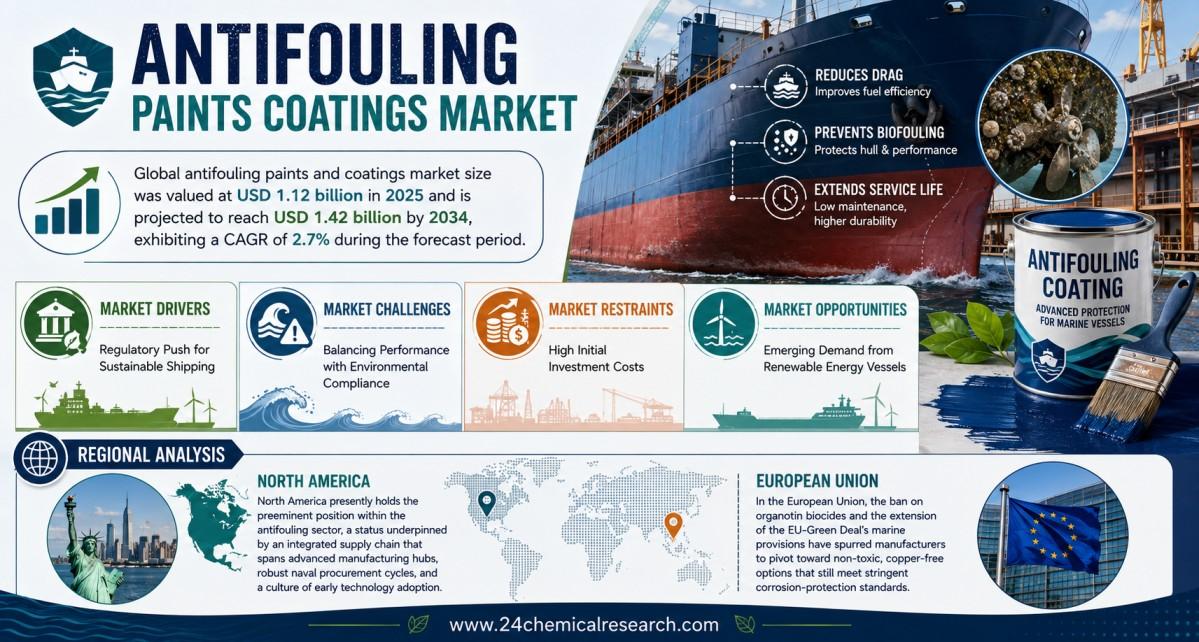
  • Global Antifouling Paints and Coatings market to reach USD 1.42 Billion by 2034 at 2.7% CAGR. North America leads, driven by IMO regulations and maritime trade growth.

    Get the full report: https://www.24chemicalresearch.com/reports/264403/global-antifouling-paints-coatings-market

    #MarketResearch, #AntifoulingCoatings, #MarineIndustry, #ChemicalIndustry
    Global Antifouling Paints and Coatings market to reach USD 1.42 Billion by 2034 at 2.7% CAGR. North America leads, driven by IMO regulations and maritime trade growth. Get the full report: https://www.24chemicalresearch.com/reports/264403/global-antifouling-paints-coatings-market #MarketResearch, #AntifoulingCoatings, #MarineIndustry, #ChemicalIndustry
    0 Comments ·0 Shares ·305 Views
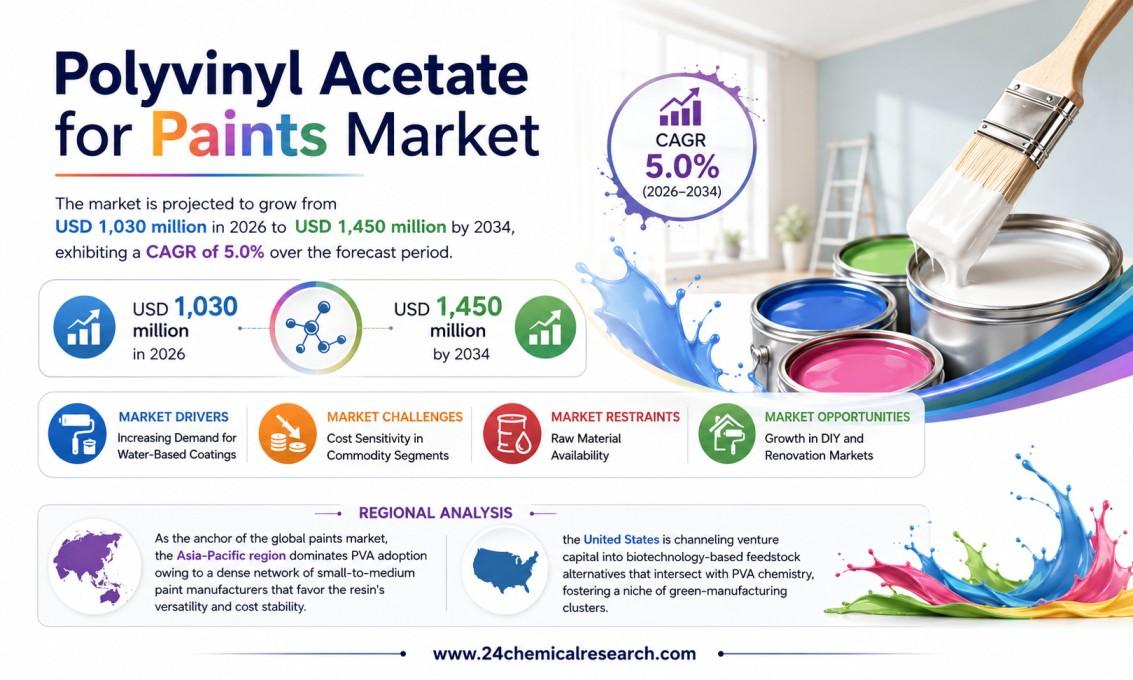
  • Global Polyvinyl Acetate for Paints Market to reach USD 1.45 Billion by 2034 at 5.0% CAGR. Low-VOC water-based coatings drive PVA binder demand.

    View full report: https://www.24chemicalresearch.com/reports/316273/polyvinyl-acetate-for-paints-market

    #MarketResearch #PolyvinylAcetate #LowVOC #WaterBasedCoatings #Paints
    Global Polyvinyl Acetate for Paints Market to reach USD 1.45 Billion by 2034 at 5.0% CAGR. Low-VOC water-based coatings drive PVA binder demand. View full report: https://www.24chemicalresearch.com/reports/316273/polyvinyl-acetate-for-paints-market #MarketResearch #PolyvinylAcetate #LowVOC #WaterBasedCoatings #Paints
    0 Comments ·0 Shares ·288 Views
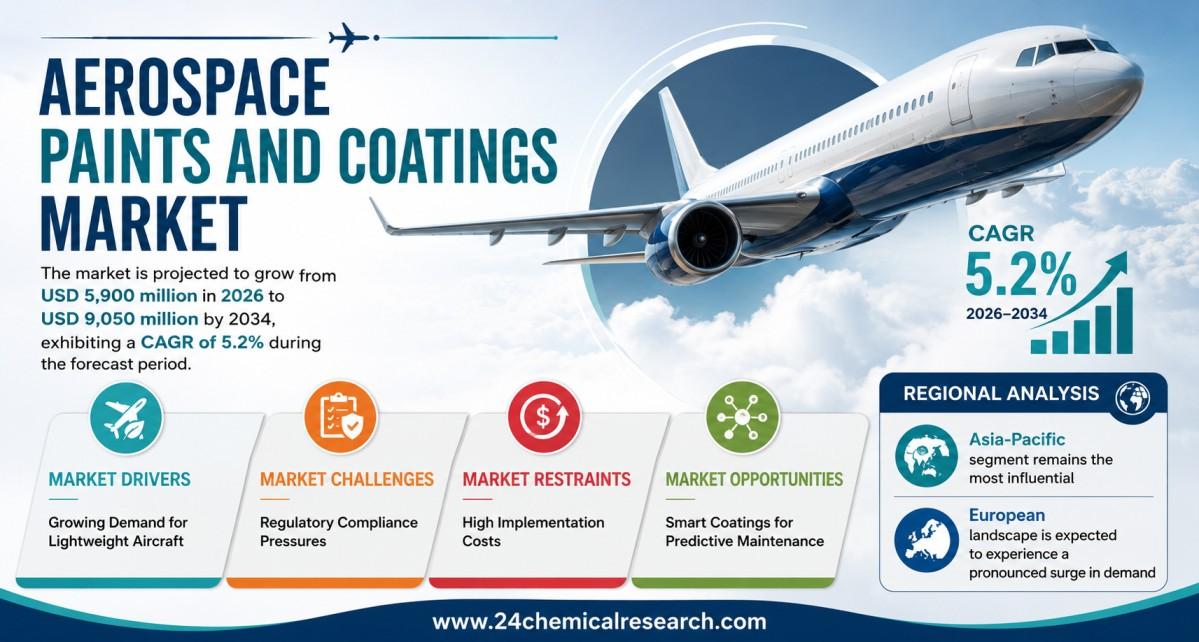
  • Global Aerospace Paints and Coatings Market to reach USD 9.05 Billion by 2034 at 5.2% CAGR. Lightweight and low-VOC coatings drive fuel efficiency.

    View full report: https://www.24chemicalresearch.com/reports/313401/aerospace-paints-and-coatings-market

    #MarketResearch #AerospaceCoatings #Aviation #LightweightCoatings #LowVOC
    Global Aerospace Paints and Coatings Market to reach USD 9.05 Billion by 2034 at 5.2% CAGR. Lightweight and low-VOC coatings drive fuel efficiency. View full report: https://www.24chemicalresearch.com/reports/313401/aerospace-paints-and-coatings-market #MarketResearch #AerospaceCoatings #Aviation #LightweightCoatings #LowVOC
    0 Comments ·0 Shares ·371 Views
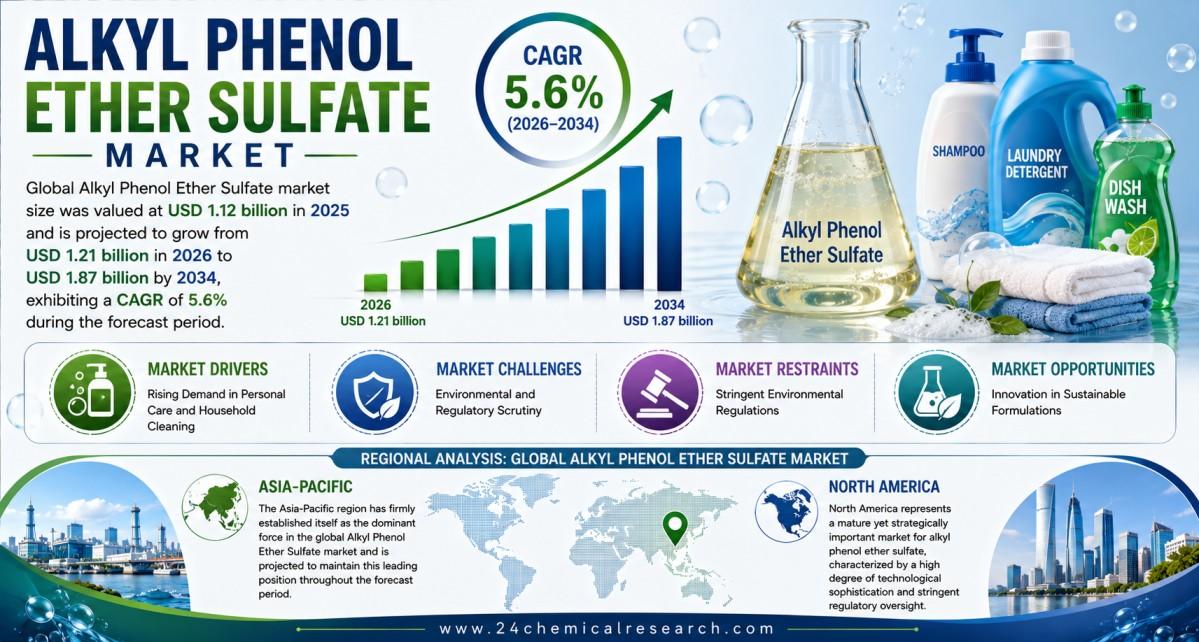
  • Global Alkyl Phenol Ether Sulfate Market to reach USD 1.87 Billion by 2034 at 5.6% CAGR. Paints, coatings, and personal care drive anionic surfactant demand.

    View full report: https://www.24chemicalresearch.com/reports/275463/global-alkyl-phenol-ether-sulfate-market

    #MarketResearch #AlkylPhenolEtherSulfate #Surfactants #PaintsAndCoatings #AnionicSurfactants
    Global Alkyl Phenol Ether Sulfate Market to reach USD 1.87 Billion by 2034 at 5.6% CAGR. Paints, coatings, and personal care drive anionic surfactant demand. View full report: https://www.24chemicalresearch.com/reports/275463/global-alkyl-phenol-ether-sulfate-market #MarketResearch #AlkylPhenolEtherSulfate #Surfactants #PaintsAndCoatings #AnionicSurfactants
    0 Comments ·0 Shares ·309 Views
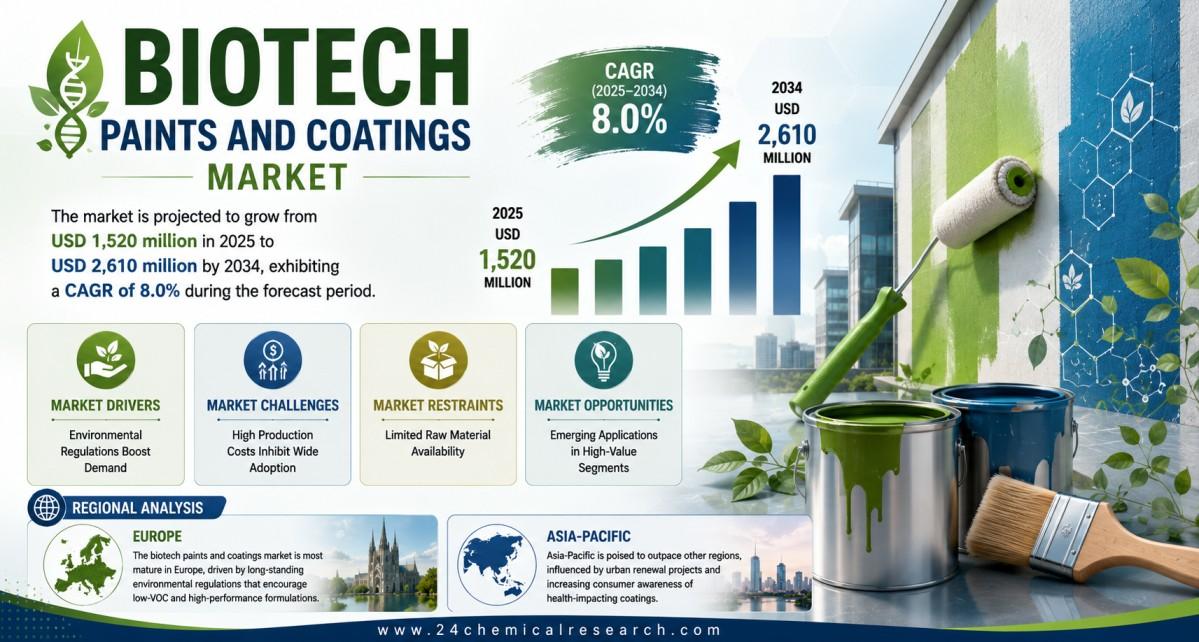
  • Global Biotech Paints and Coatings Market to reach USD 2.61 Billion by 2034 at 8.0% CAGR. Bio-based formulations and low-VOC regulations drive sustainable coatings demand.

    View full report: https://www.24chemicalresearch.com/reports/313468/biotech-paints-and-coatings-market

    #MarketResearch #BiotechCoatings #SustainableCoatings #LowVOC #GreenChemistry
    Global Biotech Paints and Coatings Market to reach USD 2.61 Billion by 2034 at 8.0% CAGR. Bio-based formulations and low-VOC regulations drive sustainable coatings demand. View full report: https://www.24chemicalresearch.com/reports/313468/biotech-paints-and-coatings-market #MarketResearch #BiotechCoatings #SustainableCoatings #LowVOC #GreenChemistry
    0 Comments ·0 Shares ·427 Views
More Results