

• Bathroom Taps Market Gains Momentum from Contemporary Interior Design Preferences

    Market Estimation & Definition

    The global Bathroom Taps Market is experiencing significant development as consumers increasingly invest in modern bathroom fixtures, home renovation and water-efficient technologies. According to Stellar Market Research, the market was valued at USD 31.27 billion in 2025 and is projected to reach USD 96.13 billion by 2032, registering a compound annual growth rate (CAGR) of 17.4% during the 2026–2032 forecast period. The report identifies 2025 as the base year, with historical data covering 2020–2025.

    Bathroom taps are plumbing fixtures that regulate water flow and temperature in bathrooms, including washbasins, showers and bathtubs. Available designs range from traditional pillar taps and mixers to thermostatic and sensor-operated models. These products serve residential and commercial environments, including homes, hotels, offices, hospitals and other public facilities.

    Download Free PDF Brochure: https://www.stellarmr.com/report/req_sample/Bathroom-Taps-Market/1371

    Market Growth Drivers & Opportunity

    Rising consumer disposable income and increased spending on home improvement are important factors supporting market growth. Homeowners are increasingly selecting bathroom fixtures that combine functional performance with contemporary design. Renovation projects, new residential construction and commercial building development create demand for a broad range of taps and fittings.

    Growing awareness of water conservation and hygiene is also encouraging interest in sensor-based bathroom taps. These products can activate water flow when a user is detected and automatically stop when the user moves away, helping reduce unnecessary water consumption. Touchless operation is particularly relevant in commercial environments where hygiene and efficient water use are priorities.

    Urbanisation and infrastructure development provide further opportunities for manufacturers. Residential construction, hospitality projects and modern commercial facilities require reliable plumbing fixtures that complement current interior designs. Retailers and manufacturers can also reach consumers through online distribution channels, offering broader product selections and easier product comparisons.

    However, smart taps can involve higher installation and maintenance costs than conventional products. Sensor-based models may also depend on electrical power or batteries, creating additional considerations for buyers. Manufacturers that balance advanced functionality with affordability, durability and straightforward installation can appeal to a wider customer base.

    What Lies Ahead: Emerging Trends Shaping the Future

    Smart bathroom technology is expected to remain an important trend. Sensor-operated and electronic taps provide touchless functionality and can help users manage water consumption. Improvements in sensor performance, product reliability and ease of installation may support adoption across residential and commercial applications.

    Water-efficient product development is another emerging opportunity. Manufacturers are exploring designs that support controlled water flow while maintaining a satisfactory user experience. Sustainability considerations are increasingly relevant to consumers, property developers and commercial building operators.

    Design innovation is also shaping purchasing decisions. Minimalist finishes, contemporary styles and fixtures that complement premium bathroom interiors are encouraging product differentiation. Digital retail channels allow buyers to compare product specifications, styles and prices before making purchasing decisions.

    As smart homes and connected building systems become more common, bathroom taps are likely to form part of wider efforts to improve convenience, hygiene and resource efficiency. Manufacturers that combine attractive design, reliable performance and water-saving features may be well positioned to respond to changing customer expectations.

    Get More Report Details: https://www.stellarmr.com/report/Bathroom-Taps-Market/1371

    Segmentation Analysis

    Stellar Market Research segments the Bathroom Taps Market by type, application, distribution channel and region.

    By Type

    Wall Mounted
    Floor Mounted
    Mixer
    Pillar
    Shower Mixer
    Sensor
    Thermostatic
    Others
    By Application

    Residential
    Commercial
    The residential segment dominated the market and is expected to continue growing, supported by home renovation, new housing development and demand for modern bathroom fixtures.

    By Distribution Channel

    Online
    Offline
    Online distribution is expected to make the largest contribution, supported by digital retail expansion, promotional activity and the availability of a broad range of products.

    By Region

    North America
    Europe
    Asia Pacific
    Middle East and Africa
    South America
    North America is expected to hold the highest regional share, supported by residential bathroom remodelling and commercial construction activity.

    Country-Level Analysis: USA and Germany

    United States: The USA is an important market for bathroom taps, supported by residential renovation, commercial construction and demand for contemporary plumbing fixtures. Consumers increasingly consider design, durability, ease of use and water efficiency when selecting bathroom products. Established brands such as Delta Faucet Company, Moen Incorporated and American Standard serve different price points and customer requirements. Demand from housing renovation and hospitality projects provides opportunities for manufacturers and distributors.

    Germany: Germany is an important European market, supported by its established sanitaryware and bathroom technology sector. Consumers and commercial property developers place value on product quality, functional design and water-efficient solutions. German-associated bathroom brands and wider European manufacturers compete through engineering, design and product innovation. The report does not provide separate market-size estimates for the USA or Germany, so individual country growth rates should not be inferred from the global forecast.

    Competitive Analysis

    The Bathroom Taps Market includes established sanitaryware companies, plumbing fixture manufacturers and specialist faucet brands. Key players identified by Stellar Market Research include Kraus, American Standard Brands, Grohe America Inc., Pfister, Delta Faucet Company, Moen Incorporated and Aqua Source Faucet. The broader report also identifies companies such as CERA Sanitaryware Limited, Jaquar Group, Kohler Co., LIXIL Corporation, Masco Corporation, ROCA Sanitario S.A. and Eczacibasi Group (VitrA).

    Competition is shaped by product design, reliability, water efficiency, price, distribution reach and brand reputation. Manufacturers are investing in product development, digital marketing, strategic partnerships and broader product portfolios. Companies that offer dependable products across different budgets while responding to demand for smart and sustainable bathroom fixtures can strengthen their market position.

    Download Free PDF Brochure: https://www.stellarmr.com/report/req_sample/Bathroom-Taps-Market/1371

    Press Release Conclusion

    The Bathroom Taps Market is projected to reach USD 96.13 billion by 2032, supported by home renovation, construction activity and growing interest in smart bathroom technology. Sensor-operated taps, water-saving designs and online retail channels are creating opportunities for manufacturers and distributors. Although installation costs and technical requirements may limit adoption of some advanced products, continued design innovation and demand for functional, attractive bathroom fixtures are expected to shape the industry's development.

    About Stellar Market Research:

    Stellar Market Research is a multifaceted market research and consulting company with professionals from several industries. Some of the industries we cover include medical devices, pharmaceutical manufacturers, science and engineering, electronic components, industrial equipment, technology and communication, cars and automobiles, chemical products and substances, general merchandise, beverages, personal care, and automated systems. To mention a few, we provide market-verified industry estimations, technical trend analysis, crucial market research, strategic advice, competition analysis, production and demand analysis, and client impact studies.

    Contact Stellar Market Research:

    3rd Floor, Navale IT Park, Phase 2

    Pune Banglore Highway, Narhe,

    Pune, Maharashtra 411041, India

    [email protected]

    +91 20 6630 3320 | +91 9607365656
    Bathroom Taps Market Gains Momentum from Contemporary Interior Design Preferences Market Estimation & Definition The global Bathroom Taps Market is experiencing significant development as consumers increasingly invest in modern bathroom fixtures, home renovation and water-efficient technologies. According to Stellar Market Research, the market was valued at USD 31.27 billion in 2025 and is projected to reach USD 96.13 billion by 2032, registering a compound annual growth rate (CAGR) of 17.4% during the 2026–2032 forecast period. The report identifies 2025 as the base year, with historical data covering 2020–2025. Bathroom taps are plumbing fixtures that regulate water flow and temperature in bathrooms, including washbasins, showers and bathtubs. Available designs range from traditional pillar taps and mixers to thermostatic and sensor-operated models. These products serve residential and commercial environments, including homes, hotels, offices, hospitals and other public facilities. Download Free PDF Brochure: https://www.stellarmr.com/report/req_sample/Bathroom-Taps-Market/1371 Market Growth Drivers & Opportunity Rising consumer disposable income and increased spending on home improvement are important factors supporting market growth. Homeowners are increasingly selecting bathroom fixtures that combine functional performance with contemporary design. Renovation projects, new residential construction and commercial building development create demand for a broad range of taps and fittings. Growing awareness of water conservation and hygiene is also encouraging interest in sensor-based bathroom taps. These products can activate water flow when a user is detected and automatically stop when the user moves away, helping reduce unnecessary water consumption. Touchless operation is particularly relevant in commercial environments where hygiene and efficient water use are priorities. Urbanisation and infrastructure development provide further opportunities for manufacturers. Residential construction, hospitality projects and modern commercial facilities require reliable plumbing fixtures that complement current interior designs. Retailers and manufacturers can also reach consumers through online distribution channels, offering broader product selections and easier product comparisons. However, smart taps can involve higher installation and maintenance costs than conventional products. Sensor-based models may also depend on electrical power or batteries, creating additional considerations for buyers. Manufacturers that balance advanced functionality with affordability, durability and straightforward installation can appeal to a wider customer base. What Lies Ahead: Emerging Trends Shaping the Future Smart bathroom technology is expected to remain an important trend. Sensor-operated and electronic taps provide touchless functionality and can help users manage water consumption. Improvements in sensor performance, product reliability and ease of installation may support adoption across residential and commercial applications. Water-efficient product development is another emerging opportunity. Manufacturers are exploring designs that support controlled water flow while maintaining a satisfactory user experience. Sustainability considerations are increasingly relevant to consumers, property developers and commercial building operators. Design innovation is also shaping purchasing decisions. Minimalist finishes, contemporary styles and fixtures that complement premium bathroom interiors are encouraging product differentiation. Digital retail channels allow buyers to compare product specifications, styles and prices before making purchasing decisions. As smart homes and connected building systems become more common, bathroom taps are likely to form part of wider efforts to improve convenience, hygiene and resource efficiency. Manufacturers that combine attractive design, reliable performance and water-saving features may be well positioned to respond to changing customer expectations. Get More Report Details: https://www.stellarmr.com/report/Bathroom-Taps-Market/1371 Segmentation Analysis Stellar Market Research segments the Bathroom Taps Market by type, application, distribution channel and region. By Type Wall Mounted Floor Mounted Mixer Pillar Shower Mixer Sensor Thermostatic Others By Application Residential Commercial The residential segment dominated the market and is expected to continue growing, supported by home renovation, new housing development and demand for modern bathroom fixtures. By Distribution Channel Online Offline Online distribution is expected to make the largest contribution, supported by digital retail expansion, promotional activity and the availability of a broad range of products. By Region North America Europe Asia Pacific Middle East and Africa South America North America is expected to hold the highest regional share, supported by residential bathroom remodelling and commercial construction activity. Country-Level Analysis: USA and Germany United States: The USA is an important market for bathroom taps, supported by residential renovation, commercial construction and demand for contemporary plumbing fixtures. Consumers increasingly consider design, durability, ease of use and water efficiency when selecting bathroom products. Established brands such as Delta Faucet Company, Moen Incorporated and American Standard serve different price points and customer requirements. Demand from housing renovation and hospitality projects provides opportunities for manufacturers and distributors. Germany: Germany is an important European market, supported by its established sanitaryware and bathroom technology sector. Consumers and commercial property developers place value on product quality, functional design and water-efficient solutions. German-associated bathroom brands and wider European manufacturers compete through engineering, design and product innovation. The report does not provide separate market-size estimates for the USA or Germany, so individual country growth rates should not be inferred from the global forecast. Competitive Analysis The Bathroom Taps Market includes established sanitaryware companies, plumbing fixture manufacturers and specialist faucet brands. Key players identified by Stellar Market Research include Kraus, American Standard Brands, Grohe America Inc., Pfister, Delta Faucet Company, Moen Incorporated and Aqua Source Faucet. The broader report also identifies companies such as CERA Sanitaryware Limited, Jaquar Group, Kohler Co., LIXIL Corporation, Masco Corporation, ROCA Sanitario S.A. and Eczacibasi Group (VitrA). Competition is shaped by product design, reliability, water efficiency, price, distribution reach and brand reputation. Manufacturers are investing in product development, digital marketing, strategic partnerships and broader product portfolios. Companies that offer dependable products across different budgets while responding to demand for smart and sustainable bathroom fixtures can strengthen their market position. Download Free PDF Brochure: https://www.stellarmr.com/report/req_sample/Bathroom-Taps-Market/1371 Press Release Conclusion The Bathroom Taps Market is projected to reach USD 96.13 billion by 2032, supported by home renovation, construction activity and growing interest in smart bathroom technology. Sensor-operated taps, water-saving designs and online retail channels are creating opportunities for manufacturers and distributors. Although installation costs and technical requirements may limit adoption of some advanced products, continued design innovation and demand for functional, attractive bathroom fixtures are expected to shape the industry's development. About Stellar Market Research: Stellar Market Research is a multifaceted market research and consulting company with professionals from several industries. Some of the industries we cover include medical devices, pharmaceutical manufacturers, science and engineering, electronic components, industrial equipment, technology and communication, cars and automobiles, chemical products and substances, general merchandise, beverages, personal care, and automated systems. To mention a few, we provide market-verified industry estimations, technical trend analysis, crucial market research, strategic advice, competition analysis, production and demand analysis, and client impact studies. Contact Stellar Market Research: 3rd Floor, Navale IT Park, Phase 2 Pune Banglore Highway, Narhe, Pune, Maharashtra 411041, India [email protected] +91 20 6630 3320 | +91 9607365656
    0 Comments ·0 Shares ·370 Views

  • Non-Woven Fabrics Market 2034: USD 85.07 Billion Growth Opportunity
    Market Overview: Rising Demand for Advanced Textiles Accelerates Global Industry Expansion

    The Non-Woven Fabrics Market was valued at USD 50.78 Billion in 2025 and is projected to reach nearly USD 85.07 Billion by 2034, expanding at a CAGR of 5.9% during 2026–2034, according to Maximize Market Research. Increasing demand for hygiene products, medical textiles, automotive components, and industrial filtration materials is strengthening global industry growth.

    The Non-Woven Fabrics Market benefits from expanding applications of lightweight, durable, and cost-effective textile materials manufactured without conventional weaving or knitting processes.

    Access Exclusive Insights – Get Your Free Sample Today @https://www.maximizemarketresearch.com/request-sample/17274/
    Non-Woven Fabrics Market 2034: USD 85.07 Billion Growth Opportunity Market Overview: Rising Demand for Advanced Textiles Accelerates Global Industry Expansion The Non-Woven Fabrics Market was valued at USD 50.78 Billion in 2025 and is projected to reach nearly USD 85.07 Billion by 2034, expanding at a CAGR of 5.9% during 2026–2034, according to Maximize Market Research. Increasing demand for hygiene products, medical textiles, automotive components, and industrial filtration materials is strengthening global industry growth. The Non-Woven Fabrics Market benefits from expanding applications of lightweight, durable, and cost-effective textile materials manufactured without conventional weaving or knitting processes. Access Exclusive Insights – Get Your Free Sample Today @https://www.maximizemarketresearch.com/request-sample/17274/
    0 Comments ·0 Shares ·339 Views
  • Best Homeopathic Medicines for Poultry

    Healthy growth, proper digestion, and good nutrition are essential for raising healthy poultry. Poultry farmers may face challenges such as slow chick growth, poor appetite, uneven feeding, and digestive issues. Proper nutrition, clean drinking water, good farm hygiene, and regular veterinary care help maintain flock health. If you are looking for the best homeopathic medicine for poultry growth, explore available formulations and learn about responsible poultry care.

    Excel Pharma offers E-Poul Gro Drops (E-VET No. 26), a homeopathic formulation for poultry. It contains Alfalfa 30C, Calcarea Phosphorica 30C, Ferrum Phosphoricum 30C, Cinchona Officinalis 30C, and Kali Phosphoricum 30C. This product is intended to support healthy growth, digestion, and natural immunity in chicks and poultry. Explore the product details, ingredients, dosage instructions, and precautions before use. Homeopathy has not been scientifically proven to improve poultry growth or prevent disease. Consult a qualified veterinarian for appropriate flock health management, vaccination, and treatment. Do not replace prescribed veterinary medicines or vaccines with homeopathic drops.

    For consultation, call +91 98155 67678. For product details and orders, WhatsApp +91 7347341717.

    Visit us: https://www.excelpharma.co.in/product/e-poul-gro-drops-homeopathy-medicine-for-poultry/

    #BestHomeopathicMedicineForPoultry #PoultryHomeopathicMedicine #EPoulGroDrops #EVET26 #ExcelPharma #PoultryFarming #PoultryHealth #PoultryGrowth #ChickenCare #BroilerFarming #LayerFarming #PoultryFarmers
    Best Homeopathic Medicines for Poultry Healthy growth, proper digestion, and good nutrition are essential for raising healthy poultry. Poultry farmers may face challenges such as slow chick growth, poor appetite, uneven feeding, and digestive issues. Proper nutrition, clean drinking water, good farm hygiene, and regular veterinary care help maintain flock health. If you are looking for the best homeopathic medicine for poultry growth, explore available formulations and learn about responsible poultry care. Excel Pharma offers E-Poul Gro Drops (E-VET No. 26), a homeopathic formulation for poultry. It contains Alfalfa 30C, Calcarea Phosphorica 30C, Ferrum Phosphoricum 30C, Cinchona Officinalis 30C, and Kali Phosphoricum 30C. This product is intended to support healthy growth, digestion, and natural immunity in chicks and poultry. Explore the product details, ingredients, dosage instructions, and precautions before use. Homeopathy has not been scientifically proven to improve poultry growth or prevent disease. Consult a qualified veterinarian for appropriate flock health management, vaccination, and treatment. Do not replace prescribed veterinary medicines or vaccines with homeopathic drops. For consultation, call +91 98155 67678. For product details and orders, WhatsApp +91 7347341717. Visit us: https://www.excelpharma.co.in/product/e-poul-gro-drops-homeopathy-medicine-for-poultry/ #BestHomeopathicMedicineForPoultry #PoultryHomeopathicMedicine #EPoulGroDrops #EVET26 #ExcelPharma #PoultryFarming #PoultryHealth #PoultryGrowth #ChickenCare #BroilerFarming #LayerFarming #PoultryFarmers
    0 Comments ·0 Shares ·222 Views ·0 Views
  • Early dental checkups play an essential role in maintaining children's oral health. Regular appointments allow pediatric dentists to monitor tooth development, identify potential dental concerns, and recommend appropriate preventive care. Families searching for a dental clinic in kalispell can explore pediatric services at Big Sky Pediatric Dentistry. The clinic provides dental examinations, cleanings, and guidance on proper oral hygiene. Establishing regular dental visits during childhood can help children become familiar with dental care environments. Parents also learn useful techniques for brushing, flossing, and protecting developing teeth, helping their children build healthier habits for the future. Read more: https://slides.com/bigskypediatric/essential-pediatric-dental-services
    Early dental checkups play an essential role in maintaining children's oral health. Regular appointments allow pediatric dentists to monitor tooth development, identify potential dental concerns, and recommend appropriate preventive care. Families searching for a dental clinic in kalispell can explore pediatric services at Big Sky Pediatric Dentistry. The clinic provides dental examinations, cleanings, and guidance on proper oral hygiene. Establishing regular dental visits during childhood can help children become familiar with dental care environments. Parents also learn useful techniques for brushing, flossing, and protecting developing teeth, helping their children build healthier habits for the future. Read more: https://slides.com/bigskypediatric/essential-pediatric-dental-services
    0 Comments ·0 Shares ·402 Views
  • Specialty Surfactants Market Demand and Projected Industry Growth

    Specialty Surfactants Market to Reach USD 38.88 Billion by 2034, Driven by Sustainable Formulations and High-Performance Applications

    The Specialty Surfactants Market is entering a period of steady transformation as manufacturers, formulators, and end-use industries increasingly seek high-performance ingredients that combine functionality, safety, and sustainability. According to Maximize Market Research, the market was valued at USD 33.7 billion in 2025 and is projected to reach USD 38.88 billion by 2034, expanding at a CAGR of 1.6% during 2026–2034.

    Market Estimation, Growth Drivers and Opportunities

    Specialty surfactants are surface-active chemicals designed to provide targeted properties such as emulsification, wetting, foaming, dispersion, solubilization, and cleaning. Their use across household detergents, personal care, industrial cleaning, agriculture, oilfield chemicals, textiles, lubricants, and other specialty applications continues to support market demand.

    One of the strongest growth drivers is the increasing consumption of personal care and home-care products. Premium skincare, shampoos, body washes, cosmetics, detergents, dishwashing liquids, and surface cleaners require surfactants with controlled performance and formulation compatibility. Industrialization and increasing hygiene awareness are also supporting demand for specialty cleaning formulations.

    Sustainability is creating another major opportunity. Manufacturers are investing in bio-based, biodegradable, low-toxicity, sugar-based, amino-acid-based, and biosurfactant technologies to address environmental concerns and changing customer expectations. At the same time, application-specific formulations are creating opportunities for suppliers to differentiate products through improved performance rather than competing only on price.

    However, raw-material price volatility, regulatory compliance costs, formulation complexity, and competition from conventional surfactants remain important challenges. Companies capable of combining performance, sustainability, cost efficiency, and reliable supply are positioned to capture emerging opportunities.

    Get Your Free Sample Report Link : https://www.maximizemarketresearch.com/request-sample/80533/

    U.S. Market Trends and Investment Outlook

    The United States remains an important specialty surfactants market because of its established personal care, household cleaning, industrial, pharmaceutical, agricultural, and specialty chemical industries. During 2025, sustainability and domestic production capacity became particularly important themes. BASF expanded its North American EcoBalanced Care Chemicals portfolio, including biomass-balance-certified betaine products, while six U.S. Care Chemicals production sites were powered with renewable electricity.

    Investment in domestic specialty surfactant capacity also accelerated. Stepan Company announced a 25% increase in Alpha Olefin Sulfonates (AOS) production capacity through investments and process improvements across facilities in Illinois, California, and Georgia. BASF also announced an additional APG production line in Cincinnati scheduled for start-up in 2026. These developments demonstrate the industry's movement toward higher-capacity, sustainable, and supply-chain-resilient specialty surfactant manufacturing in the U.S.

    Specialty Surfactants Market Demand and Projected Industry Growth Specialty Surfactants Market to Reach USD 38.88 Billion by 2034, Driven by Sustainable Formulations and High-Performance Applications The Specialty Surfactants Market is entering a period of steady transformation as manufacturers, formulators, and end-use industries increasingly seek high-performance ingredients that combine functionality, safety, and sustainability. According to Maximize Market Research, the market was valued at USD 33.7 billion in 2025 and is projected to reach USD 38.88 billion by 2034, expanding at a CAGR of 1.6% during 2026–2034. Market Estimation, Growth Drivers and Opportunities Specialty surfactants are surface-active chemicals designed to provide targeted properties such as emulsification, wetting, foaming, dispersion, solubilization, and cleaning. Their use across household detergents, personal care, industrial cleaning, agriculture, oilfield chemicals, textiles, lubricants, and other specialty applications continues to support market demand. One of the strongest growth drivers is the increasing consumption of personal care and home-care products. Premium skincare, shampoos, body washes, cosmetics, detergents, dishwashing liquids, and surface cleaners require surfactants with controlled performance and formulation compatibility. Industrialization and increasing hygiene awareness are also supporting demand for specialty cleaning formulations. Sustainability is creating another major opportunity. Manufacturers are investing in bio-based, biodegradable, low-toxicity, sugar-based, amino-acid-based, and biosurfactant technologies to address environmental concerns and changing customer expectations. At the same time, application-specific formulations are creating opportunities for suppliers to differentiate products through improved performance rather than competing only on price. However, raw-material price volatility, regulatory compliance costs, formulation complexity, and competition from conventional surfactants remain important challenges. Companies capable of combining performance, sustainability, cost efficiency, and reliable supply are positioned to capture emerging opportunities. Get Your Free Sample Report Link : https://www.maximizemarketresearch.com/request-sample/80533/ U.S. Market Trends and Investment Outlook The United States remains an important specialty surfactants market because of its established personal care, household cleaning, industrial, pharmaceutical, agricultural, and specialty chemical industries. During 2025, sustainability and domestic production capacity became particularly important themes. BASF expanded its North American EcoBalanced Care Chemicals portfolio, including biomass-balance-certified betaine products, while six U.S. Care Chemicals production sites were powered with renewable electricity. Investment in domestic specialty surfactant capacity also accelerated. Stepan Company announced a 25% increase in Alpha Olefin Sulfonates (AOS) production capacity through investments and process improvements across facilities in Illinois, California, and Georgia. BASF also announced an additional APG production line in Cincinnati scheduled for start-up in 2026. These developments demonstrate the industry's movement toward higher-capacity, sustainable, and supply-chain-resilient specialty surfactant manufacturing in the U.S.
    0 Comments ·0 Shares ·280 Views
  • Clean-in-Place Market Size, Share, and Emerging Trends Driving Industry Growth

    Clean-in-Place Market to Reach USD 24.71 Billion by 2032 as Automation and Food Safety Drive Demand

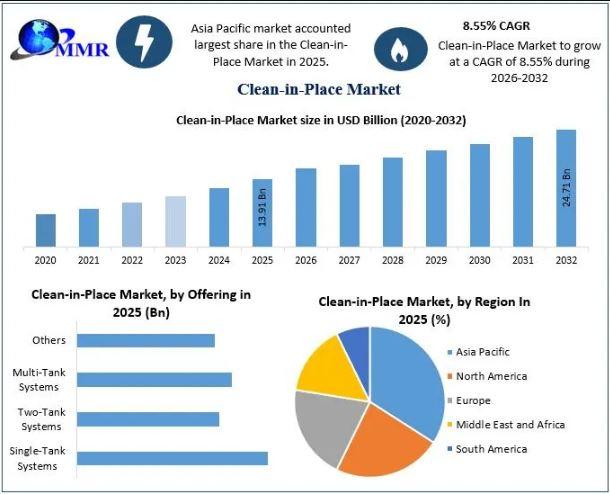
    The Clean-in-Place Market is expanding as food, beverage, dairy, pharmaceutical and bioprocess manufacturers invest in automated hygiene technologies. According to Maximize Market Research, the market was valued at USD 13.91 billion in 2025 and is projected to grow at a CAGR of 8.55% from 2026 to 2032, reaching nearly USD 24.71 billion by 2032. CIP systems clean internal surfaces of pipes, vessels, equipment, filters and fittings without dismantling machinery, reducing labor, downtime and cleaning costs while delivering repeatable sanitation.

    Growth is being supported by rising consumption of processed and convenience foods, expanding dairy and beverage production, increasing pharmaceutical manufacturing and wider automation of processing plants. Strict hygiene requirements are encouraging manufacturers to replace manual cleaning with controlled, documented systems. Manufacturers are also seeking systems that reduce water, chemicals, energy use and wastewater costs, creating opportunities for intelligent controls, sensor monitoring, optimized dosing and water recovery.

    US Market Trends and Investment

    The United States remains an important market under stringent sanitation and quality requirements. In 2025, FDA draft guidance addressed sanitation programs for low-moisture ready-to-eat foods. Industry investment also highlighted U.S. food-processing modernization. Cayuga Milk Ingredients opened an expanded consumer-goods facility in New York as part of a two-phase, USD 270 million expansion developed with Tetra Pak technology. Meanwhile, 2025 CIP developments focused on automation, shorter cleaning cycles and lower resource consumption.

    Request Your Sample Report Now : https://www.maximizemarketresearch.com/request-sample/27293/

    Market Segmentation

    By system type, Reuse CIP Systems are projected to hold the largest market share during the forecast period. Reuse systems recirculate cleaning solutions and water, allowing resources from previous cycles to be recovered and reused during subsequent stages. This approach can reduce water, chemical and wastewater costs. The segment benefits from emphasis on sustainability and cost control.

    Clean-in-Place Market Size, Share, and Emerging Trends Driving Industry Growth Clean-in-Place Market to Reach USD 24.71 Billion by 2032 as Automation and Food Safety Drive Demand The Clean-in-Place Market is expanding as food, beverage, dairy, pharmaceutical and bioprocess manufacturers invest in automated hygiene technologies. According to Maximize Market Research, the market was valued at USD 13.91 billion in 2025 and is projected to grow at a CAGR of 8.55% from 2026 to 2032, reaching nearly USD 24.71 billion by 2032. CIP systems clean internal surfaces of pipes, vessels, equipment, filters and fittings without dismantling machinery, reducing labor, downtime and cleaning costs while delivering repeatable sanitation. Growth is being supported by rising consumption of processed and convenience foods, expanding dairy and beverage production, increasing pharmaceutical manufacturing and wider automation of processing plants. Strict hygiene requirements are encouraging manufacturers to replace manual cleaning with controlled, documented systems. Manufacturers are also seeking systems that reduce water, chemicals, energy use and wastewater costs, creating opportunities for intelligent controls, sensor monitoring, optimized dosing and water recovery. US Market Trends and Investment The United States remains an important market under stringent sanitation and quality requirements. In 2025, FDA draft guidance addressed sanitation programs for low-moisture ready-to-eat foods. Industry investment also highlighted U.S. food-processing modernization. Cayuga Milk Ingredients opened an expanded consumer-goods facility in New York as part of a two-phase, USD 270 million expansion developed with Tetra Pak technology. Meanwhile, 2025 CIP developments focused on automation, shorter cleaning cycles and lower resource consumption. Request Your Sample Report Now : https://www.maximizemarketresearch.com/request-sample/27293/ Market Segmentation By system type, Reuse CIP Systems are projected to hold the largest market share during the forecast period. Reuse systems recirculate cleaning solutions and water, allowing resources from previous cycles to be recovered and reused during subsequent stages. This approach can reduce water, chemical and wastewater costs. The segment benefits from emphasis on sustainability and cost control.
    0 Comments ·0 Shares ·682 Views
  • Spunbond Nonwoven Market Demands and Projected Industry Growth

    Spunbond Nonwoven Market to Reach USD 43.50 Billion by 2034

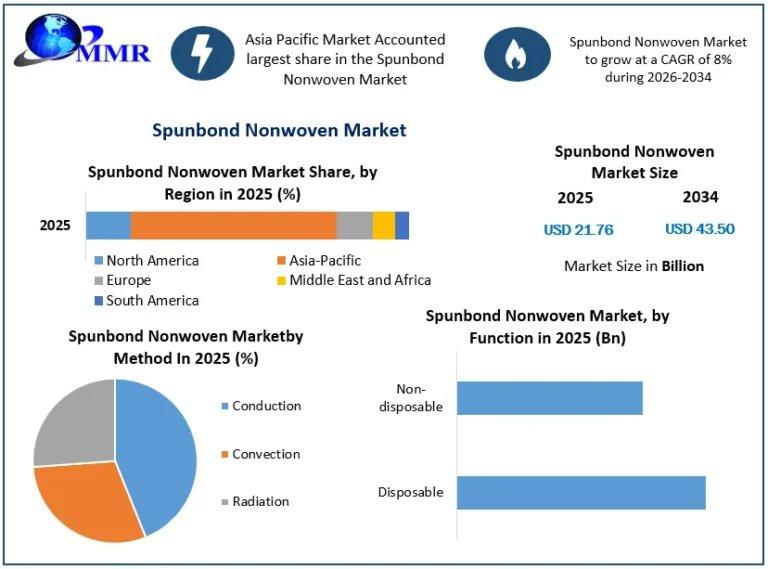
    The Spunbond Nonwoven Market is entering a strong expansion phase as demand increases across personal care and hygiene, healthcare, agriculture, packaging, automotive, construction, filtration, and geotextile applications. The market was valued at USD 21.76 billion in 2025 and is projected to grow at a CAGR of 8% from 2026 to 2034, reaching nearly USD 43.50 billion by 2034.

    Market Estimation, Growth Drivers and Opportunities

    Spunbond nonwoven materials are gaining importance because they combine lightweight construction, strength, durability, chemical resistance, processability, and cost efficiency. Growing consumption of disposable hygiene products, increasing healthcare requirements, rising adoption of lightweight materials, and expanding applications in construction and geotextiles are supporting market growth.

    The polypropylene segment represents the leading material category. Polypropylene is widely used because of its low density, cost advantages, hydrophobic characteristics, chemical resistance, and suitability for high-volume nonwoven production. Healthcare and personal hygiene applications remain important demand centers, while growing geotextile adoption creates additional opportunities in infrastructure, drainage, soil stabilization, filtration, and construction.

    Get a Free Sample Market Report Link : https://www.maximizemarketresearch.com/request-sample/2636/

    U.S. Market Trends and Investment

    The United States remains an important market for advanced nonwoven materials, supported by demand from hygiene, healthcare, industrial, construction, and filtration applications. A significant 2025 development was Avgol’s opening of a new high-speed, high-capacity flexible multiple-beam nonwoven production line at its Mocksville, North Carolina facility, representing a USD 100 million investment. The facility also added a three-layer lamination line, expanding capabilities for composite nonwoven products. The investment is aimed at serving applications including baby diapers, adult incontinence products, and feminine hygiene.

    U.S. demand is also being influenced by increasing emphasis on domestic manufacturing capacity, supply-chain resilience, advanced hygiene materials, and higher-performance nonwoven products. In 2025, Fibertex Nonwovens also reported stronger U.S. sales supported by newly installed production capacity in South Carolina, highlighting continued investment in North American manufacturing.

    Spunbond Nonwoven Market Demands and Projected Industry Growth Spunbond Nonwoven Market to Reach USD 43.50 Billion by 2034 The Spunbond Nonwoven Market is entering a strong expansion phase as demand increases across personal care and hygiene, healthcare, agriculture, packaging, automotive, construction, filtration, and geotextile applications. The market was valued at USD 21.76 billion in 2025 and is projected to grow at a CAGR of 8% from 2026 to 2034, reaching nearly USD 43.50 billion by 2034. Market Estimation, Growth Drivers and Opportunities Spunbond nonwoven materials are gaining importance because they combine lightweight construction, strength, durability, chemical resistance, processability, and cost efficiency. Growing consumption of disposable hygiene products, increasing healthcare requirements, rising adoption of lightweight materials, and expanding applications in construction and geotextiles are supporting market growth. The polypropylene segment represents the leading material category. Polypropylene is widely used because of its low density, cost advantages, hydrophobic characteristics, chemical resistance, and suitability for high-volume nonwoven production. Healthcare and personal hygiene applications remain important demand centers, while growing geotextile adoption creates additional opportunities in infrastructure, drainage, soil stabilization, filtration, and construction. Get a Free Sample Market Report Link : https://www.maximizemarketresearch.com/request-sample/2636/ U.S. Market Trends and Investment The United States remains an important market for advanced nonwoven materials, supported by demand from hygiene, healthcare, industrial, construction, and filtration applications. A significant 2025 development was Avgol’s opening of a new high-speed, high-capacity flexible multiple-beam nonwoven production line at its Mocksville, North Carolina facility, representing a USD 100 million investment. The facility also added a three-layer lamination line, expanding capabilities for composite nonwoven products. The investment is aimed at serving applications including baby diapers, adult incontinence products, and feminine hygiene. U.S. demand is also being influenced by increasing emphasis on domestic manufacturing capacity, supply-chain resilience, advanced hygiene materials, and higher-performance nonwoven products. In 2025, Fibertex Nonwovens also reported stronger U.S. sales supported by newly installed production capacity in South Carolina, highlighting continued investment in North American manufacturing.
    0 Comments ·0 Shares ·525 Views
  • Surface Disinfectant Market Demand and Projected Industry Growth

    Surface Disinfectant Market to Reach USD 9.47 Billion by 2034 as Hygiene Standards and Product Innovation Accelerate

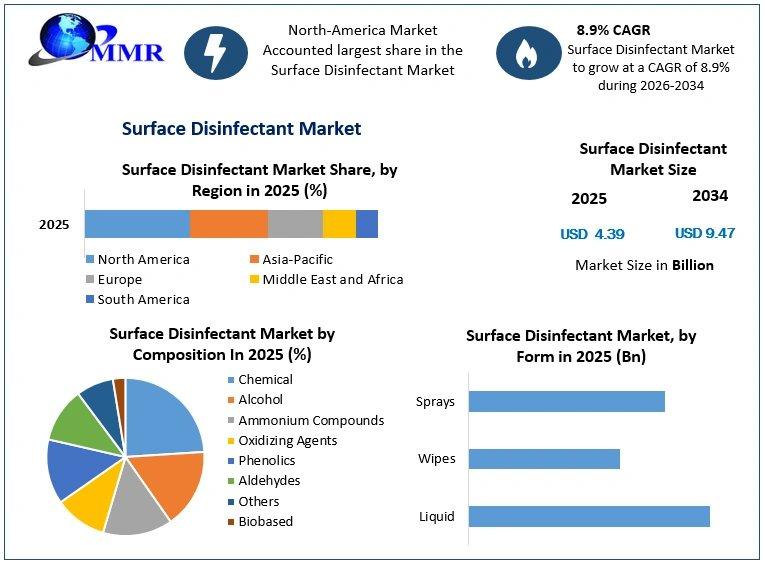
    The Surface Disinfectant Market is entering a sustained growth phase as healthcare facilities, households, hospitality businesses, and workplaces strengthen infection-control practices. According to Maximize Market Research, the market was valued at USD 4.39 billion in 2025 and is expected to grow at a CAGR of 8.9% from 2026 to 2034, reaching nearly USD 9.47 billion by 2034. Growth reflects increasing awareness of environmental hygiene, stringent sanitation requirements, rising healthcare activity, and product innovation.

    Market Estimation, Growth Drivers and Opportunities

    Demand is supported by infectious-disease concerns, higher healthcare utilization, growing numbers of surgeries, and greater attention to hygiene in high-contact environments. Hospitals and laboratories require reliable surface disinfection, while homes, schools, hotels, restaurants, offices, and food-processing sites adopt structured cleaning protocols.

    The market benefits from advances in formulation and delivery systems. Manufacturers are developing products with stronger antimicrobial performance, improved material compatibility, reduced odors, easier application, and more sustainable profiles. Electrostatic spraying, UV-C-assisted disinfection, ready-to-use wipes, concentrated liquids, and bio-based formulations create additional opportunities. Government support for hygiene programs and research can encourage investment.

    Request Your Sample Report Now : https://www.maximizemarketresearch.com/request-sample/33079/

    U.S. Market: Latest Trends and Investment

    The United States remains important because of healthcare expenditure, infection-prevention practices, consumer awareness, and commercial demand. In 2025, CloroxPro expanded its healthcare and commercial reach through a new agreement with Vizient to supply cleaning and disinfecting products. It also introduced Clorox Screen+ Sanitizing Wipes for touchscreens, laptops, tablets, and keyboards, showing how surface disinfection is expanding into technology-intensive workplaces.

    Reckitt continued strengthening Lysol’s U.S. innovation platform through new products and consumer education around proactive disinfection. Reckitt has also announced major U.S. investment in manufacturing, R&D, disinfection science, and innovation infrastructure. These developments point toward specialized and science-led hygiene solutions.

    Largest Market Segments

    By composition, the Chemical segment held the leading position, supported by widespread use of alcohols, ammonium compounds, oxidizing agents, phenolics, and aldehydes for microbial control.

    By form, Liquid surface disinfectants accounted for the leading share because they are widely used across hospitals, households, hotels, schools, commercial buildings, and other facilities.

    By application, In-House applications dominated, accounting for more than 73% of global revenue in 2022, according to the Maximize Market Research analysis. Broad use across facilities supports continued demand.

    Surface Disinfectant Market Demand and Projected Industry Growth Surface Disinfectant Market to Reach USD 9.47 Billion by 2034 as Hygiene Standards and Product Innovation Accelerate The Surface Disinfectant Market is entering a sustained growth phase as healthcare facilities, households, hospitality businesses, and workplaces strengthen infection-control practices. According to Maximize Market Research, the market was valued at USD 4.39 billion in 2025 and is expected to grow at a CAGR of 8.9% from 2026 to 2034, reaching nearly USD 9.47 billion by 2034. Growth reflects increasing awareness of environmental hygiene, stringent sanitation requirements, rising healthcare activity, and product innovation. Market Estimation, Growth Drivers and Opportunities Demand is supported by infectious-disease concerns, higher healthcare utilization, growing numbers of surgeries, and greater attention to hygiene in high-contact environments. Hospitals and laboratories require reliable surface disinfection, while homes, schools, hotels, restaurants, offices, and food-processing sites adopt structured cleaning protocols. The market benefits from advances in formulation and delivery systems. Manufacturers are developing products with stronger antimicrobial performance, improved material compatibility, reduced odors, easier application, and more sustainable profiles. Electrostatic spraying, UV-C-assisted disinfection, ready-to-use wipes, concentrated liquids, and bio-based formulations create additional opportunities. Government support for hygiene programs and research can encourage investment. Request Your Sample Report Now : https://www.maximizemarketresearch.com/request-sample/33079/ U.S. Market: Latest Trends and Investment The United States remains important because of healthcare expenditure, infection-prevention practices, consumer awareness, and commercial demand. In 2025, CloroxPro expanded its healthcare and commercial reach through a new agreement with Vizient to supply cleaning and disinfecting products. It also introduced Clorox Screen+ Sanitizing Wipes for touchscreens, laptops, tablets, and keyboards, showing how surface disinfection is expanding into technology-intensive workplaces. Reckitt continued strengthening Lysol’s U.S. innovation platform through new products and consumer education around proactive disinfection. Reckitt has also announced major U.S. investment in manufacturing, R&D, disinfection science, and innovation infrastructure. These developments point toward specialized and science-led hygiene solutions. Largest Market Segments By composition, the Chemical segment held the leading position, supported by widespread use of alcohols, ammonium compounds, oxidizing agents, phenolics, and aldehydes for microbial control. By form, Liquid surface disinfectants accounted for the leading share because they are widely used across hospitals, households, hotels, schools, commercial buildings, and other facilities. By application, In-House applications dominated, accounting for more than 73% of global revenue in 2022, according to the Maximize Market Research analysis. Broad use across facilities supports continued demand.
    0 Comments ·0 Shares ·496 Views
  • Homeopathy For Chickens and Poultry Health

    Healthy growth, good digestion, and strong immunity are important for keeping poultry healthy. Homeopathy For Chickens can be explored as a supportive approach to poultry health and overall wellness.

    E-Poul Gro Drops (E-VET No.26) from Excel Pharma are homeopathic drops formulated for poultry care. They support healthy growth, digestion, and immunity in chicks as part of proper poultry management.

    Along with homeopathic care, providing balanced nutrition, clean housing, fresh drinking water, and good hygiene is important for maintaining healthy chickens. For birds with persistent or serious health concerns, consult a qualified veterinarian.

    For more information, call +91 98155 67678. For product-related queries, contact our team at +91 7347341717.

    Visit us: https://www.excelpharma.co.in/product/e-poul-gro-drops-homeopathy-medicine-for-poultry/

    #HomeopathyForChickens #EPoulGroDrops #PoultryHealth #ChickenCare #PoultryWellness #HomeopathicMedicine #ChickenHealth #PoultryCare #AnimalHealth
    Homeopathy For Chickens and Poultry Health Healthy growth, good digestion, and strong immunity are important for keeping poultry healthy. Homeopathy For Chickens can be explored as a supportive approach to poultry health and overall wellness. E-Poul Gro Drops (E-VET No.26) from Excel Pharma are homeopathic drops formulated for poultry care. They support healthy growth, digestion, and immunity in chicks as part of proper poultry management. Along with homeopathic care, providing balanced nutrition, clean housing, fresh drinking water, and good hygiene is important for maintaining healthy chickens. For birds with persistent or serious health concerns, consult a qualified veterinarian. For more information, call +91 98155 67678. For product-related queries, contact our team at +91 7347341717. Visit us: https://www.excelpharma.co.in/product/e-poul-gro-drops-homeopathy-medicine-for-poultry/ #HomeopathyForChickens #EPoulGroDrops #PoultryHealth #ChickenCare #PoultryWellness #HomeopathicMedicine #ChickenHealth #PoultryCare #AnimalHealth
    Homeopathy medicine for Poultry to promote Growth, Immunity
    www.excelpharma.co.in
    Excel Pharma provides best homeopathy for Chickens to grow naturally & disease free promoting immune system & digestion. Call us: 9815567678
    0 Comments ·0 Shares ·415 Views
  • How Your Diet Can Affect the Results of Teeth Whitening

    A brighter smile requires more than just professional treatment. Learn how your daily diet, oral hygiene habits, and food choices can affect the longevity of your results. Discover practical tips for maintaining a whiter smile after teeth whitening in Deltona and protecting your dental investment.

    Read More- https://familydental502.stck.me/post/2155760/How-Your-Diet-Can-Affect-the-Results-of-Teeth-Whitening
    How Your Diet Can Affect the Results of Teeth Whitening A brighter smile requires more than just professional treatment. Learn how your daily diet, oral hygiene habits, and food choices can affect the longevity of your results. Discover practical tips for maintaining a whiter smile after teeth whitening in Deltona and protecting your dental investment. Read More- https://familydental502.stck.me/post/2155760/How-Your-Diet-Can-Affect-the-Results-of-Teeth-Whitening
    How Your Diet Can Affect the Results of Teeth Whitening
    familydental502.stck.me
    A brighter smile can make a noticeable difference in your appearance and confidence. Professional whitening treatments can effectively remove many types of discoloration, but keeping your teeth bright does not end when the treatment is finished. Your everyday diet plays an important role in maintaining those results. If you are considering teeth whitening deltona, understanding which foods and drinks can stain your teeth—and which choices can help protect your smile—can help you enjoy a brighter appearance for longer.
    0 Comments ·0 Shares ·875 Views
  • Homeopathy for Sneezing: Natural Remedies for Lasting Relief

    Sneezing is a common response to allergens, dust, seasonal changes, or irritation in the nasal passages. For people looking for a gentle approach, homeopathy may offer supportive care for managing frequent sneezing and related allergy symptoms. Excel Pharma provides homeopathic formulations such as E-Allergy Drops (AKG-02), which are intended to support relief from allergy-related symptoms such as sneezing, nasal irritation, and discomfort. Along with suitable remedies, reducing exposure to known allergens, maintaining good hygiene, staying hydrated, and keeping indoor spaces clean can help support respiratory comfort.

    Excel Pharma is a trusted provider of high-quality homeopathic medicines across India. For more details, call or WhatsApp at +91 98155 67678.

    #HomeopathyForSneezing #SneezingRelief #HomeopathicRemedies #NaturalAllergyRelief #HomeopathyForAllergies #AllergyRelief #SneezingTreatment #EAllergyDrops #ExcelPharma
    Homeopathy for Sneezing: Natural Remedies for Lasting Relief Sneezing is a common response to allergens, dust, seasonal changes, or irritation in the nasal passages. For people looking for a gentle approach, homeopathy may offer supportive care for managing frequent sneezing and related allergy symptoms. Excel Pharma provides homeopathic formulations such as E-Allergy Drops (AKG-02), which are intended to support relief from allergy-related symptoms such as sneezing, nasal irritation, and discomfort. Along with suitable remedies, reducing exposure to known allergens, maintaining good hygiene, staying hydrated, and keeping indoor spaces clean can help support respiratory comfort. Excel Pharma is a trusted provider of high-quality homeopathic medicines across India. For more details, call or WhatsApp at +91 98155 67678. #HomeopathyForSneezing #SneezingRelief #HomeopathicRemedies #NaturalAllergyRelief #HomeopathyForAllergies #AllergyRelief #SneezingTreatment #EAllergyDrops #ExcelPharma
    Buy AKG-02 E-ALLERGY DROPS 30Ml online in India at best price
    www.excelpharma.co.in
    Buy Homeopathic AKG-02 E-ALLERGY DROPS 30Ml in India. Shop homeopathy AKG-02 E-ALLERGY DROPS 30Ml online at the best price from Excel Pharma.
    0 Comments ·0 Shares ·706 Views
  • Surface Disinfectant Market Future Growth, Trends, and Revenue Forecast

    Key Highlights

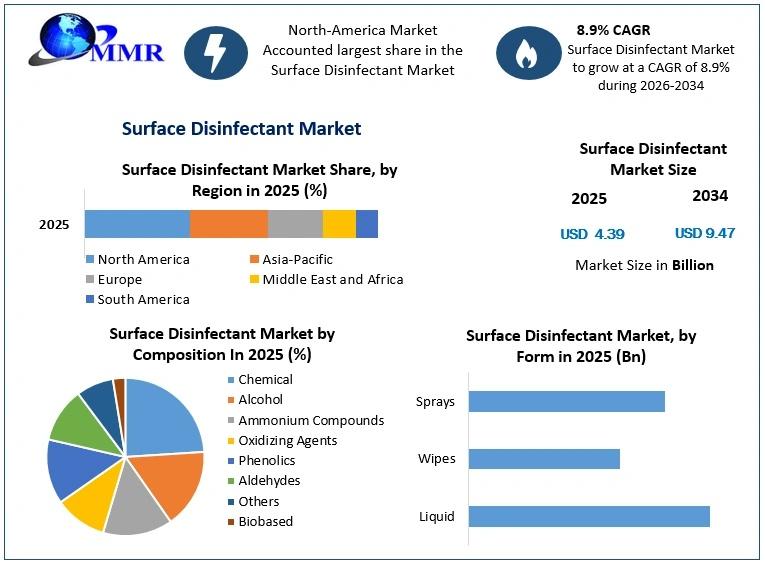
    The Surface Disinfectant Market was valued at USD 4.39 billion in 2025, establishing a sizeable base for future expansion.
    Revenue is expected to reach nearly USD 9.47 billion by 2034 at an 8.9% CAGR, signaling strong long-term demand.
    Chemical composition remains an important market category, supported by demand for effective sanitization.
    Liquid disinfectants hold a prominent position across hospitals, households, hotels, schools, and other facilities.
    North America leads the market, while Asia Pacific and emerging economies offer expansion opportunities.

    Market Overview

    The Surface Disinfectant Market is evolving from a routine cleaning category into an important component of infection-control strategies. Modern disinfection practices increasingly emphasize the removal of pathogenic microorganisms from inanimate surfaces, particularly across healthcare and institutional environments.

    The market's projected rise from USD 4.39 billion in 2025 to nearly USD 9.47 billion in 2034 indicates that demand is moving beyond occasional cleaning toward consistent sanitation programs. For manufacturers, this creates opportunities to expand product portfolios while improving formulation performance and delivery efficiency.

    Why This Market Matters Now

    Stronger hygiene practices, infectious-disease concerns, healthcare activity, and regulatory attention are reinforcing the commercial importance of surface disinfection. Hospitals and clinics require reliable products for maintaining controlled environments, while households, educational institutions, hospitality facilities, transportation networks, and food-processing operations add further demand.

    For buyers, product effectiveness is no longer the only consideration. Handling safety, application convenience, environmental impact, and operational cost are increasingly relevant when selecting disinfectants.

    Get Your Free Sample Report Link : https://www.maximizemarketresearch.com/request-sample/33079/

    Key Trends Driving Growth

    One major trend is the development of more efficient formulations. Manufacturers are investing in research and development to improve antimicrobial performance and create products suited to changing hygiene requirements.

    Bio-based disinfectants are also gaining attention as awareness of the potential toxicity of conventional chemical products increases. This shift gives manufacturers an opportunity to differentiate through environmentally focused formulations.

    Technology is another growth catalyst. Advanced delivery approaches, including electrostatic spraying and UV-C disinfection technologies, are supporting more efficient surface-treatment practices and broadening the competitive landscape.

    Surface Disinfectant Market Future Growth, Trends, and Revenue Forecast Key Highlights The Surface Disinfectant Market was valued at USD 4.39 billion in 2025, establishing a sizeable base for future expansion. Revenue is expected to reach nearly USD 9.47 billion by 2034 at an 8.9% CAGR, signaling strong long-term demand. Chemical composition remains an important market category, supported by demand for effective sanitization. Liquid disinfectants hold a prominent position across hospitals, households, hotels, schools, and other facilities. North America leads the market, while Asia Pacific and emerging economies offer expansion opportunities. Market Overview The Surface Disinfectant Market is evolving from a routine cleaning category into an important component of infection-control strategies. Modern disinfection practices increasingly emphasize the removal of pathogenic microorganisms from inanimate surfaces, particularly across healthcare and institutional environments. The market's projected rise from USD 4.39 billion in 2025 to nearly USD 9.47 billion in 2034 indicates that demand is moving beyond occasional cleaning toward consistent sanitation programs. For manufacturers, this creates opportunities to expand product portfolios while improving formulation performance and delivery efficiency. Why This Market Matters Now Stronger hygiene practices, infectious-disease concerns, healthcare activity, and regulatory attention are reinforcing the commercial importance of surface disinfection. Hospitals and clinics require reliable products for maintaining controlled environments, while households, educational institutions, hospitality facilities, transportation networks, and food-processing operations add further demand. For buyers, product effectiveness is no longer the only consideration. Handling safety, application convenience, environmental impact, and operational cost are increasingly relevant when selecting disinfectants. Get Your Free Sample Report Link : https://www.maximizemarketresearch.com/request-sample/33079/ Key Trends Driving Growth One major trend is the development of more efficient formulations. Manufacturers are investing in research and development to improve antimicrobial performance and create products suited to changing hygiene requirements. Bio-based disinfectants are also gaining attention as awareness of the potential toxicity of conventional chemical products increases. This shift gives manufacturers an opportunity to differentiate through environmentally focused formulations. Technology is another growth catalyst. Advanced delivery approaches, including electrostatic spraying and UV-C disinfection technologies, are supporting more efficient surface-treatment practices and broadening the competitive landscape.
    0 Comments ·0 Shares ·383 Views
More Results