

• Hazmat Packaging Market Size and Share with Future Growth Analysis

    Key Highlights

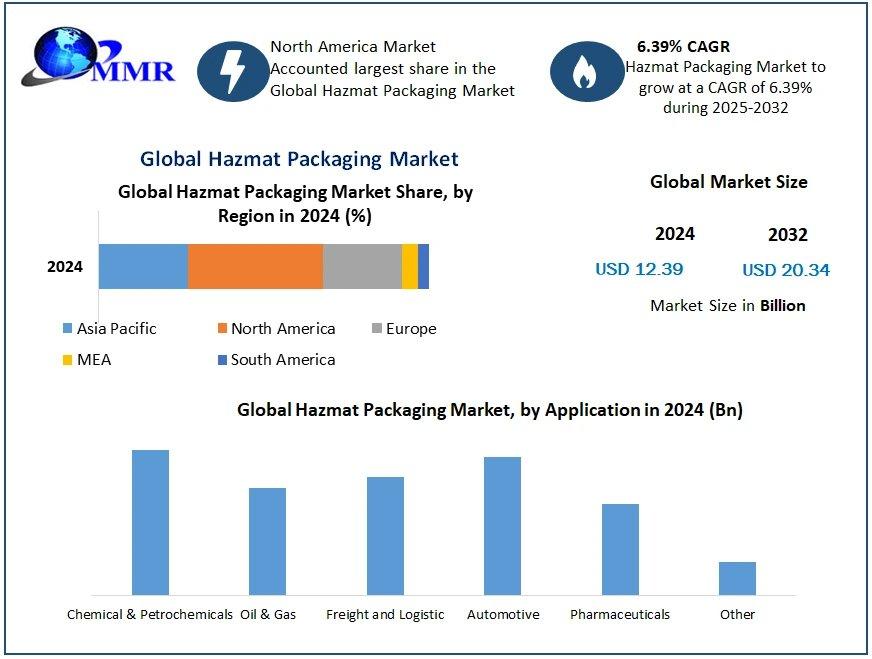
    The Hazmat Packaging Market was valued at USD 12.39 billion in 2024, creating a substantial base for suppliers serving hazardous-material industries.
    Revenue is projected to reach nearly USD 20.34 billion by 2032 at a 6.39% CAGR from 2025 to 2032, signaling sustained demand for compliant packaging.
    Plastic is expected to witness significant growth because of its durability, flexibility, light weight, and cost-effectiveness.
    North America held the highest share in 2024, while Asia Pacific is expected to record the highest CAGR during the forecast period.
    Chemical and petrochemical, oil and gas, logistics, automotive, and pharmaceutical users create multiple demand channels.

    Hazmat Packaging Market Overview

    The Hazmat Packaging Market is becoming a strategic necessity as hazardous materials move through complex storage and transportation networks. For industrial buyers, packaging is a critical control point for protecting workers, property, products, and shipments.

    The forecast to nearly USD 20.34 billion by 2032 indicates a widening commercial opportunity for manufacturers and suppliers.

    Why This Market Matters Now

    The Hazmat Packaging Market is shaped by the need for secure handling of flammable, explosive, toxic, corrosive, and other hazardous materials. Non-compliance with hazardous-material shipping regulations can be expensive, making packaging selection an operational and financial priority.

    This pressure benefits suppliers that deliver reliable formats suited to different materials and transport conditions.

    Key Trends Driving Growth

    A major Hazmat Packaging Market trend is interactive packaging, particularly track-and-trace labels that help users monitor shipments. This improves shipment visibility.

    Material choice is another important shift. Plastic is expected to witness significant growth because it combines durability and flexibility with lower weight and cost advantages compared with metal and corrugated paper. Metal remains valuable where protection from humidity and sunlight is important.

    Request Your Sample Report Now : https://www.maximizemarketresearch.com/request-sample/53938/

    Hazmat Packaging Market Growth Outlook

    The Hazmat Packaging Market is forecast to grow at a 6.39% CAGR between 2025 and 2032, reaching nearly USD 20.34 billion by 2032. The trajectory points to expanding demand as hazardous-material handling remains central to industrial logistics.

    For investors, the forecast indicates long-term expansion; for procurement teams, capacity, material performance, and supplier reliability remain considerations.
    Hazmat Packaging Market Size and Share with Future Growth Analysis Key Highlights The Hazmat Packaging Market was valued at USD 12.39 billion in 2024, creating a substantial base for suppliers serving hazardous-material industries. Revenue is projected to reach nearly USD 20.34 billion by 2032 at a 6.39% CAGR from 2025 to 2032, signaling sustained demand for compliant packaging. Plastic is expected to witness significant growth because of its durability, flexibility, light weight, and cost-effectiveness. North America held the highest share in 2024, while Asia Pacific is expected to record the highest CAGR during the forecast period. Chemical and petrochemical, oil and gas, logistics, automotive, and pharmaceutical users create multiple demand channels. Hazmat Packaging Market Overview The Hazmat Packaging Market is becoming a strategic necessity as hazardous materials move through complex storage and transportation networks. For industrial buyers, packaging is a critical control point for protecting workers, property, products, and shipments. The forecast to nearly USD 20.34 billion by 2032 indicates a widening commercial opportunity for manufacturers and suppliers. Why This Market Matters Now The Hazmat Packaging Market is shaped by the need for secure handling of flammable, explosive, toxic, corrosive, and other hazardous materials. Non-compliance with hazardous-material shipping regulations can be expensive, making packaging selection an operational and financial priority. This pressure benefits suppliers that deliver reliable formats suited to different materials and transport conditions. Key Trends Driving Growth A major Hazmat Packaging Market trend is interactive packaging, particularly track-and-trace labels that help users monitor shipments. This improves shipment visibility. Material choice is another important shift. Plastic is expected to witness significant growth because it combines durability and flexibility with lower weight and cost advantages compared with metal and corrugated paper. Metal remains valuable where protection from humidity and sunlight is important. Request Your Sample Report Now : https://www.maximizemarketresearch.com/request-sample/53938/ Hazmat Packaging Market Growth Outlook The Hazmat Packaging Market is forecast to grow at a 6.39% CAGR between 2025 and 2032, reaching nearly USD 20.34 billion by 2032. The trajectory points to expanding demand as hazardous-material handling remains central to industrial logistics. For investors, the forecast indicates long-term expansion; for procurement teams, capacity, material performance, and supplier reliability remain considerations.
    0 Comments ·0 Shares ·399 Views

  • RSPCB Certificate for Rajasthan Environmental Compliance

    Understand the rspcb certificate requirements for businesses and industries in Rajasthan. This image highlights the role of the Rajasthan State Pollution Control Board in environmental compliance and the importance of obtaining the appropriate certificate for eligible activities.
    #rspcb #rspcbcertificate

    WhatsApp:7558640644
    Visit Our Website: https://www.corpseed.com/service/rajasthan-state-pollution-control-board
    RSPCB Certificate for Rajasthan Environmental Compliance Understand the rspcb certificate requirements for businesses and industries in Rajasthan. This image highlights the role of the Rajasthan State Pollution Control Board in environmental compliance and the importance of obtaining the appropriate certificate for eligible activities. #rspcb #rspcbcertificate 📞 WhatsApp:7558640644 Visit Our Website: https://www.corpseed.com/service/rajasthan-state-pollution-control-board
    0 Comments ·0 Shares ·878 Views
  • Artificial Turf Market Growth, Demand Trends and Future Scope Analysis

    Key Highlights

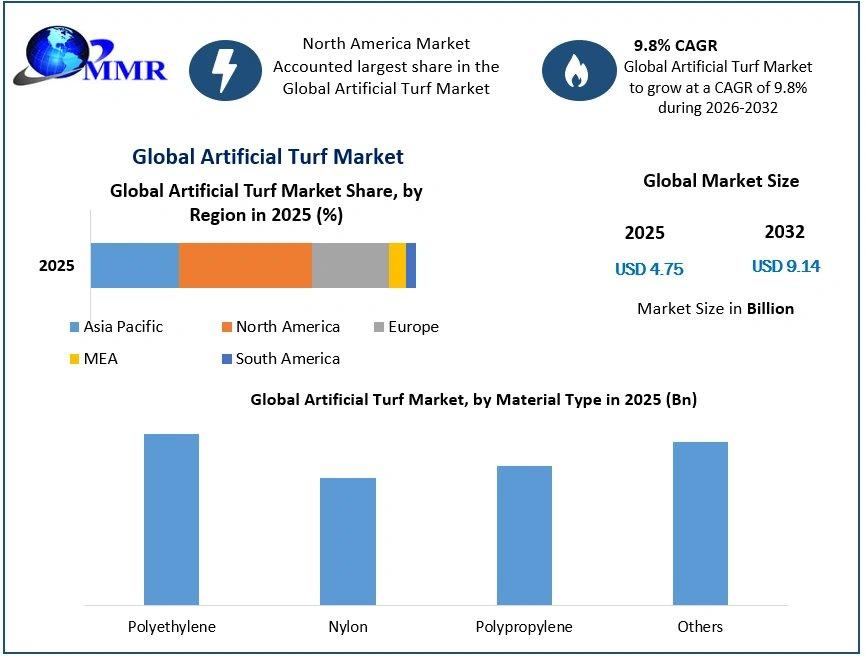
    The Artificial Turf Market was valued at USD 4.75 billion in 2025.
    Revenue is projected to reach nearly USD 9.14 billion by 2032.
    The market is expected to expand at a 9.8% CAGR from 2026 to 2032.
    Sports accounted for about 48% of the market by application in 2025.
    North America held the largest market share in 2025.
    Asia Pacific is expected to record the fastest growth during the forecast period.

    Market Overview

    The Artificial Turf Market is moving beyond its traditional role in sports facilities and becoming a practical surface solution for residential, commercial and landscaping applications. The Artificial Turf Market reached USD 4.75 billion in 2025, showing that demand is increasingly connected to broader construction, recreation and water-management requirements.

    Unlike natural grass, synthetic turf requires limited maintenance and does not depend on regular sunlight or watering. This difference matters for buyers managing operating costs, particularly in regions where water availability and maintenance requirements influence property development decisions.

    Sports remains the strongest application area. In 2025, the segment represented about 48% of the market, supported by adoption across football, rugby, hockey, golf, baseball and multipurpose sports facilities. Heavy-use surfaces that provide consistent playing conditions are encouraging stadiums and sports authorities to reconsider traditional grass.

    Why This Market Matters Now

    Urbanization and construction activity are expanding the addressable market for synthetic surfaces. Residential gardens, commercial properties, playgrounds, patios, medians and poolside areas are increasingly becoming potential applications.

    Water scarcity is another important catalyst. Artificial turf can reduce dependence on irrigation, making it attractive where maintaining natural lawns is difficult or expensive. Consequently, procurement decisions are increasingly influenced not only by appearance and durability but also by maintenance requirements and resource consumption.

    Request Your Sample Report Now : https://www.maximizemarketresearch.com/request-sample/119541/

    Artificial Turf Market Growth, Demand Trends and Future Scope Analysis Key Highlights The Artificial Turf Market was valued at USD 4.75 billion in 2025. Revenue is projected to reach nearly USD 9.14 billion by 2032. The market is expected to expand at a 9.8% CAGR from 2026 to 2032. Sports accounted for about 48% of the market by application in 2025. North America held the largest market share in 2025. Asia Pacific is expected to record the fastest growth during the forecast period. Market Overview The Artificial Turf Market is moving beyond its traditional role in sports facilities and becoming a practical surface solution for residential, commercial and landscaping applications. The Artificial Turf Market reached USD 4.75 billion in 2025, showing that demand is increasingly connected to broader construction, recreation and water-management requirements. Unlike natural grass, synthetic turf requires limited maintenance and does not depend on regular sunlight or watering. This difference matters for buyers managing operating costs, particularly in regions where water availability and maintenance requirements influence property development decisions. Sports remains the strongest application area. In 2025, the segment represented about 48% of the market, supported by adoption across football, rugby, hockey, golf, baseball and multipurpose sports facilities. Heavy-use surfaces that provide consistent playing conditions are encouraging stadiums and sports authorities to reconsider traditional grass. Why This Market Matters Now Urbanization and construction activity are expanding the addressable market for synthetic surfaces. Residential gardens, commercial properties, playgrounds, patios, medians and poolside areas are increasingly becoming potential applications. Water scarcity is another important catalyst. Artificial turf can reduce dependence on irrigation, making it attractive where maintaining natural lawns is difficult or expensive. Consequently, procurement decisions are increasingly influenced not only by appearance and durability but also by maintenance requirements and resource consumption. Request Your Sample Report Now : https://www.maximizemarketresearch.com/request-sample/119541/
    0 Comments ·0 Shares ·876 Views
  • Rendered Products Industry Growth, Market Trends and Future Opportunities

    Key Highlights

    The Rendered Products Market was valued at USD 23.61 billion in 2025, creating a substantial base for continued industry activity.
    The market is projected to reach USD 29.31 billion by 2034, indicating sustained demand across multiple applications.
    A CAGR of 2.43% is projected during 2026–2034, pointing to steady rather than abrupt expansion.
    Tallow held the largest product-type share in 2025, supported by broad food, feed, soap, candle, and lubricant applications.
    North America led the market and is expected to maintain a significant position during the forecast period.


    Market Overview

    The Rendered Products Market is built around the processing of animal by-products through heating and separation to recover useful fats, proteins, and other materials. Tallow, grease, protein meal, bone meal, feather meal, and blood meal can serve different commercial purposes, helping industries reduce waste while recovering economic value.

    The market reached USD 23.61 billion in 2025, demonstrating the scale of demand for recovered animal-derived materials. Its projected rise to USD 29.31 billion by 2034 signals an expanding opportunity for processors that can combine efficient production with consistent quality and regulatory compliance.

    Get a Sample Insight Report Now : https://www.maximizemarketresearch.com/request-sample/221538/

    Key Trends Driving Growth

    One major trend is the expanding use of rendered materials in animal nutrition. Protein-rich meals support livestock, poultry, aquaculture, and companion-animal feed applications, creating diversified demand.

    Another important trend is technological modernization. Continuous rendering systems, improved grinding, low-temperature separation, and waste-heat recovery are helping facilities improve cooking efficiency, energy performance, and product quality.

    Sustainability is also strengthening the market's relevance. Converting animal by-products into feed ingredients, fertilizers, biofuels, and industrial materials supports resource conservation and creates additional value streams for processors.

    Rendered Products Industry Growth, Market Trends and Future Opportunities Key Highlights The Rendered Products Market was valued at USD 23.61 billion in 2025, creating a substantial base for continued industry activity. The market is projected to reach USD 29.31 billion by 2034, indicating sustained demand across multiple applications. A CAGR of 2.43% is projected during 2026–2034, pointing to steady rather than abrupt expansion. Tallow held the largest product-type share in 2025, supported by broad food, feed, soap, candle, and lubricant applications. North America led the market and is expected to maintain a significant position during the forecast period. Market Overview The Rendered Products Market is built around the processing of animal by-products through heating and separation to recover useful fats, proteins, and other materials. Tallow, grease, protein meal, bone meal, feather meal, and blood meal can serve different commercial purposes, helping industries reduce waste while recovering economic value. The market reached USD 23.61 billion in 2025, demonstrating the scale of demand for recovered animal-derived materials. Its projected rise to USD 29.31 billion by 2034 signals an expanding opportunity for processors that can combine efficient production with consistent quality and regulatory compliance. Get a Sample Insight Report Now : https://www.maximizemarketresearch.com/request-sample/221538/ Key Trends Driving Growth One major trend is the expanding use of rendered materials in animal nutrition. Protein-rich meals support livestock, poultry, aquaculture, and companion-animal feed applications, creating diversified demand. Another important trend is technological modernization. Continuous rendering systems, improved grinding, low-temperature separation, and waste-heat recovery are helping facilities improve cooking efficiency, energy performance, and product quality. Sustainability is also strengthening the market's relevance. Converting animal by-products into feed ingredients, fertilizers, biofuels, and industrial materials supports resource conservation and creates additional value streams for processors.
    0 Comments ·0 Shares ·473 Views
  • Synthetic Rubber Market Future Growth, Demand Analysis and Industry Outlook

    Key Highlights

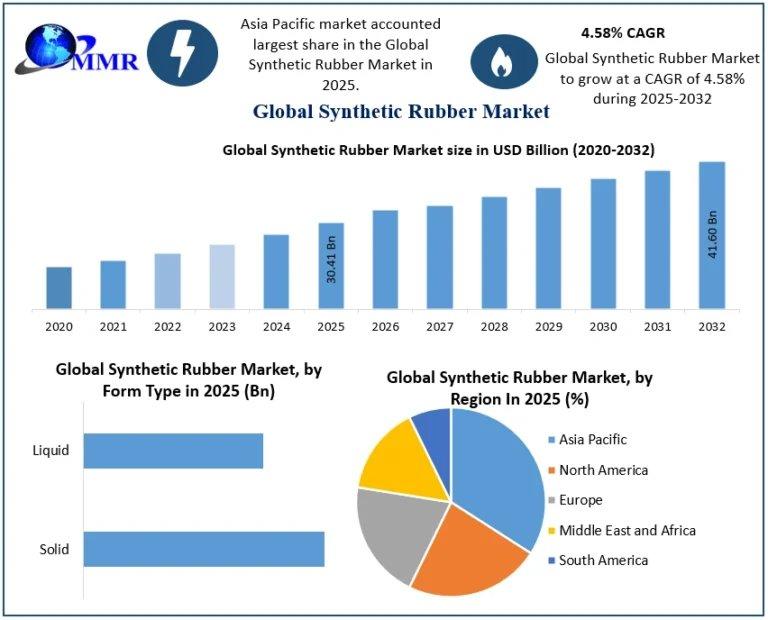
    The Synthetic Rubber Market was valued at USD 30.41 billion in 2025, establishing a substantial base.
    Revenue is expected to reach nearly USD 41.60 billion by 2032 at a 4.58% CAGR from 2026 to 2032, indicating steady expansion.
    Asia Pacific led the market in 2025, supported by automotive manufacturing and tire production.
    SBR dominated the type segment in 2025, reflecting its importance in tire manufacturing.
    Bio-based materials, recycled inputs, and EV-focused technologies are reshaping investment priorities.

    Market Overview: Synthetic Rubber Market

    The Synthetic Rubber Market is entering a phase where performance, sustainability, and mobility requirements increasingly overlap. Valued at USD 30.41 billion in 2025, it serves automotive, tires, construction, industrial goods, footwear, consumer products, and medical applications. This scale creates room for capacity expansion and specialized materials.

    Synthetic rubber is used in tires, hoses, seals, gaskets, conveyor belts, and other components because selected grades provide durability, flexibility, abrasion resistance, and heat or chemical resistance. For buyers, consistent quality and application-specific performance are important.

    Why This Market Matters Now

    Automotive demand remains central to the Synthetic Rubber Market. Vehicle production and replacement tire requirements support consumption, while electric mobility adds new performance demands. EV tires require low rolling resistance to improve energy efficiency, increasing interest in advanced rubber formulations.

    At the same time, producers face volatile petrochemical feedstock prices and stricter environmental expectations. These pressures are increasing the importance of cost control, supply reliability, and cleaner production.

    Request Your Sample Report Now : https://www.maximizemarketresearch.com/request-sample/513/

    Key Trends Driving Growth

    Sustainability is reshaping the Synthetic Rubber Market. Companies are investing in bio-based rubber, recycled materials, and lower-emission manufacturing because tire and rubber producers increasingly need materials that support environmental targets without sacrificing performance.

    Advanced elastomers for EV tires and specialized industrial applications are another important trend. S-SBR is gaining attention where rolling resistance and energy efficiency matter, shifting competition toward formulation quality and application-specific performance.

    Synthetic Rubber Market Future Growth, Demand Analysis and Industry Outlook Key Highlights The Synthetic Rubber Market was valued at USD 30.41 billion in 2025, establishing a substantial base. Revenue is expected to reach nearly USD 41.60 billion by 2032 at a 4.58% CAGR from 2026 to 2032, indicating steady expansion. Asia Pacific led the market in 2025, supported by automotive manufacturing and tire production. SBR dominated the type segment in 2025, reflecting its importance in tire manufacturing. Bio-based materials, recycled inputs, and EV-focused technologies are reshaping investment priorities. Market Overview: Synthetic Rubber Market The Synthetic Rubber Market is entering a phase where performance, sustainability, and mobility requirements increasingly overlap. Valued at USD 30.41 billion in 2025, it serves automotive, tires, construction, industrial goods, footwear, consumer products, and medical applications. This scale creates room for capacity expansion and specialized materials. Synthetic rubber is used in tires, hoses, seals, gaskets, conveyor belts, and other components because selected grades provide durability, flexibility, abrasion resistance, and heat or chemical resistance. For buyers, consistent quality and application-specific performance are important. Why This Market Matters Now Automotive demand remains central to the Synthetic Rubber Market. Vehicle production and replacement tire requirements support consumption, while electric mobility adds new performance demands. EV tires require low rolling resistance to improve energy efficiency, increasing interest in advanced rubber formulations. At the same time, producers face volatile petrochemical feedstock prices and stricter environmental expectations. These pressures are increasing the importance of cost control, supply reliability, and cleaner production. Request Your Sample Report Now : https://www.maximizemarketresearch.com/request-sample/513/ Key Trends Driving Growth Sustainability is reshaping the Synthetic Rubber Market. Companies are investing in bio-based rubber, recycled materials, and lower-emission manufacturing because tire and rubber producers increasingly need materials that support environmental targets without sacrificing performance. Advanced elastomers for EV tires and specialized industrial applications are another important trend. S-SBR is gaining attention where rolling resistance and energy efficiency matter, shifting competition toward formulation quality and application-specific performance.
    0 Comments ·0 Shares ·428 Views
  • Electric Hair Clipper and Trimmer Market Demand Analysis and Revenue Growth Outlook

    Key Highlights

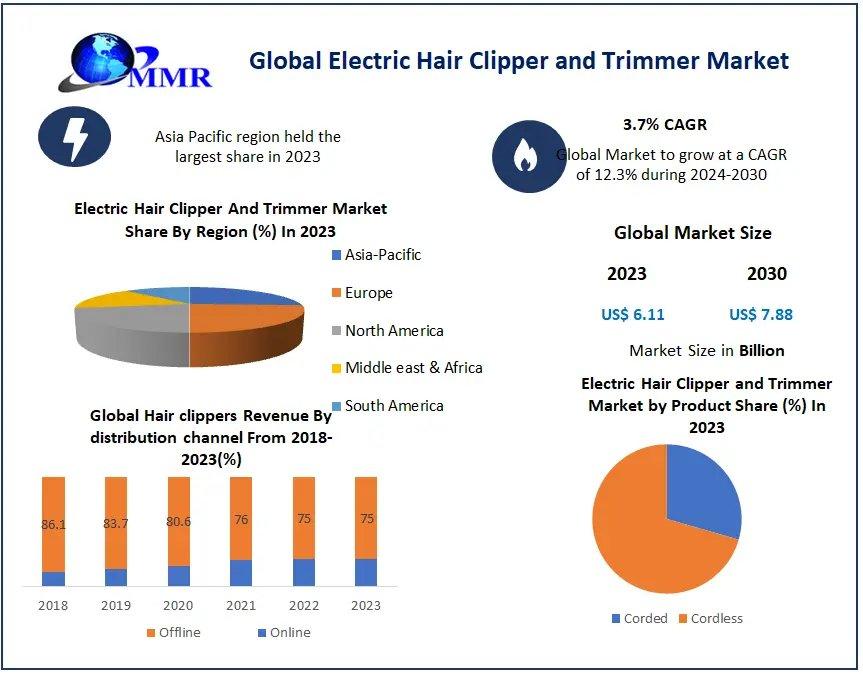
    The Electric Hair Clipper and Trimmer Market was valued at USD 6.11 billion in 2023.
    Revenue is projected to reach nearly USD 7.8 billion by 2030.
    The market is expected to expand at a 3.7% CAGR from 2024 to 2030.
    Cordless products currently dominate by product type.
    Online distribution is gaining importance through wider selection and easier price comparison.
    Asia Pacific holds the leading regional position.

    Market Overview

    The Electric Hair Clipper and Trimmer Market is evolving from a basic grooming-tools category into a convenience-focused consumer technology segment. Electric clippers are primarily used for cutting longer hair, while trimmers support shorter hair, beard, and mustache grooming. Adjustable settings, precision blades, cordless operation, and multiple attachments are improving flexibility for both consumers and professional users.

    With a 2023 valuation of USD 6.11 billion, the Electric Hair Clipper and Trimmer Market has established a substantial global revenue base. The projected rise to nearly USD 7.8 billion by 2030 indicates continued demand for products that combine functionality, portability, and personalized grooming.

    Get Your Free Sample Report Link : https://www.maximizemarketresearch.com/request-sample/218914/

    Key Trends Driving Growth

    Personalized grooming is one of the strongest demand trends. Young adults increasingly prioritize appearance, convenience, and cost-effectiveness, supporting demand for products capable of handling different grooming requirements.

    Technology is another important growth factor. Adjustable blade settings, precision-focused designs, cordless operation, and attachments allow users to customize grooming routines. These features help manufacturers differentiate products in a competitive environment.

    Electric Hair Clipper and Trimmer Market Demand Analysis and Revenue Growth Outlook Key Highlights The Electric Hair Clipper and Trimmer Market was valued at USD 6.11 billion in 2023. Revenue is projected to reach nearly USD 7.8 billion by 2030. The market is expected to expand at a 3.7% CAGR from 2024 to 2030. Cordless products currently dominate by product type. Online distribution is gaining importance through wider selection and easier price comparison. Asia Pacific holds the leading regional position. Market Overview The Electric Hair Clipper and Trimmer Market is evolving from a basic grooming-tools category into a convenience-focused consumer technology segment. Electric clippers are primarily used for cutting longer hair, while trimmers support shorter hair, beard, and mustache grooming. Adjustable settings, precision blades, cordless operation, and multiple attachments are improving flexibility for both consumers and professional users. With a 2023 valuation of USD 6.11 billion, the Electric Hair Clipper and Trimmer Market has established a substantial global revenue base. The projected rise to nearly USD 7.8 billion by 2030 indicates continued demand for products that combine functionality, portability, and personalized grooming. Get Your Free Sample Report Link : https://www.maximizemarketresearch.com/request-sample/218914/ Key Trends Driving Growth Personalized grooming is one of the strongest demand trends. Young adults increasingly prioritize appearance, convenience, and cost-effectiveness, supporting demand for products capable of handling different grooming requirements. Technology is another important growth factor. Adjustable blade settings, precision-focused designs, cordless operation, and attachments allow users to customize grooming routines. These features help manufacturers differentiate products in a competitive environment.
    0 Comments ·0 Shares ·433 Views
  • Asia Pacific Biochar Market Growth, Trends, Opportunities and Forecast 2023–2029
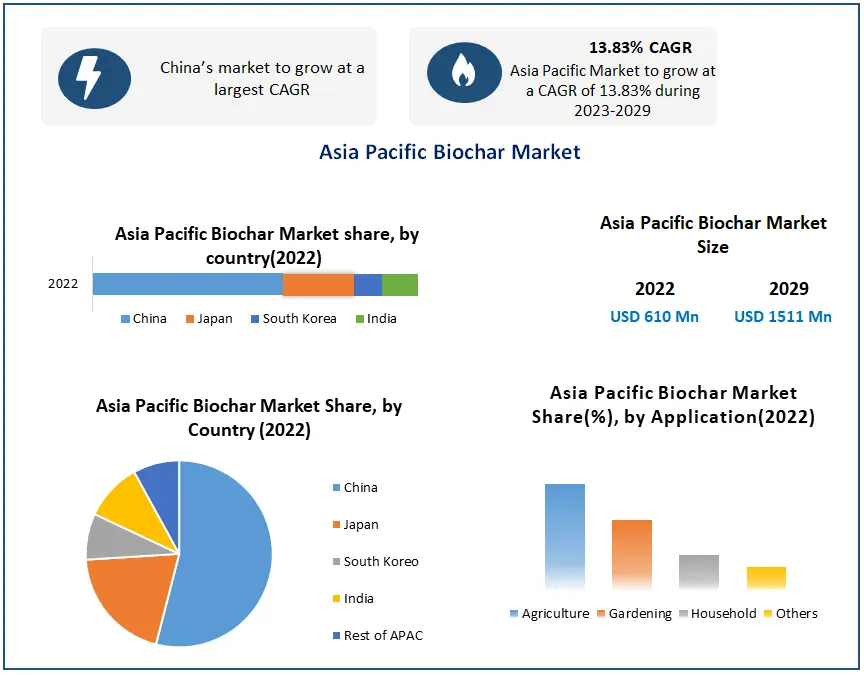
    The Asia Pacific Biochar Market was valued at USD 610 million in 2022 and is projected to grow at a CAGR of 13.83% from 2023 to 2029, reaching approximately USD 1,511 million by 2029. The market is gaining momentum as agriculture, waste management, and sustainable farming practices increasingly adopt biochar as an environmentally beneficial material.

    Asia Pacific Biochar Market Overview
    Biochar is increasingly being recognized across the Asia Pacific region for its applications in agriculture, gardening, waste management, and other end-use sectors. Strong environmental regulations, growing demand from end-user industries, increasing organic farming, and the use of biochar in waste management are among the major factors supporting market expansion.

    The agriculture sector represents a major area of demand for biochar. The material can be produced from different forms of biomass and agricultural waste, providing an opportunity to convert waste into a value-added resource. Pyrolysis remains one of the leading production methods and accounts for a significant share of the market.

    Request Free Sample Copy:https://www.maximizemarketresearch.com/request-sample/20189/

    Key Growth Drivers
    Rising Demand for Organic Farming
    The increasing adoption of organic farming and sustainable agricultural practices is creating significant demand for biochar. Farmers and agricultural businesses are increasingly exploring solutions that can support soil health while reducing dependence on conventional chemical fertilizers.

    Biochar also provides an opportunity to utilize agricultural and organic waste that would otherwise require disposal. Crop residues, biomass, and animal manure can be converted into biochar, creating an additional value stream from agricultural waste.

    Growing Importance of Waste Management
    The Asia Pacific region generates substantial quantities of agricultural and organic waste. Biochar production offers a method of converting some of these waste materials into useful products while reducing waste volumes.

    The combination of waste management and biochar production is therefore becoming increasingly relevant to governments, agricultural businesses, and sustainability-focused organizations.

    Environmental Regulations
    Stricter environmental regulations are also supporting market development. Governments and industries are looking for alternatives that can contribute to sustainable resource management and reduce environmental impacts.

    Market Restraints
    High Initial Investment
    The establishment of biochar production facilities and implementation of associated technologies can require significant upfront investment. High initial costs may discourage new entrants and investors, particularly in areas where financial resources and production infrastructure are limited.

    Lack of Awareness
    Limited awareness among farmers and consumers regarding the benefits and applications of biochar remains another challenge. Greater education and stakeholder awareness are needed to accelerate adoption across developing markets in the region.

    Market Opportunities
    Sustainable Agriculture
    Increasing awareness of sustainable agriculture presents an important opportunity for the Asia Pacific Biochar Market. Biochar can be incorporated into agricultural practices aimed at improving soil health and reducing dependence on chemical fertilizers.

    Growing consumer interest in environmentally friendly agricultural products may further encourage farmers to explore biochar-based solutions.

    Integration with Waste-to-Energy
    The region's large volume of agricultural and organic waste provides an opportunity to integrate biochar production with bioenergy and waste-to-energy processes. Such integration can enable the utilization of waste resources while creating value-added products.

    Government subsidies, incentives, and favorable regulations could further encourage investment in biochar production and sustainable agricultural practices.

    Asia Pacific Biochar Market Segmentation
    The market is segmented based on application, technology, manufacturing, and feedstock. Agriculture is a major application segment, while pyrolysis represents an important manufacturing process.

    By Technology
    Pyrolysis has dominated the market and is expected to maintain its leading position during the forecast period. It is a widely used thermochemical process in which biomass is heated in the absence of oxygen to produce biochar, bio-oil, and syngas.

    Gasification is another production method. In this process, biomass is oxidized to generate syngas, which can subsequently be processed to produce biochar.

    By Feedstock
    The Agricultural Waste segment holds a significant market share and is expected to remain dominant. Common agricultural feedstocks include rice straw, wheat straw, corn stalks, nutshells, and other biomass residues.

    Animal manure, including cow dung, swine dung, and poultry litter, is also used as a feedstock for biochar production.

    By Application
    The market covers:

    Agriculture
    Gardening
    Household
    Others
    By Manufacturing
    Gasification
    Pyrolysis
    Others
    By Feedstock
    Woody Biomass
    Agricultural Waste
    Animal Manure
    Others
    Request Free Sample Copy:https://www.maximizemarketresearch.com/request-sample/20189/

    Country Analysis
    China is the leading country in the Asia Pacific Biochar Market, accounting for approximately 95% of the regional market in 2022, according to the provided source. Chinese players are investing in research and development to understand biochar's effects on soil processes, agricultural productivity, and environmental conditions.

    Japan is also active in biochar research, particularly in understanding its physical, chemical, and biological properties and its effects on soil and compost. The broader Asia Pacific region is expected to experience strong growth, supported by pilot projects and increasing consumer adoption.

    The countries covered include China, South Korea, Japan, India, Australia, Indonesia, Malaysia, Vietnam, Taiwan, Bangladesh, Pakistan, and Rest of APAC.

    Asia Pacific Biochar Market Forecast
    Market Indicator Details
    Base Year 2022
    Historical Period 2018–2022
    Forecast Period 2023–2029
    Market Size in 2022 USD 610 Million
    CAGR 13.83%
    Market Size in 2029 USD 1,511 Million
    Key Application Agriculture
    Leading Manufacturing Process Pyrolysis
    Key Feedstock Agricultural Waste
    The market is expected to benefit from rising demand for sustainable agriculture, increasing organic waste generation, environmental regulations, and the growing integration of biochar with waste management and bioenergy systems.

    Competitive Landscape
    The Asia Pacific Biochar Market includes established companies and emerging participants involved in biochar production, pyrolysis technologies, biomass utilization, and sustainable resource management.

    Key players identified in the source include Biogreen-Energy, Agri-Tech Producers LLC, Genesis Industries, Diacarbon Energy Inc., Green Charcoal International, Vega Biofuels Inc., The Biochar Company, Cool Planet Energy Systems Inc., Full Circle Biochar, Pacific Pyrolysis Pty Ltd, ARSTA Eco, Earth Systems, Guangdong Dazhong Agricultural Science and Technology Co. Ltd, Rainbow Bee Eater and Pacific Pyrolysis, Biochar Now LLC, Tolero Energy, Airex Energy, Carbon Gold, Phoenix Energy, and AirTerra.

    Future Outlook
    The Asia Pacific Biochar Market has considerable growth potential as the region moves toward more sustainable agricultural and waste-management practices. Increasing awareness of soil health, organic farming, agricultural waste utilization, and environmentally responsible production is expected to support adoption.

    At the same time, reducing production costs, improving infrastructure, increasing stakeholder awareness, and introducing supportive government policies will be important for overcoming current market barriers.

    Overall, the market's projected growth from USD 610 million in 2022 to USD 1,511 million by 2029 highlights the expanding role of biochar in sustainable agriculture and resource management across Asia Pacific.
    Asia Pacific Biochar Market Growth, Trends, Opportunities and Forecast 2023–2029 The Asia Pacific Biochar Market was valued at USD 610 million in 2022 and is projected to grow at a CAGR of 13.83% from 2023 to 2029, reaching approximately USD 1,511 million by 2029. The market is gaining momentum as agriculture, waste management, and sustainable farming practices increasingly adopt biochar as an environmentally beneficial material. Asia Pacific Biochar Market Overview Biochar is increasingly being recognized across the Asia Pacific region for its applications in agriculture, gardening, waste management, and other end-use sectors. Strong environmental regulations, growing demand from end-user industries, increasing organic farming, and the use of biochar in waste management are among the major factors supporting market expansion. The agriculture sector represents a major area of demand for biochar. The material can be produced from different forms of biomass and agricultural waste, providing an opportunity to convert waste into a value-added resource. Pyrolysis remains one of the leading production methods and accounts for a significant share of the market. Request Free Sample Copy:https://www.maximizemarketresearch.com/request-sample/20189/ Key Growth Drivers Rising Demand for Organic Farming The increasing adoption of organic farming and sustainable agricultural practices is creating significant demand for biochar. Farmers and agricultural businesses are increasingly exploring solutions that can support soil health while reducing dependence on conventional chemical fertilizers. Biochar also provides an opportunity to utilize agricultural and organic waste that would otherwise require disposal. Crop residues, biomass, and animal manure can be converted into biochar, creating an additional value stream from agricultural waste. Growing Importance of Waste Management The Asia Pacific region generates substantial quantities of agricultural and organic waste. Biochar production offers a method of converting some of these waste materials into useful products while reducing waste volumes. The combination of waste management and biochar production is therefore becoming increasingly relevant to governments, agricultural businesses, and sustainability-focused organizations. Environmental Regulations Stricter environmental regulations are also supporting market development. Governments and industries are looking for alternatives that can contribute to sustainable resource management and reduce environmental impacts. Market Restraints High Initial Investment The establishment of biochar production facilities and implementation of associated technologies can require significant upfront investment. High initial costs may discourage new entrants and investors, particularly in areas where financial resources and production infrastructure are limited. Lack of Awareness Limited awareness among farmers and consumers regarding the benefits and applications of biochar remains another challenge. Greater education and stakeholder awareness are needed to accelerate adoption across developing markets in the region. Market Opportunities Sustainable Agriculture Increasing awareness of sustainable agriculture presents an important opportunity for the Asia Pacific Biochar Market. Biochar can be incorporated into agricultural practices aimed at improving soil health and reducing dependence on chemical fertilizers. Growing consumer interest in environmentally friendly agricultural products may further encourage farmers to explore biochar-based solutions. Integration with Waste-to-Energy The region's large volume of agricultural and organic waste provides an opportunity to integrate biochar production with bioenergy and waste-to-energy processes. Such integration can enable the utilization of waste resources while creating value-added products. Government subsidies, incentives, and favorable regulations could further encourage investment in biochar production and sustainable agricultural practices. Asia Pacific Biochar Market Segmentation The market is segmented based on application, technology, manufacturing, and feedstock. Agriculture is a major application segment, while pyrolysis represents an important manufacturing process. By Technology Pyrolysis has dominated the market and is expected to maintain its leading position during the forecast period. It is a widely used thermochemical process in which biomass is heated in the absence of oxygen to produce biochar, bio-oil, and syngas. Gasification is another production method. In this process, biomass is oxidized to generate syngas, which can subsequently be processed to produce biochar. By Feedstock The Agricultural Waste segment holds a significant market share and is expected to remain dominant. Common agricultural feedstocks include rice straw, wheat straw, corn stalks, nutshells, and other biomass residues. Animal manure, including cow dung, swine dung, and poultry litter, is also used as a feedstock for biochar production. By Application The market covers: Agriculture Gardening Household Others By Manufacturing Gasification Pyrolysis Others By Feedstock Woody Biomass Agricultural Waste Animal Manure Others Request Free Sample Copy:https://www.maximizemarketresearch.com/request-sample/20189/ Country Analysis China is the leading country in the Asia Pacific Biochar Market, accounting for approximately 95% of the regional market in 2022, according to the provided source. Chinese players are investing in research and development to understand biochar's effects on soil processes, agricultural productivity, and environmental conditions. Japan is also active in biochar research, particularly in understanding its physical, chemical, and biological properties and its effects on soil and compost. The broader Asia Pacific region is expected to experience strong growth, supported by pilot projects and increasing consumer adoption. The countries covered include China, South Korea, Japan, India, Australia, Indonesia, Malaysia, Vietnam, Taiwan, Bangladesh, Pakistan, and Rest of APAC. Asia Pacific Biochar Market Forecast Market Indicator Details Base Year 2022 Historical Period 2018–2022 Forecast Period 2023–2029 Market Size in 2022 USD 610 Million CAGR 13.83% Market Size in 2029 USD 1,511 Million Key Application Agriculture Leading Manufacturing Process Pyrolysis Key Feedstock Agricultural Waste The market is expected to benefit from rising demand for sustainable agriculture, increasing organic waste generation, environmental regulations, and the growing integration of biochar with waste management and bioenergy systems. Competitive Landscape The Asia Pacific Biochar Market includes established companies and emerging participants involved in biochar production, pyrolysis technologies, biomass utilization, and sustainable resource management. Key players identified in the source include Biogreen-Energy, Agri-Tech Producers LLC, Genesis Industries, Diacarbon Energy Inc., Green Charcoal International, Vega Biofuels Inc., The Biochar Company, Cool Planet Energy Systems Inc., Full Circle Biochar, Pacific Pyrolysis Pty Ltd, ARSTA Eco, Earth Systems, Guangdong Dazhong Agricultural Science and Technology Co. Ltd, Rainbow Bee Eater and Pacific Pyrolysis, Biochar Now LLC, Tolero Energy, Airex Energy, Carbon Gold, Phoenix Energy, and AirTerra. Future Outlook The Asia Pacific Biochar Market has considerable growth potential as the region moves toward more sustainable agricultural and waste-management practices. Increasing awareness of soil health, organic farming, agricultural waste utilization, and environmentally responsible production is expected to support adoption. At the same time, reducing production costs, improving infrastructure, increasing stakeholder awareness, and introducing supportive government policies will be important for overcoming current market barriers. Overall, the market's projected growth from USD 610 million in 2022 to USD 1,511 million by 2029 highlights the expanding role of biochar in sustainable agriculture and resource management across Asia Pacific.
    0 Comments ·0 Shares ·300 Views
  • Silica Aerogel Market Size and Share with Future Growth Opportunities

    Key Highlights

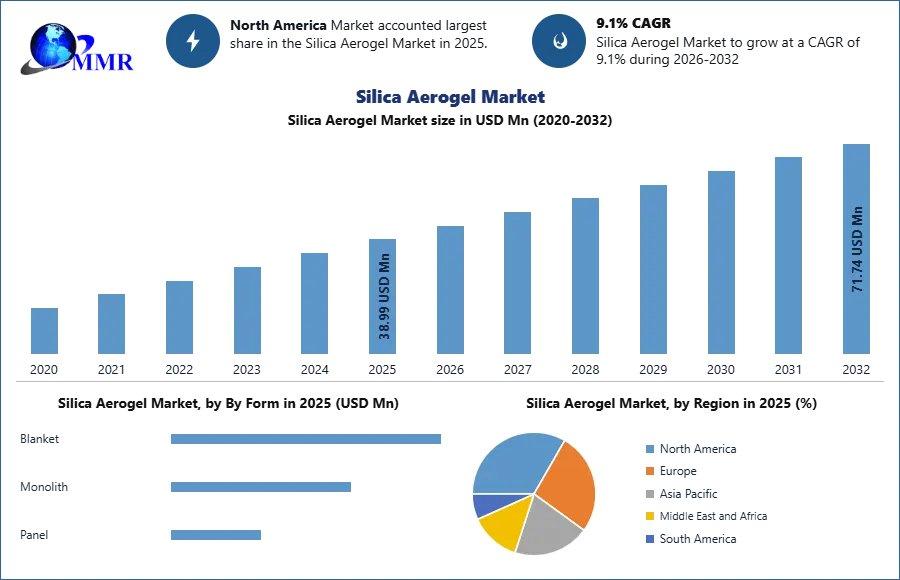
    The market was valued at USD 38.99 Mn in 2025.
    It is expected to reach USD 71.74 Mn by 2032.
    The market is projected to grow at a CAGR of 9.1% during the forecast period.
    Rising demand for high-performance insulation is strengthening the commercial relevance of silica aerogel.
    Manufacturers with advanced material capabilities are positioned to benefit from expanding application opportunities.

    Market Overview

    The Silica Aerogel Market is moving from a specialized material segment toward a broader industrial opportunity. Its commercial appeal comes from the ability of silica aerogel to provide high-performance insulation while maintaining a lightweight structure. This combination makes it relevant to industries seeking improved material efficiency and thermal management.

    The market reached USD 38.99 Mn in 2025, establishing a measurable base for future expansion. For manufacturers, this signals increasing opportunities to develop differentiated aerogel products and serve industries where conventional insulation solutions may not provide the required performance.

    Why This Market Matters Now

    Energy efficiency has become an increasingly important consideration for industrial operations, infrastructure developers, and equipment manufacturers. As businesses look for materials that can contribute to better thermal management, advanced insulation technologies are receiving greater attention.

    For investors, the projected expansion from USD 38.99 Mn in 2025 to USD 71.74 Mn by 2032 indicates a substantial increase in market value. This growth creates opportunities across production, application development, distribution, and technology-focused investments.

    Access a Free Sample Report Copy : https://www.maximizemarketresearch.com/request-sample/70767/

    Key Trends Driving Growth

    A major trend shaping the industry is the growing preference for materials that combine insulation performance with low weight. Silica aerogel fits this requirement and can support applications where space, weight, and thermal performance are important purchasing considerations.

    Another important trend is the movement toward advanced material solutions. As industrial users become more performance-oriented, suppliers have opportunities to compete through product quality, application-specific designs, and manufacturing capabilities rather than relying only on conventional insulation products.

    Silica Aerogel Market Size and Share with Future Growth Opportunities Key Highlights The market was valued at USD 38.99 Mn in 2025. It is expected to reach USD 71.74 Mn by 2032. The market is projected to grow at a CAGR of 9.1% during the forecast period. Rising demand for high-performance insulation is strengthening the commercial relevance of silica aerogel. Manufacturers with advanced material capabilities are positioned to benefit from expanding application opportunities. Market Overview The Silica Aerogel Market is moving from a specialized material segment toward a broader industrial opportunity. Its commercial appeal comes from the ability of silica aerogel to provide high-performance insulation while maintaining a lightweight structure. This combination makes it relevant to industries seeking improved material efficiency and thermal management. The market reached USD 38.99 Mn in 2025, establishing a measurable base for future expansion. For manufacturers, this signals increasing opportunities to develop differentiated aerogel products and serve industries where conventional insulation solutions may not provide the required performance. Why This Market Matters Now Energy efficiency has become an increasingly important consideration for industrial operations, infrastructure developers, and equipment manufacturers. As businesses look for materials that can contribute to better thermal management, advanced insulation technologies are receiving greater attention. For investors, the projected expansion from USD 38.99 Mn in 2025 to USD 71.74 Mn by 2032 indicates a substantial increase in market value. This growth creates opportunities across production, application development, distribution, and technology-focused investments. Access a Free Sample Report Copy : https://www.maximizemarketresearch.com/request-sample/70767/ Key Trends Driving Growth A major trend shaping the industry is the growing preference for materials that combine insulation performance with low weight. Silica aerogel fits this requirement and can support applications where space, weight, and thermal performance are important purchasing considerations. Another important trend is the movement toward advanced material solutions. As industrial users become more performance-oriented, suppliers have opportunities to compete through product quality, application-specific designs, and manufacturing capabilities rather than relying only on conventional insulation products.
    0 Comments ·0 Shares ·188 Views
  • Geosynthetics Market Analysis, Growth Drivers and Emerging Industry Trends

    Top of Form

    Key Highlights

    The Geosynthetics Market was valued at USD 19.21 billion in 2025, establishing a substantial base for future infrastructure demand.
    Revenue is projected to reach nearly USD 29.15 billion by 2032, indicating expanding commercial opportunities.
    The market is forecast to grow at a 6.14% CAGR from 2026 to 2032, reflecting sustained adoption.
    Asia Pacific held regional supremacy in 2025, supported by urbanization and infrastructure development.
    Geotextiles remain a prominent product category because of their broad construction and soil-management applications.

    Market Overview

    The Geosynthetics Market has moved beyond being a specialized construction-material segment into a strategic component of modern infrastructure. These engineered materials improve soil performance through filtration, drainage, reinforcement, separation, stabilization, and containment. Their ability to reduce material usage and support longer-lasting infrastructure is strengthening their relevance for project developers.

    Geotextiles are widely applied in roads, embankments, erosion control, and landscaping, while geomembranes provide impermeable barriers for applications such as landfills and containment systems. Geogrids reinforce soil and distribute loads, helping improve the performance of roads, retaining structures, and embankments.

    Get Your Free Sample Report Link : https://www.maximizemarketresearch.com/request-sample/30009/

    Key Trends Driving Growth

    A major trend shaping the Geosynthetics Market is the growing emphasis on resilient infrastructure. Geogrids can reinforce road structures, while geotextiles support drainage and soil stabilization. These applications become particularly important as urban development increases pressure on transportation and drainage networks.

    Environmental protection is another important growth factor. Geomembranes are used for containment in landfills, reservoirs, dams, and mining facilities. Meanwhile, erosion-control products support shoreline protection and slope stabilization.

    The integration of geosynthetics with recycled materials also creates opportunities for more resource-efficient construction. Advanced applications, including systems integrated with monitoring technologies, could further expand their role in infrastructure management.

    Geosynthetics Market Analysis, Growth Drivers and Emerging Industry Trends Top of Form Key Highlights The Geosynthetics Market was valued at USD 19.21 billion in 2025, establishing a substantial base for future infrastructure demand. Revenue is projected to reach nearly USD 29.15 billion by 2032, indicating expanding commercial opportunities. The market is forecast to grow at a 6.14% CAGR from 2026 to 2032, reflecting sustained adoption. Asia Pacific held regional supremacy in 2025, supported by urbanization and infrastructure development. Geotextiles remain a prominent product category because of their broad construction and soil-management applications. Market Overview The Geosynthetics Market has moved beyond being a specialized construction-material segment into a strategic component of modern infrastructure. These engineered materials improve soil performance through filtration, drainage, reinforcement, separation, stabilization, and containment. Their ability to reduce material usage and support longer-lasting infrastructure is strengthening their relevance for project developers. Geotextiles are widely applied in roads, embankments, erosion control, and landscaping, while geomembranes provide impermeable barriers for applications such as landfills and containment systems. Geogrids reinforce soil and distribute loads, helping improve the performance of roads, retaining structures, and embankments. Get Your Free Sample Report Link : https://www.maximizemarketresearch.com/request-sample/30009/ Key Trends Driving Growth A major trend shaping the Geosynthetics Market is the growing emphasis on resilient infrastructure. Geogrids can reinforce road structures, while geotextiles support drainage and soil stabilization. These applications become particularly important as urban development increases pressure on transportation and drainage networks. Environmental protection is another important growth factor. Geomembranes are used for containment in landfills, reservoirs, dams, and mining facilities. Meanwhile, erosion-control products support shoreline protection and slope stabilization. The integration of geosynthetics with recycled materials also creates opportunities for more resource-efficient construction. Advanced applications, including systems integrated with monitoring technologies, could further expand their role in infrastructure management.
    Request Sample
    www.maximizemarketresearch.com
    for Request Sample fill the form
    0 Comments ·0 Shares ·487 Views
  • Flock Adhesives Market Trends, Opportunities and Growth Forecast

    Key Highlights

    Valued at USD 2.10 billion in 2024, creating a base for suppliers.
    Expected to reach nearly USD 3.30 billion by 2032, expanding commercial opportunities.
    Forecast to grow at a 5.8% CAGR from 2025 to 2032, indicating sustained expansion.
    Asia Pacific held the highest share in 2024, strengthening its strategic importance.
    Automotive, textiles, paper and packaging, and paints and coatings are key applications.

    Market Overview

    The Flock Adhesives Market was valued at USD 2.10 billion in 2024. This scale matters because flock adhesives enable small fiber particles to be placed on surfaces, enhancing aesthetics, tactile sensation, appearance and color. For manufacturers competing on both function and presentation, flocking can add value to finished products.

    Revenue is projected to reach nearly USD 3.30 billion by 2032. That increase gives suppliers an incentive to strengthen product portfolios, production capabilities and distribution networks. The Flock Adhesives Market is becoming a broader industrial opportunity rather than a narrow material segment.

    Why This Market Matters Now

    Automotive and packaging demand is a major driver because flock adhesives support high-efficiency applications. Textile demand, including flocking for garments and furniture, widens the customer base. For procurement teams, this diversification makes consistent performance and dependable supply increasingly important in the Flock Adhesives Market.

    Research and development and new product launches in developing economies are also supporting expansion. The Flock Adhesives Market therefore presents opportunities for companies that can adapt products to application needs while establishing stronger positions in emerging markets.

    Access a Free Sample Report Copy : https://www.maximizemarketresearch.com/request-sample/322/

    Key Trends Driving Growth

    Product performance is influencing purchasing decisions. Washability and flame retardance are highlighted as important opportunity areas, giving suppliers ways to differentiate formulations.

    Application diversification is another trend. Automotive, textiles, paper and packaging, and paints and coatings are covered as major application categories.

    Flock Adhesives Market Trends, Opportunities and Growth Forecast Key Highlights Valued at USD 2.10 billion in 2024, creating a base for suppliers. Expected to reach nearly USD 3.30 billion by 2032, expanding commercial opportunities. Forecast to grow at a 5.8% CAGR from 2025 to 2032, indicating sustained expansion. Asia Pacific held the highest share in 2024, strengthening its strategic importance. Automotive, textiles, paper and packaging, and paints and coatings are key applications. Market Overview The Flock Adhesives Market was valued at USD 2.10 billion in 2024. This scale matters because flock adhesives enable small fiber particles to be placed on surfaces, enhancing aesthetics, tactile sensation, appearance and color. For manufacturers competing on both function and presentation, flocking can add value to finished products. Revenue is projected to reach nearly USD 3.30 billion by 2032. That increase gives suppliers an incentive to strengthen product portfolios, production capabilities and distribution networks. The Flock Adhesives Market is becoming a broader industrial opportunity rather than a narrow material segment. Why This Market Matters Now Automotive and packaging demand is a major driver because flock adhesives support high-efficiency applications. Textile demand, including flocking for garments and furniture, widens the customer base. For procurement teams, this diversification makes consistent performance and dependable supply increasingly important in the Flock Adhesives Market. Research and development and new product launches in developing economies are also supporting expansion. The Flock Adhesives Market therefore presents opportunities for companies that can adapt products to application needs while establishing stronger positions in emerging markets. Access a Free Sample Report Copy : https://www.maximizemarketresearch.com/request-sample/322/ Key Trends Driving Growth Product performance is influencing purchasing decisions. Washability and flame retardance are highlighted as important opportunity areas, giving suppliers ways to differentiate formulations. Application diversification is another trend. Automotive, textiles, paper and packaging, and paints and coatings are covered as major application categories.
    Request Sample
    www.maximizemarketresearch.com
    for Request Sample fill the form
    0 Comments ·0 Shares ·479 Views
  • Butyric Acid Market Analysis, Trends, and Growth Forecast

    Key Highlights

    The Butyric Acid Market was valued at USD 400.02 Mn in 2023, creating a substantial base for expansion.
    It is expected to reach USD 1123.76 Mn by 2030, opening opportunities across several industries.
    A 15.9% CAGR from 2024 to 2030 points to rapid commercial expansion.
    Animal feed is projected to be the fastest-growing application, strengthening demand from poultry and swine.
    Asia Pacific is the largest and fastest-growing region, with India and China driving growth.

    Market Overview

    The Butyric Acid Market is shifting from a specialized chemical segment toward a broader industrial opportunity as demand rises in animal feed, chemical intermediates, food and flavors, pharmaceuticals, and perfumes. Butyric acid is an organic compound and carboxylic acid used as a flavoring agent, while its salts and esters serve multiple applications.

    The market reached USD 400.02 Mn in 2023 and is forecast to reach USD 1123.76 Mn by 2030. The scale of this projected expansion makes production capacity, application development, and dependable supply increasingly important.

    Why This Market Matters Now

    Demand is being reshaped by the need for effective animal nutrition solutions and reduced antibiotic use in animal feed in some countries. Butyric acid is considered an efficient energy source for intestinal cells, making it important for poultry and swine feed.

    For the Butyric Acid Market, this creates opportunities for manufacturers to diversify applications. For procurement leaders, rising cross-industry demand increases the importance of reliable sourcing and consistent product quality.

    Access a Free Sample Report Copy : https://www.maximizemarketresearch.com/request-sample/22625/

    Key Trends Driving Growth

    A central trend in the Butyric Acid Market is the rising use of the product in animal feed. This segment is projected to be the fastest-growing end-user application during the forecast period. Chemicals intermediate is the second-largest application segment, demonstrating the material's industrial versatility.

    Another trend is growing interest in renewable and biobased production. Companies are developing renewable butyric acid through advanced fermentation processes, aligning product development with demand for natural ingredients and sustainable practices.

    Butyric Acid Market Analysis, Trends, and Growth Forecast Key Highlights The Butyric Acid Market was valued at USD 400.02 Mn in 2023, creating a substantial base for expansion. It is expected to reach USD 1123.76 Mn by 2030, opening opportunities across several industries. A 15.9% CAGR from 2024 to 2030 points to rapid commercial expansion. Animal feed is projected to be the fastest-growing application, strengthening demand from poultry and swine. Asia Pacific is the largest and fastest-growing region, with India and China driving growth. Market Overview The Butyric Acid Market is shifting from a specialized chemical segment toward a broader industrial opportunity as demand rises in animal feed, chemical intermediates, food and flavors, pharmaceuticals, and perfumes. Butyric acid is an organic compound and carboxylic acid used as a flavoring agent, while its salts and esters serve multiple applications. The market reached USD 400.02 Mn in 2023 and is forecast to reach USD 1123.76 Mn by 2030. The scale of this projected expansion makes production capacity, application development, and dependable supply increasingly important. Why This Market Matters Now Demand is being reshaped by the need for effective animal nutrition solutions and reduced antibiotic use in animal feed in some countries. Butyric acid is considered an efficient energy source for intestinal cells, making it important for poultry and swine feed. For the Butyric Acid Market, this creates opportunities for manufacturers to diversify applications. For procurement leaders, rising cross-industry demand increases the importance of reliable sourcing and consistent product quality. Access a Free Sample Report Copy : https://www.maximizemarketresearch.com/request-sample/22625/ Key Trends Driving Growth A central trend in the Butyric Acid Market is the rising use of the product in animal feed. This segment is projected to be the fastest-growing end-user application during the forecast period. Chemicals intermediate is the second-largest application segment, demonstrating the material's industrial versatility. Another trend is growing interest in renewable and biobased production. Companies are developing renewable butyric acid through advanced fermentation processes, aligning product development with demand for natural ingredients and sustainable practices.
    Request Sample
    www.maximizemarketresearch.com
    for Request Sample fill the form
    0 Comments ·0 Shares ·187 Views
  • Wallpaper Market Industry Analysis, Growth Drivers, and Future Opportunities

    Key Highlights

    The Wallpaper Market was valued at USD 2.01 billion in 2025, establishing a substantial base for continued industry expansion.
    Revenue is projected to reach nearly USD 2.78 billion by 2034, creating opportunities for manufacturers and distributors.
    The market is expected to expand at a 3.7% CAGR from 2026 to 2034, indicating steady rather than short-term growth.
    Non-woven wallpaper is expected to hold the largest market share by 2034 because of its practical installation and durability advantages.
    North America is expected to maintain market leadership through 2034, supported by home improvement demand and remodeling activity.

    Market Overview

    The Wallpaper Market is moving beyond its traditional role as a decorative wall covering. Wallpaper now combines design flexibility with practical attributes such as convenient installation, durability, rich patterns, color variety, and environmental considerations. These characteristics are increasing its relevance across homes, offices, and other buildings.

    The market reached USD 2.01 billion in 2025. This scale demonstrates established demand, while the projected increase to nearly USD 2.78 billion by 2034 points to continued commercial opportunities for manufacturers, retailers, and installation-related businesses.

    Why This Market Matters Now

    Construction activity and expanding housing infrastructure are creating new surfaces that require interior finishing solutions. At the same time, increasing disposable income and the growth of middle-class housing are supporting spending on interior improvements.

    The Wallpaper Market also benefits from installation convenience compared with traditional wall painting. However, specialized wallpaper can carry a higher cost, creating a pricing challenge that suppliers must address through product differentiation and value-focused offerings.

    Request Your Sample Report Now : https://www.maximizemarketresearch.com/request-sample/22571/

    Key Trends Driving Growth

    Digital printing is becoming an important development because it enables visually appealing wall designs while offering an economical alternative to interior paint. Digitally printed products also provide manufacturers with opportunities to deliver distinctive aesthetic solutions.

    Another important trend is the development of practical wallpaper materials. Non-woven products are valued for tear resistance, washability, flexibility, lightweight construction, and shorter installation and removal times. These characteristics align closely with consumers seeking lower-maintenance interior solutions.

    Wallpaper Market Industry Analysis, Growth Drivers, and Future Opportunities Key Highlights The Wallpaper Market was valued at USD 2.01 billion in 2025, establishing a substantial base for continued industry expansion. Revenue is projected to reach nearly USD 2.78 billion by 2034, creating opportunities for manufacturers and distributors. The market is expected to expand at a 3.7% CAGR from 2026 to 2034, indicating steady rather than short-term growth. Non-woven wallpaper is expected to hold the largest market share by 2034 because of its practical installation and durability advantages. North America is expected to maintain market leadership through 2034, supported by home improvement demand and remodeling activity. Market Overview The Wallpaper Market is moving beyond its traditional role as a decorative wall covering. Wallpaper now combines design flexibility with practical attributes such as convenient installation, durability, rich patterns, color variety, and environmental considerations. These characteristics are increasing its relevance across homes, offices, and other buildings. The market reached USD 2.01 billion in 2025. This scale demonstrates established demand, while the projected increase to nearly USD 2.78 billion by 2034 points to continued commercial opportunities for manufacturers, retailers, and installation-related businesses. Why This Market Matters Now Construction activity and expanding housing infrastructure are creating new surfaces that require interior finishing solutions. At the same time, increasing disposable income and the growth of middle-class housing are supporting spending on interior improvements. The Wallpaper Market also benefits from installation convenience compared with traditional wall painting. However, specialized wallpaper can carry a higher cost, creating a pricing challenge that suppliers must address through product differentiation and value-focused offerings. Request Your Sample Report Now : https://www.maximizemarketresearch.com/request-sample/22571/ Key Trends Driving Growth Digital printing is becoming an important development because it enables visually appealing wall designs while offering an economical alternative to interior paint. Digitally printed products also provide manufacturers with opportunities to deliver distinctive aesthetic solutions. Another important trend is the development of practical wallpaper materials. Non-woven products are valued for tear resistance, washability, flexibility, lightweight construction, and shorter installation and removal times. These characteristics align closely with consumers seeking lower-maintenance interior solutions.
    Request Sample
    www.maximizemarketresearch.com
    for Request Sample fill the form
    0 Comments ·0 Shares ·196 Views
More Results